

 Vista previa
 Compartir
 Compartir
 Ver detalles
 Guía
Guía

 Descargar
 Ver artículos similares
 Radiografía
 Presentación de diapositivas
 Estadísticas
X Within X Orange


 Leer más
La obra de arte que se muestra en esta página está protegida por las leyes de propiedad intelectual, lo que significa que no podemos crear ni vender legalmente una reproducción idéntica. Esta protección se hace cumplir en virtud de acuerdos internacionales como el Convenio de Berna y por las leyes nacionales, incluidas aquellas establecidas por el Ley de derechos de autor de los EE. UU. - Título 17.
Este método cumple plenamente con las normativas de derechos de autor, ya que no implica la copia ni la duplicación de la obra protegida. En su lugar, se trata de una reinterpretación creativa: una nueva pintura influenciada por la original, pero que no es idéntica a ella.
Giclée / Impresión de arte
Impresiones giclée o en lienzo de calidad de museo con producción rápida y opciones de acabado flexibles. ( Encargar reproducción pintada a mano Ver versión en imagen digital)




P118B €10

P118H €10

P118W €10

P438Z €10

P508JH €12

P508YH €12

P805H €10

P805Z €10

P919BZ €10

P919G €10

P919XJ €10

P959ZH €10

P968JZ €12

W106C €8

W218G €10

W218JH €8

W218Y €10

W307PJ €10

W316G €10

W316PJ €8

W316Y €10

W398PJ €8

W4111J €10

W500HY €15

W500JH €15

W692G €12

W849H €8

W940BG €15

W953PJ €8




Elija entre nuestros tamaños predefinidos que respetan las proporciones originales de la obra.

Introduzca el ancho y el alto que necesite para adaptarse a su marco o pared. Una impresión solo puede recortarse, nunca hacerse más grande que la imagen original, por lo que un tamaño con una forma distinta perderá parte de la obra. Le enviaremos una maqueta digital para su aprobación antes de realizar cualquier impresión. La imagen que se muestra en esta página no refleja el recorte real; solo la maqueta lo hace.
Envío a todo el mundo () en 2 semanas en lugar de las 4/5 semanas estándar. (21 octubre)

Envío exprés gratuito a todo el mundo

Lienzo de lino de alta calidad

Seguro de envío completo

Garantía de reembolso de impuestos aduaneros

Garantía de fidelidad cromática exacta

Política de devolución de 100 días (solo por defectos)

Garantía de devolución del 100% del dinero

Oferta por volumen
 La opción de vidrio solo está disponible en tamaños inferiores a 110 cm.

X Within X Orange
Giclée / Impresión de arte
Tamaño de la reproducción
-


Precio total
€ 70
The Genesis of a Geometric Echo
Robert Mangold’s “X Within X Orange,” created in 1981, isn't merely a painting; it’s an invitation to contemplate the very essence of visual perception. Born in North Tonawanda, New York, in 1937, Mangold emerged from the shadow of Abstract Expressionism not with explosive gestures but with a quiet, almost austere approach—a deliberate dismantling of traditional painting conventions that paved the way for a new era of minimalist inquiry. This particular work, housed within The Phillips Collection in Washington D.C., exemplifies this shift, presenting a deceptively simple composition: a large, vibrant orange rectangle bisected by two precisely drawn vertical lines, dividing it into four distinct sections. Yet, beneath this apparent simplicity lies a complex interplay of form, color, and the inherent tension between the visible and the implied—a meditation on space, line, and the fundamental nature of representation. The stark white background amplifies the boldness of the orange, creating a visual dialogue that immediately draws the viewer’s eye to the geometric core of the piece.A Study in Controlled Abstraction
Mangold's technique is characterized by meticulous precision and an almost engineering-like approach. He employed acrylic paint on canvas, applying it with a controlled hand—a deliberate departure from the looser brushstrokes of earlier movements. The lines are not merely painted; they’re drawn, creating a sense of crispness and definition that contrasts sharply with the fluidity often associated with abstract art. The choice of orange is particularly significant – it's a color brimming with energy and warmth, yet simultaneously grounded and stable. It acts as both a focal point and a subtle counterpoint to the void created by the lines, suggesting an inherent balance within the composition. The flatness of the surface, devoid of texture or illusionistic depth, reinforces the painting’s commitment to pure form and geometric relationships. This deliberate restraint is key to understanding Mangold's minimalist philosophy—to strip away all unnecessary elements and focus on the essential qualities of the artwork itself.Echoes of Minimalism and Beyond
“X Within X Orange” firmly situates itself within the broader context of Minimalist art, a movement that challenged traditional notions of painting by prioritizing geometric forms, industrial materials, and a reduction to their most basic elements. However, Mangold’s work transcends simple categorization. It shares affinities with constructive abstraction, a style championed by artists like Josef Albers, who similarly explored the relationships between shapes and colors. Furthermore, there's an intriguing dialogue with the concept of “negative space”—the area surrounding and between forms—a principle that is subtly emphasized here through the deliberate use of white. The painting invites viewers to actively engage with this negative space, completing the composition mentally and experiencing it as a dynamic interplay of positive and negative elements. The work’s influence can also be seen in later developments within minimalism and conceptual art, demonstrating Mangold's lasting impact on contemporary artistic practice.Symbolic Resonance: Void and Form
While seemingly straightforward, “X Within X Orange” carries a potent symbolic weight. The ‘X’ itself—a fundamental geometric shape—represents both connection and division, suggesting an inherent duality within the artwork. The lines bisecting it can be interpreted as boundaries, thresholds, or even divisions of consciousness. The orange rectangle, in turn, embodies warmth, energy, and vitality, while the white space represents emptiness, potential, and the unknown. Together, these elements create a visual metaphor for the human condition—the constant negotiation between opposing forces, the search for meaning within chaos, and the inherent tension between form and void. The painting’s simplicity belies its profound capacity to evoke contemplation and introspection.A Legacy of Quiet Innovation
Robert Mangold's work continues to resonate with audiences today, not only for its aesthetic qualities but also for its intellectual rigor and conceptual depth. “X Within X Orange” stands as a testament to his commitment to pushing the boundaries of painting while remaining true to its fundamental principles. Reproductions of this iconic piece offer an accessible way to experience Mangold’s vision—a chance to engage with a work that invites repeated viewing, each time revealing new layers of meaning and nuance. It's a reminder that art doesn't always need grand gestures or overt displays of emotion; sometimes, the most powerful works are those that quietly challenge our perceptions and invite us to contemplate the world around us in a fresh and insightful way.Preguntas y respuestas
¿Se encuentra "X Within X Orange" en el país de su creador?
Sí, la obra se encuentra en el país de origen del artista. "X Within X Orange" se encuentra en Estados Unidos de América, mientras que Robert Mangold nació en Estados Unidos de América.
¿Cómo se relacionan entre sí los colores de "X Within X Orange"?
"X Within X Orange" de Robert Mangold presenta una armonía de color Unified Palette.
¿Qué sentimiento transmite "X Within X Orange" de Robert Mangold?
El estado de ánimo capturado en "X Within X Orange" de Robert Mangold es Calm, y su tono emocional es Reflective.
Biografía del artista
Robert Mangold: Un pionero del minimalismo
Robert Mangold (nacido en 1937) es un pintor estadounidense minimalista altamente influyente, celebrado por su enfoque innovador hacia la forma y el color. Su obra desafía los límites tradicionales de la pintura, enfatizando las ideas conceptuales sobre la ejecución material.
Vida temprana y educación
Nacido en North Tonawanda, Nueva York, Robert Mangold inicialmente estudió ingeniería antes de centrar su atención en el arte. Obtuvo una licenciatura en Bellas Artes de la Universidad de Buffalo en 1959 y un máster en Bellas Artes de la Escuela de Arte de Yale en 1961.
Desarrollo artístico e influencias
El viaje artístico de Mangold comenzó con el expresionismo abstracto, pero rápidamente se movió hacia el minimalismo a principios de los años 60. Fue significativamente influenciado por artistas como Kazimir Malevich, Piet Mondrian y Barnett Newman, quienes exploraron la abstracción pura y las formas reducidas. Su obra también refleja una reacción contra la intensidad gestual del Expresionismo Abstracto, prefiriendo en cambio un enfoque más restringido e intelectual.
Características clave y estilo
Mangold es reconocido por sus lienzos con forma – pinturas que no son rectangulares sino que adoptan formas irregulares o geométricas. Esta desviación de las estructuras de soporte tradicionales se convirtió en una marca registrada de su estilo. Sus pinturas típicamente presentan:
- Abstracción geométrica: Las formas y líneas simplificadas dominan sus composiciones.
- Campos de color sutiles: Emplea tonos pastel apagados para crear efectos atmosféricos.
- Estética minimalista: Un enfoque en las formas esenciales y la eliminación de los detalles innecesarios.
- Falta de encuadernación tradicional: Sus lienzos a menudo aparecen sin encuadernar, enfatizando aún más sus formas únicas.
Obras importantes y series
A lo largo de su carrera, Mangold ha producido varias series significativas:
- Serie Plano/Figura: Explora la relación entre forma y color a través de composiciones divididas del lienzo.
- Pinturas murales: Obras a gran escala diseñadas para interactuar con los espacios arquitectónicos.
- Serie Anillos: Presenta formas circulares o en forma de anillo dentro de campos rectangulares.
- Serie Columnas: Investiga la verticalidad y las relaciones espaciales.
Logros y reconocimiento
La obra de Robert Mangold ha sido exhibida ampliamente en museos y galerías de todo el mundo. Ha recibido numerosos premios y elogios, consolidando su posición como una figura destacada del arte contemporáneo. Sus obras se conservan en importantes colecciones que incluyen:
- El Museo de Arte Moderno, Nueva York
- El Metropolitan Museum of Art, Nueva York
- The Tate Modern, Londres
Significado histórico y legado
Robert Mangold jugó un papel crucial en la configuración del desarrollo de la pintura minimalista. Su exploración de los lienzos con forma y los campos de color sutiles amplió las posibilidades del arte abstracto y desafió las nociones convencionales de representación. Junto con artistas como Robert Ryman, representa el núcleo de la pintura minimalista, priorizando la rigurosidad conceptual y la reducción formal. Su influencia se sigue sintiendo en los artistas contemporáneos que trabajan con abstracción y formas geométricas.

Robert Mangold
1937 - , Estados Unidos de América
Datos clave
- Artistas Influenciados:
- Robert Ryman
- Artistas contemporáneos
- Artistas Que Influyeron:
- Kazimir Malevich
- Piet Mondrian
- Barnett Newman
- Fecha De Nacimiento: 1937
- Lugar De Nacimiento: North Tonawanda, EE. UU.
- Movimiento Artístico: Minimalismo
- Nacionalidad: Estadounidense
- Nombre Completo: Robert Mangold
- Obras Notables:
- Serie Plano/Figura
- Serie Anillo
- Estructura Columna
Artículos relacionados

Beyond the Lines: The High-Impact Trend Forecast of Geometric Abstraction
Discover the high-impact world of Geometric Abstraction. From Cubist roots to modern urban trends, explore how bold shapes and colors redefine contemporary design. Elevate your space with expert art insights and custom-made abstract masterpieces.

Abstracción Geométrica: 10 Obras Maestras que Transformaron el Arte Moderno | OriginalUniqueArt
Descubre las 10 obras maestras de la abstracción geométrica que revolucionaron el arte moderno. Explora a Mondrian, Malevich y Kandinsky en OriginalUniqueArt.com. Reproducciones de alta calidad para tu hogar.

Neo-Abstract Art: The High-Impact Evolution of Modern Visual Energy and Geometric Sophistication
Discover the power of Neo-Abstract art. Explore how bold geometric forms and high-impact visual energy are redefining modern design. Learn to curate sophisticated, high-energy spaces with the latest trends in contemporary abstraction and structural color.
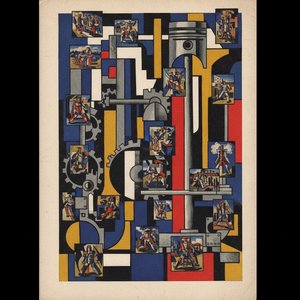
Fernand Léger: Las 25 Obras Maestras del Tubismo y la Vanguardia Francesa | OriginalUniqueArt
Descubre las 25 obras maestras de Fernand Léger, pionero del tubismo y la vanguardia francesa. Explora su estética industrial, composiciones geométricas y vibrantes colores. Reproducciones de arte exclusivas en OriginalUniqueArt.com.

The Beauty of Less: A Sophisticated Guide to the Soul of Minimalist Art and Geometric Harmony
Discover the profound elegance of minimalist art. Explore how geometric abstraction and the beauty of reduction create serene, sophisticated spaces through our expert guide to finding soul and harmony in every line and shape.