

 Vista previa
 Compartir
 Compartir
 Ver detalles
 Guía
Guía

 Descargar
 Ver artículos similares
 Radiografía
 Presentación de diapositivas
 Estadísticas
Green Column/Figure


 Leer más
La obra de arte que se muestra en esta página está protegida por las leyes de propiedad intelectual, lo que significa que no podemos crear ni vender legalmente una reproducción idéntica. Esta protección se hace cumplir en virtud de acuerdos internacionales como el Convenio de Berna y por las leyes nacionales, incluidas aquellas establecidas por el Ley de derechos de autor de los EE. UU. - Título 17.
Este método cumple plenamente con las normativas de derechos de autor, ya que no implica la copia ni la duplicación de la obra protegida. En su lugar, se trata de una reinterpretación creativa: una nueva pintura influenciada por la original, pero que no es idéntica a ella.
Giclée / Impresión de arte
Impresiones giclée o en lienzo de calidad de museo con producción rápida y opciones de acabado flexibles. ( Encargar reproducción pintada a mano Ver versión en imagen digital)




P118B €10

P118H €10

P118W €10

P438Z €10

P508JH €12

P508YH €12

P805H €10

P805Z €10

P919BZ €10

P919G €10

P919XJ €10

P959ZH €10

P968JZ €12

W106C €8

W218G €10

W218JH €8

W218Y €10

W307PJ €10

W316G €10

W316PJ €8

W316Y €10

W398PJ €8

W4111J €10

W500HY €15

W500JH €15

W692G €12

W849H €8

W940BG €15

W953PJ €8




Elija entre nuestros tamaños predefinidos que respetan las proporciones originales de la obra.

Introduzca el ancho y el alto que necesite para adaptarse a su marco o pared. Una impresión solo puede recortarse, nunca hacerse más grande que la imagen original, por lo que un tamaño con una forma distinta perderá parte de la obra. Le enviaremos una maqueta digital para su aprobación antes de realizar cualquier impresión. La imagen que se muestra en esta página no refleja el recorte real; solo la maqueta lo hace.
Envío a todo el mundo () en 2 semanas en lugar de las 4/5 semanas estándar. (22 octubre)

Envío exprés gratuito a todo el mundo

Lienzo de lino de alta calidad

Seguro de envío completo

Garantía de reembolso de impuestos aduaneros

Garantía de fidelidad cromática exacta

Política de devolución de 100 días (solo por defectos)

Garantía de devolución del 100% del dinero

Oferta por volumen
 La opción de vidrio solo está disponible en tamaños inferiores a 110 cm.

Green Column/Figure
Giclée / Impresión de arte
Tamaño de la reproducción
-


Precio total
€ 70
A Quiet Resonance: Exploring Robert Mangold’s “Green Column/Figure”
Robert Mangold's "Green Column/Figure," created in 2003, isn’t merely a depiction of form; it’s an invitation to contemplate the relationship between structure and movement, stillness and energy. This deceptively simple work, rendered with graphite or charcoal on paper – likely a print – possesses a profound quietude that belies its underlying dynamism. The piece immediately draws the eye to the stark verticality of the muted green column, a grounding element against which the sinuous, dark grey line dramatically asserts itself. It’s a composition built on subtle contrasts, inviting prolonged observation and revealing layers of meaning with each glance.
Mangold, emerging from the shadow of Abstract Expressionism in the 1960s, deliberately rejected bombastic gestures in favor of a more intellectual approach to painting. His work, as he himself described, was a “quiet revolution,” dismantling traditional conventions and paving the way for new explorations of form and perception. This piece exemplifies that ethos – it’s not about shouting; it's about whispering, suggesting, and ultimately, prompting introspection. The deliberate restraint in color and line allows the viewer to project their own interpretations onto the canvas, fostering a deeply personal connection with the artwork.
Deconstructing Form: Line, Shape, and Texture
The core of “Green Column/Figure” resides within its meticulously crafted line. It’s not a perfectly smooth curve; rather, it possesses a delightful imperfection – slight variations in thickness and subtle breaks that imbue the form with character and life. This deliberate roughness contrasts beautifully with the rectangular stability of the green background, creating a compelling tension between order and chaos, control and spontaneity. The shapes themselves—the rigid column and the flowing line—are deliberately juxtaposed, highlighting their inherent differences while simultaneously suggesting a harmonious balance.
Beyond the primary forms, the texture of the paper plays a crucial role in the overall effect. The subtle variations in tone – the creamy off-white with hints of yellow – contribute to an aged or vintage feel, as if the artwork has witnessed time itself. This tactile quality invites a closer examination, encouraging viewers to appreciate the materiality of the medium and the artist’s hand.
Symbolic Weight: Movement, Structure, and the Human Condition
The winding line can be interpreted in numerous ways. It could represent a life force, a current flowing through the structured background – a visual metaphor for the dynamism inherent within constraints. The vertical column, with its implied stability, might symbolize the framework of existence, while the line embodies the unpredictable nature of experience. There’s an undeniable sense of movement captured in this stillness; it's as if the artwork is perpetually in motion, subtly shifting and evolving before your eyes.
Furthermore, the piece resonates with themes of contemplation and resilience. The simplicity of the composition encourages a meditative state, inviting viewers to slow down and consider their own place within the larger context of life. It’s a reminder that beauty can be found in restraint, and that even the most seemingly minimal forms can hold profound emotional weight.
A Timeless Reproduction: Bringing Mangold's Vision Home
OriginalUniqueArt offers meticulously hand-painted reproductions of Robert Mangold’s “Green Column/Figure,” capturing the essence of this iconic artwork with unparalleled fidelity. Each reproduction is created by skilled artists who understand the nuances of Mangold’s technique and his deliberate use of line, texture, and color. Whether you're a seasoned art collector or simply seeking to add a touch of understated elegance to your interior space, a OriginalUniqueArt reproduction provides an authentic and enduring representation of this remarkable piece.
Consider how the subtle variations in tone and texture – faithfully reproduced in our hand-painted versions – will transform your room. “Green Column/Figure” is more than just a decoration; it’s a conversation starter, a source of contemplation, and a testament to the enduring power of minimalist art.
Preguntas y respuestas
¿Cómo se construye la composición cromática de "Green Column/Figure" de Robert Mangold?
En "Green Column/Figure", un Serene contraste se combina con una Unified Palette armonía.
¿Se encuentra "Green Column/Figure" de Robert Mangold en el país de origen del artista?
No; la obra se encuentra en el extranjero. El país de nacimiento de Robert Mangold es Estados Unidos de América, y el museo que alberga el original de "Green Column/Figure" se encuentra en United States of America.
¿Cómo encaja "Green Column/Figure" con los temas y el estilo de Robert Mangold?
Dentro de la obra de Robert Mangold, "Green Column/Figure" se inscribe en el estilo Minimalist Abstract, junto a los temas de abstract minimalism, geometric forms, quiet reflection, post-expressionism, conceptual space.
Biografía del artista
Robert Mangold: Un pionero del minimalismo
Robert Mangold (nacido en 1937) es un pintor estadounidense minimalista altamente influyente, celebrado por su enfoque innovador hacia la forma y el color. Su obra desafía los límites tradicionales de la pintura, enfatizando las ideas conceptuales sobre la ejecución material.
Vida temprana y educación
Nacido en North Tonawanda, Nueva York, Robert Mangold inicialmente estudió ingeniería antes de centrar su atención en el arte. Obtuvo una licenciatura en Bellas Artes de la Universidad de Buffalo en 1959 y un máster en Bellas Artes de la Escuela de Arte de Yale en 1961.
Desarrollo artístico e influencias
El viaje artístico de Mangold comenzó con el expresionismo abstracto, pero rápidamente se movió hacia el minimalismo a principios de los años 60. Fue significativamente influenciado por artistas como Kazimir Malevich, Piet Mondrian y Barnett Newman, quienes exploraron la abstracción pura y las formas reducidas. Su obra también refleja una reacción contra la intensidad gestual del Expresionismo Abstracto, prefiriendo en cambio un enfoque más restringido e intelectual.
Características clave y estilo
Mangold es reconocido por sus lienzos con forma – pinturas que no son rectangulares sino que adoptan formas irregulares o geométricas. Esta desviación de las estructuras de soporte tradicionales se convirtió en una marca registrada de su estilo. Sus pinturas típicamente presentan:
- Abstracción geométrica: Las formas y líneas simplificadas dominan sus composiciones.
- Campos de color sutiles: Emplea tonos pastel apagados para crear efectos atmosféricos.
- Estética minimalista: Un enfoque en las formas esenciales y la eliminación de los detalles innecesarios.
- Falta de encuadernación tradicional: Sus lienzos a menudo aparecen sin encuadernar, enfatizando aún más sus formas únicas.
Obras importantes y series
A lo largo de su carrera, Mangold ha producido varias series significativas:
- Serie Plano/Figura: Explora la relación entre forma y color a través de composiciones divididas del lienzo.
- Pinturas murales: Obras a gran escala diseñadas para interactuar con los espacios arquitectónicos.
- Serie Anillos: Presenta formas circulares o en forma de anillo dentro de campos rectangulares.
- Serie Columnas: Investiga la verticalidad y las relaciones espaciales.
Logros y reconocimiento
La obra de Robert Mangold ha sido exhibida ampliamente en museos y galerías de todo el mundo. Ha recibido numerosos premios y elogios, consolidando su posición como una figura destacada del arte contemporáneo. Sus obras se conservan en importantes colecciones que incluyen:
- El Museo de Arte Moderno, Nueva York
- El Metropolitan Museum of Art, Nueva York
- The Tate Modern, Londres
Significado histórico y legado
Robert Mangold jugó un papel crucial en la configuración del desarrollo de la pintura minimalista. Su exploración de los lienzos con forma y los campos de color sutiles amplió las posibilidades del arte abstracto y desafió las nociones convencionales de representación. Junto con artistas como Robert Ryman, representa el núcleo de la pintura minimalista, priorizando la rigurosidad conceptual y la reducción formal. Su influencia se sigue sintiendo en los artistas contemporáneos que trabajan con abstracción y formas geométricas.

Robert Mangold
1937 - , Estados Unidos de América
Datos clave
- Artistas Influenciados:
- Robert Ryman
- Artistas contemporáneos
- Artistas Que Influyeron:
- Kazimir Malevich
- Piet Mondrian
- Barnett Newman
- Fecha De Nacimiento: 1937
- Lugar De Nacimiento: North Tonawanda, EE. UU.
- Movimiento Artístico: Minimalismo
- Nacionalidad: Estadounidense
- Nombre Completo: Robert Mangold
- Obras Notables:
- Serie Plano/Figura
- Serie Anillo
- Estructura Columna
Artículos relacionados

The Beauty of Less: A Sophisticated Guide to the Soul of Minimalist Art and Geometric Harmony
Discover the profound elegance of minimalist art. Explore how geometric abstraction and the beauty of reduction create serene, sophisticated spaces through our expert guide to finding soul and harmony in every line and shape.

Expresionismo Abstracto: 10 Obras Maestras que Transformaron el Arte |
Descubre las 10 obras maestras del Expresionismo Abstracto: Pollock, Rothko y más. Explora la historia, técnica y significado de estos lienzos icónicos. Reproducciones de arte exclusivas en .

Abstracción Geométrica: 10 Obras Maestras que Transformaron el Arte Moderno | OriginalUniqueArt
Descubre las 10 obras maestras de la abstracción geométrica que revolucionaron el arte moderno. Explora a Mondrian, Malevich y Kandinsky en OriginalUniqueArt.com. Reproducciones de alta calidad para tu hogar.

Kandinsky: Las 25 Obras Maestras del Pionero de la Abstracción | OriginalUniqueArt
Descubre las 25 obras maestras de Wassily Kandinsky, pionero del arte abstracto. Explora su expresionismo, composiciones únicas y la historia detrás de cada cuadro. Reproducciones de alta calidad para decorar tu hogar con arte moderno en OriginalUniqueArt.com.
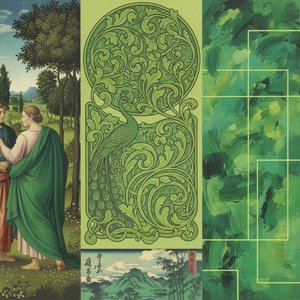
Verdant Visions: Exploring the Symbolism & Aesthetic Impact of Green in Art History
Explore the rich history & symbolism of green in art! Discover iconic paintings, techniques, and how to bring verdant harmony into your home with OriginalUniqueArt's expert guide.