Vista previa
 Compartir
 Compartir
 Ver detalles
 Guía
Guía

 Descargar
 Ver artículos similares
 Radiografía
 Presentación de diapositivas
 Estadísticas
John
 Oil On Canvas
- WallArt
- Ashcan School
 1908
1908- Modern
 61.0 x 51.0 cm
 Museo Metropolitano de Arte
 Leer más
Reproducción al óleo hecha a mano
Óleo sobre lienzo pintado a mano en el tamaño y marco de su elección, realizado por encargo por nuestros artistas. ( Cambiar a formato impreso Ver versión en imagen digital)




P118B €10

P118H €10

P118W €10

P438Z €10

P508JH €12

P508YH €12

P805H €10

P805Z €10

P919BZ €10

P919G €10

P919XJ €10

P959ZH €10

P968JZ €12

W106C €8

W218G €10

W218JH €8

W218Y €10

W307PJ €10

W316G €10

W316PJ €8

W316Y €10

W398PJ €8

W4111J €10

W500HY €15

W500JH €15

W692G €12

W849H €8

W940BG €15

W953PJ €8




Elija entre nuestros tamaños predefinidos que respetan las proporciones originales de la obra.

Escriba el ancho y el alto que necesite para adaptarse a su marco o a su pared. Al ser una obra pintada a mano, para un tamaño con una forma distinta, el artista puede pintar un poco más alrededor de la imagen o recortar un poco; usted elige. Le enviaremos una maqueta digital para su aprobación antes de comenzar la pintura. La imagen que se muestra en esta página no refleja el resultado real; solo la maqueta lo hace.
Tras realizar el pedido, el equipo de OriginalUniqueArt.com enviará un correo electrónico al cliente para solicitar instrucciones y proporcionarle una vista previa del boceto.
Envío a todo el mundo () en 3-4 semanas en lugar de las 5 semanas estándar. (20 octubre). Sin comprometer la calidad.

Envío exprés gratuito a todo el mundo

Lienzo de lino de alta calidad

Seguro de envío completo

Garantía de reembolso de impuestos aduaneros

Garantía de fidelidad cromática exacta

Política de devolución de 100 días (solo por defectos)

Garantía de devolución del 100% del dinero

Oferta por volumen
 La opción de vidrio solo está disponible en tamaños inferiores a 110 cm.

John
Técnica de reproducción
Tamaño de la reproducción
-


Precio total
€ 262
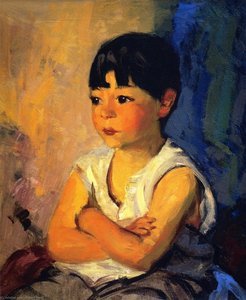
A Soul Captured in Monochrome: The Intimacy of Robert Henri’s John
In the quiet, evocative depths of Robert Henri’s 1908 masterpiece, John, we encounter more than just a portrait; we meet a moment of profound human stillness. This monochrome study of a young boy serves as a breathtaking testament to the power of tonal mastery. Painted during the height of the Ashcan School movement, the work eschews the distractions of vibrant color to focus entirely on the raw, emotional essence of its subject. The boy sits before us, his gaze direct and somewhat somber, creating an immediate and unshakeable connection with the viewer. There is a haunting quality to his expression—a contemplative weight that seems far beyond his years, inviting anyone who lingers before the canvas to contemplate the mysteries of childhood and the quiet dignity of the individual.
The technical brilliance of John lies in Henri’s ability to sculpt form using nothing but a grayscale palette. Through a sophisticated range of tones—from the deepest, velvety blacks of the background to the luminous whites that catch the light on the boy's collar—the artist achieves a remarkable sense of three-dimensionality. The lighting, appearing to descend from an unseen source above and to the left, casts subtle shadows across the contours of the face, lending a sculptural quality to the flesh. This use of light does not merely illuminate; it breathes life into the subject, creating a soft, atmospheric glow that contrasts beautifully with the more rugged, textured applications of paint found in the boy's clothing.
The Mastery of the Ashcan Aesthetic
The brushwork itself is a masterclass in the Ashcan School aesthetic, characterized by its immediacy and expressive freedom. Rather than relying on rigid, clinical outlines, Henri defines shapes through fluid, visible strokes that suggest movement and texture. One can almost feel the weight of the fabric and the slight roughness of the boy's coat through the artist's vigorous application of oil paint. This technique avoids the polished idealism of academic art, opting instead for a gritty realism that captures the very texture of life. The lack of hard outlines allows the subject to emerge organically from the shadows, creating a sense of depth and atmosphere that is both visceral and poetic.
For the discerning collector or interior designer, this piece offers a profound sense of presence. Its monochromatic palette makes it an incredibly versatile addition to a sophisticated space, capable of anchoring a room with its quiet intensity without clashing with surrounding colors. The artwork does not demand attention through loudness, but rather commands it through depth and emotional resonance. It is a piece that rewards long periods of observation, revealing new nuances in the play of light and shadow each time it is viewed.
A Legacy of Realism and Emotion
To understand John is to understand the spirit of Robert Henri himself. As a pioneer of American realism, Henri sought to depict life as it truly was—unvarnished, raw, and deeply human. This portrait reflects his deep empathy for his subjects, capturing a sense of character that transcends the simple depiction of a face. The boy's direct gaze establishes an intimate communion with the viewer, bridging the gap between 1908 and the present day. It is this timeless quality, combined with the technical sophistication of the Ashcan style, that makes this work a perennial favorite for those who appreciate art that speaks to the enduring complexities of the human condition.
Preguntas y respuestas
¿Puedo pedir una reproducción al óleo de "John"?
"John" está disponible como una reproducción al óleo pintada a mano sobre lienzo de lino. El pedido puede realizarse en su página de Reproducción pintada a mano, con una variedad de tamaños para elegir.
¿Dónde puedo ver una vista previa de "John"?
Para previsualizar una reproducción de "John" de Robert Henri, abra la página de Vista previa de la obra.
¿En qué periodo se realizó "John" de Robert Henri?
El periodo histórico de "John" de Robert Henri es Modern. Esta clasificación sitúa la obra en la historia del arte.
Biografía del artista
Orígenes y Primeros Años
Robert Henri, nacido Robert Henry Cozad el 24 de junio de 1865 en Cincinnati, Ohio, tuvo una infancia marcada por la turbulenta relación entre sus padres, John Jackson Cozad, un jugador y promotor inmobiliario, y Theresa Gatewood Cozad. Un evento significativo en 1882 alteró el curso de su vida familiar. La familia se trasladó a Nebraska durante la época del Homestead Act, pero regresaron al Este después de un incidente que llevó a un cambio de identidad para evitar problemas legales. Robert Henry Cozad adoptó el nombre Henri cuando tenía 17 años.Formación Artística y Primeras Influencias
Su formación artística comenzó en 1886 en la Academia de Bellas Artes de Pensilvania en Filadelfia, bajo la tutela de Thomas Anshutz. Posteriormente, viajó a París en 1888 para estudiar en la Académie Julian, donde recibió influencias de William-Adolphe Bouguereau y François Millet, inicialmente abrazando el impresionismo. Henri se interesó por los artistas realistas holandeses y comenzó a experimentar con la pintura al aire libre, capturando escenas urbanas espontáneas.El Ashcan School y "The Eight"
Robert Henri emergió como una figura clave del Ashcan School de realismo americano y fue un organizador de "The Eight", una asociación informal de artistas que protestaron contra las prácticas restrictivas de exposición de la poderosa y conservadora National Academy of Design. Este grupo incluía a William Glackens, George Luks, Everett Shinn y John Sloan. Henri promovió una estética que se centraba en representar la vida cotidiana urbana con honestidad y vitalidad, alejándose de los temas idealizados tradicionales.Enseñanza e Influencia en Nuevas Generaciones
Henri comenzó a enseñar en la Escuela de Diseño para Mujeres de Filadelfia en 1892. Su enfoque pedagógico se caracterizaba por fomentar la observación directa y la expresión individual. Entre sus destacados alumnos se encuentran Joseph Stella, Edward Hopper, Rockwell Kent, George Bellows, Norman Raeben, Louis D. Fancher y Stuart Davis. Henri animó a sus estudiantes a desarrollar su propio estilo y a pintar lo que veían con honestidad, independientemente de las convenciones artísticas establecidas.Madurez Artística y Legado
En 1898, Henri se casó con Linda Craige, una alumna de su clase privada. Tras la muerte de Linda en 1905, se volvió a casar con Marjorie Organ en 1908. Su obra más conocida incluye "Mujer con Manteau" (1899) y "La Nieve" ("The Snow"), adquirida por el gobierno francés para su exhibición en el Musée du Luxembourg. Robert Henri falleció en 1929, dejando un legado duradero como defensor del realismo americano e influyente maestro que inspiró a una generación de artistas. Su énfasis en la observación directa y la expresión individual contribuyó significativamente al desarrollo del arte moderno estadounidense.
Robert Henri
1865 - 1929 , Estados Unidos de América
Datos clave
- Artistas Influenciados:
- Edward Hopper
- Rockwell Kent
- George Bellows
- Artistas Que Influyeron:
- William-Adolphe Bouguereau
- François Millet
- Thomas Anshutz
- Fecha De Nacimiento: 24 de junio de 1865
- Lugar De Nacimiento: Cincinnati, EE. UU.
- Movimiento Artístico: Ashcan School, Realismo americano
- Nacionalidad: Estadounidense
- Nombre Completo: Robert Henri
- Nombres Alternativos: Robert Henry Cozad
- Obras Notables:
- Mujer con manteau (1899)
- La nieve
Artículos relacionados

The Power of One Hue: Mastering Monochrome Art for Sophisticated and Timeless Interiors
Elevate your interiors with the profound elegance of monochrome art. Explore OriginalUniqueArt.com’s curated collection of hand-painted oil reproductions and bespoke commissions, designed to bring sophisticated simplicity and timeless texture to every professional design project.

La Escuela de La Haya: Realismo, Atmósfera y el Amanecer del Impresionismo Holandés
Descubre la Escuela de La Haya: el movimiento realista que revolucionó la pintura holandesa del siglo XIX. Analizamos a sus artistas clave, su técnica atmosférica y su influencia en el impresionismo. ¡Un viaje por el arte y la historia!
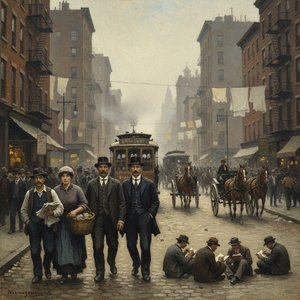
La Escuela del Cubo de Basura: Realismo Urbano y la Democratización del Arte Americano
Exploramos la Escuela del Cubo de Basura y el realismo urbano americano. Descubre cómo este movimiento artístico revolucionó la representación de la sociedad, democratizando el arte y desafiando las convenciones estéticas tradicionales.

The Ashcan School: A Guide to Urban Realism for Professional Interior Design and Hospitality Procurement
Discover the raw energy of the Ashcan School. Our guide for hotel designers explores urban realism, offering professional insights into sourcing hand-painted oil reproductions and custom large-scale murals for high-end hospitality and corporate interiors.

The Ashcan School: Capturing the Raw Spirit and Urban Realism of New York City Life
Explore the raw, evocative beauty of the Ashcan School. Discover how masters like Bellows and Glackens captured New York's urban soul through American Realism, and learn to bring this gritty, historical elegance into your modern art collection.