Ver en contexto
 Enviar
 Compartir
 Detalles
 Guía
Guía

 Descargar
 Similares
 Radiografía
 Presentación de diapositivas
 Estadísticas
Les Amoureux de l


 Ver más
La obra de arte que se muestra en esta página está protegida por las leyes de propiedad intelectual, lo que significa que no podemos crear ni vender legalmente una reproducción idéntica. Esta protección se hace cumplir en virtud de acuerdos internacionales como el Convenio de Berna y por las leyes nacionales, incluidas aquellas establecidas por el Ley de derechos de autor de los EE. UU. - Título 17.
Este método cumple plenamente con las normativas de derechos de autor, ya que no implica la copia ni la duplicación de la obra protegida. En su lugar, se trata de una reinterpretación creativa: una nueva pintura influenciada por la original, pero que no es idéntica a ella.
Giclée / Impresión de arte
Impresiones giclée o en lienzo de calidad de museo con producción rápida y opciones de acabado flexibles. ( Comprar pintura hecha a mano Cambiar a imagen digital)




P118B €10

P118H €10

P118W €10

P438Z €10

P508JH €12

P508YH €12

P805H €10

P805Z €10

P919BZ €10

P919G €10

P919XJ €10

P959ZH €10

P968JZ €12

W106C €8

W218G €10

W218JH €8

W218Y €10

W307PJ €10

W316G €10

W316PJ €8

W316Y €10

W398PJ €8

W4111J €10

W500HY €15

W500JH €15

W692G €12

W849H €8

W940BG €15

W953PJ €8




Elija entre nuestros tamaños predefinidos que respetan las proporciones originales de la obra.

Introduzca el ancho y el alto que necesite para adaptarse a su marco o pared. Una impresión solo puede recortarse, nunca hacerse más grande que la imagen original, por lo que un tamaño con una forma distinta perderá parte de la obra. Le enviaremos una maqueta digital para su aprobación antes de realizar cualquier impresión. La imagen que se muestra en esta página no refleja el recorte real; solo la maqueta lo hace.
Envío a todo el mundo () en 2 semanas en lugar de las 4/5 semanas estándar. (27 octubre)

Envío exprés gratuito a todo el mundo

Lienzo de lino de alta calidad

Seguro de envío total

Garantía de reembolso de aranceles aduaneros

Garantía de fidelidad cromática exacta

Política de devolución de 100 días (solo por defectos)

Garantía de devolución del 100% del dinero

Descuento por cantidad
 La opción de vidrio solo está disponible en tamaños inferiores a 110 cm.

Les Amoureux de l
Giclée / Impresión de arte
Dimensiones de la reproducción
-


Precio total final
€ 70
Les Amoureux de l'Opera: Un Encuentro Romántico Parísiense Capturado en Tiempo
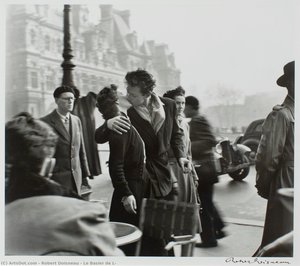
Robert Doisneau’s “Les Amoureux de l’Opera” transcends mere photographic documentation; it embodies the spirit of postwar Paris—a city grappling with optimism and melancholy, yearning for connection amidst urban anonymity. Captured in 1950, this iconic image depicts a young couple embracing on the steps of Hôtel de Ville (City Hall), bathed in diffused daylight that lends an ethereal quality to the scene.
Doisneau, nacido en Gentilly, Francia, en 1912, no fue simplemente un fotógrafo; fue un poeta visual de las calles, un cronista del alma cotidiana que capturó el corazón y el espíritu francés después de la Segunda Guerra Mundial con una mezcla incomparable de humanismo, ironía y observación juguetona. Su viaje comenzó entre dificultades personales – huérfano a temprana edad, criado por una tía poco afectuosa –, pero floreció en una carrera que celebraba la resistencia y el encanto del espíritu humano.
Composición y Perspectiva: Un Encuentro Dramático en Espacios Públicos
La composición de “Les Amoureux de l’Opera” está centrada en la pareja abrazándose, ubicada ligeramente fuera del centro hacia la derecha. El edificio monumental con numerosas ventanas y una prominente línea de techo proporciona contexto y escala. Una escalera conduce hacia arriba al edificio, creando líneas diagonales que atraen la mirada hacia arriba. Las figuras borrosas en el fondo forman rayas verticales que aportan dinamismo a la escena.
Doisneau utilizó una perspectiva ligeramente baja para enfatizar la altura y la grandeza de Hôtel de Ville, guiando así al espectador hacia esta impresionante estructura arquitectónica. Esta elección compositiva refuerza la sensación de drama inherente a la imagen y captura un momento significativo en el paisaje urbano parisino.
Técnica Fotográfica: El Arte del Movimiento Capturado
La verdadera maestría técnica de Doisneau reside en su uso deliberado de velocidad lenta para crear el efecto de movimiento borroso – una técnica conocida como ‘motion blur’. Esta manipulación artística captura la esencia del instante fugaz, transformando las figuras borrosas en el fondo en líneas brillantes que intensifican la belleza efímera de la escena.
Esta habilidad excepcional demuestra un profundo conocimiento de los principios fotográficos y permite a Doisneau transmitir una emoción específica: la nostalgia por un momento perdido en el tiempo, pero también la capacidad de apreciar la belleza escondida en esos mismos instantes trascendentes. Esta innovación técnica marcó un punto de inflexión en la historia de la fotografía documental.
Simbolismo y Emoción: Amor y Anonimato Urbano
"Les Amoureux de l’Opera" habla poderosamente sobre temas de amor, intimidad y vulnerabilidad. El abrazo de la pareja simboliza conexión entre individuos en medio del bullicio de la vida urbana – un conmovedor recordatorio de que incluso en momentos de aislamiento, las relaciones humanas permanecen fuertes.
Más allá de su belleza estética, esta imagen invita a una reflexión sobre la condición humana y la búsqueda constante de significado en el mundo cotidiano. Doisneau logró capturar una emoción universal: la esperanza de encontrar amor verdadero y conexión genuina en lugares inesperados.
Legado Artístico: Una Imagen Ícono para Siempre
“Les Amoureux de l’Opera” sigue siendo una imagen icónica que captura el espíritu de París después de la guerra, reflejando tanto la belleza como la complejidad de la experiencia humana. Esta obra maestra de Doisneau continúa inspirando artistas y diseñadores en todo el mundo – testimonio de su capacidad para transformar escenas ordinarias en imágenes inolvidables que transmiten una profunda sensibilidad artística.
Preguntas y respuestas
¿Qué tamaño debería elegir para imprimir "Les Amoureux de l" en mi habitación?
La combinación recomendada para "Les Amoureux de l" de Robert Doisneau: una impresión de Grande en un/a Salón principal.
¿Qué nivel de luminosidad transmite "Les Amoureux de l" de Robert Doisneau?
En términos generales, "Les Amoureux de l" presenta una luminosidad de equilibrado. La luminosidad percibida describe qué tan clara u oscura parece la obra.
¿A qué movimiento y a qué época pertenece "Les Amoureux de l" de Robert Doisneau?
"Les Amoureux de l" pertenece al movimiento Documentary Photography, y su creador trabajó en la época Edad Moderna.
Biografía del artista
A Parisian Chronicler: The Life and Legacy of Robert Doisneau
Robert Doisneau, born in Gentilly, France, in 1912, wasn’t merely a photographer; he was a visual poet of the streets, a chronicler of everyday life who captured the heart and soul of post-war Paris with an unparalleled blend of humanism, irony, and playful observation. His journey began amidst personal hardship – orphaned at a young age, raised by an unloving aunt – yet it blossomed into a career that celebrated the resilience and charm of the human spirit. Initially drawn to the technical arts, Doisneau trained in engraving and lithography at the École Estienne, skills that would later inform his compositional eye. However, it was the allure of the streets, the spontaneous narratives unfolding before him, that truly ignited his artistic passion. He began tentatively, reportedly photographing cobblestones to overcome initial shyness, gradually building confidence to capture the lives of children and adults in their natural environment.Early Influences and Artistic Training
Doisneau’s formative years instilled a meticulous attention to detail and an appreciation for craftsmanship—qualities that would profoundly shape his artistic sensibilities. After his parents perished early in life, he was cared for by his aunt, fostering a quiet introspection that contrasted sharply with the vibrant energy of his future vocation. Recognizing his aptitude for visual arts, Doisneau pursued formal training at the École Estienne, mastering engraving and lithography techniques—skills that would prove invaluable in developing his distinctive photographic style. These disciplines instilled a disciplined approach to observation and composition, prioritizing accuracy and subtlety over mere spectacle. He was particularly drawn to the work of Eugène Atget and André Kertész, whose images captured the essence of Parisian life with understated elegance and profound empathy.The Streets Speak: Photography as Witness
Doisneau’s artistic breakthrough occurred during his time at Atelier Ullmann, where he honed his skills in advertising photography—a profession that exposed him to diverse subjects and challenged him to distill complex ideas into visually compelling narratives. Simultaneously, he cultivated a fascination with the streets of Paris, recognizing their capacity to reveal hidden truths about human experience. Rejecting grand gestures or theatrical displays, Doisneau sought to capture fleeting moments of spontaneity and emotion, prioritizing authenticity over artifice. He famously stated, “The marvels of daily life are so exciting; no movie director can arrange the unexpected that you find in the street.” This ethos guided his artistic practice throughout his career—a commitment to documenting ordinary people with compassion and respect.World War II and Resistance: A Photographer's Duty
The outbreak of World War II dramatically altered Doisneau’s trajectory, thrusting him into the crucible of resistance activity alongside his burgeoning photographic vocation. Drafted into the French army, he served bravely on the front lines while simultaneously documenting the occupation and liberation of Paris—a dual role that demanded both physical courage and artistic sensitivity. Recognizing the importance of preserving cultural heritage amidst wartime turmoil, Doisneau tirelessly worked to forge passports for refugees fleeing persecution—demonstrating his unwavering moral compass and his dedication to upholding human dignity. This experience solidified his belief in photography’s power as a tool for social commentary and historical recordkeeping.Iconic Images and Enduring Legacy
Doisneau's photographic legacy rests upon a remarkable archive of 450,000 negatives—a testament to his unwavering commitment to capturing the beauty and complexity of Parisian life. His most celebrated image, *Le Baiser de l’hôtel de ville* (The Kiss by the Hôtel de Ville), exemplifies this artistic vision—a spontaneous moment of tenderness amidst the bustling cityscape, an enduring symbol of love and resilience. Doisneau's photographs continue to resonate with audiences worldwide, inspiring admiration for his humanist perspective and his masterful technique. He was awarded the Balzac Prize in 1986, recognizing his contribution to French culture. Henri Cartier-Bresson, a fellow photographer and lifelong friend, described Doisneau as “a man of profound kindness,” emphasizing his unwavering devotion to capturing the essence of human experience with honesty and compassion. Robert Doisneau passed away peacefully in Paris in 1994, leaving behind an indelible mark on the history of photography—a legacy that celebrates the transformative power of observation and the enduring beauty of everyday life.
Robert Doisneau
1922 - 1994 , Francia
Datos clave
- Artistic Movement Or Style: Fotografía Humanista
- Artists Who Influenced This Artist:
- André Kertész
- Eugène Atget
- Henri Cartier-Bresson
- Date Of Birth: 1912 Abril
- Date Of Death: 1994 Abríl
- Full Name: Robert Doisneau
- Nationality: Francés
- Notable Artworks: ["Le Baiser de l'hôtel de ville"]
- Place Of Birth: Gentilly Francia
Artículos relacionados
Shadow & Soul: Why Black & White Photography Remains the Ultimate Power Move in Modern Art
Discover why black & white photography remains a powerful force in contemporary art. Explore the impact of light, shadow, and texture through a visual journey of monochrome mastery and learn how to elevate your space with timeless grayscale aesthetics.
Timeless Shadows: The Artistry, History, and Emotional Resonance of Black and White Photography
Explore the profound artistry of black and white photography. From historical mastery to the interplay of light and shadow, discover how monochrome captures timeless emotion and form through a sophisticated lens of art history.

Monochrome Visions: Exploring the Aesthetic & Historical Significance of Black & White Photography
Explore the rich history & artistic power of black and white photography. From early techniques to iconic masters like Ansel Adams, discover why monochrome continues to captivate art lovers today. Expert insights for collectors.
Beyond Color: The Timeless Power and Artistry of Black and White Photography
Explore the profound artistry of black and white photography. From the chemistry of gelatin silver to the chiaroscuro of the Old Masters, discover how monochrome captures the eternal essence of light, form, and emotion for the discerning art collector.

Blanco Sublime: Los 10 Cuadros Más Famosos Dominados por la Luz y el Color
Descubre los 10 cuadros blancos más emblemáticos de la historia del arte. Explora Monet, Van Gogh y Klimt, y su magistral uso de la luz y el color. Encuentra reproducciones de alta calidad e inspírate para tu decoración en .