Vista previa
 Compartir
 Compartir
 Ver detalles
 Guía
Guía

 Descargar
 Ver artículos similares
 Radiografía
 Presentación de diapositivas
 Estadísticas
The Red Tower


 Leer más
Giclée / Impresión de arte
Impresiones giclée o en lienzo de calidad de museo con producción rápida y opciones de acabado flexibles. ( Encargar reproducción pintada a mano Ver versión en imagen digital)




P118B €10

P118H €10

P118W €10

P438Z €10

P508JH €12

P508YH €12

P805H €10

P805Z €10

P919BZ €10

P919G €10

P919XJ €10

P959ZH €10

P968JZ €12

W106C €8

W218G €10

W218JH €8

W218Y €10

W307PJ €10

W316G €10

W316PJ €8

W316Y €10

W398PJ €8

W4111J €10

W500HY €15

W500JH €15

W692G €12

W849H €8

W940BG €15

W953PJ €8




Elija entre nuestros tamaños predefinidos que respetan las proporciones originales de la obra.

Introduzca el ancho y el alto que necesite para adaptarse a su marco o pared. Una impresión solo puede recortarse, nunca hacerse más grande que la imagen original, por lo que un tamaño con una forma distinta perderá parte de la obra. Le enviaremos una maqueta digital para su aprobación antes de realizar cualquier impresión. La imagen que se muestra en esta página no refleja el recorte real; solo la maqueta lo hace.
Envío a todo el mundo () en 2 semanas en lugar de las 4/5 semanas estándar. (21 octubre)

Envío exprés gratuito a todo el mundo

Lienzo de lino de alta calidad

Seguro de envío completo

Garantía de reembolso de impuestos aduaneros

Garantía de fidelidad cromática exacta

Política de devolución de 100 días (solo por defectos)

Garantía de devolución del 100% del dinero

Oferta por volumen
 La opción de vidrio solo está disponible en tamaños inferiores a 110 cm.

The Red Tower
Giclée / Impresión de arte
Tamaño de la reproducción
-


Precio total
€ 70
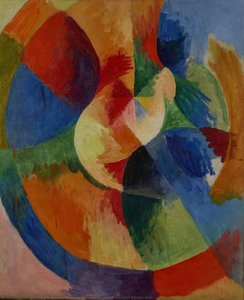
A Symphony of Light and Form: The Red Tower by Robert Delaunay
Robert Delaunay’s “The Red Tower,” painted in 1911, is more than a depiction of the iconic Eiffel Tower; it's a vibrant explosion of color and dynamic energy that encapsulates the revolutionary spirit of early 20th-century Paris. This reproduction captures not just an image, but the very essence of Delaunay’s pioneering approach to art – a move away from representational accuracy towards a profound exploration of light, emotion, and geometric abstraction. The painting's bold red dominates the upper structure, drawing the eye upwards while simultaneously grounding the composition with its assertive hue. This deliberate use of color wasn’t merely decorative; it was integral to Delaunay’s Orphism movement, aiming to evoke pure emotional responses through the manipulation of chromatic relationships.

Contextualizing Modernity: Paris in 1911
To fully appreciate “The Red Tower,” one must understand the historical context of its creation. The Eiffel Tower, erected for the 1889 World’s Fair, was a symbol of France's industrial prowess and technological advancement – a bold statement against the traditional aesthetic sensibilities of the time. Delaunay, however, saw beyond this monumental structure. He captured not just its physical form but also the dynamism of modern life surrounding it: the bustling crowds, the movement of traffic, and the very spirit of innovation that defined the era. The inclusion of figures below the tower – tourists and locals alike – further emphasizes this theme, portraying a society actively engaging with and celebrating this new architectural marvel.
Delaunay’s Technique: Fragmentation and Color
Delaunay's technique is characterized by a masterful blend of fragmentation and vibrant color. The tower itself isn't rendered in smooth, continuous lines; instead, it’s broken down into geometric shapes and planes, creating a sense of movement and visual excitement. This approach aligns with the broader artistic trends of the time – Cubism’s exploration of multiple perspectives and Expressionism’s focus on subjective experience. The use of complementary colors—reds and blues, yellows and purples—intensifies the emotional impact of the painting, generating a powerful sense of energy and visual harmony. Note the careful layering of paint, creating depth and luminosity that draws the viewer into the scene.
Symbolism and Emotional Resonance
Beyond its technical brilliance, “The Red Tower” resonates with profound symbolic meaning. The red tower itself can be interpreted as a symbol of ambition, progress, and even revolution – mirroring the transformative changes occurring in France at the time. Delaunay’s deliberate framing of the tower—with tall buildings and clouds—creates a sense of grandeur and aspiration. The painting invites us to contemplate not just the physical structure but also its place within the broader narrative of human endeavor. This reproduction allows you to experience this powerful artwork firsthand, bringing a touch of Parisian modernity and Delaunay’s visionary spirit into your space.
Preguntas y respuestas
¿Qué tan armoniosos son los colores de "The Red Tower" de Robert Delaunay?
"The Red Tower" de Robert Delaunay presenta una armonía de color Discordant Palette.
¿Está "The Red Tower" disponible como una impresión de bellas artes?
Para obtener una impresión de "The Red Tower" de Robert Delaunay, simplemente pídala en su página de Impresión de bellas artes: una impresión de bellas artes sobre lienzo de algodón o papel de lienzo de archivo.
¿Puedo usar la realidad aumentada para ver "The Red Tower" de Robert Delaunay en mi habitación?
La página de Vista previa AR de "The Red Tower" de Robert Delaunay utiliza realidad aumentada para mostrar la obra en su propio espacio, mediante un dispositivo compatible.
Biografía del artista
Primeros años y comienzos artísticos
Robert delaunay, un artista francés, nació el 12 de abril de 1885 en París. Es más conocido por cofundar el movimiento artístico orfismo con su esposa Sonia Delaunay y otros. Este movimiento, caracterizado por su uso de colores fuertes y formas geométricas, buscaba expresar la vida moderna a través de formas abstractas.Estilo artístico e influencias
El estilo artístico de Delaunay se caracterizó por un audaz uso del color y un claro amor por la experimentación tanto en profundidad como en tono. Sus obras posteriores fueron más abstractas, reminiscentes de Paul Klee. La influencia clave del artista se relaciona con el uso del color como medio expresivo y estructural.- La serie de la Torre Eiffel, que captura la esencia de este emblemático punto de referencia parisino en una forma única y abstracta.
- Contrastes simultáneos: sol y luna, una pintura que muestra el arte de Delaunay y su compromiso teórico con el color.
- Ventanas se abren simultáneamente, 1ª parte, 3er motivo, una pintura que demuestra el uso de bloques de colores por parte de Delaunay para crear profundidad y movimiento.
Obras notables y legado
Las obras notables de Delaunay incluyen:- La Torre Eiffel (126 x 93 cm, Museo Solomon R. Guggenheim, Nueva York, Estados Unidos)
- Contrastes simultáneos: sol y luna (orfismo)
- Ventanas se abren simultáneamente, 1ª parte, 3er motivo (orfismo)
Desarrollo artístico y evolución
Delaunay abandonó el cubismo con sus formas geométricas y colores monocromáticos para embarcarse en un nuevo estilo, el orfismo, que se centró en las formas circulares y en los colores brillantes y que también ha sido calificado de cubismo abstracto. Sus estudios sobre el ritmo y el movimiento se resolvieron en series de cuadros basados en eventos deportivos, como Sprinters (1924-1926), que culminaron en impresionantes obras abstractas centradas en el ritmo, como sus últimas series "Ritmos" y "Ritmos eternos". Realizó igualmente escritos teóricos como el ensayo Sur la lumière, publicado en «Der Sturm» (1913), en traducción de Paul Klee. Con su esposa, la también artista Sonia Delaunay, residió un tiempo en España.Significado histórico
Robert Delaunay, pionero del orfismo, dejó una huella imborrable en el mundo del arte con su audaz uso del color y las formas abstractas. Su legado continúa inspirando a artistas y entusiastas del arte por igual, convirtiéndolo en una figura significativa en la historia del arte moderno. Vea más obras de Robert Delaunay en OriginalUniqueArt La historia de la pintura - Wikipedia El movimiento artístico orfismo - OriginalUniqueArt
Robert Delaunay
1885 - 1941 , Francia
Datos clave
- Artistas Influenciados:
- Stanton Macdonald-Wright
- Morgan Russell
- Der Blaue Reiter
- Artistas Que Influyeron:
- Paul Cézanne
- Henri Rousseau
- Paul Klee
- Fecha De Nacimiento: 12 de abril de 1885
- Lugar De Nacimiento: París, Francia
- Movimiento Artístico: Orfismo, Cubismo
- Nacionalidad: Francesa
- Nombre Completo: Robert Delaunay
- Obras Notables:
- La Torre Eiffel
- Contraste simultáneo: Sol y Luna
- Ventanas abiertas simultáneamente