Vista previa
 Compartir
 Compartir
 Ver detalles
 Guía
Guía

 Descargar
 Ver artículos similares
 Radiografía
 Presentación de diapositivas
 Estadísticas
The Eiffel Tower
 Oil On Canvas
- WallArt
- Cubism
 1910
1910- Modern
 116.0 x 81.0 cm
 Staatliche Kunsthalle Karlsruhe
 Leer más
Giclée / Impresión de arte
Impresiones giclée o en lienzo de calidad de museo con producción rápida y opciones de acabado flexibles. ( Encargar reproducción pintada a mano Ver versión en imagen digital)




P118B €10

P118H €10

P118W €10

P438Z €10

P508JH €12

P508YH €12

P805H €10

P805Z €10

P919BZ €10

P919G €10

P919XJ €10

P959ZH €10

P968JZ €12

W106C €8

W218G €10

W218JH €8

W218Y €10

W307PJ €10

W316G €10

W316PJ €8

W316Y €10

W398PJ €8

W4111J €10

W500HY €15

W500JH €15

W692G €12

W849H €8

W940BG €15

W953PJ €8




Elija entre nuestros tamaños predefinidos que respetan las proporciones originales de la obra.

Introduzca el ancho y el alto que necesite para adaptarse a su marco o pared. Una impresión solo puede recortarse, nunca hacerse más grande que la imagen original, por lo que un tamaño con una forma distinta perderá parte de la obra. Le enviaremos una maqueta digital para su aprobación antes de realizar cualquier impresión. La imagen que se muestra en esta página no refleja el recorte real; solo la maqueta lo hace.
Envío a todo el mundo () en 2 semanas en lugar de las 4/5 semanas estándar. (19 octubre)

Envío exprés gratuito a todo el mundo

Lienzo de lino de alta calidad

Seguro de envío completo

Garantía de reembolso de impuestos aduaneros

Garantía de fidelidad cromática exacta

Política de devolución de 100 días (solo por defectos)

Garantía de devolución del 100% del dinero

Oferta por volumen
 La opción de vidrio solo está disponible en tamaños inferiores a 110 cm.

The Eiffel Tower
Giclée / Impresión de arte
Tamaño de la reproducción
-


Precio total
€ 70
A Symphony of Light and Geometry
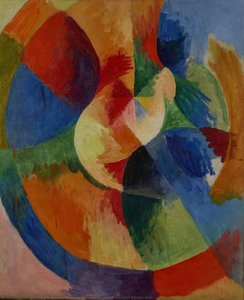
In the heart of early twentieth-century Paris, a radical transformation was unfolding, one that sought to dismantle the traditional boundaries of sight and perception. Robert Delaunay’s The Eiffel Tower stands as a breathtaking monument to this era of profound change. Rather than offering a mere photographic record of the iron lattice structure, Delaunay invites us into a world where architecture dissolves into rhythm. The painting is not simply a depiction of a landmark; it is a pulsating tapestry of light and movement, capturing the very soul of modernity. Through his pioneering use of Orphism, Delaunay transcends the physical weight of the steel, replacing it with a dynamic interplay of geometric forms that seem to vibrate against the canvas.
The composition functions like a visual musical score, where every line and plane contributes to a larger, melodic whole. The tower itself is fragmented into a series of interlocking triangles and rectangles, a technique deeply rooted in the Cubist revolution. This fragmentation allows the viewer to experience the structure from multiple perspectives simultaneously, creating an illusion of depth that feels both structural and ethereal. As the eye wanders across the canvas, it encounters a deliberate tension between the grounded, earthy tones of the tower’s base and the explosive, luminous energy of the sky. It is a masterful balance of stability and motion, making the piece an ideal focal point for any space seeking a sense of sophisticated dynamism.
The Language of Color and Emotion
To gaze upon this work is to experience the artist's fascination with synesthesia—the enchanting blurring of the senses. Delaunay did not merely paint what he saw; he painted what he felt through color. While the palette is anchored by the muted, weathered greys and browns that echo the industrial reality of the Eiffel Tower, it is frequently interrupted by sudden, brilliant bursts of crimson, sapphire, and lemon yellow. These chromatic accents act as rhythmic pulses, injecting a sense of urban vitality into the scene. This use of color serves to evoke the sensory overload of Parisian life, mirroring the clatter of streets and the shimmering light of the Seine.
For the discerning collector or interior designer, this painting offers more than just aesthetic beauty; it provides an emotional atmosphere. The interplay of light and shadow creates a sense of atmospheric depth that can transform a room, bringing with it the romantic yet avant-garde spirit of 1914 Paris. Whether placed in a minimalist contemporary setting to provide a bold pop of color or integrated into a classic study to add historical weight, a high-quality reproduction of this masterpiece serves as a window into a moment when art first learned to dance with light. It is an invitation to contemplate the beauty of abstraction and the enduring power of the modern spirit.
Preguntas y respuestas
¿Qué dimensiones tiene la obra original "The Eiffel Tower"?
Las dimensiones registradas de "The Eiffel Tower" de Robert Delaunay son 116 x 81 cm. Se pueden solicitar reproducciones en otros tamaños manteniendo las mismas proporciones.
¿"The Eiffel Tower" de Robert Delaunay utiliza contrastes fuertes o armonías suaves?
La composición cromática de "The Eiffel Tower" de Robert Delaunay combina un contraste Bold con una armonía Softly Mixed Palette.
¿Dónde se puede ver "The Eiffel Tower" de Robert Delaunay actualmente?
"The Eiffel Tower" de Robert Delaunay se encuentra en exhibición en Staatliche Kunsthalle Karlsruhe, Carlsruhe, Alemania. La información del museo se refiere a la obra original, no a reproducciones.
Biografía del artista
Primeros años y comienzos artísticos
Robert delaunay, un artista francés, nació el 12 de abril de 1885 en París. Es más conocido por cofundar el movimiento artístico orfismo con su esposa Sonia Delaunay y otros. Este movimiento, caracterizado por su uso de colores fuertes y formas geométricas, buscaba expresar la vida moderna a través de formas abstractas.Estilo artístico e influencias
El estilo artístico de Delaunay se caracterizó por un audaz uso del color y un claro amor por la experimentación tanto en profundidad como en tono. Sus obras posteriores fueron más abstractas, reminiscentes de Paul Klee. La influencia clave del artista se relaciona con el uso del color como medio expresivo y estructural.- La serie de la Torre Eiffel, que captura la esencia de este emblemático punto de referencia parisino en una forma única y abstracta.
- Contrastes simultáneos: sol y luna, una pintura que muestra el arte de Delaunay y su compromiso teórico con el color.
- Ventanas se abren simultáneamente, 1ª parte, 3er motivo, una pintura que demuestra el uso de bloques de colores por parte de Delaunay para crear profundidad y movimiento.
Obras notables y legado
Las obras notables de Delaunay incluyen:- La Torre Eiffel (126 x 93 cm, Museo Solomon R. Guggenheim, Nueva York, Estados Unidos)
- Contrastes simultáneos: sol y luna (orfismo)
- Ventanas se abren simultáneamente, 1ª parte, 3er motivo (orfismo)
Desarrollo artístico y evolución
Delaunay abandonó el cubismo con sus formas geométricas y colores monocromáticos para embarcarse en un nuevo estilo, el orfismo, que se centró en las formas circulares y en los colores brillantes y que también ha sido calificado de cubismo abstracto. Sus estudios sobre el ritmo y el movimiento se resolvieron en series de cuadros basados en eventos deportivos, como Sprinters (1924-1926), que culminaron en impresionantes obras abstractas centradas en el ritmo, como sus últimas series "Ritmos" y "Ritmos eternos". Realizó igualmente escritos teóricos como el ensayo Sur la lumière, publicado en «Der Sturm» (1913), en traducción de Paul Klee. Con su esposa, la también artista Sonia Delaunay, residió un tiempo en España.Significado histórico
Robert Delaunay, pionero del orfismo, dejó una huella imborrable en el mundo del arte con su audaz uso del color y las formas abstractas. Su legado continúa inspirando a artistas y entusiastas del arte por igual, convirtiéndolo en una figura significativa en la historia del arte moderno. Vea más obras de Robert Delaunay en OriginalUniqueArt La historia de la pintura - Wikipedia El movimiento artístico orfismo - OriginalUniqueArt
Robert Delaunay
1885 - 1941 , Francia
Datos clave
- Artistas Influenciados:
- Stanton Macdonald-Wright
- Morgan Russell
- Der Blaue Reiter
- Artistas Que Influyeron:
- Paul Cézanne
- Henri Rousseau
- Paul Klee
- Fecha De Nacimiento: 12 de abril de 1885
- Lugar De Nacimiento: París, Francia
- Movimiento Artístico: Orfismo, Cubismo
- Nacionalidad: Francesa
- Nombre Completo: Robert Delaunay
- Obras Notables:
- La Torre Eiffel
- Contraste simultáneo: Sol y Luna
- Ventanas abiertas simultáneamente
Artículos relacionados

Top 25 Masterpieces by Laurent Fabre: A Journey Through Neo-Abstract Geometry
Immerse yourself in the luminous world of Laurent Fabre. Explore 25 iconic Neo-Abstract masterpieces defined by geometric precision and chromatic harmony. Find inspiration for your space with museum-quality art reproductions. Discover all masterpieces on OriginalUniqueArt.com.
10 obras maestras que definieron la Abstracción Geométrica
Explora 10 obras maestras de la Abstracción Geométrica. Desde Mondrian hasta Léger, descubre la historia y el equilibrio del arte moderno. Encuentra reproducciones de calidad de museo para tu colección en OriginalUniqueArt.com. ¡Explora la colección completa online!

Dominando el Cubismo: Las 25 Mejores Obras de Georges Braque
Explora las 25 obras maestras de Georges Braque y el cubismo. Encuentra reproducciones de museo en OriginalUniqueArt.com. ¡Descubre la colección!

Dominando el Cubismo: Las 25 mejores obras de Georges Braque
Explora las 25 obras maestras de Georges Braque y descubre la revolución del cubismo. Un viaje visual por formas, texturas y el alma del arte moderno. Encuentra reproducciones de calidad museo para tu colección en OriginalUniqueArt.com. ¡Explora la colección completa online!

Las 25 mejores obras de Laurent Fabre: Esencia de la Geometría Neo-Abstracta
Explora las 25 obras maestras de Laurent Fabre y su geometría neo-abstracta. ¡Descubre toda la colección en OriginalUniqueArt.com!