- Inicio

- Impresión en lienzo
- Ro Su-hyoun
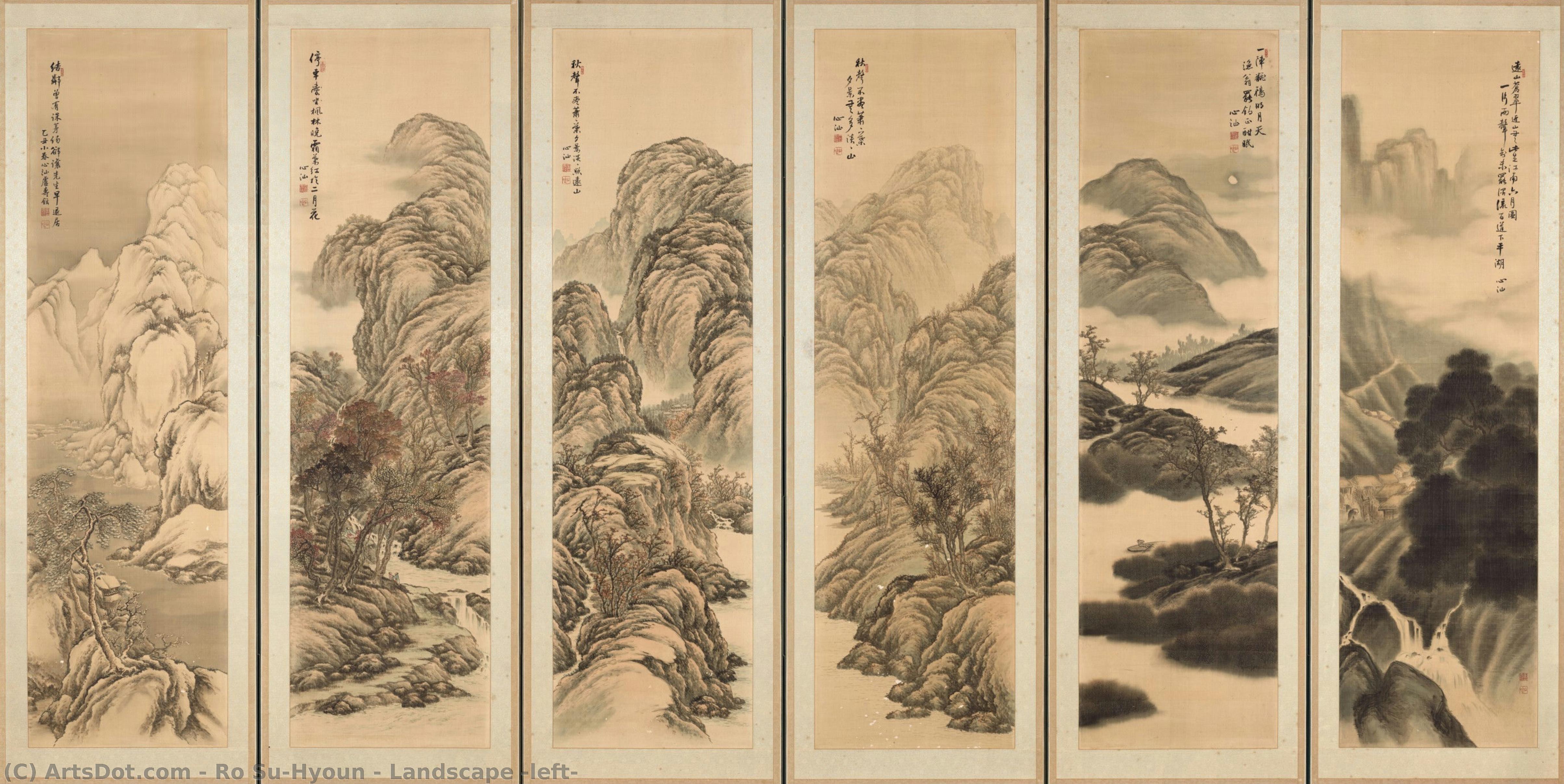
- Landscape (left)
 Preview
 Encargar reproducción Comprar imagen en alta resolución
 Enviar
 Compartir
 Detalles
 Añadir a favoritos

 Descargar
 Similares
 Radiografía
 Presentación de diapositivas
Landscape (left)
 1925
1925 154.0 x 42.0 cm
 Museo Horim
 Ver más
Giclée / Impresión de arte
Impresión giclée o en lienzo de calidad de museo con producción rápida y opciones de acabado flexibles.




































Elija entre nuestros tamaños predefinidos que respetan las proporciones originales de la obra.

Puede introducir sus propias dimensiones para adaptarse a un marco o espacio específico. Si el tamaño seleccionado no coincide con las proporciones de la imagen original, recortaremos la obra de arte o extenderemos la imagen con un borde con efecto espejo o de color sólido. Se enviará una maqueta digital para su aprobación antes de que comience la producción.
Tenga en cuenta que la vista previa en pantalla no refleja el recorte o la extensión real. Solo la maqueta mostrará con precisión la composición final.
Aunque existen tamaños personalizados, recomendamos seleccionar una dimensión de la lista predefinida para preservar las proporciones originales.
Entrega mundial () en 2 semanas en lugar de las 4/5 semanas estándar. (26 julio)

Envío exprés gratuito a todo el mundo

Lienzo de lino de alta calidad

Seguro de envío total

Garantía de reembolso de impuestos aduaneros

Garantía de fidelidad de color

Política de devolución de 60 días (solo por defectos)

Garantía de devolución del 100% del dinero

Descuento por pedido múltiple
 La opción de vidrio solo está disponible en tamaños inferiores a 110 cm.

Landscape (left)
Giclée / Impresión de arte
Tamaño de la reproducción
-


Precio total final
-
Biografía del artista
Early Life and Artistic Beginnings
ro su-hyoun, born in Uljin, South Korea in 1899, emerged from a period of profound cultural transformation within Korea—a nation grappling with the pressures of Western influence while striving to preserve its traditions. Precise details regarding her formative years remain elusive, reflecting the limitations of archival records during that era. However, it is understood that she possessed an innate fascination for art and pursued formal training at Bunka Gakuin University in Tokyo, where she honed her skills in oil painting—a deliberate choice aligning with prevailing artistic trends of the time. This education provided her with a foundational understanding of Western techniques and aesthetics, which would subsequently inform her distinctive approach to Korean landscape painting.Note: The biography is based on the provided information and may not be a comprehensive or entirely accurate account of ro su-hyoun’s life and career. Her early artistic inclinations were nurtured by a family steeped in Korean cultural heritage—a tradition that valued craftsmanship and meticulous observation of nature. While biographical accounts are scarce, anecdotal evidence suggests she displayed exceptional talent from a young age, demonstrating an aptitude for drawing and painting that surpassed her peers. This innate ability propelled her toward higher education, culminating in enrollment at Bunka Gakuin University, where she immersed herself in the study of Western art history and technique—a pivotal moment shaping her artistic worldview.A Singular Vision: Landscape Painting on Folding Screens
ro su-hyoun distinguished herself from her contemporaries through her unwavering dedication to the medium of folding screens—a practice remarkably rare in Korean art history. These intricately crafted wooden panels, traditionally used for ceremonial purposes and displaying calligraphy or paintings, became her favored canvas. Her artistic vision centered on capturing the essence of Korean landscapes with meticulous realism and subtle brushstrokes—a stylistic hallmark that resonated deeply with the sensibilities of her time. She skillfully employed layering techniques to create depth and dimensionality, immersing viewers in scenes of serene mountainsides and flowing rivers.This masterful approach allowed her to convey not merely visual representation but also a profound sense of atmosphere and emotion. Her color palette favored muted tones—primarily ochre, umber, and indigo—reflecting the quiet beauty of Korean nature and conveying a sense of contemplative harmony. These colors were chosen with deliberate care, mirroring the subtle hues observed in Korean landscapes during dawn and dusk. The deliberate choice of folding screens wasn’t merely stylistic; it served as a powerful symbol of Korean cultural heritage—a tangible representation of artistic tradition passed down through generations. Furthermore, she recognized that these panels offered an unparalleled opportunity to explore compositional balance and visual rhythm—elements crucial to achieving aesthetic excellence. Her compositions often incorporated asymmetrical arrangements—a characteristic feature of Korean art—creating visual interest while subtly emphasizing the grandeur of the natural world.Technique and Style
ro su-hyoun's technique embodied the spirit of Korean painting traditions. She favored a meticulous approach, painstakingly blending pigments with painstaking attention to detail.Specifically, she utilized wet-on-wet brushwork—a technique that allowed for gradual tonal shifts and subtle gradations of color—resulting in landscapes imbued with atmospheric luminescence.This method ensured that the textures of rocks, trees, and water surfaces were rendered with remarkable accuracy. She achieved this effect by applying thin washes of pigment over previously laid down layers, gradually building up depth and luminosity without sacrificing textural nuance. This technique demanded considerable patience and skill—a testament to her unwavering commitment to artistic excellence. ##Legacy and Recognition ro su-hyoun’s contribution to Korean landscape painting extends beyond her individual artworks. Her pioneering use of folding screens elevated the medium's artistic potential, establishing a precedent for future generations of artists. She served as an inspiration to female Korean painters who sought to forge their own paths in a male-dominated field. Her paintings are held in prestigious collections, including those of the Korean Art Museum Association and the British Museum, cementing her place among Korea’s most celebrated artistic figures.Her work continues to inspire admiration for its beauty and technical mastery—a lasting legacy reflecting the enduring spirit of Korean art.
Ro Su-hyoun
1899 - 1978 , Corea del Sur
Datos clave
- Artistic Movement Or Style: Landscape Painting
- Date Of Birth: 1899
- Date Of Death: 1978
- Full Name: ro su-hyoun
- Nationality: Korean
- Notable Artworks:
- Landscape (Left)
- Landscape (Right)
- Place Of Birth: Uljin, South Korea

