

 Ver en contexto
 Enviar
 Compartir
 Detalles
 Guía
Guía

 Descargar
 Similares
 Radiografía
 Presentación de diapositivas
 Estadísticas
Dibujos Demostrativos


 Ver más
La obra de arte que se muestra en esta página está protegida por las leyes de propiedad intelectual, lo que significa que no podemos crear ni vender legalmente una reproducción idéntica. Esta protección se hace cumplir en virtud de acuerdos internacionales como el Convenio de Berna y por las leyes nacionales, incluidas aquellas establecidas por el Ley de derechos de autor de los EE. UU. - Título 17.
Este método cumple plenamente con las normativas de derechos de autor, ya que no implica la copia ni la duplicación de la obra protegida. En su lugar, se trata de una reinterpretación creativa: una nueva pintura influenciada por la original, pero que no es idéntica a ella.
Giclée / Impresión de arte
Impresiones giclée o en lienzo de calidad de museo con producción rápida y opciones de acabado flexibles. ( Comprar pintura hecha a mano Cambiar a imagen digital)




P118B €10

P118H €10

P118W €10

P438Z €10

P508JH €12

P508YH €12

P805H €10

P805Z €10

P919BZ €10

P919G €10

P919XJ €10

P959ZH €10

P968JZ €12

W106C €8

W218G €10

W218JH €8

W218Y €10

W307PJ €10

W316G €10

W316PJ €8

W316Y €10

W398PJ €8

W4111J €10

W500HY €15

W500JH €15

W692G €12

W849H €8

W940BG €15

W953PJ €8




Elija entre nuestros tamaños predefinidos que respetan las proporciones originales de la obra.

Introduzca el ancho y el alto que necesite para adaptarse a su marco o pared. Una impresión solo puede recortarse, nunca hacerse más grande que la imagen original, por lo que un tamaño con una forma distinta perderá parte de la obra. Le enviaremos una maqueta digital para su aprobación antes de realizar cualquier impresión. La imagen que se muestra en esta página no refleja el recorte real; solo la maqueta lo hace.
Envío a todo el mundo () en 2 semanas en lugar de las 4/5 semanas estándar. (26 octubre)

Envío exprés gratuito a todo el mundo

Lienzo de lino de alta calidad

Seguro de envío total

Garantía de reembolso de aranceles aduaneros

Garantía de fidelidad cromática exacta

Política de devolución de 100 días (solo por defectos)

Garantía de devolución del 100% del dinero

Descuento por cantidad
 La opción de vidrio solo está disponible en tamaños inferiores a 110 cm.

Dibujos Demostrativos
Giclée / Impresión de arte
Dimensiones de la reproducción
-


Precio total final
€ 70
Demonstration Drawings - Rirkrit Tiravanija: A Dialogue Between Art and Everyday Life
Rirkrit Tiravanija stands apart from many contemporary artists, prioritizing not merely visual aesthetics but the profound connection between art and human experience—a philosophy he succinctly defines as “bringing people together.” This ethos originates in his formative years spent traversing Thailand, Ethiopia, and Canada, experiences that profoundly shaped his worldview and became integral to his artistic vision. He’s a Thai artist who has lived and worked extensively in New York City and Chiang Mai, establishing himself as a pioneer of Relational Aesthetics, an art movement that champions collaborative projects and challenges traditional notions of artistic creation.- Subject Matter: Tiravanija's work consistently explores themes of social interaction and collective participation. His pieces often depict scenes of shared meals—Pad Thai, Tom Kha Soup—creating spaces for spontaneous conversation and fostering a sense of community. These aren’t merely decorative images; they are invitations to engage in dialogue and contemplate the role of art within broader societal contexts.
- Style: Tiravanija's artistic style leans heavily into Minimalism, characterized by its simplicity and focus on essential forms. However, this apparent austerity belies a complex conceptual underpinning—a deliberate rejection of grand narratives in favor of understated gestures that provoke reflection. The drawings themselves are deliberately devoid of extraneous detail, emphasizing the core idea: the act of sharing experience transcends superficial appearances.
- Technique: Tiravanija’s technique is rooted in photography and drawing, combining meticulous observation with a conceptual approach. He meticulously captures images from publications like the International Herald Tribune—often depicting social uprisings—translating them into drawings that convey not just visual information but also emotional resonance. The resulting prints are executed with remarkable precision, highlighting the artist's commitment to capturing fleeting moments of collective action.
- Historical Context: Tiravanija’s work emerged during the late 1990s and early 2000s, coinciding with the rise of Relational Aesthetics—a movement spearheaded by Nicolas Bourriaud that questioned the conventional boundaries between art and life. This artistic stance reflects a broader cultural shift toward valuing participatory practices and challenging institutional hierarchies within the art world.
- Symbolism: The drawings’ central motif –the distribution of bricks—holds significant symbolic weight. Referencing the Situationists' slogan “Never Work,” it represents a deliberate inversion of societal norms, transforming labor into an artistic endeavor. Furthermore, the number 14,086 symbolizes the modest house envisioned for a family in China, expanding the intimacy of domestic space and inviting viewers to contemplate the importance of human connection.
Preguntas y respuestas
¿Cómo puedo conseguir una lámina de "Dibujos Demostrativos" de Rirkrit Tiravanija?
"Dibujos Demostrativos" está disponible como una impresión de bellas artes sobre lienzo de algodón o papel de lienzo de archivo. Puede realizar su pedido en su página Impresión de arte de bellas artes, en el tamaño que prefiera.
¿Qué ambiente aportaría "Dibujos Demostrativos" a un espacio?
La atmósfera Sereno de "Dibujos Demostrativos" de Rirkrit Tiravanija armoniza perfectamente con su espacio recomendado: un Salón principal.
¿Dónde puedo encontrar una guía sobre "Dibujos Demostrativos"?
La guía de "Dibujos Demostrativos" es la página Ficha informativa de la obra: una ficha imprimible que presenta la pieza con su pie de foto, línea de crédito y tabla de datos (artista, fechas, técnica, tamaño original, colección).
Artículos relacionados

The Enduring Form: Sculpture Across History, Technique & Emotional Resonance
Explore the rich history of sculpture with OriginalUniqueArt. Discover key techniques, influential artists & investment potential for discerning collectors. Expert insights into valuing and collecting timeless masterpieces.

Las 10 Obras Maestras de Bronce que Revolucionaron la Historia del Arte | OriginalUniqueArt
Descubre las 10 esculturas de bronce más influyentes de la historia del arte. Explora obras maestras de Rodin, Degas y otros genios. Encuentra reproducciones de arte de calidad museo en OriginalUniqueArt.com.

The Enduring Form: Exploring Themes & Techniques in Sculpture Across Historical Periods
Explore the rich history of sculpture from ancient masterpieces to contemporary innovations. Discover key techniques, influential artists & investment potential for discerning art collectors.

Esculturas de Bronce Legendarias: 10 Obras Maestras que Transformaron el Arte | OriginalUniqueArt
Descubre las 10 esculturas de bronce más legendarias que revolucionaron el arte. Explora la historia de Rodin, Degas y otros maestros del bronce. Encuentra reproducciones de alta calidad e inspiración para tu hogar en OriginalUniqueArt.com.
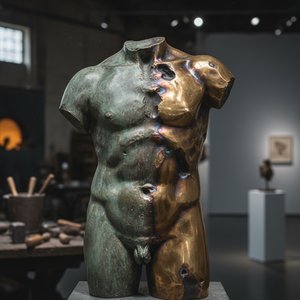
El Legado Duradero de la Escultura en Bronce: Historia, Técnicas e Interpretaciones Contemporáneas
Descubra la historia, las técnicas y el valor de la escultura en bronce. Guía experta para coleccionistas e inversores. Explore obras maestras y aprenda sobre fundición a la cera perdida.
