

 Ver en contexto
 Enviar
 Compartir
 Detalles

 Descargar
 Similares
 Radiografía
 Presentación de diapositivas
 Estadísticas
Woman bathing

 Ver más
Adquiera una imagen digital de alta resolución y optimizada, muy superior a la vista previa en línea.
Cada archivo es preparado meticulosamente por nuestros especialistas internos mediante el uso de herramientas avanzadas y un experto retoque manual. Nos aseguramos de que cada imagen posea una claridad excepcional, una precisión cromática impecable y un detalle minucioso.
El archivo final se entrega por correo electrónico en un plazo de 72 horas, optimizado para su uso inmediato en entornos profesionales, editoriales y de impresión. Esta es la misma calidad en la que confían los estudios de diseño, las editoriales y las galerías de primer nivel.
Imagen Digital
Descarga un archivo de alta resolución para exhibición personal, impresión y proyectos creativos. ( Cambiar a Impresión Comprar pintura hecha a mano)
Incluido en cada pedido de imágenes digitales
Entrega digital experta, garantizada.
Al elegir OriginalUniqueArt.com, no solo está adquiriendo una imagen; está recibiendo una obra de arte digital mejorada profesionalmente, elaborada con precisión y respaldada por una garantía de satisfacción. Esto es todo lo que incluye su pedido, automáticamente:

Entrega rápida por email
Recibirá su archivo de imagen digital en alta resolución por correo electrónico en un plazo de 72 horas tras realizar su pedido, listo para su uso inmediato.

Archivo digital optimizado por IA
Su obra de arte se optimiza profesionalmente mediante herramientas avanzadas de IA y edición manual, garantizando el máximo detalle, claridad y precisión cromática.

Reenvío gratuito de por vida
¿Has borrado o perdido tu archivo por error? No te preocupes: te lo volveremos a enviar en cualquier momento, sin coste adicional.

Sin gastos de importación, siempre
Disfrute de su obra de arte al instante sin aduanas, aranceles ni gastos de envío; las descargas digitales siempre están libres de impuestos.

Garantía de fidelidad de color
Garantizamos que su imagen digital refleje los colores originales con la mayor fidelidad posible, mediante el uso de herramientas profesionales y gestión del color.

Garantía de satisfacción de 100 días
Si no está satisfecho con su imagen digital, la revisaremos o le reembolsaremos el 100% en un plazo de 100 días, sin preguntas.

100% Garantía de devolución de dinero
¿No está satisfecho? Obtenga un reembolso completo dentro de los 100 días posteriores a la recepción de su archivo digital, sin preguntas.

Descuentos por pedidos grandes
Compra 3 imágenes, ahorra 10% - Compra 5, ahorra 15% - Compra 10+, ahorra 20%. Ideal para proyectos creativos, galerías y agencias.
René Magritte’s Enigmatic “Woman Bathing”: A Study in Hidden Realities
Rene Magritte's "Woman Bathing," painted around 1929, is not merely a depiction of a woman enjoying a moment of repose; it’s a carefully constructed puzzle designed to challenge our fundamental assumptions about perception and representation. This deceptively simple black-and-white image, now housed in various collections worldwide, embodies the core tenets of Surrealism – a movement Magritte helped define – by subtly disrupting the familiar relationship between what we see and what truly exists. The painting’s power lies not in overt drama or explicit narrative, but in its quiet insistence on questioning the very nature of reality itself.
The scene unfolds with an almost clinical detachment. A woman, her features partially obscured by a strategically placed red dress, is immersed in a stream. Her posture suggests relaxation and vulnerability, yet there’s an undeniable sense of unease. The background is sparsely populated – two indistinct figures hint at the presence of others, adding to the feeling that we are observing a private, almost staged moment. Magritte masterfully employs a stark monochrome palette, reminiscent of early 20th-century photography and film, further enhancing the painting’s unsettling atmosphere. This deliberate choice strips away any potential distractions, forcing the viewer to confront the image with raw intensity.
The Roots of Surrealism: Trauma and the Unseen
Understanding Magritte's artistic vision requires a glimpse into his personal history. Born René Ghislain Magritte in Lessines, Belgium, in 1898, he experienced a profoundly formative event at the age of thirteen – the suicide of his mother. The image of her body being recovered from the River Sambre, with her dress concealing her face, became a recurring motif throughout his oeuvre. This deeply personal tragedy instilled within him a lifelong fascination with concealment, loss, and the unsettling power of what remains hidden beneath the surface. It’s believed this early trauma fueled his exploration of the subconscious and his deliberate manipulation of visual reality.
Magritte's work is often described as “visual poetry,” prioritizing intellectual engagement over emotional expression. He wasn’t interested in simply replicating the world; he sought to expose its constructed nature, revealing the mechanisms by which we perceive and interpret it. "Woman Bathing" exemplifies this approach perfectly. The red dress, a seemingly minor detail, acts as a powerful symbol of concealment – obscuring the woman's face and suggesting that her true identity is deliberately hidden from view. This echoes his mother’s obscured visage, creating a subtle yet persistent link to his personal history.
Technique and Style: A Masterclass in Illusion
Magritte’s technique is characterized by meticulous detail and an almost photographic realism, despite the painting's surreal subject matter. He employed oil paints on canvas with a precision that belies the dreamlike quality of his work. The smooth gradations of tone, the subtle modeling of form, and the careful rendering of textures create a convincing illusion of depth and space. However, this apparent realism is deliberately undermined by the painting’s overall atmosphere of unease and ambiguity.
The composition itself contributes to the painting's unsettling effect. The woman is positioned slightly off-center, drawing the viewer’s eye across the canvas and creating a sense of imbalance. The lack of clear perspective further enhances this feeling of disorientation. Magritte’s deliberate use of line and form challenges our expectations of how things should look, forcing us to question what we are seeing.
Symbolism and Emotional Resonance: A Question of Perception
"Woman Bathing" is a profoundly ambiguous work, inviting multiple interpretations. The woman herself can be seen as representing vulnerability, innocence, or perhaps even the unknowable depths of the human psyche. The stream symbolizes transition, purification, or simply the flow of time. The red dress, as previously mentioned, represents concealment and the suppression of identity.
Ultimately, Magritte’s masterpiece is not about providing answers but about posing questions. It's a meditation on the nature of perception, the limitations of representation, and the enduring power of the subconscious. A high-quality reproduction of “Woman Bathing” offers a captivating glimpse into the mind of one of the 20th century’s most influential artists – a work that continues to resonate with viewers today, prompting us to reconsider our own understanding of reality.
Biografía del artista
vida temprana y comienzos artísticos
René François Ghislain Magritte, un reconocido artista surrealista belga, nació el 21 de noviembre de 1898 en Lessines, provincia de Hainaut, Bélgica. Su vida temprana permanece algo misteriosa, con poco conocimiento sobre su infancia. Sin embargo, está documentado que comenzó clases de dibujo en 1910.evolución artística e influencias
El estilo artístico de Magritte evolucionó significativamente a lo largo de los años, influenciado por diversos movimientos como el impresionismo, el futurismo y el cubismo. Sus primeras pinturas, datadas alrededor de 1915, eran de estilo impresionista. De 1916 a 1918, estudió en la Academia Real de Bellas Artes de Bruselas, bajo Constant Montald.período surrealista y obras notables
En 1926, Magritte produjo su primer cuadro surrealista, El jinete perdido (Le jockey perdu), marcando el comienzo de su asociación con el movimiento surrealista. Su obra se caracteriza por imágenes provocadoras, a menudo representando objetos ordinarios en contextos inusuales, desafiando las percepciones de la realidad de los observadores.- Les amants (1927-1928), una serie de pinturas que presentan a personas con tela cubriendo sus rostros, se cree que fue inspirada por la historia de la muerte de su madre.
- Los amantes, otra pieza icónica, presenta a una pareja besándose con sus rostros cubiertos por telas blancas, invitando al espectador a reflexionar sobre el amor y la identidad. (disponible para su compra como una reproducción de pintura al óleo hecha a mano o impresión en lienzo en OriginalUniqueArt.com)
vida tardía y legado
La obra de Magritte fue exhibida en los Estados Unidos en 1936 y nuevamente en dos exposiciones retrospectivas, una en el Museo de Arte Moderno en 1965 y la otra en el Metropolitan Museum of Art en 1992. Se mantuvo comprometido con la izquierda política pero abogó por la autonomía artística. Museos notables que exhiben la obra de Magritte:- Musée royal des beaux-arts de Belgique, Bruselas, Bélgica (descubra las obras maestras del musée royal des beaux-arts de belgique en OriginalUniqueArt.com)
- Musée Magritte, parte del musée royal des beaux-arts de Belgique, que exhibe la colección mundial más grande de obras de Magritte.
Conclusión
El legado de René Magritte como maestro surrealista perdura, con sus imágenes provocadoras que continúan inspirando e intrigando. Su obra, caracterizada por su mezcla única del ordinario y lo inesperado, sigue siendo un pilar fundamental del arte surrealista. Más información sobre René Magritte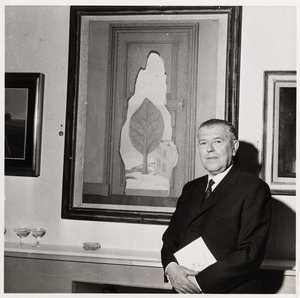
René Magritte
1898 - 1967 , bélgica
Breves datos
- Artistas Que Influyeron:
- Impresionismo
- Futurismo
- Cubismo
- Estilo Artístico: Surrealismo
- Fecha De Muerte: 15 de agosto de 1967
- Fecha De Nacimiento: 21 de noviembre de 1898
- Influenciado A Artistas:
- Pop Art
- Minimalismo
- Arte conceptual
- Lugar De Nacimiento: Lessines, Bélgica
- Nacionalidad: Belga
- Nombre Completo: René François Ghislain Magritte
- Obras Notables:
- Le Jockey Perdu
- Les Amants
- La traición de las imágenes
- Tiempo transcurrido
- La condición humana