Ver en contexto
 Enviar
 Compartir
 Detalles

 Descargar
 Similares
 Radiografía
 Presentación de diapositivas
The endearing truth
 Acrylic On Canvas
- WallArt
- Surrealism
 1966
1966 89.0 x 130.0 cm
 Ver más
Giclée / Impresión de arte
Impresiones giclée o en lienzo de calidad de museo con producción rápida y opciones de acabado flexibles. ( Comprar pintura hecha a mano Comprar imagen)




P118B $10

P118H $10

P118W $10

P438Z $10

P508JH $12

P508YH $12

P805H $10

P805Z $10

P919BZ $10

P919G $10

P919XJ $10

P959ZH $10

P968JZ $12

W106C $8

W218G $10

W218JH $8

W218Y $10

W307PJ $10

W316G $10

W316PJ $8

W316Y $10

W398PJ $8

W4111J $10

W500HY $15

W500JH $15

W692G $12

W849H $8

W940BG $15

W953PJ $8




Elija entre nuestros tamaños predefinidos que respetan las proporciones originales de la obra.

Puede introducir sus propias dimensiones para adaptarse a un marco o espacio específico. Si el tamaño seleccionado no coincide con las proporciones de la imagen original, recortaremos la obra de arte o extenderemos la imagen con un borde con efecto espejo o de color sólido. Se enviará una maqueta digital para su aprobación antes de que comience la producción.
Tenga en cuenta que la vista previa en pantalla no refleja el recorte o la extensión real. Solo la maqueta mostrará con precisión la composición final.
Aunque existen tamaños personalizados, recomendamos seleccionar una dimensión de la lista predefinida para preservar las proporciones originales.
Envío a todo el mundo () en 2 semanas en lugar de las 4/5 semanas estándar. (28 agosto)

Envío exprés gratuito a todo el mundo

Lienzo de lino de alta calidad

Seguro de envío total

Garantía de reembolso de impuestos aduaneros

Garantía de fidelidad cromática exacta

Política de devolución de 60 días (solo por defectos)

Garantía de devolución del 100% del dinero

Descuento por cantidad
 La opción de vidrio solo está disponible en tamaños inferiores a 110 cm.

The endearing truth
Giclée / Impresión de arte
Dimensiones de la reproducción
-


Precio total final
$ 80
The Enigmatic Allure of “The Endearing Truth”
René Magritte’s “The Endearing Truth,” painted in 1966, isn't merely a depiction of a table laden with fruit; it’s an invitation to question the very nature of reality and representation – a cornerstone of the artist’s enduring surrealist vision. This particular work, created near the end of his career, possesses a quiet intensity, reflecting both Magritte’s lifelong fascination with paradox and his growing contemplation on mortality. The painting immediately draws the eye with its deceptively simple composition: a brick wall serves as the backdrop for a stark white table, upon which rests an apple, a loaf of bread, and a cylindrical object – its purpose deliberately obscured. Yet, within this apparent stillness lies a profound sense of unease, a subtle disruption that compels us to look closer, to consider what’s *not* there.A Surrealist Dialogue with the Everyday
Magritte's work consistently challenged conventional perceptions by juxtaposing familiar objects in unexpected contexts. “The Endearing Truth” is no exception. The brick wall, typically associated with solidity and permanence, becomes a stage for an ephemeral tableau of food. The white tablecloth, a symbol of domesticity and order, seems to float unnaturally against the rough texture of the bricks, creating a visual dissonance. This deliberate contrast speaks directly to the core tenets of Surrealism – a movement that sought to unlock the creative potential of the unconscious mind by disrupting logical associations. Magritte wasn’t interested in fantastical imagery; instead, he aimed to expose the inherent strangeness within the familiar, prompting viewers to question their assumptions about how they perceive and interpret the world around them.Technique and Symbolism: A Masterful Blend
The painting's execution is remarkably precise, reflecting Magritte’s meticulous attention to detail. He employed a restrained palette of muted tones – primarily browns, whites, and greens – contributing to the work’s understated yet unsettling atmosphere. The apple, rendered with a subtle sheen, hints at both nourishment and decay; the bread, sliced open, suggests vulnerability and incompleteness. The unidentified cylindrical object is particularly intriguing, its shape ambiguous and its purpose deliberately withheld. Some art historians interpret it as a reference to the human form – perhaps a stylized representation of the artist himself – while others see it as a symbol of mystery or even death. The subtle integration of the table legs into the brickwork further blurs the boundaries between object and environment, reinforcing the painting’s central theme of illusion and perception.A Reflection on Mortality and the Unseen
Considering the timeframe in which “The Endearing Truth” was created – 1966 – it's impossible to ignore the context of Magritte’s own declining health. He was battling cancer at the time, and many believe this painting represents a poignant meditation on mortality and the things that remain hidden from view. The obscured face in his earlier works, often veiled by cloth, returns here in a more subtle form – the unseen object invites speculation about what lies beneath the surface, mirroring the mysteries of life and death. The title itself, “The Endearing Truth,” is laden with irony; it suggests that even the most cherished truths can be elusive and ultimately unknowable. It’s a final, enigmatic statement from an artist who dedicated his career to exposing the complexities of reality and inviting us to embrace the beauty of uncertainty.Bringing Magritte's Vision Home
OriginalUniqueArt offers meticulously crafted hand-painted reproductions of “The Endearing Truth,” allowing you to experience the depth and nuance of this iconic masterpiece in your own space. Our skilled artists faithfully recreate Magritte’s distinctive style, capturing the painting’s subtle details and evocative atmosphere with exceptional precision. Whether displayed as a statement piece in a contemporary setting or incorporated into a more traditional interior design scheme, a OriginalUniqueArt reproduction of “The Endearing Truth” will undoubtedly spark conversation and invite contemplation – a fitting tribute to one of art history's most enigmatic figures.Biografía del artista
vida temprana y comienzos artísticos
René François Ghislain Magritte, un reconocido artista surrealista belga, nació el 21 de noviembre de 1898 en Lessines, provincia de Hainaut, Bélgica. Su vida temprana permanece algo misteriosa, con poco conocimiento sobre su infancia. Sin embargo, está documentado que comenzó clases de dibujo en 1910.evolución artística e influencias
El estilo artístico de Magritte evolucionó significativamente a lo largo de los años, influenciado por diversos movimientos como el impresionismo, el futurismo y el cubismo. Sus primeras pinturas, datadas alrededor de 1915, eran de estilo impresionista. De 1916 a 1918, estudió en la Academia Real de Bellas Artes de Bruselas, bajo Constant Montald.período surrealista y obras notables
En 1926, Magritte produjo su primer cuadro surrealista, El jinete perdido (Le jockey perdu), marcando el comienzo de su asociación con el movimiento surrealista. Su obra se caracteriza por imágenes provocadoras, a menudo representando objetos ordinarios en contextos inusuales, desafiando las percepciones de la realidad de los observadores.- Les amants (1927-1928), una serie de pinturas que presentan a personas con tela cubriendo sus rostros, se cree que fue inspirada por la historia de la muerte de su madre.
- Los amantes, otra pieza icónica, presenta a una pareja besándose con sus rostros cubiertos por telas blancas, invitando al espectador a reflexionar sobre el amor y la identidad. (disponible para su compra como una reproducción de pintura al óleo hecha a mano o impresión en lienzo en OriginalUniqueArt.com)
vida tardía y legado
La obra de Magritte fue exhibida en los Estados Unidos en 1936 y nuevamente en dos exposiciones retrospectivas, una en el Museo de Arte Moderno en 1965 y la otra en el Metropolitan Museum of Art en 1992. Se mantuvo comprometido con la izquierda política pero abogó por la autonomía artística. Museos notables que exhiben la obra de Magritte:- Musée royal des beaux-arts de Belgique, Bruselas, Bélgica (descubra las obras maestras del musée royal des beaux-arts de belgique en OriginalUniqueArt.com)
- Musée Magritte, parte del musée royal des beaux-arts de Belgique, que exhibe la colección mundial más grande de obras de Magritte.
Conclusión
El legado de René Magritte como maestro surrealista perdura, con sus imágenes provocadoras que continúan inspirando e intrigando. Su obra, caracterizada por su mezcla única del ordinario y lo inesperado, sigue siendo un pilar fundamental del arte surrealista. Más información sobre René Magritte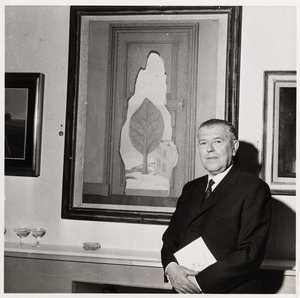
René Magritte
1898 - 1967 , bélgica
Datos clave
- Artistas Que Influyeron:
- Impresionismo
- Futurismo
- Cubismo
- Estilo Artístico: Surrealismo
- Fecha De Muerte: 15 de agosto de 1967
- Fecha De Nacimiento: 21 de noviembre de 1898
- Influenciado A Artistas:
- Pop Art
- Minimalismo
- Arte conceptual
- Lugar De Nacimiento: Lessines, Bélgica
- Nacionalidad: Belga
- Nombre Completo: René François Ghislain Magritte
- Obras Notables:
- Le Jockey Perdu
- Les Amants
- La traición de las imágenes
- Tiempo transcurrido
- La condición humana
Artículos relacionados
The Treachery of Images: Decoding René Magritte’s Surrealist Philosophy and the Paradox of Representation
Explore the profound mystery of René Magritte’s 'The Treachery of Images.' Dive into an expert analysis of his Surrealist philosophy, the paradox of representation, and how he challenged reality through the interplay of language and visual perception.
Surrealismo: 10 Obras Maestras que Transformaron el Arte y la Decoración
Descubre las 10 obras maestras del Surrealismo con Dalí, Magritte y Miró. Explora la historia, el simbolismo y la técnica de estos íconos del arte moderno. Encuentra reproducciones de alta calidad para tu hogar en .
Surrealist Expression: Unlocking the Power of Dreams and the Subconscious through Art History
Explore the profound depths of Surrealism. From Dalí’s dreamscapes to Magritte’s enigmas, master the history of the subconscious mind through our expert art guide and discover museum-quality oil reproductions of the world's most iconic surrealist masterpieces.

The Treachery of Images: Decoding René Magritte’s Surrealist Vision and the Paradox of Representation
Delve into the profound mysteries of René Magritte’s Surrealism. Explore an expert analysis of 'The Treachery of Images,' decoding the philosophical paradoxes and visual subversions that redefined modern art history for collectors and connoisseurs alike.
Dreamscapes & Disrupted Realities: Exploring Surrealism's Enduring Influence
Explore the fascinating world of Surrealism! Discover its origins, key artists like Dalí & Magritte, and enduring influence on art & culture. Expert insights & high-quality reproductions at OriginalUniqueArt.