Ver en contexto
 Enviar
 Compartir
 Detalles
 Guía
Guía

 Descargar
 Similares
 Radiografía
 Presentación de diapositivas
 Estadísticas
La Gran Guerra


 Ver más
La obra de arte que se muestra en esta página está protegida por las leyes de propiedad intelectual, lo que significa que no podemos crear ni vender legalmente una reproducción idéntica. Esta protección se hace cumplir en virtud de acuerdos internacionales como el Convenio de Berna y por las leyes nacionales, incluidas aquellas establecidas por el Ley de derechos de autor de los EE. UU. - Título 17.
Este método cumple plenamente con las normativas de derechos de autor, ya que no implica la copia ni la duplicación de la obra protegida. En su lugar, se trata de una reinterpretación creativa: una nueva pintura influenciada por la original, pero que no es idéntica a ella.
Giclée / Impresión de arte
Impresiones giclée o en lienzo de calidad de museo con producción rápida y opciones de acabado flexibles. ( Comprar pintura hecha a mano Cambiar a imagen digital)




P118B €10

P118H €10

P118W €10

P438Z €10

P508JH €12

P508YH €12

P805H €10

P805Z €10

P919BZ €10

P919G €10

P919XJ €10

P959ZH €10

P968JZ €12

W106C €8

W218G €10

W218JH €8

W218Y €10

W307PJ €10

W316G €10

W316PJ €8

W316Y €10

W398PJ €8

W4111J €10

W500HY €15

W500JH €15

W692G €12

W849H €8

W940BG €15

W953PJ €8




Elija entre nuestros tamaños predefinidos que respetan las proporciones originales de la obra.

Introduzca el ancho y el alto que necesite para adaptarse a su marco o pared. Una impresión solo puede recortarse, nunca hacerse más grande que la imagen original, por lo que un tamaño con una forma distinta perderá parte de la obra. Le enviaremos una maqueta digital para su aprobación antes de realizar cualquier impresión. La imagen que se muestra en esta página no refleja el recorte real; solo la maqueta lo hace.
Envío a todo el mundo () en 2 semanas en lugar de las 4/5 semanas estándar. (28 octubre)

Envío exprés gratuito a todo el mundo

Lienzo de lino de alta calidad

Seguro de envío total

Garantía de reembolso de aranceles aduaneros

Garantía de fidelidad cromática exacta

Política de devolución de 100 días (solo por defectos)

Garantía de devolución del 100% del dinero

Descuento por cantidad
 La opción de vidrio solo está disponible en tamaños inferiores a 110 cm.

La Gran Guerra
Giclée / Impresión de arte
Dimensiones de la reproducción
-


Precio total final
€ 71
A Dream Obscured: Delving into Magritte’s ‘The Great War’
René Magritte's 1964 painting, *The Great War*, is a quintessential example of Surrealist artistry – a work that simultaneously captivates and unsettles. It presents a formally dressed man, complete with bowler hat and dark suit, but crucially, his face is entirely concealed by a vibrant green apple. Above the apple float several delicate leaves against a backdrop of softly rendered clouds. This seemingly simple composition unlocks layers of symbolic meaning and psychological intrigue.Style & Technique: The Precision of Dreams
Magritte masterfully employs the hallmarks of his signature style in *The Great War*. His technique is rooted in traditional oil painting, characterized by meticulous detail and smooth application – a deliberate contrast to the chaotic energy often associated with Surrealism. Geometric lines define the man’s attire, sharply contrasting with the organic forms of the apple and leaves. The color palette is restrained, dominated by blacks and greys that amplify the startling vibrancy of the green apple. This calculated use of color draws immediate attention to the central symbol. Perspective is flattened, contributing to the dreamlike quality and a sense of spatial ambiguity.Symbolism & Interpretation: Beyond the Surface
The symbolism within *The Great War* is rich and open to interpretation. The apple, a recurring motif in Magritte’s work, often represents temptation, hidden knowledge, or even innocence. Here, obscuring the face, it suggests an obstruction of identity or perception. Is this a commentary on how war conceals individual humanity? Or perhaps a representation of societal conformity – the bowler hat and suit signifying adherence to norms that mask true selfhood? The leaves above the apple could symbolize fleeting life or lost memories. Given the title, “The Great War,” it’s reasonable to interpret the work as a meditation on the obscuring effects of conflict—how war hides individual stories and distorts reality.Historical Context: Post-War Reflections
Created two decades after the end of World War II, *The Great War* reflects a lingering sense of trauma and disillusionment. While Magritte wasn’t directly involved in depicting battlefield scenes, his work often grapples with themes of anxiety, alienation, and the fragility of existence – sentiments deeply felt in the post-war era. His Surrealist approach allowed him to explore these complex emotions through symbolic imagery rather than direct representation. The painting stands as a quiet yet powerful statement about the psychological impact of large-scale conflict.Emotional Impact & Aesthetic Appeal
*The Great War* evokes a profound sense of unease and mystery. The juxtaposition of familiar elements – a well-dressed man, an apple – with their illogical arrangement creates a disquieting effect. The painting isn’t overtly dramatic; its power lies in its subtle psychological tension. It invites contemplation, prompting viewers to question what lies beneath the surface and to confront the hidden realities of human experience. Its sophisticated composition and evocative symbolism make it a compelling addition to any art collection or interior space. This piece serves as a powerful statement piece, sparking conversation and adding depth to any environment. The painting’s muted tones and elegant simplicity lend themselves well to modern interiors, adding a touch of intellectual intrigue and surreal beauty.Collecting & Reproduction
As an iconic work by one of the 20th century's most influential artists, *The Great War* is highly sought after by collectors. High-quality reproductions allow art enthusiasts to experience Magritte’s vision in their own homes. When selecting a reproduction, consider canvas quality and color accuracy to best capture the nuances of the original painting. This artwork embodies Magritte’s genius—a masterful blend of meticulous technique and profound symbolism that continues to fascinate audiences worldwide.Preguntas y respuestas
¿Qué origen nacional sustenta el Surrealismo de "La Gran Guerra"?
"La Gran Guerra" vincula el movimiento Surrealismo con bélgica a través del lugar de nacimiento de su creador.
¿En qué año se creó "La Gran Guerra"?
"La Gran Guerra" data de 1964. Esta fecha sitúa la obra dentro de la trayectoria de René Magritte y de su época.
¿Cuál es la técnica y la fecha de creación de "La Gran Guerra" de René Magritte?
"La Gran Guerra" fue creada en 1964 mediante la técnica de Óleo sobre lienzo. El material y la fecha describen cómo y cuándo se realizó la obra original.
Biografía del artista
vida temprana y comienzos artísticos
René François Ghislain Magritte, un reconocido artista surrealista belga, nació el 21 de noviembre de 1898 en Lessines, provincia de Hainaut, Bélgica. Su vida temprana permanece algo misteriosa, con poco conocimiento sobre su infancia. Sin embargo, está documentado que comenzó clases de dibujo en 1910.evolución artística e influencias
El estilo artístico de Magritte evolucionó significativamente a lo largo de los años, influenciado por diversos movimientos como el impresionismo, el futurismo y el cubismo. Sus primeras pinturas, datadas alrededor de 1915, eran de estilo impresionista. De 1916 a 1918, estudió en la Academia Real de Bellas Artes de Bruselas, bajo Constant Montald.período surrealista y obras notables
En 1926, Magritte produjo su primer cuadro surrealista, El jinete perdido (Le jockey perdu), marcando el comienzo de su asociación con el movimiento surrealista. Su obra se caracteriza por imágenes provocadoras, a menudo representando objetos ordinarios en contextos inusuales, desafiando las percepciones de la realidad de los observadores.- Les amants (1927-1928), una serie de pinturas que presentan a personas con tela cubriendo sus rostros, se cree que fue inspirada por la historia de la muerte de su madre.
- Los amantes, otra pieza icónica, presenta a una pareja besándose con sus rostros cubiertos por telas blancas, invitando al espectador a reflexionar sobre el amor y la identidad. (disponible para su compra como una reproducción de pintura al óleo hecha a mano o impresión en lienzo en OriginalUniqueArt.com)
vida tardía y legado
La obra de Magritte fue exhibida en los Estados Unidos en 1936 y nuevamente en dos exposiciones retrospectivas, una en el Museo de Arte Moderno en 1965 y la otra en el Metropolitan Museum of Art en 1992. Se mantuvo comprometido con la izquierda política pero abogó por la autonomía artística. Museos notables que exhiben la obra de Magritte:- Musée royal des beaux-arts de Belgique, Bruselas, Bélgica (descubra las obras maestras del musée royal des beaux-arts de belgique en OriginalUniqueArt.com)
- Musée Magritte, parte del musée royal des beaux-arts de Belgique, que exhibe la colección mundial más grande de obras de Magritte.
Conclusión
El legado de René Magritte como maestro surrealista perdura, con sus imágenes provocadoras que continúan inspirando e intrigando. Su obra, caracterizada por su mezcla única del ordinario y lo inesperado, sigue siendo un pilar fundamental del arte surrealista. Más información sobre René Magritte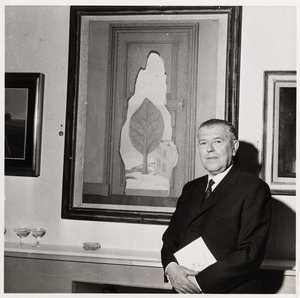
René Magritte
1898 - 1967 , bélgica
Datos clave
- Artistas Que Influyeron:
- Impresionismo
- Futurismo
- Cubismo
- Estilo Artístico: Surrealismo
- Fecha De Muerte: 15 de agosto de 1967
- Fecha De Nacimiento: 21 de noviembre de 1898
- Influenciado A Artistas:
- Pop Art
- Minimalismo
- Arte conceptual
- Lugar De Nacimiento: Lessines, Bélgica
- Nacionalidad: Belga
- Nombre Completo: René François Ghislain Magritte
- Obras Notables:
- Le Jockey Perdu
- Les Amants
- La traición de las imágenes
- Tiempo transcurrido
- La condición humana
Artículos relacionados
The Treachery of Images: Decoding René Magritte’s Surrealist Philosophy and the Paradox of Representation
Explore the profound mystery of René Magritte’s 'The Treachery of Images.' Dive into an expert analysis of his Surrealist philosophy, the paradox of representation, and how he challenged reality through the interplay of language and visual perception.
Los 10 Maestros del Surrealismo: Obras que Revolucionaron el Arte y la Decoración
Descubre los 10 lienzos surrealistas más influyentes de artistas como Dalí y Magritte. Explora la historia, el simbolismo y las técnicas del movimiento surrealista. Encuentra reproducciones de arte de museo en OriginalUniqueArt.com.
Surrealismo: 10 Obras Maestras que Transformaron el Arte y la Decoración
Descubre las 10 obras maestras del Surrealismo con Dalí, Magritte y Miró. Explora la historia, el simbolismo y la técnica de estos íconos del arte moderno. Encuentra reproducciones de alta calidad para tu hogar en .
Los 10 Maestros del Surrealismo: Obras que Desafían la Realidad | OriginalUniqueArt
Descubre los 10 cuadros surrealistas más influyentes de artistas como Dalí y Magritte. Explora la historia, el simbolismo y las técnicas del movimiento surrealista. Encuentra reproducciones de arte de museo en OriginalUniqueArt.com.

La traición de las imágenes: El enigma filosófico de René Magritte y el surrealismo
Descubre el enigma de Magritte y la filosofía surrealista con rigor experto. Explora la traición de las imágenes ahora.