Vista previa
 Compartir
 Compartir
 Ver detalles
 Guía
Guía

 Descargar
 Ver artículos similares
 Radiografía
 Presentación de diapositivas
 Estadísticas
Golconda
 Óleo sobre lienzo
- Arte de pared
- Surrealist Movement
 1953
1953- Edad Moderna
 100.0 x 81.0 cm
 Leer más
La obra de arte que se muestra en esta página está protegida por las leyes de propiedad intelectual, lo que significa que no podemos crear ni vender legalmente una reproducción idéntica. Esta protección se hace cumplir en virtud de acuerdos internacionales como el Convenio de Berna y por las leyes nacionales, incluidas aquellas establecidas por el Ley de derechos de autor de los EE. UU. - Título 17.
Este método cumple plenamente con las normativas de derechos de autor, ya que no implica la copia ni la duplicación de la obra protegida. En su lugar, se trata de una reinterpretación creativa: una nueva pintura influenciada por la original, pero que no es idéntica a ella.
Giclée / Impresión de arte
Impresiones giclée o en lienzo de calidad de museo con producción rápida y opciones de acabado flexibles. ( Encargar reproducción pintada a mano Ver versión en imagen digital)




P118B €10

P118H €10

P118W €10

P438Z €10

P508JH €12

P508YH €12

P805H €10

P805Z €10

P919BZ €10

P919G €10

P919XJ €10

P959ZH €10

P968JZ €12

W106C €8

W218G €10

W218JH €8

W218Y €10

W307PJ €10

W316G €10

W316PJ €8

W316Y €10

W398PJ €8

W4111J €10

W500HY €15

W500JH €15

W692G €12

W849H €8

W940BG €15

W953PJ €8




Elija entre nuestros tamaños predefinidos que respetan las proporciones originales de la obra.

Puede introducir sus propias dimensiones para adaptarse a un marco o espacio específico. Si el tamaño seleccionado no coincide con las proporciones de la imagen original, recortaremos la obra de arte o extenderemos la imagen con un borde con efecto espejo o de color sólido. Se enviará una maqueta digital para su aprobación antes de que comience la producción.
Tenga en cuenta que la vista previa en pantalla no refleja el recorte o la extensión real. Solo la maqueta mostrará con precisión la composición final.
Aunque existen tamaños personalizados, recomendamos seleccionar una dimensión de la lista predefinida para preservar las proporciones originales.
Envío a todo el mundo () en 2 semanas en lugar de las 4/5 semanas estándar. (10 octubre)

Envío exprés gratuito a todo el mundo

Lienzo de lino de alta calidad

Seguro de envío completo

Garantía de reembolso de impuestos aduaneros

Garantía de fidelidad cromática exacta

Política de devolución de 100 días (solo por defectos)

Garantía de devolución del 100% del dinero

Oferta por volumen
 La opción de vidrio solo está disponible en tamaños inferiores a 110 cm.

Golconda
Giclée / Impresión de arte
Tamaño de la reproducción
-


Precio total
€ 69
Golconda: A Surreal Reflection on Wealth and Illusion
René Magritte’s “Golconda” stands as an arresting testament to the artist's mastery of surrealism—a genre he championed alongside Salvador Dalí, forging a path toward challenging conventional perceptions of reality. Painted in 1953, this enigmatic canvas transcends mere visual representation, inviting viewers into a dreamlike landscape brimming with symbolic depth and intellectual provocation.Origins and Inspiration: The Echoes of Scutenaire
The genesis of “Golconda” lies in Magritte’s collaboration with poet Louis Scutenaire, a kindred spirit who served as his creative companion throughout his artistic journey. Scutenaire's influence extended beyond companionship; he provided Magritte with evocative names for his paintings—names that resonated with literary and philosophical ideas. "Golconda," derived from the ancient Indian city famed for its diamond mines, immediately conjures images of opulence and subterranean riches. This reference wasn’t merely decorative; it mirrored Scutenaire's fascination with mythology and folklore, reflecting a broader preoccupation with hidden meanings beneath surface appearances—a hallmark of Magritte’s artistic sensibility. Notably, Magritte incorporated Scutenaire’s face into the composition, positioned prominently near a chimney on the right side of the painting. This subtle gesture underscores the artist’s personal connection to his muse and reinforces the theme of concealed identities within the artwork.Visual Analysis: Floating Figures Amidst Rain
The scene depicted is undeniably surreal. A multitude of figures—approximately thirteen individuals—walk beneath umbrellas in a rainstorm, yet they appear to defy gravity, drifting upwards as if suspended in mid-air. This paradoxical movement disrupts our ingrained understanding of physics and spatial relationships, aligning perfectly with Magritte’s stylistic approach. The building backdrop lends context to the scene, creating an atmosphere of whimsical disorientation. Each umbrella serves as a visual anchor, grounding the figures while simultaneously emphasizing their ethereal quality. Magritte's meticulous attention to detail—the reflections in the wet pavement, the subtle variations in color—contributes to the painting’s immersive experience and reinforces its unsettling beauty.Magritte’s Surrealist Style: Playing with Perception
Magritte’s artistic style is characterized by a deliberate manipulation of visual conventions. He employs techniques reminiscent of Dadaism and Cubism, fracturing perspectives and juxtaposing disparate elements to destabilize viewers' expectations. Like Dalí, Magritte skillfully blends recognizable objects—umbrellas, buildings—with illogical scenarios, prompting contemplation about the nature of reality itself. This stylistic choice aligns with the broader Surrealist movement’s ambition to liberate the subconscious mind from rational constraints. “Golconda” exemplifies this ethos, inviting us to question what we see and consider alternative interpretations beyond the surface level.Legacy and Influence: Beyond Representation
“Golconda” cemented Magritte's reputation as a pioneer of surrealism and profoundly impacted subsequent artistic movements. Artists influenced by Magritte—including Pop Art luminaries like Andy Warhol—embraced similar strategies of visual disruption, prioritizing conceptual ideas over literal depiction. The Musée d’Ixelles in Brussels houses an impressive collection dedicated to Belgian art from the 19th century onward, showcasing masterpieces such as “Golconda” alongside works by Bruegel and Rubens. This museum serves as a vital resource for understanding Magritte's contribution to artistic history and continues to inspire scholars and collectors alike. Ultimately, “Golconda” remains an enduring symbol of Magritte’s unwavering commitment to exploring the complexities of human consciousness—a painting that compels us to confront our assumptions about perception and embrace the transformative power of imagination.Preguntas y respuestas
¿Qué técnica y dimensiones tiene la obra original "Golconda" de René Magritte?
La obra original "Golconda" de René Magritte es una pieza de Óleo sobre lienzo con unas dimensiones de 100 x 81 cm. La técnica y el tamaño describen la obra original.
¿A qué artista se le atribuye "Golconda"?
"Golconda" fue creada por René Magritte. La información en esta página describe la obra original de René Magritte.
¿En qué año se creó "Golconda" de René Magritte?
"Golconda" data de 1953. La fecha sitúa la obra dentro de la trayectoria de René Magritte y de su época.
¿A qué edad creó René Magritte "Golconda"?
René Magritte realizó "Golconda" a la edad de 55. El artista nació en 1898 y la obra data de 1953.
¿Cómo equilibra la luz y la sombra "Golconda"?
"Golconda" tiene un brillo general de luminosidad extrema y su luminancia es Luminosidad alta.
¿En qué estancia del hogar quedaría bien una reproducción de "Golconda"?
Una reproducción de "Golconda" encaja perfectamente en un Salón principal.
¿Cuáles son las dimensiones de la obra original "Golconda" de René Magritte?
La obra original "Golconda" de René Magritte mide 100 x 81 cm.
Biografía del artista
vida temprana y comienzos artísticos
René François Ghislain Magritte, un reconocido artista surrealista belga, nació el 21 de noviembre de 1898 en Lessines, provincia de Hainaut, Bélgica. Su vida temprana permanece algo misteriosa, con poco conocimiento sobre su infancia. Sin embargo, está documentado que comenzó clases de dibujo en 1910.evolución artística e influencias
El estilo artístico de Magritte evolucionó significativamente a lo largo de los años, influenciado por diversos movimientos como el impresionismo, el futurismo y el cubismo. Sus primeras pinturas, datadas alrededor de 1915, eran de estilo impresionista. De 1916 a 1918, estudió en la Academia Real de Bellas Artes de Bruselas, bajo Constant Montald.período surrealista y obras notables
En 1926, Magritte produjo su primer cuadro surrealista, El jinete perdido (Le jockey perdu), marcando el comienzo de su asociación con el movimiento surrealista. Su obra se caracteriza por imágenes provocadoras, a menudo representando objetos ordinarios en contextos inusuales, desafiando las percepciones de la realidad de los observadores.- Les amants (1927-1928), una serie de pinturas que presentan a personas con tela cubriendo sus rostros, se cree que fue inspirada por la historia de la muerte de su madre.
- Los amantes, otra pieza icónica, presenta a una pareja besándose con sus rostros cubiertos por telas blancas, invitando al espectador a reflexionar sobre el amor y la identidad. (disponible para su compra como una reproducción de pintura al óleo hecha a mano o impresión en lienzo en OriginalUniqueArt.com)
vida tardía y legado
La obra de Magritte fue exhibida en los Estados Unidos en 1936 y nuevamente en dos exposiciones retrospectivas, una en el Museo de Arte Moderno en 1965 y la otra en el Metropolitan Museum of Art en 1992. Se mantuvo comprometido con la izquierda política pero abogó por la autonomía artística. Museos notables que exhiben la obra de Magritte:- Musée royal des beaux-arts de Belgique, Bruselas, Bélgica (descubra las obras maestras del musée royal des beaux-arts de belgique en OriginalUniqueArt.com)
- Musée Magritte, parte del musée royal des beaux-arts de Belgique, que exhibe la colección mundial más grande de obras de Magritte.
Conclusión
El legado de René Magritte como maestro surrealista perdura, con sus imágenes provocadoras que continúan inspirando e intrigando. Su obra, caracterizada por su mezcla única del ordinario y lo inesperado, sigue siendo un pilar fundamental del arte surrealista. Más información sobre René Magritte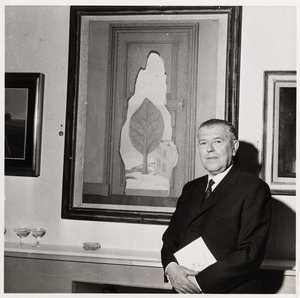
René Magritte
1898 - 1967 , bélgica
Datos clave
- Artistas Que Influyeron:
- Impresionismo
- Futurismo
- Cubismo
- Estilo Artístico: Surrealismo
- Fecha De Muerte: 15 de agosto de 1967
- Fecha De Nacimiento: 21 de noviembre de 1898
- Influenciado A Artistas:
- Pop Art
- Minimalismo
- Arte conceptual
- Lugar De Nacimiento: Lessines, Bélgica
- Nacionalidad: Belga
- Nombre Completo: René François Ghislain Magritte
- Obras Notables:
- Le Jockey Perdu
- Les Amants
- La traición de las imágenes
- Tiempo transcurrido
- La condición humana
Artículos relacionados
10 Obras Maestras del Surrealismo que Cambiaron el Arte para Siempre
Explora 10 obras maestras del surrealismo que desafían la realidad. Desde Dalí hasta Magritte, descubre la historia y técnica de estos iconos del arte. Encuentra reproducciones de calidad de museo para tu colección en OriginalUniqueArt.com. ¡Explora la colección completa online!
Sueños y Distorsiones: Las 10 Obras Maestras del Surrealismo que Cambiaron el Arte
Explora las 10 obras maestras del surrealismo que transformaron la realidad. Desde Dalí hasta Miró, descubre historias de sueños y técnica pura. Encuentra reproducciones de calidad museo para tu colección en OriginalUniqueArt.com. ¡Explora la colección completa online!

Sueños Revelados: Las 10 Mejores Obras Maestras del Surrealismo
Explora los paisajes oníricos del surrealismo a través de 10 obras maestras de Dalí, Magritte y Kahlo. Descubre la historia y técnica detrás de cada lienzo y encuentra reproducciones de alta calidad para tu colección. Explora la colección completa en OriginalUniqueArt.com.

Sueños Revelados: Las 10 Obras Maestras del Surrealismo que Cambiaron el Arte
Explora los sueños del subconsciente con las 10 obras maestras del surrealismo. Desde Dalí hasta Magritte, descubre la historia y el simbolismo de estos iconos del arte. Encuentra reproducciones al óleo de calidad museo en OriginalUniqueArt.com. ¡Explora la colección completa online!

10 Obras Maestras del Surrealismo que Cambiaron el Arte para Siempre
Explora 10 obras maestras del surrealismo que desafían la realidad. Desde Dalí hasta Frida Kahlo, descubre la historia y técnica de estos iconos del arte para inspirar tu decoración con reproducciones de museo. Explora la colección completa en OriginalUniqueArt.com.