- Inicio

- Impresión en lienzo
- René Magritte
- Blue cinema

 Encargar reproducción Comprar imagen en alta resolución
 Enviar
 Compartir
 Detalles
 Añadir a favoritos

 Descargar
 Similares
 Radiografía
 Presentación de diapositivas
Blue cinema


 Ver más
Giclée / Impresión de arte
Impresión giclée o en lienzo de calidad de museo con producción rápida y opciones de acabado flexibles.




P118B $10

P118H $10

P118W $10

P438Z $10

P508JH $12

P508YH $12

P805H $10

P805Z $10

P919BZ $10

P919G $10

P919XJ $10

P959ZH $10

P968JZ $12

W106C $8

W218G $10

W218JH $8

W218Y $10

W307PJ $10

W316G $10

W316PJ $8

W316Y $10

W398PJ $8

W4111J $10

W500HY $15

W500JH $15

W692G $12

W849H $8

W940BG $15

W953PJ $8




Elija entre nuestros tamaños predefinidos que respetan las proporciones originales de la obra.

Puede introducir sus propias dimensiones para adaptarse a un marco o espacio específico. Si el tamaño seleccionado no coincide con las proporciones de la imagen original, recortaremos la obra de arte o extenderemos la imagen con un borde con efecto espejo o de color sólido. Se enviará una maqueta digital para su aprobación antes de que comience la producción.
Tenga en cuenta que la vista previa en pantalla no refleja el recorte o la extensión real. Solo la maqueta mostrará con precisión la composición final.
Aunque existen tamaños personalizados, recomendamos seleccionar una dimensión de la lista predefinida para preservar las proporciones originales.
Entrega mundial () en 2 semanas en lugar de las 4/5 semanas estándar. (22 julio)

Envío exprés gratuito a todo el mundo

Lienzo de lino de alta calidad

Seguro de envío total

Garantía de reembolso de impuestos aduaneros

Garantía de fidelidad de color

Política de devolución de 60 días (solo por defectos)

Garantía de devolución del 100% del dinero

Descuento por pedido múltiple
 La opción de vidrio solo está disponible en tamaños inferiores a 110 cm.

Blue cinema
Giclée / Impresión de arte
Tamaño de la reproducción
-


Precio total final
-
Descripción de la obra
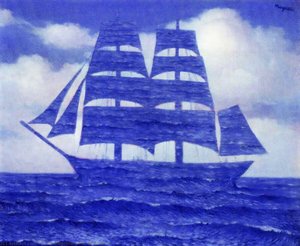
A Portrait of Illusion: René Magritte's "Blue Cinema"
René Magritte’s “Blue Cinema,” painted in 1925, is more than just a depiction of a woman posing before a cinema; it’s a meticulously constructed meditation on perception, identity, and the deceptive nature of reality. Executed during a pivotal moment in Magritte's artistic development – a period marked by his burgeoning interest in Surrealism while retaining a strong connection to classical painting techniques – this work exemplifies his signature style: a deliberate disruption of familiar visual conventions.
- Subject and Composition: The central figure, a woman dressed in a simple yet elegant dress, stands confidently before the “Cinema Blue,” her posture suggesting both invitation and detachment. The inclusion of two balloons – one playfully hovering above her head, the other receding into the background – adds an element of whimsical incongruity, further destabilizing any straightforward interpretation.
- Color Palette: Magritte’s masterful use of color is immediately striking. The dominant blue of the cinema's sign and curtain creates a cool, almost melancholic atmosphere, contrasting sharply with the warmer tones of the woman’s dress and the red accents within the scene. This deliberate juxtaposition amplifies the painting’s unsettling effect.
The Seeds of Surrealism: Influences and Techniques
Painted in 1925, “Blue Cinema” reflects Magritte's early explorations into Surrealist themes while firmly rooted in the traditions of Flemish realism. He was deeply influenced by artists like Jan van Eyck, known for his meticulous detail and exploration of optics, a fascination that would become central to Magritte’s own approach. The painting’s precise rendering – the smooth application of paint, the careful modeling of form – speaks to this influence. However, unlike Van Eyck's often celebratory depictions, Magritte employs these techniques to create an atmosphere of unease and ambiguity. The use of a photographic style, reminiscent of early advertising photography, adds another layer of complexity, blurring the lines between reality and representation.
- Technique: Magritte utilized a layering technique, building up thin glazes of color to achieve remarkable luminosity and depth. His brushwork is almost invisible, contributing to the painting’s smooth, polished surface – a characteristic feature of his style.
Symbolism and Emotional Resonance
"Blue Cinema" resonates with profound symbolic weight, echoing themes that would become recurring motifs in Magritte's oeuvre. The cinema itself represents a constructed reality, an illusion designed to entertain and captivate. The woman’s pose – poised yet distant – suggests a questioning of identity and the role of the observer. The obscured face of her mother, subtly alluded to through the painting’s overall mood and the recurring motif of veiled figures, is perhaps most powerfully felt here. This echoes Magritte's personal trauma and his lifelong preoccupation with hidden truths and the impossibility of truly knowing another person or their world.
- Interpretation: The painting invites viewers to consider the nature of representation itself – how images can both reflect and distort reality, and how our perceptions are shaped by cultural and psychological factors.
A Timeless Masterpiece for Your Collection
OriginalUniqueArt.com is proud to offer a meticulously crafted hand-painted reproduction of René Magritte’s “Blue Cinema.” This exceptional piece captures the essence of Magritte's genius, allowing you to bring this iconic artwork into your home or office. Perfect for collectors seeking a statement piece, or interior designers looking to infuse their spaces with a touch of Surrealist intrigue, this reproduction is an investment in art history and a testament to Magritte’s enduring legacy.
Biografía del artista
vida temprana y comienzos artísticos
René François Ghislain Magritte, un reconocido artista surrealista belga, nació el 21 de noviembre de 1898 en Lessines, provincia de Hainaut, Bélgica. Su vida temprana permanece algo misteriosa, con poco conocimiento sobre su infancia. Sin embargo, está documentado que comenzó clases de dibujo en 1910.evolución artística e influencias
El estilo artístico de Magritte evolucionó significativamente a lo largo de los años, influenciado por diversos movimientos como el impresionismo, el futurismo y el cubismo. Sus primeras pinturas, datadas alrededor de 1915, eran de estilo impresionista. De 1916 a 1918, estudió en la Academia Real de Bellas Artes de Bruselas, bajo Constant Montald.período surrealista y obras notables
En 1926, Magritte produjo su primer cuadro surrealista, El jinete perdido (Le jockey perdu), marcando el comienzo de su asociación con el movimiento surrealista. Su obra se caracteriza por imágenes provocadoras, a menudo representando objetos ordinarios en contextos inusuales, desafiando las percepciones de la realidad de los observadores.- Les amants (1927-1928), una serie de pinturas que presentan a personas con tela cubriendo sus rostros, se cree que fue inspirada por la historia de la muerte de su madre.
- Los amantes, otra pieza icónica, presenta a una pareja besándose con sus rostros cubiertos por telas blancas, invitando al espectador a reflexionar sobre el amor y la identidad. (disponible para su compra como una reproducción de pintura al óleo hecha a mano o impresión en lienzo en OriginalUniqueArt.com)
vida tardía y legado
La obra de Magritte fue exhibida en los Estados Unidos en 1936 y nuevamente en dos exposiciones retrospectivas, una en el Museo de Arte Moderno en 1965 y la otra en el Metropolitan Museum of Art en 1992. Se mantuvo comprometido con la izquierda política pero abogó por la autonomía artística. Museos notables que exhiben la obra de Magritte:- Musée royal des beaux-arts de Belgique, Bruselas, Bélgica (descubra las obras maestras del musée royal des beaux-arts de belgique en OriginalUniqueArt.com)
- Musée Magritte, parte del musée royal des beaux-arts de Belgique, que exhibe la colección mundial más grande de obras de Magritte.
Conclusión
El legado de René Magritte como maestro surrealista perdura, con sus imágenes provocadoras que continúan inspirando e intrigando. Su obra, caracterizada por su mezcla única del ordinario y lo inesperado, sigue siendo un pilar fundamental del arte surrealista. Más información sobre René Magritte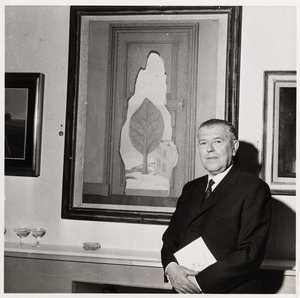
René Magritte
1898 - 1967 , bélgica
Datos clave
- Artistas Que Influyeron:
- Impresionismo
- Futurismo
- Cubismo
- Estilo Artístico: Surrealismo
- Fecha De Muerte: 15 de agosto de 1967
- Fecha De Nacimiento: 21 de noviembre de 1898
- Influenciado A Artistas:
- Pop Art
- Minimalismo
- Arte conceptual
- Lugar De Nacimiento: Lessines, Bélgica
- Nacionalidad: Belga
- Nombre Completo: René François Ghislain Magritte
- Obras Notables:
- Le Jockey Perdu
- Les Amants
- La traición de las imágenes
- Tiempo transcurrido
- La condición humana
Artículos relacionados
René Magritte: Las 25 Obras Maestras del Surrealismo para Inspirar tu Hogar
Descubre las 25 obras maestras de René Magritte, el rey del surrealismo. Explora su arte moderno, significado oculto y técnica única. Encuentra reproducciones de alta calidad e inspira tu hogar con OriginalUniqueArt.com.
Las 25 Obras Maestras del MET: Arte, Historia y Decoración para tu Hogar
Descubre las 25 obras maestras del MET de Nueva York: Van Gogh, Monet, Rembrandt y más. Explora la historia, el arte y los colores que inspiran tu hogar. Reproducciones de museo en OriginalUniqueArt.com.

Henri Matisse: Las 25 Obras Maestras que Definieron un Genio del Color | OriginalUniqueArt
Descubre las 25 obras maestras de Henri Matisse, el rey del color y padre del fauvismo. Explora su arte moderno, lienzos vibrantes y la historia detrás de cada pintura icónica. Encuentra reproducciones de alta calidad en OriginalUniqueArt.com.
Las 25 Obras Maestras del National Gallery of Art: Arte, Historia y Decoración Exclusiva
Descubre las 25 obras maestras del National Gallery of Art, Washington. Explora la historia de Cézanne, Matisse, Picasso y más. Encuentra reproducciones de arte exclusivas e ideas para decorar tu hogar con lienzos inolvidables en OriginalUniqueArt.com.
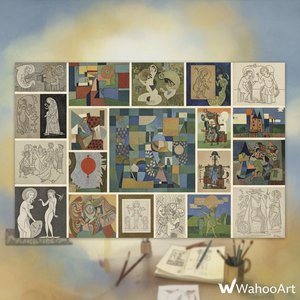
Paul Klee: Las 25 Obras Maestras que Definen un Genio del Arte Moderno | OriginalUniqueArt
Descubre las 25 obras maestras de Paul Klee, el genio del arte moderno. Explora su expresionismo único, composiciones abstractas y vibrantes paletas de colores. Reproducciones de alta calidad y decoración con arte en OriginalUniqueArt.com.