Ver en contexto
 Enviar
 Compartir
 Detalles

 Descargar
 Similares
 Radiografía
 Presentación de diapositivas
 Estadísticas
Autoportrait


 Ver más
Giclée / Impresión de arte
Impresiones giclée o en lienzo de calidad de museo con producción rápida y opciones de acabado flexibles. ( Comprar pintura hecha a mano Cambiar a imagen digital)




P118B $10

P118H $10

P118W $10

P438Z $10

P508JH $12

P508YH $12

P805H $10

P805Z $10

P919BZ $10

P919G $10

P919XJ $10

P959ZH $10

P968JZ $12

W106C $8

W218G $10

W218JH $8

W218Y $10

W307PJ $10

W316G $10

W316PJ $8

W316Y $10

W398PJ $8

W4111J $10

W500HY $15

W500JH $15

W692G $12

W849H $8

W940BG $15

W953PJ $8




Elija entre nuestros tamaños predefinidos que respetan las proporciones originales de la obra.

Puede introducir sus propias dimensiones para adaptarse a un marco o espacio específico. Si el tamaño seleccionado no coincide con las proporciones de la imagen original, recortaremos la obra de arte o extenderemos la imagen con un borde con efecto espejo o de color sólido. Se enviará una maqueta digital para su aprobación antes de que comience la producción.
Tenga en cuenta que la vista previa en pantalla no refleja el recorte o la extensión real. Solo la maqueta mostrará con precisión la composición final.
Aunque existen tamaños personalizados, recomendamos seleccionar una dimensión de la lista predefinida para preservar las proporciones originales.
Envío a todo el mundo () en 2 semanas en lugar de las 4/5 semanas estándar. (13 septiembre)

Envío exprés gratuito a todo el mundo

Lienzo de lino de alta calidad

Seguro de envío total

Garantía de reembolso de impuestos aduaneros

Garantía de fidelidad cromática exacta

Política de devolución de 100 días (solo por defectos)

Garantía de devolución del 100% del dinero

Descuento por cantidad
 La opción de vidrio solo está disponible en tamaños inferiores a 110 cm.

Autoportrait
Giclée / Impresión de arte
Dimensiones de la reproducción
-


Precio total final
$ 80
René Magritte’s “Self Portrait,” 1923: A Fragmented Reflection of Surrealist Vision
This striking self-portrait by René Magritte, executed in 1923, transcends mere likeness—it embodies the nascent spirit of Surrealism and represents a pivotal moment in Magritte's artistic evolution. Initially conceived as an exploration beyond Impressionistic conventions, this artwork swiftly abandons traditional representation, opting instead for a radical deconstruction that anticipates Magritte’s later masterpieces brimming with enigmatic symbolism. The piece isn’t simply about depicting the artist; it’s about presenting a fractured psyche grappling with identity and perception—a core preoccupation of Surrealist thought.Style & Technique: Cubism's Echoes Amidst Emotional Depth
The artwork is powerfully influenced by Cubism, albeit subtly diluted from Picasso’s or Braque’s analytical approach. Magritte skillfully employs geometric shapes – triangles, rectangles, and trapezoids – to dissect the subject’s face and torso into fragmented planes. However, unlike his predecessors, Magritte prioritizes emotional resonance over strict geometrical analysis. Bold contrasts between yellows, reds, and blacks dominate the palette, intensifying a palpable sense of unease and dynamism. The paint application is remarkably smooth, creating a flattened picture plane despite the implied depth achieved through layering—a technique that speaks to Magritte’s desire to bypass literal depiction and tap into subconscious associations. Sharp lines delineate each shape, contributing to an overall rigidity and precision that underscores the artwork's intellectual ambition.Historical Context: The Birth of Surrealist Iconography
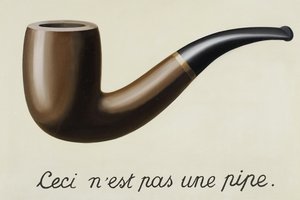
Born in 1898, Magritte embarked on his artistic journey with Impressionistic explorations before gravitating towards Futurism and Cubism. This self-portrait marks a crucial transitional period—a moment where he simultaneously retains Cubist tendencies while foreshadowing the Surrealist aesthetic that would define his career. The year 1923 was formative; it coincided with Magritte’s initial encounter with Giorgio de Chirico's *The Song of Love*, an experience described as “one of the most moving moments of my life,” triggering a profound shift in his artistic perspective. This seminal influence propelled him toward Surrealism, where he would dismantle accepted notions of reality and delve into the realm of dreams and irrational thought—a path culminating in iconic works like *The Treachery of Images* ("This is not a pipe").Symbolism & Emotional Impact: Beyond Appearance
Beyond its formal stylistic considerations, “Self Portrait” resonates with subtle symbolic elements. The dominant colors – yellow, red, and black – are deliberately chosen to convey tension and psychological complexity. Magritte’s masterful use of perspective—flattened rather than realistic—further emphasizes this emotional dimension, inviting viewers to contemplate the artwork's deeper meanings. Consider the deliberate fragmentation of form; it mirrors the artist’s own internal struggle with self-representation, prompting us to question what constitutes “truth” in art and life. The image lingers in the mind long after viewing, embodying Magritte’s enduring fascination with illusion and deception—themes that would become central to his Surrealist oeuvre.- Material: Oil paints on canvas
- Size: Unknown
- Date: 1923
Biografía del artista
vida temprana y comienzos artísticos
René François Ghislain Magritte, un reconocido artista surrealista belga, nació el 21 de noviembre de 1898 en Lessines, provincia de Hainaut, Bélgica. Su vida temprana permanece algo misteriosa, con poco conocimiento sobre su infancia. Sin embargo, está documentado que comenzó clases de dibujo en 1910.evolución artística e influencias
El estilo artístico de Magritte evolucionó significativamente a lo largo de los años, influenciado por diversos movimientos como el impresionismo, el futurismo y el cubismo. Sus primeras pinturas, datadas alrededor de 1915, eran de estilo impresionista. De 1916 a 1918, estudió en la Academia Real de Bellas Artes de Bruselas, bajo Constant Montald.período surrealista y obras notables
En 1926, Magritte produjo su primer cuadro surrealista, El jinete perdido (Le jockey perdu), marcando el comienzo de su asociación con el movimiento surrealista. Su obra se caracteriza por imágenes provocadoras, a menudo representando objetos ordinarios en contextos inusuales, desafiando las percepciones de la realidad de los observadores.- Les amants (1927-1928), una serie de pinturas que presentan a personas con tela cubriendo sus rostros, se cree que fue inspirada por la historia de la muerte de su madre.
- Los amantes, otra pieza icónica, presenta a una pareja besándose con sus rostros cubiertos por telas blancas, invitando al espectador a reflexionar sobre el amor y la identidad. (disponible para su compra como una reproducción de pintura al óleo hecha a mano o impresión en lienzo en OriginalUniqueArt.com)
vida tardía y legado
La obra de Magritte fue exhibida en los Estados Unidos en 1936 y nuevamente en dos exposiciones retrospectivas, una en el Museo de Arte Moderno en 1965 y la otra en el Metropolitan Museum of Art en 1992. Se mantuvo comprometido con la izquierda política pero abogó por la autonomía artística. Museos notables que exhiben la obra de Magritte:- Musée royal des beaux-arts de Belgique, Bruselas, Bélgica (descubra las obras maestras del musée royal des beaux-arts de belgique en OriginalUniqueArt.com)
- Musée Magritte, parte del musée royal des beaux-arts de Belgique, que exhibe la colección mundial más grande de obras de Magritte.
Conclusión
El legado de René Magritte como maestro surrealista perdura, con sus imágenes provocadoras que continúan inspirando e intrigando. Su obra, caracterizada por su mezcla única del ordinario y lo inesperado, sigue siendo un pilar fundamental del arte surrealista. Más información sobre René Magritte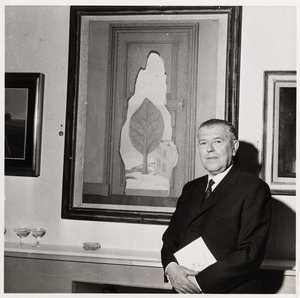
René Magritte
1898 - 1967 , bélgica
Datos clave
- Artistas Que Influyeron:
- Impresionismo
- Futurismo
- Cubismo
- Estilo Artístico: Surrealismo
- Fecha De Muerte: 15 de agosto de 1967
- Fecha De Nacimiento: 21 de noviembre de 1898
- Influenciado A Artistas:
- Pop Art
- Minimalismo
- Arte conceptual
- Lugar De Nacimiento: Lessines, Bélgica
- Nacionalidad: Belga
- Nombre Completo: René François Ghislain Magritte
- Obras Notables:
- Le Jockey Perdu
- Les Amants
- La traición de las imágenes
- Tiempo transcurrido
- La condición humana
Artículos relacionados
Fernand Léger: Las 25 Obras Maestras del Tubismo y la Vanguardia Francesa | OriginalUniqueArt
Descubre las 25 obras maestras de Fernand Léger, pionero del tubismo y la vanguardia francesa. Explora su estética industrial, composiciones geométricas y vibrantes colores. Reproducciones de arte exclusivas en OriginalUniqueArt.com.
Los 10 Maestros del Surrealismo: Obras que Revolucionaron el Arte y la Decoración
Descubre los 10 lienzos surrealistas más influyentes de artistas como Dalí y Magritte. Explora la historia, el simbolismo y las técnicas del movimiento surrealista. Encuentra reproducciones de arte de museo en OriginalUniqueArt.com.

The Treachery of Images: Decoding René Magritte’s Surrealist Vision and the Paradox of Representation
Delve into the profound mysteries of René Magritte’s Surrealism. Explore an expert analysis of 'The Treachery of Images,' decoding the philosophical paradoxes and visual subversions that redefined modern art history for collectors and connoisseurs alike.
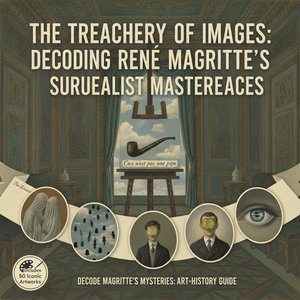
The Treachery of Images: Decoding René Magritte’s Surrealist Philosophy and the Paradox of Representation
Explore the profound mystery of René Magritte’s 'The Treachery of Images.' Dive into an expert analysis of his Surrealist philosophy, the paradox of representation, and how he challenged reality through the interplay of language and visual perception.

10 Obras de Arte Audaces que Transformarán tu Espacio | OriginalUniqueArt
Descubre 10 obras de arte audaces que definen la pasión y el impacto visual. Explora la historia detrás de artistas como Van Gogh, Matisse y Kahlo. Encuentra reproducciones de museo en OriginalUniqueArt.com.