Vista previa
 Compartir
 Compartir
 Ver detalles
 Guía
Guía

 Descargar
 Ver artículos similares
 Radiografía
 Presentación de diapositivas
 Estadísticas
Self-portrait


 Leer más
Giclée / Impresión de arte
Impresiones giclée o en lienzo de calidad de museo con producción rápida y opciones de acabado flexibles. ( Encargar reproducción pintada a mano Ver versión en imagen digital)




P118B €10

P118H €10

P118W €10

P438Z €10

P508JH €12

P508YH €12

P805H €10

P805Z €10

P919BZ €10

P919G €10

P919XJ €10

P959ZH €10

P968JZ €12

W106C €8

W218G €10

W218JH €8

W218Y €10

W307PJ €10

W316G €10

W316PJ €8

W316Y €10

W398PJ €8

W4111J €10

W500HY €15

W500JH €15

W692G €12

W849H €8

W940BG €15

W953PJ €8




Elija entre nuestros tamaños predefinidos que respetan las proporciones originales de la obra.

Introduzca el ancho y el alto que necesite para adaptarse a su marco o pared. Una impresión solo puede recortarse, nunca hacerse más grande que la imagen original, por lo que un tamaño con una forma distinta perderá parte de la obra. Le enviaremos una maqueta digital para su aprobación antes de realizar cualquier impresión. La imagen que se muestra en esta página no refleja el recorte real; solo la maqueta lo hace.
Envío a todo el mundo () en 2 semanas en lugar de las 4/5 semanas estándar. (22 octubre)

Envío exprés gratuito a todo el mundo

Lienzo de lino de alta calidad

Seguro de envío completo

Garantía de reembolso de impuestos aduaneros

Garantía de fidelidad cromática exacta

Política de devolución de 100 días (solo por defectos)

Garantía de devolución del 100% del dinero

Oferta por volumen
 La opción de vidrio solo está disponible en tamaños inferiores a 110 cm.

Self-portrait
Giclée / Impresión de arte
Tamaño de la reproducción
-


Precio total
€ 70
A Window into the Soul: Rembrandt Peale’s “Self-Portrait”
Rembrandt Peale's "Self-Portrait," executed in 1629, is more than just a likeness; it’s a profound meditation on identity, ambition, and the burgeoning spirit of early America. Created during a period of immense artistic ferment – mirroring the European masters while simultaneously forging a distinctly American style – this etching offers a remarkably intimate glimpse into the mind of a man poised to become a pivotal figure in the nation's cultural landscape. The portrait itself is deceptively simple: a young Peale, dressed in dark attire and adorned with a stylish hat, gazes directly at the viewer with an expression that balances quiet contemplation and determined resolve.
The technical mastery on display is immediately striking. Peale’s skill as an engraver is evident in the meticulous rendering of textures – from the smooth fabric of his coat to the intricate details of his hair. He employs a sophisticated range of hatching and cross-hatching, techniques borrowed from Northern European masters like Rembrandt himself, to create subtle gradations of tone and volume. These lines aren’t merely decorative; they are carefully orchestrated to define form, suggest shadow, and imbue the portrait with a remarkable sense of depth and realism. The stark contrast between light and dark – a hallmark of his style – draws attention to key features, particularly the eyes, which seem to hold both intelligence and vulnerability.
The Legacy of Charles Willson Peale
Understanding “Self-Portrait” requires acknowledging its context within the life and career of Charles Willson Peale. As a painter, museum founder, and ardent naturalist, Peale was deeply invested in promoting art and science to the American public. His ambition wasn’t simply to create beautiful images; he sought to educate, inspire, and foster a sense of national pride through artistic representation. Rembrandt Peale, his son, inherited this legacy, absorbing his father's passion for portraiture and his belief in art’s power to shape society. The young Rembrandt clearly aimed to emulate his father’s success, establishing himself as a leading portraitist within the rapidly evolving American art scene.
The portrait itself can be seen as a deliberate statement of intent – a visual declaration of Peale's artistic aspirations and his commitment to upholding a tradition of excellence. It reflects not only his personal ambitions but also the broader cultural values of the time, where self-representation was increasingly valued as a means of asserting one’s identity and status.
Symbolism and the Portraiture of Identity
While the portrait appears straightforward, it's rich with subtle symbolic elements. The hat, fashionable for the period, suggests sophistication and social standing. The dark clothing, often associated with seriousness and introspection, reinforces the sense of thoughtful contemplation. However, the most compelling aspect is Peale’s gaze – direct and unwavering – which invites a connection between the artist and the viewer. This directness was considered crucial in portraiture; it demanded engagement and fostered a feeling of intimacy.
Furthermore, the oval border framing the image—a common device in portraits of this era—creates a sense of formality and timelessness. It elevates the subject to an almost iconic status, suggesting that Peale intended his self-portrait to be more than just a likeness; it was meant to embody a particular ideal of masculinity and artistic achievement.
A Timeless Masterpiece – Reimagined
Today, “Self-Portrait” stands as a testament to the remarkable talent of Rembrandt Peale and a vital document in the history of American art. Its enduring appeal lies not only in its technical brilliance but also in its profound exploration of human identity. If you’re seeking a piece that embodies both artistic skill and emotional resonance, consider commissioning a high-quality reproduction from OriginalUniqueArt.com. These meticulously crafted reproductions capture the essence of Peale's original work, allowing you to bring this timeless masterpiece into your home or office – a window into the soul of an artist and a pivotal moment in American history.
Preguntas y respuestas
¿Puedo ver una vista previa de "Self-portrait" de Rembrandt Peale antes de realizar el pedido?
Para previsualizar una reproducción de "Self-portrait" de Rembrandt Peale, abra la página de Vista previa de la obra.
¿Qué temas aparecen en "Self-portrait" de Rembrandt Peale?
"Self-portrait" de Rembrandt Peale representa: portrait, self-portrait, etching, black & white, realism, dutch art, rembrandt peale, 18th century.
¿Cuál es la identidad cromática de "Self-portrait" de Rembrandt Peale?
"Self-portrait" se define por una paleta de Neutrals liderada por Espresso (#46443e).
Biografía del artista
Primeros años y formación
Rembrandt Peale, un artista y conservador de museo estadounidense, nació el 22 de febrero de 1778 en Bucks County, Pensilvania. Fue el tercer hijo de seis hijos sobrevivientes de su madre, Rachel Brewer, y su padre, Charles Willson Peale, un artista notable. El nombre de Rembrandt fue inspirado por el pintor y grabador holandés del siglo XVII Rembrandt Harmenszoon van Rijn. Su padre enseñó a todos sus hijos a pintar paisajes y retratos, y tutorizó a Rembrandt en las artes y las ciencias.Carrera artística
El estilo de Peale fue influenciado por el neoclasicismo francés después de una estancia en París a principios de los treinta. Comenzó a dibujar a la edad de 8 años y completó su primer autorretrato a los 13, mostrando su dominio temprano. La prolífica carrera de Peale incluyó más de 70 réplicas detalladas, incluyendo retratos de los presidentes George Washington y Thomas Jefferson.- Obras notables:
- George Washington (tipo portilla) (1795), ahora en la Galería Nacional de Retratos (Londres, Reino Unido), [https://OriginalUniqueArt.com/@@/d44spg-rembrandt-peale-george-washington-(porthole-type)](pintura de 'Rembrandt Peale' | Rembrandt Peale: George Washington (tipo portilla))
- Hombre con barba (sin fecha), [https://OriginalUniqueArt.com/@@/d329cc-rembrandt-peale-man-with-a-beard](pintura de 'Rembrandt Peale' | Rembrandt Peale: Hombre con barba)
- Retrato del Rev. John Pierpont (1785-1866), [https://OriginalUniqueArt.com/@@/d4nqk5-rembrandt-peale-portrait-of-the-rev-john-pierpont-(1785-1866)](pintura de 'Rembrandt Peale' | Rembrandt Peale: Retrato del Rev. John Pierpont (1785-1866))
Museo y legado
Peale lanzó su primer museo en Baltimore, Maryland, el 15 de agosto de 1814, que posteriormente sirvió como el segundo ayuntamiento de Baltimore y finalmente fue restaurado como el Museo Peale. Su legado continúa siendo celebrado a través de sus numerosos retratos, ahora forman parte de varias colecciones de museos, incluyendo la Galería Nacional de Retratos (Washington, Estados Unidos), [https://OriginalUniqueArt.com/@/rembrandt-peale](artista: Rembrandt Peale | 243 obras de arte).Conclusión
La prolífica carrera de Rembrandt Peale como artista y conservador de museo estadounidense ha dejado un impacto duradero en el mundo del arte. Sus numerosos retratos, incluyendo los de George Washington y Thomas Jefferson, continúan siendo celebrados por su significado histórico y valor artístico.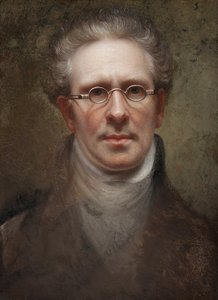
Rembrandt Peale
1778 - 1860 , Estados Unidos de América
Datos clave
- Artistas Que Influyeron:
- Rembrandt Harmenszoon van Rijn
- Charles Willson Peale
- Lugar De Nacimiento: Bucks County, EE. UU.
- Movimiento Artístico: Neoclasicismo
- Nacionalidad: Estadounidense
- Nombre Completo: Rembrandt Peale
- Notable Obras:
- George Washington (tipo portilla)
- Hombre con barba
- Retrato del Rev. John Pierpont
Artículos relacionados

Rembrandt van Rijn: Las 25 Obras Maestras que Definen un Genio | Arte, Historia y Decoración
Descubre las 25 obras maestras de Rembrandt van Rijn, el genio del barroco holandés. Explora su historia, técnica y simbolismo en retratos icónicos como 'La Ronda Nocturna'. Encuentra reproducciones de arte exclusivas para decorar tu hogar con OriginalUniqueArt.com.

El Aguafuerte: Un Recorrido Histórico por su Técnica, Cualidades Estéticas y Significado Duradero
Descubre la fascinante historia y técnica del aguafuerte. Explora su evolución artística, los maestros que lo dominaron y sus cualidades estéticas únicas. Guía experta para amantes del arte.

Las 10 Pinturas Más Famosas Dominadas por el Negro | Arte y Decoración
Descubre las 10 pinturas más impactantes dominadas por el negro. Explora obras maestras de Rembrandt, Goya y Rothko, su historia y significado. Encuentra reproducciones de arte exclusivas para transformar tu hogar en .
Las 10 Grabados Legendarios que Revolucionaron el Arte | OriginalUniqueArt
Descubre los 10 grabados legendarios que transformaron la historia del arte. Explora las obras maestras de Rembrandt, Goya y Dürer. Encuentra reproducciones de alta calidad e inspírate para decorar tu hogar con arte clásico en OriginalUniqueArt.com.

The Intricate World of Etching: A Historical Survey of Technique, Aesthetic Evolution, and Enduring Artistic Impact
Explore the rich history of etching, from its origins to modern practice. Discover techniques, key artists like Rembrandt, and insights for collectors. A comprehensive guide by OriginalUniqueArt.