

 Vista previa
 Compartir
 Compartir
 Ver detalles
 Guía
Guía

 Descargar
 Ver artículos similares
 Radiografía
 Presentación de diapositivas
 Estadísticas
Hanuman
 Acrylic On Canvas
- WallArt
- Tanjore School Painting
 1870
1870- 19th Century
 La Fundación del Patrimonio de Raja Ravi Varma
 Leer más
Adquiera una imagen digital de alta resolución y optimizada, muy superior a la vista previa en línea.
Cada archivo es preparado meticulosamente por nuestros especialistas internos mediante el uso de herramientas avanzadas y un experto retoque manual. Nos aseguramos de que cada imagen posea una claridad excepcional, una precisión cromática impecable y un detalle minucioso.
El archivo final se entrega por correo electrónico en un plazo de 72 horas, optimizado para su uso inmediato en entornos profesionales, editoriales y de impresión. Esta es la misma calidad en la que confían los estudios de diseño, las editoriales y las galerías de primer nivel.
Imagen Digital
Descarga un archivo de alta resolución para exhibición personal, impresión y proyectos creativos. ( Cambiar a formato impreso Encargar reproducción pintada a mano)
Incluido en cada pedido de imágenes digitales
Entrega digital experta, garantizada.
Al elegir OriginalUniqueArt.com, no solo está adquiriendo una imagen; está recibiendo una obra de arte digital mejorada profesionalmente, elaborada con precisión y respaldada por una garantía de satisfacción. Esto es todo lo que incluye su pedido, automáticamente:

Entrega inmediata por email
Recibirá su archivo de imagen digital en alta resolución por correo electrónico en un plazo de 72 horas tras realizar su pedido, listo para su uso inmediato.

Archivo digital optimizado por IA
Su obra de arte se optimiza profesionalmente mediante herramientas avanzadas de IA y edición manual, garantizando el máximo detalle, claridad y precisión cromática.

Reenvío gratuito de por vida
¿Has borrado o perdido tu archivo por error? No te preocupes: te lo volveremos a enviar en cualquier momento, sin coste adicional.

Sin gastos de importación, siempre
Disfrute de su obra de arte al instante sin aduanas, aranceles ni gastos de envío; las descargas digitales siempre están libres de impuestos.

Garantía de precisión de color
Garantizamos que su imagen digital refleje los colores originales con la mayor fidelidad posible, mediante el uso de herramientas profesionales y gestión del color.

Garantía de satisfacción de 100 días
Si no está satisfecho con su imagen digital, la revisaremos o le reembolsaremos el 100% en un plazo de 100 días, sin preguntas.

100% Garantía de devolución de dinero
¿No está satisfecho? Obtenga un reembolso completo dentro de los 100 días posteriores a la recepción de su archivo digital, sin preguntas.

Descuentos por volumen
Compra 3 imágenes, ahorra 10% - Compra 5, ahorra 15% - Compra 10+, ahorra 20%. Ideal para proyectos creativos, galerías y agencias.
A Divine Discourse: The Early Mastery of Raja Ravi Varma
In the quiet, focused atmosphere of 1870, a young Raja Ravi Varma captured a moment of profound spiritual instruction that would resonate through the annals of Indian art history. His painting, Hanuman—often referred to as Hanuman’s Discourse—serves as a breathtaking window into a transitional period of his creative evolution. At this stage in his career, the artist was still deeply enamored with the Tanjore style, a vibrant and ornate school of painting he encountered during his time at the Travancore court. This influence is palpably present in the meticulous detail of the characters' attire, particularly in the parabolic-shaped crowns that adorn the divine figures. These regal ornaments, reminiscent of the heavy gold work found in Tanjore traditions, lend a sense of sacred weight and majesty to the composition, signaling the artist's ability to marry regional decorative splendor with an emerging realism.
The painting presents a tightly structured narrative within a small frame, where every figure plays a vital role in the unfolding drama. At the heart of the scene sits Rama, occupying the central position as the source of wisdom. His posture is one of calm authority, his hands performing the teaching mudra, a symbolic gesture that directs the viewer's eye to the instructional flow of the moment. Beside him, the characters are gathered in an intimate circle of learning. As Hanuman reads intently from ancient palm leaves, the tension between the physical act of reading and the spiritual act of receiving knowledge becomes palpable. The artist’s burgeoning maturity is evident in the way he renders the faces; there is a delicate balance of beauty and profound expression that breathes life into these mythological icons, transforming them from mere deities into relatable, emotive beings.
A Fusion of Traditions and Techniques
For the discerning collector or interior designer, this work represents more than just a religious depiction; it is a masterclass in the fusion of European academic techniques and traditional Indian iconography. Ravi Varma was a pioneer who bridged the gap between the East and the West, utilizing the subtle shading and anatomical precision learned from Western masters to enhance the storytelling of the Puranas. In Hanuman, one can observe how light and shadow are used to create depth within the small frame, giving the figures a sculptural presence that feels almost tangible. The repetition of intricate jewels and ornate patterns across the characters creates a rhythmic visual harmony, a technique that would later become a hallmark of his more famous works, such as Sita Bhumipravesh.
The emotional impact of the piece lies in its sense of togetherness and sacred stillness. The composition draws the observer into a private moment of devotion and intellect. For those looking to adorn a space with art that evokes both cultural heritage and sophisticated elegance, a high-quality reproduction of this masterpiece offers an unparalleled opportunity. It brings into a modern interior a sense of historical continuity and a profound peace. Whether placed in a curated gallery setting or as a focal point in a luxurious living space, the painting serves as a testament to the power of art to preserve the sacred narratives of the past while maintaining a timeless, aesthetic allure that transcends generations.
Preguntas y respuestas
¿Dónde puedo comprar una imagen digital de "Hanuman" de Raja Ravi Varma?
Puede adquirir una imagen digital de "Hanuman" de Raja Ravi Varma en su página de Imagen Digital: descarga de una imagen digital en alta resolución.
¿Qué paleta y qué sentimiento combinan "Hanuman"?
"Hanuman" de Raja Ravi Varma combina una paleta de Dark con un tono Reflective.
¿Qué representa "Hanuman" de Raja Ravi Varma?
Los temas de "Hanuman" son hanuman, ravi varma, indian mythology, tanjore style, rama, palm leaves, court painting.
Biografía del artista
The Princely Brush: Raja Ravi Varma and the Dawn of Modern Indian Painting
Raja Ravi Varma, a name that resonates with artistic innovation in India, emerged from the royal lineage of Kilimanoor Palace in Kerala during the mid-19th century. Born on April 29, 1848, his life was steeped in both aristocratic tradition and an innate creative spirit. He wasn’t merely a painter; he was a cultural bridge, skillfully blending European academic techniques with the rich tapestry of Indian mythology and aesthetics. His family's long-standing connection to the Travancore royal house – indeed, two of his daughters were later adopted into that very family – provided both privilege and a deep understanding of Indian courtly life, which would profoundly influence his artistic vision. From an early age, Ravi Varma displayed a remarkable aptitude for art, nurtured by his uncle Raja Raja Varma, who initiated him into the world of drawing and painting, primarily within the Tanjore School tradition. However, young Ravi’s ambition extended beyond imitation; he sought to master techniques that would allow him to capture not just likeness but also emotion and narrative depth.Early Life & Background
Raja Ravi Varma was born into a noble family residing in Kilimanoor Palace, Travancore (present-day Kerala). His father, Ezhumavil Neelakanthan Bhattatiripad, was a respected scholar of Sanskrit and Ayurveda, hailing from the Ernakulam district. Uma Ambabayi Thampuratty, his mother, belonged to the baronial family that governed Kilimanoor Estate within the Travancore kingdom. She possessed considerable literary talent and penned *Parvati Swayamvaram*, which was published posthumously. Ravi Varma’s upbringing fostered a unique blend of artistic sensibilities—influenced by both European academic art and classical Indian traditions. Recognizing his exceptional talent, his uncle Raja Raja Varma, who served as Maharaja of Travancore, championed his artistic pursuits, enrolling him in formal training with Rama Swamy Naidu, a prominent painter from Tanjore. This mentorship instilled in Ravi Varma the foundational skills necessary for mastering watercolor and later, oil painting under Theodor Jenson, a Dutch artist stationed in India. At the tender age of 14, he began his artistic journey by sketching on the palace walls with charcoal—a practice that would foreshadow his lifelong dedication to visual art.A Fusion of Worlds: Technique and Inspiration
Raja Ravi Varma’s artistic trajectory took an unprecedented turn when he encountered the works of European masters during his travels abroad. He was captivated by the realism and meticulous precision characteristic of academic painting, diligently studying its principles—perspective, anatomy, light, and shadow—to elevate his own artistic endeavors. Unlike many contemporaries who merely replicated Western styles, Ravi Varma skillfully adapted these techniques to imbue Indian subjects with profound emotional resonance. His canvases became vibrant stages for scenes from the Ramayana, Mahabharata, and Puranas, populated by gods and goddesses rendered with remarkable naturalism. This transformative approach distinguished him from his peers and established a precedent for blending Eastern and Western artistic traditions. He didn’t merely depict religious narratives; he infused them with human emotion and psychological complexity—a hallmark of his distinctive style. Consider *Shakuntala*, where Ravi Varma portrays Shakuntalá’s longing gaze and delicate posture, conveying an unparalleled depth of feeling previously absent in Indian art.Lithographs and Public Appeal
Recognizing that original paintings were inaccessible to the majority of Indians, Raja Ravi Varma embarked on a visionary endeavor: establishing the Raja Ravi Varma Fine Arts Lithographic Press in 1894. This pioneering initiative revolutionized artistic dissemination by facilitating the mass production of affordable lithographs based on his masterpieces. Suddenly, images of Hindu deities and mythological narratives transcended social strata and geographical boundaries, adorning homes across India—a testament to Ravi Varma’s commitment to democratizing art. The lithographs weren’t mere reproductions; they were carefully crafted interpretations that captured the essence of Varma’s originals—further enhancing their visual impact and broadening their reach. This transformative step solidified his legacy as a champion of artistic accessibility and profoundly shaped public perceptions of Hindu iconography.Legacy and Enduring Influence
Raja Ravi Varma passed away in 1906, leaving behind an indelible mark on Indian art history. His groundbreaking fusion of European academic methods with Indian mythological themes irrevocably altered the course of artistic expression—establishing him as a pivotal figure who ushered in the era of modern Indian painting. His influence continues to resonate today, evident in the works of subsequent generations of artists who sought to forge a distinctly national artistic identity. Museums like The Raja Ravi Varma Heritage Foundation and The Ganesh Shivaswamy Foundation diligently preserve and celebrate his art—ensuring that his visionary spirit persists for posterity. His paintings remain powerful embodiments of beauty, spirituality, and cultural richness—masterpieces that encapsulate the transformative legacy of Raja Ravi Varma.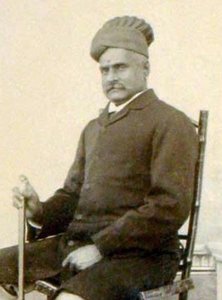
Raja Ravi Varma
1848 - 1906 , India
Datos clave
- Artistic Movement Or Style: Académico y fusión india
- Artists Or Movements Influenced By This Artist: ['Arte moderno indio']
- Artists Who Influenced This Artist: ['Maestro europeo']
- Date Of Birth: 29 abril 1848
- Date Of Death: 2 octubre 1906
- Full Name: Raja Ravi Varma
- Nationality: Indio
- Notable Artworks:
- Hansa Damayanthi
- Maharani de Travancore
- Retrato de un caballero
- Place Of Birth: Kilimanjaro, India