Ver en contexto
 Enviar
 Compartir
 Detalles
 Guía
Guía

 Descargar
 Similares
 Radiografía
 Presentación de diapositivas
 Estadísticas
St. George y el Dragón


 Ver más
Giclée / Impresión de arte
Impresiones giclée o en lienzo de calidad de museo con producción rápida y opciones de acabado flexibles. ( Comprar pintura hecha a mano Cambiar a imagen digital)




P118B €10

P118H €10

P118W €10

P438Z €10

P508JH €12

P508YH €12

P805H €10

P805Z €10

P919BZ €10

P919G €10

P919XJ €10

P959ZH €10

P968JZ €12

W106C €8

W218G €10

W218JH €8

W218Y €10

W307PJ €10

W316G €10

W316PJ €8

W316Y €10

W398PJ €8

W4111J €10

W500HY €15

W500JH €15

W692G €12

W849H €8

W940BG €15

W953PJ €8




Elija entre nuestros tamaños predefinidos que respetan las proporciones originales de la obra.

Introduzca el ancho y el alto que necesite para adaptarse a su marco o pared. Una impresión solo puede recortarse, nunca hacerse más grande que la imagen original, por lo que un tamaño con una forma distinta perderá parte de la obra. Le enviaremos una maqueta digital para su aprobación antes de realizar cualquier impresión. La imagen que se muestra en esta página no refleja el recorte real; solo la maqueta lo hace.
Envío a todo el mundo () en 2 semanas en lugar de las 4/5 semanas estándar. (25 octubre)

Envío exprés gratuito a todo el mundo

Lienzo de lino de alta calidad

Seguro de envío total

Garantía de reembolso de aranceles aduaneros

Garantía de fidelidad cromática exacta

Política de devolución de 100 días (solo por defectos)

Garantía de devolución del 100% del dinero

Descuento por cantidad
 La opción de vidrio solo está disponible en tamaños inferiores a 110 cm.

St. George y el Dragón
Giclée / Impresión de arte
Dimensiones de la reproducción
-


Precio total final
€ 70
St. George and the Dragon
The painting "St. George and the Dragon" by Raphael (Raffaello Sanzio Da Urbino) stands as a cornerstone of High Renaissance art—a testament to the artist’s unparalleled mastery of composition, color palettes, and profound emotional resonance. Executed between 1504-1506 during Raphael's formative years in Florence, this diminutive cabinet painting continues to enthrall audiences centuries later with its dramatic portrayal of Saint George vanquishing the dragon—a narrative steeped in Christian symbolism and reflecting the humanist ideals prevalent at the time.The Artistic Context
Raphael’s artistic trajectory was firmly rooted in the Florentine Renaissance, a period characterized by an exuberant revival of classical art and philosophy. Influenced profoundly by Leonardo da Vinci and Michelangelo Buonarroti, Raphael skillfully blended Greco-Roman aesthetics with Christian iconography—a hallmark of his oeuvre. “St. George and the Dragon” embodies this synthesis perfectly, drawing inspiration from biblical tales yet imbued with mythological elements characteristic of Renaissance artistic discourse. The painting served as a visual embodiment of Duke Federico Montefeltro’s patronage, aligning seamlessly with the cultural ambitions of Urbino during Raphael's time.Composition and Symbolism
The scene unfolds within a stylized forest setting—a deliberate choice designed to heighten dramatic tension and evoke a sense of otherworldly grandeur. Saint George, mounted upon a magnificent white horse, dominates the central axis of the composition, his spear poised with unwavering determination as he confronts the fearsome dragon. The horse symbolizes purity, courage, and nobility—qualities revered throughout Christian tradition. Conversely, the dragon represents evil, chaos, and pagan darkness—a formidable adversary embodying the forces opposing divine righteousness. Scattered figures observing the confrontation add to the theatrical atmosphere, emphasizing the importance of witnessing this heroic deed. Notably, two birds—one positioned near the left edge and another on the right—serve as subtle emblems of hope and redemption—visual cues reinforcing the painting’s overarching moral message.Artistic Techniques
Raphael's masterful command of oil paint allowed for an astonishing range of tonal nuances and textural richness—a technique that elevates the artwork beyond mere representation, imbuing it with palpable emotion. The diminutive size of the panel belies its monumental impact; Raphael skillfully employs perspective to create a convincing illusion of depth and movement—a hallmark of Renaissance artistic innovation. Anatomical precision is evident in the depiction of Saint George’s musculature and posture, reflecting Raphael's meticulous study of classical sculpture and demonstrating his unwavering commitment to humanist ideals. The artist’s careful attention to detail contributes significantly to the painting’s enduring beauty and symbolic power.Historical Significance
“St. George and the Dragon” initially resided within the esteemed Pierre Crozat collection before finding its permanent home in the Imperial Hermitage Museum in 1772—a journey that spanned over a century. Subsequently, it passed into the hands of Andrew Mellon, who generously donated it to the National Gallery of Art in Washington D.C., securing its place among America’s most treasured artistic treasures. Its legacy extends far beyond its physical presence; Raphael's influence on subsequent generations of artists—particularly within the Neoclassical movement—solidifies his position as one of history’s greatest creative geniuses.- Madonna with Beardless St Joseph by Raphael (Raffaello Sanzio Da Urbino)
- Self-Portrait by Raphael (R Raffaello Sanzio Da Urbino)
- Raphael
- Florentine Renaissance art
- Western painting
Preguntas y respuestas
¿Dónde se recomienda exhibir el formato Vertical de "St. George y el Dragón"?
Con su formato Vertical, se sugiere una reproducción de "St. George y el Dragón" para un Salón principal.
¿Puedo ver "St. George y el Dragón" de Rafael bajo diferentes luces?
La vista de rayos X de "St. George y el Dragón" de Rafael se encuentra en la página Radiografía de la obra: un examen interactivo de la imagen a través de once capas ópticas.
¿Qué paleta de colores utiliza "St. George y el Dragón"?
La paleta de "St. George y el Dragón" de Rafael se describe como Tonos tierra. Es una descripción concisa de los colores de la obra.
Biografía del artista
**vida temprana y formación**
Rafael (rafaello sanzio da urbino), un renombrado pintor y arquitecto italiano, nació entre el 28 de marzo y el 6 de abril de 1483, en la pequeña pero culturalmente significativa ciudad de Urbino. Su padre, Giovanni Santi, era pintor de corte para el duque, proporcionando a Rafael una exposición temprana al mundo artístico. Después de fallecer su padre a los once años, Rafael probablemente administró el taller familiar, consolidando aún más su base artística.**carrera artística e influencias**
El viaje artístico de Rafael puede categorizarse en tres fases distintas, cada una marcada por un estilo único:- primeros años en Umbría: caracterizado por la influencia de su padre y el ambiente cultural de Urbino.
- período florentino (1504-1508): absorbiendo las tradiciones artísticas de Florencia, que influyeron significativamente en su estilo.
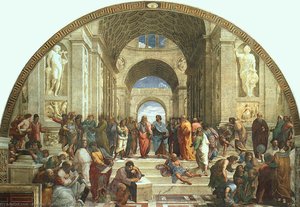
- período romano (1508-1520): trabajando para dos papas y sus asociados, produciendo algunas de sus obras más celebradas, incluyendo la escuela de Atenas en la stanza della segnatura del Vaticano.
**obras notables y legado**
Algunas de las obras notables de Rafael incluyen:- el juicio de Salomón (ver en OriginalUniqueArt)
- la madona de Esterházy (ver en OriginalUniqueArt)
- Stanze Vaticane - vista de la stanza della segnatura (ver en OriginalUniqueArt)
- San Sebastián (ver en OriginalUniqueArt)
- La dama velada (ver en OriginalUniqueArt)
**influencia y legado**
La influencia de Rafael en el arte es profunda, con su obra siendo un pilar del Renacimiento italiano. Su estilo sereno y armonioso ha sido un modelo para la pintura neoclásica, como señaló el historiador de arte Johann Joachim Winckelmann. A pesar de la influencia posterior del estilo de Miguel Ángel, Rafael sigue siendo uno de los artistas más reverenciados en la historia. ver el perfil de Rafael en OriginalUniqueArt
Rafael
1483 - 1520 , Italia
Datos clave
- Artistas Influyentes:
- Giovanni Santi
- Pietro Perugino
- Estilo Artístico: Alto Renacimiento
- Fecha De Muerte: 06/04/1520
- Fecha De Nacimiento: 28/03/1483
- Influencia En Artistas: Neoclasicismo
- Lugar De Nacimiento: Urbino, Italia
- Nacionalidad: Italiano
- Nombre Completo: Rafael (Raffaello Sanzio)
- Obras Notables:
- El Juicio de Salomón
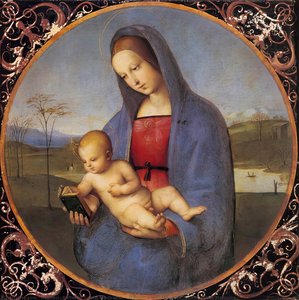
- Madonna del Cardellino
- La Escuela de Atenas
- San Sebastián
- La Dama Velada
Artículos relacionados

Georges Seurat: Las 25 Obras Maestras del Pionero Puntillista | OriginalUniqueArt
Descubre las 25 obras maestras de Georges Seurat, el innovador del puntillismo. Explora su técnica única, colores vibrantes y legado artístico en OriginalUniqueArt.com. Reproducciones de arte de museo para tu hogar.

Legado en las Paredes: Frescos Familiares que Trascienden el Tiempo
Descubre el arte del fresco muralístico para inmortalizar tu historia familiar. Expertos en frescos personalizados y técnicas ancestrales. Crea un legado visual único con .

Georges Braque: Las 25 Obras Maestras del Cubismo y su Legado en el Arte Moderno
Descubre las 25 obras maestras de Georges Braque, pionero del cubismo. Explora su innovadora técnica, colores y el legado del arte moderno francés. Reproducciones de alta calidad en OriginalUniqueArt.com. ¡Encuentra tu inspiración!
Rafael: Las 25 Obras Maestras que Definen al Genio del Renacimiento | OriginalUniqueArt
Descubre las 25 obras maestras de Rafael Sanzio, el genio del Renacimiento. Explora su historia, técnica y significado en pinturas icónicas como 'La Escuela de Atenas'. Reproducciones de arte de alta calidad para decorar tu hogar con elegancia. ¡Explora la colección completa en OriginalUniqueArt.com!

The Enduring Legacy of Fresco: Technique, History & Artistic Expression Across Cultures
Explore the rich history & enduring legacy of fresco painting! Discover ancient techniques, Giotto's masterpieces, and modern applications. Expert insights for art lovers & professionals.