Ver en contexto
 Enviar
 Compartir
 Detalles
 Guía
Guía

 Descargar
 Similares
 Radiografía
 Presentación de diapositivas
 Estadísticas
San Jorge y el Dragón
 Óleo sobre lienzo
- Arte de pared
- Alto Renacimiento
 1506
1506- Renacimiento
 29.0 x 22.0 cm
 Galería Nacional de Arte
 Ver más
Giclée / Impresión de arte
Impresiones giclée o en lienzo de calidad de museo con producción rápida y opciones de acabado flexibles. ( Comprar pintura hecha a mano Cambiar a imagen digital)




P118B €10

P118H €10

P118W €10

P438Z €10

P508JH €12

P508YH €12

P805H €10

P805Z €10

P919BZ €10

P919G €10

P919XJ €10

P959ZH €10

P968JZ €12

W106C €8

W218G €10

W218JH €8

W218Y €10

W307PJ €10

W316G €10

W316PJ €8

W316Y €10

W398PJ €8

W4111J €10

W500HY €15

W500JH €15

W692G €12

W849H €8

W940BG €15

W953PJ €8




Elija entre nuestros tamaños predefinidos que respetan las proporciones originales de la obra.

Introduzca el ancho y el alto que necesite para adaptarse a su marco o pared. Una impresión solo puede recortarse, nunca hacerse más grande que la imagen original, por lo que un tamaño con una forma distinta perderá parte de la obra. Le enviaremos una maqueta digital para su aprobación antes de realizar cualquier impresión. La imagen que se muestra en esta página no refleja el recorte real; solo la maqueta lo hace.
Envío a todo el mundo () en 2 semanas en lugar de las 4/5 semanas estándar. (26 octubre)

Envío exprés gratuito a todo el mundo

Lienzo de lino de alta calidad

Seguro de envío total

Garantía de reembolso de aranceles aduaneros

Garantía de fidelidad cromática exacta

Política de devolución de 100 días (solo por defectos)

Garantía de devolución del 100% del dinero

Descuento por cantidad
 La opción de vidrio solo está disponible en tamaños inferiores a 110 cm.

San Jorge y el Dragón
Giclée / Impresión de arte
Dimensiones de la reproducción
-


Precio total final
€ 70
Raphael's Triumph Over Darkness: An Exploration of "Saint George and the Dragon"
Raffaello Sanzio da Urbino’s “Saint George and the Dragon,” completed in 1506, stands as a cornerstone of High Renaissance art—a testament to humanist ideals fused with Christian iconography. More than just a depiction of legend, it embodies Raphael's mastery of composition, color, and textural detail, cementing his place among the artistic titans of his era.
A Classical Framework for Narrative Drama
The painting’s structure adheres rigidly to classical principles—specifically the pyramidal arrangement championed by Leonardo da Vinci. At its apex stands Saint George, radiating nobility and courage as he confronts the monstrous dragon. The horse beneath him anchors the scene, symbolizing strength and righteousness. This deliberate architectural underpinning lends an air of solemn grandeur to the narrative unfolding below.
Harmony Born From Contrasting Elements
Raphael’s palette is deliberately restrained, dominated by earthy greens, browns, and blues—colors that evoke the rugged landscape of Provence where he resided during his Roman period. However, these muted tones are punctuated by flashes of vibrant crimson in the dragon's scales and the princess’s dress—a strategic use of color to draw attention to key elements and heighten dramatic tension. The artist skillfully employs chiaroscuro—the interplay of light and shadow—to sculpt form and emphasize volume, creating a palpable sense of movement.
The Art of Illusion: Texture and Detail
What distinguishes “Saint George and the Dragon” from many other paintings of its time is Raphael’s meticulous attention to textural detail. The dragon's skin is rendered with painstaking accuracy—scales overlapping and shimmering subtly under the light, conveying a sense of reptilian realism. Similarly, Saint George’s armor gleams with polished metal, reflecting the brilliance of the Renaissance sun. Even the rough bark of the trees in the background contributes to the painting’s immersive quality.
Symbolism Rooted in Medieval Tradition
The narrative itself is deeply embedded in medieval Christian lore—a retelling of the tale of Saint George slaying a dragon to rescue Princess Angelica. The saint represents virtue and heroism, embodying the triumph of good over evil—themes that resonated powerfully with audiences of the Renaissance. The dragon symbolizes chaos and pagan darkness, representing the forces opposed to divine order. The princess embodies vulnerability and innocence, requiring protection from danger.
A Legacy of Inspiration
"Saint George and the Dragon" continues to inspire admiration for its artistic excellence and enduring symbolic power. Raphael’s masterful technique—his command of perspective, color theory, and sculptural modeling—established a standard against which subsequent artists would measure themselves. Its serene beauty and dramatic narrative remain relevant today, reminding viewers of the timeless values of courage, faith, and compassion.
Bringing Renaissance Splendor Home
A high-quality reproduction captures the essence of Raphael’s masterpiece—allowing you to experience its grandeur and sophistication in your own living space. Whether displayed prominently on a gallery wall or subtly incorporated into an interior design scheme, this artwork serves as a constant reminder of artistic brilliance and humanist ideals.
Investing in Artistic Heritage
Choosing a reproduction is not merely acquiring decoration; it’s investing in a piece of art history—a tangible connection to one of the most celebrated figures of the Renaissance. Raphael's "Saint George and the Dragon" stands as an enduring symbol of artistic achievement and humanist virtue.
Preguntas y respuestas
¿A qué movimiento y a qué época pertenece "San Jorge y el Dragón" de Rafael?
"San Jorge y el Dragón" de Rafael pertenece al movimiento Alto Renacimiento, dentro de la era Renacimiento de su creador.
¿Es "San Jorge y el Dragón" de Rafael una composición en formato vertical, horizontal o cuadrado?
"San Jorge y el Dragón" de Rafael es una composición en Vertical. Se recomienda revisar las proporciones antes de elegir un tamaño de impresión.
¿Dónde puedo comprar una imagen digital de "San Jorge y el Dragón" de Rafael?
Para obtener una copia digital de "San Jorge y el Dragón" de Rafael, puede solicitar descarga de una imagen digital en alta resolución en su página de Imagen digital de alta resolución.
Biografía del artista
**vida temprana y formación**
Rafael (rafaello sanzio da urbino), un renombrado pintor y arquitecto italiano, nació entre el 28 de marzo y el 6 de abril de 1483, en la pequeña pero culturalmente significativa ciudad de Urbino. Su padre, Giovanni Santi, era pintor de corte para el duque, proporcionando a Rafael una exposición temprana al mundo artístico. Después de fallecer su padre a los once años, Rafael probablemente administró el taller familiar, consolidando aún más su base artística.**carrera artística e influencias**
El viaje artístico de Rafael puede categorizarse en tres fases distintas, cada una marcada por un estilo único:- primeros años en Umbría: caracterizado por la influencia de su padre y el ambiente cultural de Urbino.
- período florentino (1504-1508): absorbiendo las tradiciones artísticas de Florencia, que influyeron significativamente en su estilo.
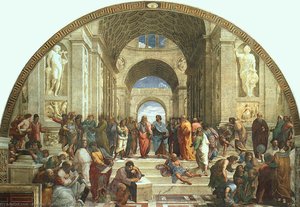
- período romano (1508-1520): trabajando para dos papas y sus asociados, produciendo algunas de sus obras más celebradas, incluyendo la escuela de Atenas en la stanza della segnatura del Vaticano.
**obras notables y legado**
Algunas de las obras notables de Rafael incluyen:- el juicio de Salomón (ver en OriginalUniqueArt)
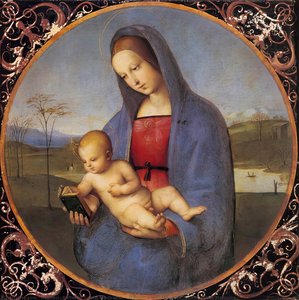
- la madona de Esterházy (ver en OriginalUniqueArt)
- Stanze Vaticane - vista de la stanza della segnatura (ver en OriginalUniqueArt)
- San Sebastián (ver en OriginalUniqueArt)
- La dama velada (ver en OriginalUniqueArt)
**influencia y legado**
La influencia de Rafael en el arte es profunda, con su obra siendo un pilar del Renacimiento italiano. Su estilo sereno y armonioso ha sido un modelo para la pintura neoclásica, como señaló el historiador de arte Johann Joachim Winckelmann. A pesar de la influencia posterior del estilo de Miguel Ángel, Rafael sigue siendo uno de los artistas más reverenciados en la historia. ver el perfil de Rafael en OriginalUniqueArt
Rafael
1483 - 1520 , Italia
Datos clave
- Artistas Influyentes:
- Giovanni Santi
- Pietro Perugino
- Estilo Artístico: Alto Renacimiento
- Fecha De Muerte: 06/04/1520
- Fecha De Nacimiento: 28/03/1483
- Influencia En Artistas: Neoclasicismo
- Lugar De Nacimiento: Urbino, Italia
- Nacionalidad: Italiano
- Nombre Completo: Rafael (Raffaello Sanzio)
- Obras Notables:
- El Juicio de Salomón
- Madonna del Cardellino
- La Escuela de Atenas
- San Sebastián
- La Dama Velada
Artículos relacionados

Georges Braque: Las 25 Obras Maestras del Cubismo y su Legado en el Arte Moderno
Descubre las 25 obras maestras de Georges Braque, pionero del cubismo. Explora su innovadora técnica, colores y el legado del arte moderno francés. Reproducciones de alta calidad en OriginalUniqueArt.com. ¡Encuentra tu inspiración!

Georges Seurat: Las 25 Obras Maestras del Pionero Puntillista | OriginalUniqueArt
Descubre las 25 obras maestras de Georges Seurat, el innovador del puntillismo. Explora su técnica única, colores vibrantes y legado artístico en OriginalUniqueArt.com. Reproducciones de arte de museo para tu hogar.
Mastering Harmony: The Most Iconic Works of Raphael to Transform Your Space
Elevate your home with the sublime harmony of Raphael’s masterpieces. Explore iconic High Renaissance works, from St. George to The School of Athens, and discover how premium, hand-painted reproductions can transform your space into a sanctuary of classical elegance and timeless beauty.
Rafael: Las 25 Obras Maestras que Definen al Genio del Renacimiento | OriginalUniqueArt
Descubre las 25 obras maestras de Rafael Sanzio, el genio del Renacimiento. Explora su historia, técnica y significado en pinturas icónicas como 'La Escuela de Atenas'. Reproducciones de arte de alta calidad para decorar tu hogar con elegancia. ¡Explora la colección completa en OriginalUniqueArt.com!
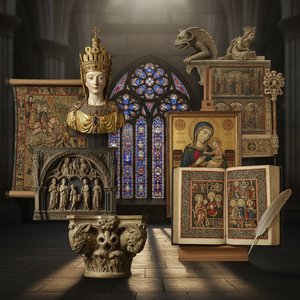
Las 10 Obras Maestras del Alto Medieval: Arte, Historia y Decoración Exclusiva
Descubre las 10 obras maestras del Alto Medieval. Explora la historia, el simbolismo y la belleza de la pintura románica y gótica. Reproducciones exclusivas en OriginalUniqueArt.com para decorar tu hogar con arte atemporal.