Tamaño del texto

() ·

Una pintura hecha para ti, a mano

La Madonna dell'Impannata

Reproducción al óleo hecha a mano

Óleo sobre lienzo pintado a mano en el tamaño y marco de su elección, realizado por encargo por nuestros artistas. ( Cambiar a impresiones Cambiar a imagen digital)

Descripción del objeto

Descubre la 'Madonna dell'Impannata', una obra maestra de Rafael del 1513. Un retrato conmovedor de la Virgen María con su hijo, símbolo del Renacimiento italiano.

Biografía del artista

Descubra a Rafael (1483-1520), el maestro del Alto Renacimiento italiano, reconocido por su gracia, claridad y composiciones armoniosas. Explore obras icónicas como 'La Escuela de Atenas', Madonas y frescos que definen la belleza clásica. #ArteRenacentista #Italia

desde ·

Capítulo 1

¿Qué tamaño debería tener?

Deslice para cambiar el tamaño; la imagen de la izquierda muestra el marco con su anchura real. Se mantienen las proporciones originales.

Tamaño estándar
a medida
CM
INCH

Elija entre nuestros tamaños predefinidos que respetan las proporciones originales de la obra.

ancho
altura

Indique el ancho y el alto que necesite para adaptarse a su marco o pared. Al tratarse de una obra pintada a mano, si requiere un tamaño con una proporción distinta, el artista puede pintar un poco más alrededor de la imagen o recortarla ligeramente; usted elige. Le enviaremos una maqueta digital para su aprobación antes de comenzar la pintura. La imagen que se muestra en esta página no refleja el resultado real; solo la maqueta lo hace.

Capítulo 2

¿Cómo debe llegar?

Elige el acabado de los bordes del lienzo

Elige tu marco

Corner sample of the WhiteWrap canvas edge finish, stretched on madera maciza bars
Blanco €1
Corner sample of the BlurSideWrap canvas edge finish, stretched on madera maciza bars
Bordes difuminados €1
Corner sample of the ExtendedWrap canvas edge finish, stretched on madera maciza bars
Continuación de imagen €1
Corner sample of the P118B picture frame: poliestireno moldeado, 5 cm wide and 3 cm thick
P118B €10
Corner sample of the P118H picture frame: poliestireno moldeado, 5 cm wide and 3 cm thick
P118H €10
Corner sample of the P118W picture frame: poliestireno moldeado, 5 cm wide and 3 cm thick
P118W €10
Corner sample of the P438Z picture frame: poliestireno moldeado, 5.5 cm wide and 3.5 cm thick
P438Z €10
Corner sample of the P508JH picture frame: poliestireno moldeado, 7 cm wide and 3.5 cm thick
P508JH €12
Corner sample of the P508YH picture frame: poliestireno moldeado, 7 cm wide and 3.5 cm thick
P508YH €12
Corner sample of the P805H picture frame: poliestireno moldeado, 5 cm wide and 3.5 cm thick
P805H €10
Corner sample of the P805Z picture frame: poliestireno moldeado, 5 cm wide and 3.5 cm thick
P805Z €10
Corner sample of the P919BZ picture frame: poliestireno moldeado, 7 cm wide and 3.5 cm thick
P919BZ €10
Corner sample of the P919G picture frame: poliestireno moldeado, 7 cm wide and 3.5 cm thick
P919G €10
Corner sample of the P919XJ picture frame: poliestireno moldeado, 7 cm wide and 3.5 cm thick
P919XJ €10
Corner sample of the P959ZH picture frame: poliestireno moldeado, 5 cm wide and 3 cm thick
P959ZH €10
Corner sample of the P968JZ picture frame: poliestireno moldeado, 6 cm wide and 4 cm thick
P968JZ €12
Corner sample of the W106C picture frame: madera maciza, 5 cm wide and 3 cm thick
W106C €8
Corner sample of the W218G picture frame: madera maciza, 5 cm wide and 3 cm thick
W218G €10
Corner sample of the W218JH picture frame: madera maciza, 5 cm wide and 3 cm thick
W218JH €8
Corner sample of the W218Y picture frame: madera maciza, 5 cm wide and 3 cm thick
W218Y €10
Corner sample of the W307PJ picture frame: madera maciza, 6 cm wide and 3 cm thick
W307PJ €10
Corner sample of the W316G picture frame: madera maciza, 6 cm wide and 3 cm thick
W316G €10
Corner sample of the W316PJ picture frame: madera maciza, 6 cm wide and 3 cm thick
W316PJ €8
Corner sample of the W316Y picture frame: madera maciza, 6 cm wide and 3 cm thick
W316Y €10
Corner sample of the W398PJ picture frame: madera maciza, 5 cm wide and 3 cm thick
W398PJ €8
Corner sample of the W4111J picture frame: madera maciza, 6.5 cm wide and 3.5 cm thick
W4111J €10
Corner sample of the W500HY picture frame: madera maciza, 7 cm wide and 5 cm thick
W500HY €15
Corner sample of the W500JH picture frame: madera maciza, 7 cm wide and 5 cm thick
W500JH €15
Corner sample of the W692G picture frame: madera maciza, 8 cm wide and 4 cm thick
W692G €12
Corner sample of the W849H picture frame: madera maciza, 5 cm wide and 3 cm thick
W849H €8
Corner sample of the W940BG picture frame: madera maciza, 7.5 cm wide and 4.5 cm thick
W940BG €15
Corner sample of the W953PJ picture frame: madera maciza, 6 cm wide and 3.5 cm thick
W953PJ €8
Corner sample of the H24-GOLD picture frame: madera tallada con estuco, 10 cm wide and 6 cm thick
H24-GOLD €30
Corner sample of the H24-SILVER picture frame: madera tallada con estuco, 10 cm wide and 6 cm thick
H24-SILVER €30
Corner sample of the H36-GOLD picture frame: madera tallada con estuco, 15 cm wide and 6.5 cm thick
H36-GOLD €45
Corner sample of the H36-SILVER picture frame: madera tallada con estuco, 15 cm wide and 6.5 cm thick
H36-SILVER €45

Moldura: . Dimensiones totales con marco: .

Capítulo 3

¿Quién lo pinta y debería cambiar algo?

Ejemplos de lo que se puede cambiar: Reemplazar el rostro con la foto del cliente; Añadir una mascota (por ejemplo, cambiar un gato por un perro); Incluir un mensaje oculto en el fondo; Cambiar el paisaje o los elementos del fondo.
Tras realizar el pedido, el equipo de OriginalUniqueArt.com enviará un correo electrónico al cliente para solicitar instrucciones y proporcionar una vista previa del boceto

Envío a todo el mundo () en 3-4 semanas en lugar de las 5 semanas estándar. (4 noviembre). Sin comprometer la calidad.

Capítulo 4

Los últimos retoques

¿Una placa de identificación, como en un museo?

Detalles de la placa de bronce grabada

This elegant plaque features the artist's name and the title of the artwork, finely engraved for a timeless presentation.

It is made from bronze with a refined, elegant finish. The text is precisely laser-engraved for a sharp and permanent result. Measuring 9x2 cm, the plaque is compact yet easy to read. It's built to be durable and scratch-resistant, offering a professional, museum-quality look. Mounting is simple thanks to the included adhesive backing.

Detalles de la placa de acrílico transparente

The plaque includes essential engraved details such as the artist's name, the title of the artwork, the date it was created, the type of media used-like oil on canvas or watercolor-a brief description of the piece, and a QR code that links to the complete artwork information.

It is crafted from clear acrylic, offering a sleek, modern appearance. The text is UV-engraved in black to ensure strong visual contrast. With a size of 10x15 cm, it ensures optimal readability. It comes equipped with two metal hooks for secure wall mounting. The plaque is designed to be weather-resistant, making it suitable for various environments, and it includes interactive features that work seamlessly with smartphone scanning.

Detalles de la placa de acrílico negro

This elegant plaque includes engraved information such as the artist's name, the title of the artwork, the date it was created, the type of media used (like oil on canvas or watercolor), a short description of the artwork, and a QR code for quick access to more information.

The plaque itself is made from refined black acrylic with a premium finish. The text is laser-engraved in white for high contrast and readability. Its size is 10x15 cm, designed to be easy to read. It comes with two metal hooks for professional mounting. The design is sleek and fits any interior style. It is also weather-resistant and durable, with built-in digital integration for mobile compatibility.

¿Un barniz protector?

¿Para cuándo lo necesita?

Capítulo 5

Su pintura, tal como la solicitó

La Madonna dell'Impannata

Técnica de reproducción

Dimensiones de la reproducción

-

Selección de artistas premium

Mayor nivel de detalle, delicadeza y tiempo de producción adicional

-

Enmarcado de reproducción

-

-

Para obras de arte o reproducciones que midan más de 105 cm (aproximadamente 41 pulgadas) en cualquiera de sus lados, el marco se enviará como un kit desmontado. Este método garantiza una entrega segura y evita daños durante el transporte.

Se requiere montaje profesional: este no es un producto para hacer usted mismo (DIY).
El kit debe ser ensamblado y el lienzo tensado por un enmarcador profesional con experiencia, utilizando cola para madera (no incluida), una tenaza para tensar lienzos y sargentos para mantener los bastidores alineados mientras la cola se seca. Un montaje incorrecto o una tensión desigual del lienzo pueden dañar la obra de arte de forma permanente y no están cubiertos por nuestra garantía.

  • Se incluyen todos los listones de madera maciza, cortados con precisión según las medidas.

  • Se ensambla con los tornillos incluidos, además de cola para madera para las uniones de las esquinas, la cual no se incluye y debe ser proporcionada por su enmarcador.

  • Se requieren herramientas profesionales que no están incluidas: un alicate para tensar lienzos (tensor) y abrazaderas para mantener los bastidores alineados mientras se seca el pegamento.

Importante:
Las uniones de las esquinas requieren cola para madera, los listones deben sujetarse con prensas hasta que la cola esté completamente seca, y para tensar el lienzo en el bastidor ensamblado se requiere una pinza para tensar lienzos. Ninguno de estos elementos está incluido en el kit. Por favor, contacte con un profesional del enmarcado con experiencia antes de realizar un pedido de este tamaño.

Cartela

-

-

Barniz protector

Barniz brillante (realza los colores y protege contra la luz y la humedad)

-

Personalizar mi obra

Ejemplos de lo que se puede personalizar: sustituir el rostro por una foto del cliente; añadir una mascota (por ejemplo, cambiar un gato por un perro); incluir un mensaje oculto en el fondo; cambiar el paisaje o los elementos del fondo.

-

Envío urgente

Envío a todo el mundo () en 3 o 4 semanas, en lugar de las 5 semanas habituales. (4 noviembre). Sin comprometer la calidad.

-

Envío urgente

Envío internacional () en 5 semanas. (11 noviembre).

Incluido

Precio total final

€ 267

Precio total € 267

La opción de vidrio solo está disponible en tamaños inferiores a 110 cm.

Incluido en cada pedido

  • Envío exprés gratuito a todo el mundo
  • Lienzo de lino de alta calidad
  • Seguro de envío total
  • Garantía de reembolso de aranceles aduaneros
  • Garantía de fidelidad cromática exacta
  • Política de devolución de 100 días (solo por defectos)
  • Garantía de devolución del 100% del dinero
  • Descuento por cantidad

A Serene Vision of Motherhood: Raphael’s Madonna dell’Impannata

Raphael’s Madonna dell’Impannata, painted in 1513 and currently residing within the hallowed halls of the Pitti Palace Museum in Florence, is more than just a beautiful depiction of the Virgin Mary cradling her infant son; it's a profound meditation on nurturing, faith, and the very essence of Renaissance humanity. This oil-on-panel masterpiece transcends its religious subject matter to offer a glimpse into Raphael’s masterful understanding of composition, color, and the subtle language of gesture – elements that continue to resonate powerfully with viewers centuries later. The painting immediately draws the eye with its harmonious balance and gentle luminosity, inviting us into a scene brimming with quiet dignity and profound tenderness.

Compositional Harmony and Symbolic Arrangement

The composition is meticulously crafted, radiating an almost palpable sense of serenity. At the heart of the image lies Mary, positioned centrally and bathed in soft light, her expression one of serene devotion. She cradles the Christ Child with a tenderness that speaks volumes, his tiny hand reaching out to grasp her robe — a gesture both vulnerable and utterly captivating. Surrounding this central triad are three women, each contributing to the painting’s rich tapestry of symbolism. To Mary's left stands an older woman, traditionally identified as Saint Anne, Mary’s mother, offering a gesture of support and guidance. Her posture suggests a quiet strength and wisdom. Beside her is another figure, often interpreted as either St. Elizabeth or Magdalene, adding layers of spiritual significance to the scene. On the right side, a third woman, similarly draped in flowing robes, further emphasizes the theme of maternal care and protection. The inclusion of three women — mother, grandmother, and saint — creates a powerful visual representation of lineage, faith, and the continuity of divine grace.

Technique and Artistic Flourishes

Raphael’s technical skill is immediately apparent in the painting’s exquisite detail and masterful use of color. He employs a technique known as *sfumato*, subtly blurring lines and softening edges to create an atmosphere of ethereal beauty. The colors are muted yet luminous, dominated by warm earth tones — ochres, siennas, and reds — that evoke a sense of warmth and intimacy. Notice the delicate rendering of Mary’s robes, which cascade around her in graceful folds, and the subtle play of light on the Christ Child’s face. The artist’s attention to detail extends beyond the figures themselves; observe the three birds perched within the scene—one near the top left corner, another in the middle right, and a third at the bottom left — adding an element of natural beauty and perhaps symbolizing divine protection or messengers from heaven. The use of panel painting allows for rich color saturation and detailed rendering, contributing to the overall sense of depth and realism.

Historical Context and Legacy

Commissioned by Bindo Altoviti around 1513, the Madonna dell’Impannata reflects the artistic and intellectual climate of Florence during the High Renaissance. It was originally intended for Altoviti's palace but later became part of Duke Cosimo I de’ Medici’s collection, undergoing a journey to Paris before its eventual return to Florence. The painting’s subject matter—the Virgin Mary cradling her infant son—was deeply resonant with contemporary religious beliefs and artistic traditions. Raphael’s work stands as a testament to the Renaissance ideal of humanism, celebrating beauty, grace, and the dignity of human life while simultaneously conveying profound spiritual meaning. Its influence can be seen in countless subsequent works of art, solidifying its place as one of the most beloved and enduring images of motherhood and faith.

OriginalUniqueArt offers meticulously crafted hand-painted reproductions of Raphael’s Madonna dell’Impannata, allowing you to bring this timeless masterpiece into your home or office. Each reproduction is created by skilled artists using archival quality materials, ensuring that the beauty and detail of the original are faithfully preserved for generations to come. Explore our collection today and experience the magic of Raphael’s vision.

Photo Description: The painting is a religious scene featuring Mary holding her baby Jesus while surrounded by other women. The women in the painting appear to be nurturing and caring for the child. There are three women in total, with one on the left side of the image, another in the middle, and the third woman on the right side. The baby is being held by Mary, who is positioned towards the center of the image. The other two women are also holding babies, with one baby being held by a woman on the left side and the second baby being held by a woman on the right side. There are three birds visible in the scene. One bird is located near the top-left corner of the image, another bird can be seen towards the middle-right area, and the third bird is positioned at the bottom-left corner of the image. Size: 158 x 125 cm Date: 1513 ARTIST INFORMATION: ================== Artist: Raphael Birth Year: 1483 Death Year: 1520 Birth City: Urbino Birth Country: Italy Biography:

The Urbino Renaissance: Raphael’s Early Life and Formation

Raffaello Sanzio da Urbino, known to the world as Raphael, emerged from a remarkably fertile cultural landscape. Born in 1483 within the walls of Urbino, a small but intellectually vibrant city-state in central Italy, his earliest years were steeped in an atmosphere that prized both artistic skill and humanist learning. His father Giovanni Santi was not merely a painter employed by Duke Federico da Montefeltro—he was a man deeply engaged with the currents of Renaissance thought, a poet who chronicled the Duke’s life and actively sought out innovative artistic ideas from across Italy and beyond. This immersion in a courtly environment, one that valued refinement and intellectual discourse, profoundly shaped the young Raphael’s sensibilities. The loss of his father at age eleven thrust responsibility upon him, but also provided an opportunity to hone his skills within the family workshop, absorbin

Preguntas y respuestas

¿Cuál es el tono predominante de "La Madonna dell'Impannata" de Rafael?

El tono dominante de "La Madonna dell'Impannata" de Rafael es Gama de amarillos dorados. Este color constituye la base cromática de la paleta.

¿Permaneció "La Madonna dell'Impannata" en el país de origen de su artista?

Sí, la obra se encuentra en el país de origen del artista. "La Madonna dell'Impannata" se encuentra en Italia, mientras que Rafael nació en Italia.

¿En qué técnica está ejecutada "La Madonna dell'Impannata" de Rafael?

"La Madonna dell'Impannata" está realizada en Óleo sobre tabla.

Más información sobre esta pintura

Ver en contexto Vista previa en RA Cambiar a impresiones Cambiar a imagen digital Enviar
Detalles Guía Añadir a favoritos Descargar Similares Radiografía Presentación de diapositivas Preguntas y respuestas Estadísticas

En cifras

  • 1513el año en que fue pintada
  • 29marcos disponibles para elegir
  • tamaños estándar, en sus propias proporciones
  • 5semanas para pintar y entregar la obra
Rafael

Rafael

1483 - 1520, Italia

Datos rápidos sobre Rafael

  • Artistas Influyentes:
    • Giovanni Santi
    • Pietro Perugino
  • Estilo Artístico: Alto Renacimiento
  • Fecha De Muerte: 06/04/1520
  • Fecha De Nacimiento: 28/03/1483
  • Influencia En Artistas: Neoclasicismo
  • Lugar De Nacimiento: Urbino, Italia
  • Nacionalidad: Italiano
  • Nombre Completo: Rafael (Raffaello Sanzio)
  • Obras Notables:
    • El Juicio de Salomón
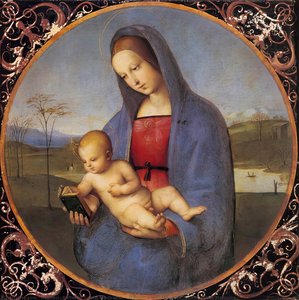
    • Madonna del Cardellino
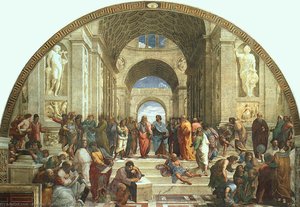
    • La Escuela de Atenas
    • San Sebastián
    • La Dama Velada

Biografía del artista

**vida temprana y formación**

Rafael (rafaello sanzio da urbino), un renombrado pintor y arquitecto italiano, nació entre el 28 de marzo y el 6 de abril de 1483, en la pequeña pero culturalmente significativa ciudad de Urbino. Su padre, Giovanni Santi, era pintor de corte para el duque, proporcionando a Rafael una exposición temprana al mundo artístico. Después de fallecer su padre a los once años, Rafael probablemente administró el taller familiar, consolidando aún más su base artística.

**carrera artística e influencias**

El viaje artístico de Rafael puede categorizarse en tres fases distintas, cada una marcada por un estilo único:
  • primeros años en Umbría: caracterizado por la influencia de su padre y el ambiente cultural de Urbino.
  • período florentino (1504-1508): absorbiendo las tradiciones artísticas de Florencia, que influyeron significativamente en su estilo.
  • período romano (1508-1520): trabajando para dos papas y sus asociados, produciendo algunas de sus obras más celebradas, incluyendo la escuela de Atenas en la stanza della segnatura del Vaticano.

**obras notables y legado**

Algunas de las obras notables de Rafael incluyen:

**influencia y legado**

La influencia de Rafael en el arte es profunda, con su obra siendo un pilar del Renacimiento italiano. Su estilo sereno y armonioso ha sido un modelo para la pintura neoclásica, como señaló el historiador de arte Johann Joachim Winckelmann. A pesar de la influencia posterior del estilo de Miguel Ángel, Rafael sigue siendo uno de los artistas más reverenciados en la historia. ver el perfil de Rafael en OriginalUniqueArt

Datos clave

  • Título: Madonna dell'Impannata
  • Año: 1513
  • Movimiento: Alto Renacimiento
  • Tema: Nácarido de María
  • Ubicación: Palacio Pitti, Florencia
  • Estilo: Armonía y equilibrio

Test de conocimientos artísticos

Cada pregunta tiene una única respuesta correcta.

Pregunta 1:
¿En qué año fue pintada la "Madonna dell’Impannata"?
Pregunta 2:
Según la descripción de la imagen, ¿cuántas mujeres aparecen en la escena?
Pregunta 3:
¿Dónde se encuentra actualmente la "Madonna dell’Impannata"?
Pregunta 4:
¿Cuál es el significado de la expresión 'Impannata' en el título de la obra?
Pregunta 5:
En el contexto histórico, ¿quién encargó originalmente la "Madonna dell’Impannata"?