

 Ver en contexto
 Enviar
 Compartir
 Detalles
 Guía
Guía

 Descargar
 Similares
 Radiografía
 Presentación de diapositivas
 Estadísticas
Golden Age
 Oil On Canvas
- WallArt
- Fauvism
 1946
1946 135.0 x 102.0 cm
 Ver más
Giclée / Impresión de arte
Impresiones giclée o en lienzo de calidad de museo con producción rápida y opciones de acabado flexibles. ( Comprar pintura hecha a mano Cambiar a imagen digital)




P118B €10

P118H €10

P118W €10

P438Z €10

P508JH €12

P508YH €12

P805H €10

P805Z €10

P919BZ €10

P919G €10

P919XJ €10

P959ZH €10

P968JZ €12

W106C €8

W218G €10

W218JH €8

W218Y €10

W307PJ €10

W316G €10

W316PJ €8

W316Y €10

W398PJ €8

W4111J €10

W500HY €15

W500JH €15

W692G €12

W849H €8

W940BG €15

W953PJ €8




Elija entre nuestros tamaños predefinidos que respetan las proporciones originales de la obra.

Introduzca el ancho y el alto que necesite para adaptarse a su marco o pared. Una impresión solo puede recortarse, nunca hacerse más grande que la imagen original, por lo que un tamaño con una forma distinta perderá parte de la obra. Le enviaremos una maqueta digital para su aprobación antes de realizar cualquier impresión. La imagen que se muestra en esta página no refleja el recorte real; solo la maqueta lo hace.
Envío a todo el mundo () en 2 semanas en lugar de las 4/5 semanas estándar. (25 octubre)

Envío exprés gratuito a todo el mundo

Lienzo de lino de alta calidad

Seguro de envío total

Garantía de reembolso de aranceles aduaneros

Garantía de fidelidad cromática exacta

Política de devolución de 100 días (solo por defectos)

Garantía de devolución del 100% del dinero

Descuento por cantidad
 La opción de vidrio solo está disponible en tamaños inferiores a 110 cm.

Golden Age
Giclée / Impresión de arte
Dimensiones de la reproducción
-


Precio total final
€ 70
The Luminous Echoes of a Golden Age
To stand before Pyotr Konchalovsky's "Golden Age" is to step into a moment suspended between memory and vibrant possibility. This 1946 canvas does not merely depict a scene; it captures an atmosphere—a rich, almost palpable sense of repose tinged with the energy of artistic awakening. The eye is immediately drawn to the central figure, seated in a posture of profound ease, his legs crossed over what appears to be a simple stool. He holds a fish, an object that anchors the narrative, suggesting a connection to sustenance, tradition, or perhaps the quiet bounty found at the close of a day’s labor. The entire composition breathes with a warmth emanating from the man's skin tone, rendered in luminous golden hues that seem to absorb and reflect the light.
A Symphony of Fauvist Color
Technically, the painting is a masterful exercise in expressive color theory, firmly rooted in the spirit of Fauvism. Konchalovsky employs brushwork that is wonderfully loose and unrestrained, allowing the paint itself to sing across the canvas. This technique moves far beyond mere representation; it prioritizes emotional resonance over photographic accuracy. The bold application of color—the vibrant golds against the cool, enveloping blue background—creates an immediate visual vibration. It is a dialogue between warm earth tones and cool ether, giving the piece a dynamic yet strangely tranquil energy. One can almost hear the rhythmic scrape of the brush as it laid down these confident strokes.
Symbolism and the Passage of Time
The title itself, "Golden Age," invites contemplation on what that period might represent—a time perceived by the artist as idyllic, perhaps a return to foundational truths or a moment of perfect balance. The fish, in art history, is often a potent symbol of abundance, prosperity, and even spiritual renewal. Coupled with the man's neutral, slightly averted gaze, which suggests introspection rather than direct engagement with the viewer, the painting becomes an invitation into a private meditation. It speaks to moments of quiet fulfillment, where simple elements—a chair, a fish, a patch of blue sky—are elevated to profound statements about life’s enduring rhythms.
A Touch of Russian Modernism
Understanding Konchalovsky's context enriches the viewing experience. As an artist whose career spanned Russia's tumultuous modern history, his work carries the weight of cultural endurance. While influenced by the grand currents of French Impressionism and Fauvism, his signature remains distinctly personal—a blend of European avant-garde techniques filtered through a deeply Russian sensibility. For those who collect art that speaks to historical depth while embracing modernist freedom, this piece offers a perfect nexus point. It is not merely decoration; it is a conversation across decades, offering the collector or designer a piece imbued with intellectual weight and undeniable visual poetry.
Preguntas y respuestas
¿Qué color predomina en la composición de "Golden Age" de Pyotr Konchalovsky?
El Prussian Blue (#242a51) es el color predominante de "Golden Age" de Pyotr Konchalovsky.
¿Qué nivel de saturación e intensidad presenta "Golden Age" de Pyotr Konchalovsky?
La paleta cromática de "Golden Age" presenta una saturación de Clear Color Presence y una intensidad de Vivid.
¿En qué año y bajo qué movimiento se creó "Golden Age"?
"Golden Age" fue creada en 1946 como una obra del movimiento Fauvism. La fecha y el movimiento sitúan la pieza en su contexto histórico dentro de la historia del arte.
Biografía del artista
Pyotr Konchalovsky: Una Vida en el Arte Ruso
- Nacimiento: 21 de febrero de 1876, Slavianka, Gobernación de Kharkov (actualmente Ucrania)
- Fallecimiento: 1956
Pyotr Konchalovsky fue una figura significativa en el arte ruso, reconocido por su prolífica producción y versatilidad estilística. Nacido en una familia artística – su padre era editor de arte – la temprana exposición de Konchalovsky al mundo del arte sin duda moldeó su futura carrera. Su vida abarcó un período de inmensos cambios sociales y políticos en Rusia, influyendo tanto en sus temas como en su estilo artístico.
Primeros Años, Educación y Desarrollo Artístico
- Años en Moscú: La familia Konchalovsky se mudó a Moscú en 1889, transformando su casa en un vibrante centro para la élite artística de la ciudad. Visitantes frecuentes incluían luminarias como Valentín Serov, Mikhail Vrubel y Vasily Surikov, brindándole a joven Pyotr una invaluable exposición a artistas establecidos.
- Formación Formal: Konchalovsky asistió a clases en la Escuela de Pintura, Escultura y Arquitectura de Moscú durante sus años de gimnasio. Continuó sus estudios en París (1896-1898) en la Académie Julian antes de graduarse en la Academia Imperial de las Artes de San Petersburgo en 1907.
- Influencias Tempranas: Las primeras obras de Konchalovsky, principalmente bodegones y paisajes, revelan una fuerte influencia de Paul Cézanne, evidente en su exploración de la forma y la estructura. Experimentó con varios estilos antes de desarrollar su propia voz distintiva.
Movimientos Clave y Estilo Artístico
- Jack of Diamonds: Miembro fundador de la influyente sociedad "Jack of Diamonds" (establecida en 1909), Konchalovsky estuvo a la vanguardia de los movimientos rusos de vanguardia. Este grupo defendió un enfoque más moderno y experimental del arte, rechazando los estilos académicos tradicionales.
- Fauvismo y Primer Modernismo: Sus primeras obras demuestran una adopción de los principios fauvistas, caracterizados por colores audaces y no naturalistas y pinceladas expresivas. Ejemplos incluyen "Bodegón con una Cafetera" (1919) y "El Paisaje. Costa de Francia" (1908).
- Realismo Socialista: A medida que avanzaba la era soviética, el estilo de Konchalovsky se desplazó hacia el Realismo Socialista, reflejando las demandas artísticas predominantes del régimen. Se hizo conocido por crear retratos ceremoniales que celebraban los ideales socialistas y a figuras prominentes. Si bien este cambio marcó una desviación de sus primeras exploraciones de vanguardia, solidificó su posición dentro del establecimiento artístico ruso.
- Producción Prolífica: Konchalovsky fue notablemente prolífico, dejando atrás un estimado de 5000 obras que abarcan diversos temas que incluyen bodegones ("Bodegón. Melocotones"), paisajes ("Pinos") y retratos ("Novgorodianos").
Logros Mayores y Legado
- Exposición Individual en la Galería Tretyakov: Un hito importante en su carrera fue su primera exposición individual en la prestigiosa Galería Tretyakov en 1922, que exhibió una amplia gama de sus logros artísticos.
- Familia de Artistas: El legado de Konchalovsky se extiende más allá de su propio trabajo; provenía y fomentó una familia profundamente involucrada en las artes. Su hijo, Mikhail Petrovich Konchalovsky, se convirtió en un renombrado director de cine, y su hija, Natalia Konchalovskaya, también fue una artista consumada.
- Contribución al Arte Ruso: La contribución de Pyotr Konchalovsky al arte ruso es innegable. Navegó por diversos movimientos artísticos, desde la vanguardia hasta el Realismo Socialista, dejando atrás una vasta colección de obras que reflejan el cambiante panorama cultural y político de Rusia en el siglo XX. Su capacidad para adaptarse manteniendo un estilo distintivo consolidó su lugar como una figura clave en la historia del arte ruso.
Significado Histórico
La carrera de Konchalovsky proporciona información valiosa sobre la evolución del arte ruso durante un período turbulento. Representa tanto el dinamismo del primer modernismo como las restricciones impuestas por las políticas artísticas soviéticas. Su trabajo sirve como testimonio de la resiliencia y adaptabilidad de los artistas al navegar por climas políticos complejos mientras se esfuerzan por la expresión creativa.
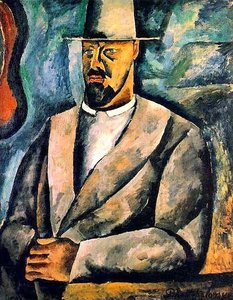
Pyotr Konchalovsky
1876 - 1956 , Rusia
Datos clave
- Artistas Que Influyeron: ['Paul Cézanne']
- Estilo Artístico: Variado, adaptable.
- Fecha De Nacimiento: 21 de febrero de 1876
- Lugar De Nacimiento: Járkov, Rusia
- Movimiento Artístico:
- Fauvismo
- Realismo socialista
- Nacionalidad: Ruso
- Nombre Completo: Pyotr Konchalovsky
- Obras Notables:
- Bodegón con una cafetera
- Paisaje
- Novgorodianos
- La costa de Francia
- Naturaleza muerta. Melocotones
Artículos relacionados

10 Obras de Arte Audaces que Transformarán tu Espacio | OriginalUniqueArt
Descubre 10 obras de arte audaces que definen la pasión y el impacto visual. Explora la historia detrás de artistas como Van Gogh, Matisse y Kahlo. Encuentra reproducciones de museo en OriginalUniqueArt.com.
Fauvismo Expresionista: 10 Obras Maestras que Transformaron el Arte | OriginalUniqueArt
Descubre las 10 obras maestras del fauvismo que revolucionaron el arte. Explora la pasión, el color y la expresión de Matisse, Derain y más. Reproducciones de alta calidad en OriginalUniqueArt.com.
Fauvismo: 10 Obras Maestras que Revolucionaron la Pintura |
Descubre las 10 obras maestras del Fauvismo con Matisse, Derain y Vlaminck. Explora la historia, el color y la audacia de este movimiento artístico revolucionario. Reproducciones de arte exclusivas en .
Los 25 Tesoros del Hermitage: Arte Clásico para tu Hogar | OriginalUniqueArt
Descubre los 25 tesoros del Museo Hermitage de San Petersburgo. Explora la historia y belleza de Rembrandt, Leonardo da Vinci y más. Reproducciones de arte en OriginalUniqueArt.com para decorar tu hogar con obras maestras.

Ivan Bilibin: A Synthesis of Folklore, Modernism & National Identity in Russian Illustration
Explore the enchanting world of Ivan Bilibin, a master Russian illustrator who synthesized folklore, Art Nouveau & national identity. Discover his iconic fairy tale illustrations and legacy with OriginalUniqueArt.


