

 Vista previa
 Compartir
 Compartir
 Ver detalles
 Guía
Guía

 Descargar
 Ver artículos similares
 Radiografía
 Presentación de diapositivas
 Estadísticas
Untitled


 Leer más
La obra de arte que se muestra en esta página está protegida por las leyes de propiedad intelectual, lo que significa que no podemos crear ni vender legalmente una reproducción idéntica. Esta protección se hace cumplir en virtud de acuerdos internacionales como el Convenio de Berna y por las leyes nacionales, incluidas aquellas establecidas por el Ley de derechos de autor de los EE. UU. - Título 17.
Este método cumple plenamente con las normativas de derechos de autor, ya que no implica la copia ni la duplicación de la obra protegida. En su lugar, se trata de una reinterpretación creativa: una nueva pintura influenciada por la original, pero que no es idéntica a ella.
Giclée / Impresión de arte
Impresiones giclée o en lienzo de calidad de museo con producción rápida y opciones de acabado flexibles. ( Encargar reproducción pintada a mano Ver versión en imagen digital)




P118B €10

P118H €10

P118W €10

P438Z €10

P508JH €12

P508YH €12

P805H €10

P805Z €10

P919BZ €10

P919G €10

P919XJ €10

P959ZH €10

P968JZ €12

W106C €8

W218G €10

W218JH €8

W218Y €10

W307PJ €10

W316G €10

W316PJ €8

W316Y €10

W398PJ €8

W4111J €10

W500HY €15

W500JH €15

W692G €12

W849H €8

W940BG €15

W953PJ €8




Elija entre nuestros tamaños predefinidos que respetan las proporciones originales de la obra.

Introduzca el ancho y el alto que necesite para adaptarse a su marco o pared. Una impresión solo puede recortarse, nunca hacerse más grande que la imagen original, por lo que un tamaño con una forma distinta perderá parte de la obra. Le enviaremos una maqueta digital para su aprobación antes de realizar cualquier impresión. La imagen que se muestra en esta página no refleja el recorte real; solo la maqueta lo hace.
Envío a todo el mundo () en 2 semanas en lugar de las 4/5 semanas estándar. (22 octubre)

Envío exprés gratuito a todo el mundo

Lienzo de lino de alta calidad

Seguro de envío completo

Garantía de reembolso de impuestos aduaneros

Garantía de fidelidad cromática exacta

Política de devolución de 100 días (solo por defectos)

Garantía de devolución del 100% del dinero

Oferta por volumen
 La opción de vidrio solo está disponible en tamaños inferiores a 110 cm.

Untitled
Giclée / Impresión de arte
Tamaño de la reproducción
-


Precio total
€ 70
A Chronicle of Overtown: Purvis Young’s ‘Untitled’ (1980)
Purvis Young's art wasn’t born within the pristine walls of an artist’s studio, but rather emerged from the vibrant, often turbulent streets of Miami’s Overtown neighborhood. This particular piece, “Untitled” (1980), is a potent distillation of that lived experience—a layered testament to a community’s resilience, its struggles, and its enduring spirit. It's not merely a painting; it’s an archive, a memory captured in ink and paper, a window into a forgotten corner of American history.
The artwork itself is a captivating assemblage, dominated by a stack of aged books – their yellowed pages hinting at countless stories absorbed and then largely discarded. These aren't simply decorative; they’re the foundation upon which Young constructs his narrative. Affixed to the front cover is an abstract painting—a dynamic swirl of black ink against a textured background of browns, tans, and subtle blues. The style leans heavily into expressionism, mirroring the raw emotion and immediacy of Young’s process. There's a deliberate lack of polish; the brushstrokes are visible, the edges frayed, suggesting a work created with urgency and without meticulous planning – a reflection of Young’s own approach to his art.
The Language of Found Materials
Young’s genius lay in his resourceful use of discarded materials. He didn't seek out canvases or traditional paints; instead, he embraced the detritus of urban life—old books, newspapers, magazines, correspondence, and even discarded bills – transforming them into the very fabric of his art. “Untitled” exemplifies this perfectly. The books themselves are not just a backdrop but actively contribute to the composition, their worn covers and fragmented pages symbolizing forgotten histories and untold narratives. The layering of these found elements creates a rich tapestry of textures and visual information, inviting the viewer to piece together their own interpretation.
The abstract painting adhered to the book cover adds another layer of complexity. It’s difficult to discern specific figures or forms within its swirling patterns, yet it evokes a sense of movement, energy, and perhaps even chaos – mirroring the social dynamics of Overtown at the time. Young often used these abstract elements as vehicles for expressing emotions and ideas that were difficult to articulate directly.
Overtown: A Community in Transition
To fully appreciate “Untitled,” it’s crucial to understand the historical context surrounding Purvis Young's work. Overtown, a predominantly Black neighborhood in Miami, was a vibrant hub of Jamaican culture and community life in the mid-20th century. However, by the late 1960s, it faced systematic displacement due to urban renewal projects – specifically, the construction of Interstate 395, which effectively cleaved the neighborhood apart. Young’s art became a powerful record of this transition—a poignant documentation of Overtown's social life, its struggles, and ultimately, its loss.
The drawings within the books themselves offer glimpses into this world: basketball games, horse races, pregnant women, funerals – scenes of everyday life rendered with an arresting immediacy. They are not idealized representations; they capture the grit, the hardship, but also the joy and resilience of a community facing immense challenges.
Symbolism and Emotional Resonance
“Untitled” is more than just a visual record; it’s imbued with potent symbolism. The aged books represent memory and the passage of time, while the fragmented pages suggest broken narratives and lost histories. The abstract painting embodies the chaotic energy of urban life and the difficulty of capturing complex emotions. Ultimately, the artwork evokes a sense of melancholy—a recognition of loss and displacement – but also a profound appreciation for the enduring spirit of a community.
Purvis Young’s work continues to resonate today because it speaks to universal themes of identity, memory, and social justice. “Untitled” is a powerful reminder that art can be born from adversity and that even the most discarded materials can hold extraordinary beauty and meaning. It's a piece that invites contemplation, sparking dialogue about history, community, and the power of artistic expression.
Preguntas y respuestas
¿Qué tan intensos son los colores de "Untitled"?
El color de "Untitled" presenta una saturación de Muted y una intensidad de Balanced.
¿En qué estancia del hogar quedaría bien una reproducción de "Untitled"?
Una reproducción de "Untitled" encaja perfectamente en un Living Room.
¿Qué orientación tiene "Untitled" de Purvis Young?
"Untitled" de Purvis Young es una composición en Square. Se recomienda revisar las proporciones antes de elegir un tamaño de impresión.
Biografía del artista
Purvis Young: Una Vida en el Arte y Overtown
- Nacido: Liberty City, Estados Unidos de América (4 de febrero de 1943)
- Fallecido: 20 de abril de 2010
- Origen: OriginalUniqueArt
Purvis Young fue un artista estadounidense autodidacta profundamente arraigado en el vibrante y a menudo desafiante paisaje de Overtown, Miami, Florida. Su vida y su obra están inextricablemente ligadas a este barrio históricamente afroamericano, que retrató con una honestidad implacable y una profunda empatía. El viaje artístico de Young comenzó sin formación formal; en cambio, aprendió a través de la observación, la experiencia y una dedicación incesante a capturar la esencia de su entorno.
Primeros Años e Influencias
- Primeros años: Nacido en Liberty City, Young experimentó de primera mano las realidades de la vida urbana. Pasó tiempo en prisión (1961-1964) por allanamiento de morada, una experiencia que lo impactó profundamente.
- Autoeducación: Mientras estaba encarcelado, comenzó a estudiar libros de arte y a cultivar sus habilidades artísticas. Tras su liberación, se sumergió en las bibliotecas de Miami, ampliando aún más sus conocimientos sobre la historia del arte y las técnicas.
- Overtown como Musa: Young eligió Overtown como su principal tema. Documentó a su gente, edificios y atmósfera con una mezcla única de realismo y expresionismo. El deterioro y la resiliencia del barrio se convirtieron en temas centrales en su obra.
- Influencias: Aunque en gran medida autodidacta, Young fue influenciado por el movimiento muralista de la década de 1960 y se inspiró en diversas fuentes, lo que es evidente en su estilo ecléctico.
Estilo Artístico y Técnicas
- Materiales encontrados: Una característica definitoria del trabajo de Young fue el uso de materiales encontrados. Recogía madera contrachapada, chapa, libros descartados, revistas y otros desechos de las calles de Overtown. Estos materiales se convirtieron en la base de su arte.
- Collage y ensamblaje: Young combinó magistralmente técnicas de collage y ensamblaje. Capaba dibujos, texto y pintura sobre sus superficies elegidas, creando composiciones complejas y visualmente impactantes.
- Imágenes expresivas: Su imaginería oscilaba entre representaciones realistas de los residentes y edificios de Overtown y escenas más simbólicas y oníricas con animales, ángeles y figuras participando en actividades rituales.
- Estética única: Young desarrolló una estética distintiva caracterizada por su energía cruda, belleza caótica y conmovedor comentario social. Su obra a menudo evoca una sensación tanto de desesperación como de esperanza.
Reconocimiento y Legado
- Seguidores devotos: A pesar de la falta de reconocimiento formal al principio de su carrera, Young cultivó un grupo de seguidores devotos entre los coleccionistas, incluidos personajes notables como Jane Fonda, Damon Wayans, Jim Belushi y Dan Aykroyd.
- "Purvis of Overtown": La película documental de 2006 "Purvis of Overtown" atrajo una atención más amplia a su vida y obra, mostrando la perspectiva única del artista y su dedicación a su comunidad.
- Colecciones de museos: El arte de Young ahora está representado en prestigiosas colecciones de museos de todo el mundo, incluyendo el Museo Americano de Arte Popular, la Galería Corcoran de Arte, el High Museum of Art, el National Museum of African American History and Culture, el Pérez Art Museum Miami, el Philadelphia Museum of Art y Bakehouse Art Complex.
- Salón de la Fama de los Artistas de Florida: En 2018, Purvis Young fue inducido póstumamente al Salón de la Fama de los Artistas de Florida, consolidando su lugar como una figura significativa en el patrimonio artístico de Florida.
Significado Histórico
La obra de Purvis Young tiene un inmenso significado histórico por varias razones:
- Documentación de Overtown: Proporcionó un registro visual invaluable de Overtown durante un período de declive y agitación social, preservando la memoria de sus residentes y sus luchas.
- Experiencia afroamericana: Su arte ofrece un comentario poderoso sobre la experiencia afroamericana en el Sur, explorando temas como la pobreza, la resiliencia, la espiritualidad y la comunidad.
- Arte autodidacta: El éxito de Young como artista autodidacta desafía las nociones convencionales de la formación artística y demuestra el poder de la visión individual y la determinación.
- Comentario social: Su obra sirve como un recordatorio conmovedor de las injusticias sociales e inspira a reflexionar sobre temas como la decadencia urbana, la desigualdad y la dignidad humana.

Purvis Young
1943 - 2010 , Estados Unidos de América
Datos clave
- Fecha De Fallecimiento: 20 de abril de 2010
- Fecha De Nacimiento: 4 de febrero de 1943
- Lugar De Nacimiento: Liberty City, EE. UU.
- Movimiento Artístico: Expresionismo social, Arte popular
- Nacionalidad: Estadounidense
- Nombre Completo: Purvis Young
- Obras Notables:
- Souls Grown Deep
- Another Killing Last Night
- Wild Horse and Rider
- Carrying the Angel
Artículos relacionados
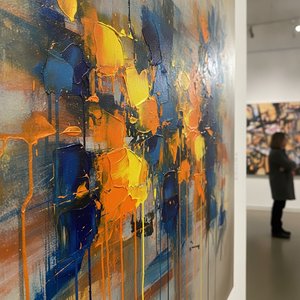
Beyond the Lines: Mastering the High-Impact World of Contemporary Abstraction
Master the high-impact world of contemporary abstraction. Discover how bold colors, textures, and modern movements like Abstract Expressionism can transform your space with premium, high-energy art curated for the design-conscious professional.

Kandinsky: Las 25 Obras Maestras del Pionero de la Abstracción | OriginalUniqueArt
Descubre las 25 obras maestras de Wassily Kandinsky, pionero del arte abstracto. Explora su expresionismo, composiciones únicas y la historia detrás de cada cuadro. Reproducciones de alta calidad para decorar tu hogar con arte moderno en OriginalUniqueArt.com.
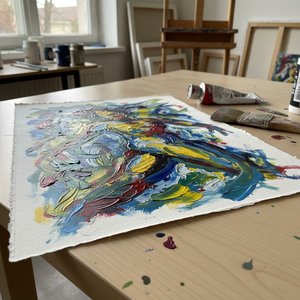
Acrílico sobre Papel: Materialidad y Expresión en el Arte Contemporáneo
Explore la fascinante técnica de la pintura acrílica sobre papel en el arte contemporáneo. Descubra la materialidad, las técnicas mixtas y consejos para coleccionistas exigentes. Guía experta.

Expresionismo Abstracto: 10 Obras Maestras que Transformaron el Arte |
Descubre las 10 obras maestras del Expresionismo Abstracto: Pollock, Rothko y más. Explora la historia, técnica y significado de estos lienzos icónicos. Reproducciones de arte exclusivas en .

Abstracción Geométrica: 10 Obras Maestras que Transformaron el Arte Moderno | OriginalUniqueArt
Descubre las 10 obras maestras de la abstracción geométrica que revolucionaron el arte moderno. Explora a Mondrian, Malevich y Kandinsky en OriginalUniqueArt.com. Reproducciones de alta calidad para tu hogar.


