

 Vista previa
 Compartir
 Compartir
 Ver detalles
 Guía
Guía

 Descargar
 Ver artículos similares
 Radiografía
 Presentación de diapositivas
 Estadísticas
Galatea (?)
 1509
1509 63.0 x 100.0 cm
 Leer más
Giclée / Impresión de arte
Impresiones giclée o en lienzo de calidad de museo con producción rápida y opciones de acabado flexibles. ( Encargar reproducción pintada a mano Ver versión en imagen digital)




































Elija entre nuestros tamaños predefinidos que respetan las proporciones originales de la obra.

Introduzca el ancho y el alto que necesite para adaptarse a su marco o pared. Una impresión solo puede recortarse, nunca hacerse más grande que la imagen original, por lo que un tamaño con una forma distinta perderá parte de la obra. Le enviaremos una maqueta digital para su aprobación antes de realizar cualquier impresión. La imagen que se muestra en esta página no refleja el recorte real; solo la maqueta lo hace.
Envío a todo el mundo () en 2 semanas en lugar de las 4/5 semanas estándar. (23 octubre)

Envío exprés gratuito a todo el mundo

Lienzo de lino de alta calidad

Seguro de envío completo

Garantía de reembolso de impuestos aduaneros

Garantía de fidelidad cromática exacta

Política de devolución de 100 días (solo por defectos)

Garantía de devolución del 100% del dinero

Oferta por volumen
 La opción de vidrio solo está disponible en tamaños inferiores a 110 cm.

Galatea (?)
Giclée / Impresión de arte
Tamaño de la reproducción
-


Precio total
€ 70
Preguntas y respuestas
¿Puedo examinar "Galatea (?)" con más detalle?
La vista de rayos X de "Galatea (?)" de Pinturicchio se encuentra en la página Rayos X de la obra: un examen interactivo de la imagen a través de once capas ópticas.
¿Dónde puedo comprar una lámina de "Galatea (?)" de Pinturicchio?
"Galatea (?)" está disponible como una impresión de bellas artes sobre lienzo de algodón o papel de lienzo de archivo. Los pedidos se realizan en su página Impresión de bellas artes, en el tamaño de su elección.
¿Cómo puedo descubrir obras de arte similares a "Galatea (?)" de Pinturicchio?
Las obras similares a "Galatea (?)" de Pinturicchio se encuentran reunidas en la página de Similares de la obra.
Biografía del artista
Bernardino di Betto Pinturicchio: A Renaissance Master of Grace and Detail
Bernardino di Betto, universally recognized as Pinturicchio—a moniker affectionately bestowed upon him for his diminutive stature—emerged from the artistic crucible of Perugia in 1454. His life unfolded during a period of unparalleled cultural dynamism, the High Renaissance surging across Italy; yet Pinturicchio distinguished himself through an aesthetic sensibility that transcended mere imitation, forging instead a singular path rooted in refined elegance and meticulous craftsmanship. While titans like Leonardo da Vinci and Michelangelo wrestled with anatomical precision and dramatic grandeur, Pinturicchio cultivated a style characterized by delicate grace, intricate detail, and a vibrant, decorative fervor—a testament to his mastery of transforming established forms into expressions of unparalleled beauty.Early Training and Artistic Roots
Pinturicchio’s formative years were steeped in Umbrian artistic traditions, nurtured under the tutelage of masters like Bonfigli and Fiorenzo di Lorenzo. These early influences instilled within him a profound appreciation for Gothic sensibilities—particularly the expressive power of drapery and the subtle interplay of light and shadow—which would subtly permeate his subsequent oeuvre. Crucially, he benefited from the mentorship of Pietro Perugino, arguably Umbria’s foremost painter during this era, whose influence extended beyond mere technique to encompass broader artistic principles. Vasari recounts that Pinturicchio served as Perugino’s assistant, a collaboration that undoubtedly honed his skills and solidified his understanding of the Renaissance ideal—a harmonious blend of classical erudition and humanist compassion.The Sistine Chapel Commission: A Turning Point
A pivotal moment arrived when Pinturicchio secured a commission for the Sistine Chapel in Rome during the early 16th century, coinciding with the reign of Pope Julius II. This undertaking represented an extraordinary challenge—a chance to collaborate alongside some of the most celebrated artists of his time—including Botticelli, Ghirlandaio, and Signorelli. The frescoes Pinturicchio undertook within this monumental space showcased not only his technical prowess but also his ability to synthesize disparate influences into a cohesive artistic vision. Though sadly his contributions were subsequently obliterated by Michelangelo’s ambitious undertaking to adorn the chapel with *The Last Judgement*, this experience nonetheless served as an invaluable catalyst, exposing him to new stylistic currents and cementing his reputation as a respected artist within papal circles.Rome and the Borgia Apartments: Decorative Splendor
Between 1484 and 1492 Pinturicchio resided primarily in Rome, where he undertook commissions from influential families like the Della Rovere—decorating chapels within Santa Maria del Popolo with his distinctive style—demonstrating a remarkable aptitude for fresco technique. These works underscored his commitment to capturing not merely visual likeness but also emotional resonance—a hallmark of Renaissance art that sought to elevate the viewer’s experience beyond mere observation. However, it was his engagement on the Borgia Apartments project in the Vatican Palace between 1492 and 1494 that truly elevated Pinturicchio's artistic stature. Collaborating with Giovanni Battista Rastrelli and Federico Mazzola, he created a suite of rooms lavishly adorned with frescoes depicting mythological narratives, portraits, and allegorical representations—a bold assertion of papal authority and an opulent celebration of humanist ideals. The masterful use of gold leaf, vibrant pigments, and illusionistic techniques transformed these spaces into immersive environments that mirrored the grandeur of the Borgia court.Legacy and Enduring Influence
Pinturicchio’s artistic legacy resides in his unwavering devotion to refined elegance and meticulous craftsmanship—qualities that continue to inspire admiration centuries after his death in Siena in 1513. While he may not have achieved the monumental fame enjoyed by Leonardo or Michelangelo, Pinturicchio nonetheless exerted a profound influence on subsequent generations of artists—particularly those drawn to Umbrian decorative art. His distinctive style—characterized by delicate grace and intricate detail—served as a beacon for painters seeking to emulate his mastery of color and composition. As evidenced by his frescoes in the Piccolomini Library in Siena, Pinturicchio’s work embodies an enduring aesthetic ideal—one that prioritizes beauty, harmony, and intellectual stimulation. He remains a poignant reminder that artistic greatness can flourish not merely through revolutionary innovation but also through unwavering adherence to established traditions—transformed into expressions of unparalleled artistry.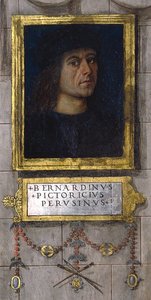
Pinturicchio
1454 - 1513 , Italia
Datos clave
- Artistic Movement Or Style: Renacimiento Umbria
- Artists Or Movements Influenced By This Artist: ['Raphael']
- Artists Who Influenced This Artist:
- Perugino
- Umbrian School
- Date Of Birth: 1454
- Date Of Death: 1513
- Full Name: Bernardino di Betto
- Nationality: Italian
- Notable Artworks:
- Frescos Sistina (destruidos)
- Apartamentos Borgia Vaticano
- Biblioteca Piccolomini Siena
- Place Of Birth: Perugia, Italia

