
() ·
Una pintura hecha para ti, a mano
Reproducción al óleo hecha a mano
Óleo sobre lienzo pintado a mano en el tamaño y marco de su elección, realizado por encargo por nuestros artistas. ( Cambiar a impresiones Cambiar a imagen digital)
Biografía del artista
Pietro Tacca: Maestro escultor que unió el manierismo y la grandeza barroca. Admira sus obras maestras como El Porcellino y Monumento de los Cuatro Moros en Florencia. Descubre su legado artístico italiano!
 Ver más
desde ·
Capítulo 1
¿Qué tamaño debería tener?
Deslice para cambiar el tamaño; la imagen de la izquierda muestra el marco con su anchura real. Se mantienen las proporciones originales.
Elija entre nuestros tamaños predefinidos que respetan las proporciones originales de la obra.

Indique el ancho y el alto que necesite para adaptarse a su marco o pared. Al tratarse de una obra pintada a mano, si requiere un tamaño con una proporción distinta, el artista puede pintar un poco más alrededor de la imagen o recortarla ligeramente; usted elige. Le enviaremos una maqueta digital para su aprobación antes de comenzar la pintura. La imagen que se muestra en esta página no refleja el resultado real; solo la maqueta lo hace.
Capítulo 2
¿Cómo debe llegar?
Elige el acabado de los bordes del lienzo
Elige tu marco

Blanco €1

Bordes difuminados €1

Continuación de imagen €1

P118B €10

P118H €10

P118W €10

P438Z €10

P508JH €12

P508YH €12

P805H €10

P805Z €10

P919BZ €10

P919G €10

P919XJ €10

P959ZH €10

P968JZ €12

W106C €8

W218G €10

W218JH €8

W218Y €10

W307PJ €10

W316G €10

W316PJ €8

W316Y €10

W398PJ €8

W4111J €10

W500HY €15

W500JH €15

W692G €12

W849H €8

W940BG €15

W953PJ €8

H24-GOLD €30

H24-SILVER €30

H36-GOLD €45

H36-SILVER €45
Con marco
Moldura: . Dimensiones totales con marco: .
Capítulo 3
¿Quién lo pinta y debería cambiar algo?
Tras realizar el pedido, el equipo de OriginalUniqueArt.com enviará un correo electrónico al cliente para solicitar instrucciones y proporcionar una vista previa del boceto
Envío a todo el mundo () en 3-4 semanas en lugar de las 5 semanas estándar. (10 noviembre). Sin comprometer la calidad.
Capítulo 4
Los últimos retoques
¿Una placa de identificación, como en un museo?
Detalles de la placa de bronce grabada
This elegant plaque features the artist's name and the title of the artwork, finely engraved for a timeless presentation.
It is made from bronze with a refined, elegant finish. The text is precisely laser-engraved for a sharp and permanent result. Measuring 9x2 cm, the plaque is compact yet easy to read. It's built to be durable and scratch-resistant, offering a professional, museum-quality look. Mounting is simple thanks to the included adhesive backing.
Detalles de la placa de acrílico transparente
The plaque includes essential engraved details such as the artist's name, the title of the artwork, the date it was created, the type of media used-like oil on canvas or watercolor-a brief description of the piece, and a QR code that links to the complete artwork information.
It is crafted from clear acrylic, offering a sleek, modern appearance. The text is UV-engraved in black to ensure strong visual contrast. With a size of 10x15 cm, it ensures optimal readability. It comes equipped with two metal hooks for secure wall mounting. The plaque is designed to be weather-resistant, making it suitable for various environments, and it includes interactive features that work seamlessly with smartphone scanning.
Detalles de la placa de acrílico negro
This elegant plaque includes engraved information such as the artist's name, the title of the artwork, the date it was created, the type of media used (like oil on canvas or watercolor), a short description of the artwork, and a QR code for quick access to more information.
The plaque itself is made from refined black acrylic with a premium finish. The text is laser-engraved in white for high contrast and readability. Its size is 10x15 cm, designed to be easy to read. It comes with two metal hooks for professional mounting. The design is sleek and fits any interior style. It is also weather-resistant and durable, with built-in digital integration for mobile compatibility.
¿Un barniz protector?
¿Para cuándo lo necesita?
Capítulo 5
Su pintura, tal como la solicitó

Slave
Técnica de reproducción
Dimensiones de la reproducción
-

Selección de artistas premium
Mayor nivel de detalle, delicadeza y tiempo de producción adicional
-

Enmarcado de reproducción
-
-
Para obras de arte o reproducciones que midan más de 105 cm (aproximadamente 41 pulgadas) en cualquiera de sus lados, el marco se enviará como un kit desmontado. Este método garantiza una entrega segura y evita daños durante el transporte.
Se requiere montaje profesional: este no es un producto para hacer usted mismo (DIY).
El kit debe ser ensamblado y el lienzo tensado por un enmarcador profesional con experiencia, utilizando cola para madera (no incluida), una tenaza para tensar lienzos y sargentos para mantener los bastidores alineados mientras la cola se seca. Un montaje incorrecto o una tensión desigual del lienzo pueden dañar la obra de arte de forma permanente y no están cubiertos por nuestra garantía.
 Para obras de arte o reproducciones que midan más de 105 cm (aproximadamente 41 pulgadas) en cualquiera de sus lados, el marco se enviará como un kit desmontado. Este método garantiza una entrega segura y evita daños durante el transporte.
Se incluyen todos los listones de madera maciza, cortados con precisión según las medidas.
Se ensambla con los tornillos incluidos, además de cola para madera para las uniones de las esquinas, la cual no se incluye y debe ser proporcionada por su enmarcador.
Se requieren herramientas profesionales que no están incluidas: un alicate para tensar lienzos (tensor) y abrazaderas para mantener los bastidores alineados mientras se seca el pegamento.
Importante:
Las uniones de las esquinas requieren cola para madera, los listones deben sujetarse con prensas hasta que la cola esté completamente seca, y para tensar el lienzo en el bastidor ensamblado se requiere una pinza para tensar lienzos. Ninguno de estos elementos está incluido en el kit. Por favor, contacte con un profesional del enmarcado con experiencia antes de realizar un pedido de este tamaño.

Cartela
-
-

Barniz protector
Barniz brillante (realza los colores y protege contra la luz y la humedad)
-

Personalizar mi obra
Ejemplos de lo que se puede personalizar: sustituir el rostro por una foto del cliente; añadir una mascota (por ejemplo, cambiar un gato por un perro); incluir un mensaje oculto en el fondo; cambiar el paisaje o los elementos del fondo.
-

Envío urgente
Envío a todo el mundo () en 3 o 4 semanas, en lugar de las 5 semanas habituales. (10 noviembre). Sin comprometer la calidad.
-
Envío urgente
Envío internacional () en 5 semanas. (17 noviembre).
Incluido
Precio total final
€ 268
La opción de vidrio solo está disponible en tamaños inferiores a 110 cm.
Incluido en cada pedido
- Envío exprés gratuito a todo el mundo
- Lienzo de lino de alta calidad
- Seguro de envío total
- Garantía de reembolso de aranceles aduaneros
- Garantía de fidelidad cromática exacta
- Política de devolución de 100 días (solo por defectos)
- Garantía de devolución del 100% del dinero
- Descuento por cantidad


 Ver en contexto
 Enviar
 Compartir
 Detalles
 Guía
Guía

 Descargar
 Similares
 Radiografía
 Presentación de diapositivas
 Preguntas y respuestas
 Estadísticas
En cifras
- 1615el año en que fue pintada
- 29marcos disponibles para elegir
- tamaños estándar, en sus propias proporciones
- 5semanas para pintar y entregar la obra
Sobre el original


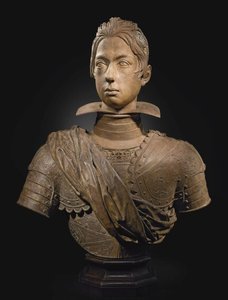
Pietro Tacca
1577 - 1640, Italia
Datos rápidos sobre Pietro Tacca
- Artistic Movement Or Style: Barroco y Manierismo
- Artists Who Influenced This Artist: ['Giambologna']
- Date Of Birth: 1577
- Full Name: Pietro Tacca
- Nationality: Italiano
- Notable Artworks:
- Monumento de los Cuatro Moros
- Estatua ecuestre de Fernando I
- Place Of Birth: Carrara, Italia
Biografía del artista
El legado escultórico de Pietro Tacca
En el corazón de la Toscana, donde el mármol blanco de Carrara se encuentra con la luz dorada de Florencia, la vida de Pietro Tacca se desarrolló como un puente entre dos eras monumentales de la historia del arte. Nacido en 1577, Tacca emergió de un linaje de artesanos para convertirse en una voz definitoria en la transición desde las elegantes y a menudo artificiales complejidades del Manierismo hacia la energía visceral y dramática del Barroco. Su viaje no fue meramente una cuestión de ambición personal, sino una profunda evolución de la forma, donde la gracia controlada de sus predecesores dio paso a un nuevo realismo palpitante que capturaba la esencia misma del movimiento y la emoción.
Los cimientos del genio de Tacca se forjaron dentro del legendario taller de Giambologna. Al ingresar al atelier en 1592, el joven escultor se convirtió en algo más que un simple aprendiz; se transformó en el custodio de un sofisticado lenguaje estético. Bajo la mirada vigilante de Giambologna, Tacca dominó el intrincado arte de la fundición en bronce y el delicado equilibrio de las composiciones asimétricas. Si bien sus primeras obras conservaban la elegancia estilizada y las proporciones alargadas características de la tradición manierista, en su trabajo emergía un hambre por algo más tangible, más humano e infinitamente más dinámico.
La corte de los Médici y las obras maestras en bronce
Tras el fallecimiento de su mentor en 1608, Tacca ascendió al prestigioso cargo de escultor de la corte de los Grandes Duques de Médici. Este nombramiento fue un hito transformador que le otorgó los recursos y la escala monumental necesarios para ejecutar obras de inmensa importancia histórica. Como artista predilecto de la élite florentina, navegó las exigencias de poderosos mecenas con una destreza que fusionaba el prestigio político con la innovación artística. Su capacidad para traducir la grandeza de la dinastía Médici en una realidad permanente de bronce ayudó a definir la identidad visual de Florencia durante esta edad de oro.
Una de sus contribuciones más perdurables al paisaje de la ciudad se encuentra, quizás, en su maestría con las obras de bronce a menor escala que poseían vida propia. El famoso Porcellino, un jabalí de bronce que se ha convertido en un icono entrañable del folclore florentino, ejemplifica su habilidad para infundir encanto y vitalidad incluso en un solo sujeto. Más allá de estas figuras encantadoras, la labor de Tacca en las estatuas ecuestres —como el tributo a Fernando I de Médici— demostró su capacidad para la narrativa monumental, capturando el poder y la autoridad de la clase gobernante a través de gestos amplios y tensión muscular.
Una síntesis de drama y realismo
A medida que la carrera de Tacca progresaba, la influencia del estilo barroco se volvió cada vez más innegable. Se alejó de los acertijos intelectualizados de la escultura manierista para buscar un compromiso más directo con las emociones del espectador. Sus obras tardías, como la conmovedora pieza de Tarquinio y Lucrecia, muestran un dominio profundo de la tensión narrativa y la profundidad psicológica. En estas piezas, el metal parece perder su rigidez, adoptando la suavidad de la piel y el pesado drapeado de las telas, creando una teatralidad que resultó revolucionaria para su época.
La importancia histórica de Pietro Tacca reside precisamente en esta síntesis de estilos. No abandonó simplemente las lecciones de Giambologna; más bien, las expandió para dar cabida a un mundo que empezaba a ansiar el realismo y la resonancia emocional. Su legado está grabado en el bronce y el mármol de Italia, representando un momento en el tiempo en que el arte se desplazó de lo cerebral a lo visceral, asegurando que las tradiciones escultóricas de Florencia continuaran latiendo con vida mucho después de su muerte en 1640.
Artículos relacionados
Pietro Perugino: Umbrian Master of Serenity & Precursor to Raphael's High Renaissance
Explore the life & art of Pietro Perugino, a pivotal Renaissance master and Raphael’s influential teacher. Discover his serene compositions, Sistine Chapel frescoes, and lasting legacy with OriginalUniqueArt.
