Text size

() ·

A painting made for you, by hand

Place de la Concorde

Reproducción al óleo hecha a mano

Óleo sobre lienzo pintado a mano en el tamaño y marco de su elección, realizado por encargo por nuestros artistas. ( Cambiar a impresiones Cambiar a imagen digital)

Descripción del objeto

Place de la Concorde: Una obra maestra de Mondrian que captura la esencia de París y el espíritu del movimiento De Stijl. Descubre su historia, composición y legado artístico.

Biografía del artista

Explore la obra de Piet Mondrian (1872-1944), un pionero del arte abstracto y el movimiento De Stijl. Descubre sus icónicos cuadros geométricos, su estilo Neoplasticismo y su influencia duradera en el diseño moderno, la arquitectura y el arte del siglo XX.

from ·

Chapter 1

How large should it be?

Slide to change the size; the picture on the left shows the frame at its real width. The proportions of the original are kept.

Tamaño estándar
a medida
CM
INCH

Elija entre nuestros tamaños predefinidos que respetan las proporciones originales de la obra.

ancho
altura

Indique el ancho y el alto que necesite para adaptarse a su marco o pared. Al tratarse de una obra pintada a mano, si requiere un tamaño con una proporción distinta, el artista puede pintar un poco más alrededor de la imagen o recortarla ligeramente; usted elige. Le enviaremos una maqueta digital para su aprobación antes de comenzar la pintura. La imagen que se muestra en esta página no refleja el resultado real; solo la maqueta lo hace.

Chapter 2

How should it arrive?

Choose the edges of the stretched canvas

Choose your frame

Corner sample of the WhiteWrap canvas edge finish, stretched on madera maciza bars
White €1
Corner sample of the BlurSideWrap canvas edge finish, stretched on madera maciza bars
Blurside €1
Corner sample of the ExtendedWrap canvas edge finish, stretched on madera maciza bars
Extended €1
Corner sample of the P118B picture frame: poliestireno moldeado, 5 cm wide and 3 cm thick
P118B €10
Corner sample of the P118H picture frame: poliestireno moldeado, 5 cm wide and 3 cm thick
P118H €10
Corner sample of the P118W picture frame: poliestireno moldeado, 5 cm wide and 3 cm thick
P118W €10
Corner sample of the P438Z picture frame: poliestireno moldeado, 5.5 cm wide and 3.5 cm thick
P438Z €10
Corner sample of the P508JH picture frame: poliestireno moldeado, 7 cm wide and 3.5 cm thick
P508JH €12
Corner sample of the P508YH picture frame: poliestireno moldeado, 7 cm wide and 3.5 cm thick
P508YH €12
Corner sample of the P805H picture frame: poliestireno moldeado, 5 cm wide and 3.5 cm thick
P805H €10
Corner sample of the P805Z picture frame: poliestireno moldeado, 5 cm wide and 3.5 cm thick
P805Z €10
Corner sample of the P919BZ picture frame: poliestireno moldeado, 7 cm wide and 3.5 cm thick
P919BZ €10
Corner sample of the P919G picture frame: poliestireno moldeado, 7 cm wide and 3.5 cm thick
P919G €10
Corner sample of the P919XJ picture frame: poliestireno moldeado, 7 cm wide and 3.5 cm thick
P919XJ €10
Corner sample of the P959ZH picture frame: poliestireno moldeado, 5 cm wide and 3 cm thick
P959ZH €10
Corner sample of the P968JZ picture frame: poliestireno moldeado, 6 cm wide and 4 cm thick
P968JZ €12
Corner sample of the W106C picture frame: madera maciza, 5 cm wide and 3 cm thick
W106C €8
Corner sample of the W218G picture frame: madera maciza, 5 cm wide and 3 cm thick
W218G €10
Corner sample of the W218JH picture frame: madera maciza, 5 cm wide and 3 cm thick
W218JH €8
Corner sample of the W218Y picture frame: madera maciza, 5 cm wide and 3 cm thick
W218Y €10
Corner sample of the W307PJ picture frame: madera maciza, 6 cm wide and 3 cm thick
W307PJ €10
Corner sample of the W316G picture frame: madera maciza, 6 cm wide and 3 cm thick
W316G €10
Corner sample of the W316PJ picture frame: madera maciza, 6 cm wide and 3 cm thick
W316PJ €8
Corner sample of the W316Y picture frame: madera maciza, 6 cm wide and 3 cm thick
W316Y €10
Corner sample of the W398PJ picture frame: madera maciza, 5 cm wide and 3 cm thick
W398PJ €8
Corner sample of the W4111J picture frame: madera maciza, 6.5 cm wide and 3.5 cm thick
W4111J €10
Corner sample of the W500HY picture frame: madera maciza, 7 cm wide and 5 cm thick
W500HY €15
Corner sample of the W500JH picture frame: madera maciza, 7 cm wide and 5 cm thick
W500JH €15
Corner sample of the W692G picture frame: madera maciza, 8 cm wide and 4 cm thick
W692G €12
Corner sample of the W849H picture frame: madera maciza, 5 cm wide and 3 cm thick
W849H €8
Corner sample of the W940BG picture frame: madera maciza, 7.5 cm wide and 4.5 cm thick
W940BG €15
Corner sample of the W953PJ picture frame: madera maciza, 6 cm wide and 3.5 cm thick
W953PJ €8
Corner sample of the H24-GOLD picture frame: madera tallada con estuco, 10 cm wide and 6 cm thick
H24-GOLD €30
Corner sample of the H24-SILVER picture frame: madera tallada con estuco, 10 cm wide and 6 cm thick
H24-SILVER €30
Corner sample of the H36-GOLD picture frame: madera tallada con estuco, 15 cm wide and 6.5 cm thick
H36-GOLD €45
Corner sample of the H36-SILVER picture frame: madera tallada con estuco, 15 cm wide and 6.5 cm thick
H36-SILVER €45

Moulding: . Overall size with the frame: .

Chapter 3

Who paints it, and should anything change?

Examples of what can be changed: Replace face with customer photo; Add pet (e.g., replace cat with dog); Include hidden message in background; Change background landscape or elements.
After order, OriginalUniqueArt.com team will email client for instructions and provide a mockup preview

Envío a todo el mundo () en 3-4 semanas en lugar de las 5 semanas estándar. (2 noviembre). Sin comprometer la calidad.

Chapter 4

The finishing touches

A nameplate, as in a museum?

Detalles de la placa de bronce grabada

This elegant plaque features the artist's name and the title of the artwork, finely engraved for a timeless presentation.

It is made from bronze with a refined, elegant finish. The text is precisely laser-engraved for a sharp and permanent result. Measuring 9x2 cm, the plaque is compact yet easy to read. It's built to be durable and scratch-resistant, offering a professional, museum-quality look. Mounting is simple thanks to the included adhesive backing.

Detalles de la placa de acrílico transparente

The plaque includes essential engraved details such as the artist's name, the title of the artwork, the date it was created, the type of media used-like oil on canvas or watercolor-a brief description of the piece, and a QR code that links to the complete artwork information.

It is crafted from clear acrylic, offering a sleek, modern appearance. The text is UV-engraved in black to ensure strong visual contrast. With a size of 10x15 cm, it ensures optimal readability. It comes equipped with two metal hooks for secure wall mounting. The plaque is designed to be weather-resistant, making it suitable for various environments, and it includes interactive features that work seamlessly with smartphone scanning.

Detalles de la placa de acrílico negro

This elegant plaque includes engraved information such as the artist's name, the title of the artwork, the date it was created, the type of media used (like oil on canvas or watercolor), a short description of the artwork, and a QR code for quick access to more information.

The plaque itself is made from refined black acrylic with a premium finish. The text is laser-engraved in white for high contrast and readability. Its size is 10x15 cm, designed to be easy to read. It comes with two metal hooks for professional mounting. The design is sleek and fits any interior style. It is also weather-resistant and durable, with built-in digital integration for mobile compatibility.

A protective varnish?

When do you need it?

Chapter 5

Your painting, as you ordered it

Place de la Concorde

Técnica de reproducción

Dimensiones de la reproducción

-

Selección de artistas premium

Mayor nivel de detalle, delicadeza y tiempo de producción adicional

-

Enmarcado de reproducción

-

-

Para obras de arte o reproducciones que midan más de 105 cm (aproximadamente 41 pulgadas) en cualquiera de sus lados, el marco se enviará como un kit desmontado. Este método garantiza una entrega segura y evita daños durante el transporte.

Se requiere montaje profesional: este no es un producto para hacer usted mismo (DIY).
El kit debe ser ensamblado y el lienzo tensado por un enmarcador profesional con experiencia, utilizando cola para madera (no incluida), una tenaza para tensar lienzos y sargentos para mantener los bastidores alineados mientras la cola se seca. Un montaje incorrecto o una tensión desigual del lienzo pueden dañar la obra de arte de forma permanente y no están cubiertos por nuestra garantía.

  • Se incluyen todos los listones de madera maciza, cortados con precisión según las medidas.

  • Se ensambla con los tornillos incluidos, además de cola para madera para las uniones de las esquinas, la cual no se incluye y debe ser proporcionada por su enmarcador.

  • Se requieren herramientas profesionales que no están incluidas: un alicate para tensar lienzos (tensor) y abrazaderas para mantener los bastidores alineados mientras se seca el pegamento.

Importante:
Las uniones de las esquinas requieren cola para madera, los listones deben sujetarse con prensas hasta que la cola esté completamente seca, y para tensar el lienzo en el bastidor ensamblado se requiere una pinza para tensar lienzos. Ninguno de estos elementos está incluido en el kit. Por favor, contacte con un profesional del enmarcado con experiencia antes de realizar un pedido de este tamaño.

Cartela

-

-

Barniz protector

Barniz brillante (realza los colores y protege contra la luz y la humedad)

-

Personalizar mi obra

Ejemplos de lo que se puede personalizar: sustituir el rostro por una foto del cliente; añadir una mascota (por ejemplo, cambiar un gato por un perro); incluir un mensaje oculto en el fondo; cambiar el paisaje o los elementos del fondo.

-

Envío urgente

Envío a todo el mundo () en 3 o 4 semanas, en lugar de las 5 semanas habituales. (2 noviembre). Sin comprometer la calidad.

-

Envío urgente

Envío internacional () en 5 semanas. (9 noviembre).

Incluido

Precio total final

€ 267

Precio total € 267

La opción de vidrio solo está disponible en tamaños inferiores a 110 cm.

Included with every order

  • Envío exprés gratuito a todo el mundo
  • Lienzo de lino de alta calidad
  • Seguro de envío total
  • Garantía de reembolso de aranceles aduaneros
  • Garantía de fidelidad cromática exacta
  • Política de devolución de 100 días (solo por defectos)
  • Garantía de devolución del 100% del dinero
  • Descuento por cantidad

A Symphony of Balance: Deconstructing Mondrian’s ‘Place de la Concorde’

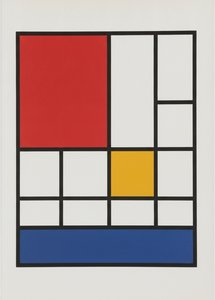
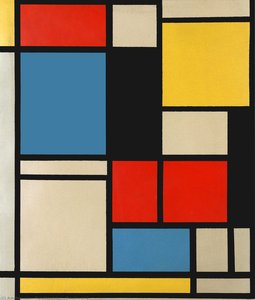
Piet Mondrian’s *Place de la Concorde*, painted between 1938 and 1943, is far more than a geometric arrangement of color and line; it’s a distillation of an artistic philosophy, a visual poem born from a period of profound change and upheaval. While titled after the famed Parisian square, Mondrian doesn't offer a representational depiction. Instead, he presents us with an abstraction that *embodies* the energy and dynamism of modern urban life – a pulsating grid of black lines containing blocks of primary colors—red, yellow, and blue—set against a stark white background. This wasn’t merely about depicting a place; it was about capturing its essence, its underlying structure, and translating it into a universal visual language. The painting's evolution is particularly fascinating. Begun in Paris before Mondrian fled the looming threat of World War II, it continued to be reworked after his arrival in New York City, absorbing the influence of a new environment—a faster pace, bolder energy—resulting in adjustments to line weight and color placement that lend the work an even greater sense of vitality.

The Path to Neoplasticism: A Life Dedicated to Abstraction

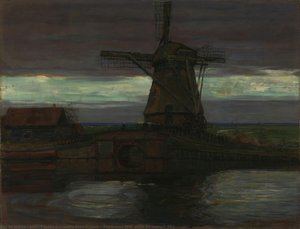
To truly appreciate *Place de la Concorde*, one must understand its place within Mondrian’s artistic journey. Born Pieter Cornelis Mondriaan in 1872, he initially trained as a teacher while simultaneously pursuing his passion for art. His early works were steeped in the traditions of Dutch landscape painting, reflecting the influence of the Hague School and Impressionism. Paintings like *The Red Mill* demonstrate this formative period, showcasing a naturalistic style that gradually gave way to experimentation with Pointillism and Fauvism. However, it was his move to Paris in 1912 that proved pivotal. Immersed in the avant-garde scene and captivated by Cubism, Mondrian began to deconstruct forms, moving away from representational art towards a more abstract vocabulary. This exploration culminated in the development of Neoplasticism – also known as De Stijl – a style predicated on the belief that pure abstraction could express universal harmony. Mondrian believed that through reducing painting to its most fundamental elements—horizontal and vertical lines, primary colors, and black, white, and gray—he could reveal the underlying structure of reality and achieve a spiritual ideal.

Decoding the Composition: Beyond Form and Color

The seemingly simple composition of *Place de la Concorde* is deceptively complex. The grid structure isn’t arbitrary; it represents Mondrian’s attempt to create a harmonious balance between opposing forces – horizontal versus vertical, static versus dynamic, individual elements versus the unified whole. The black lines act as boundaries and connectors, defining spaces while simultaneously creating a sense of flow and interconnectedness. The carefully placed blocks of color aren’t merely decorative; they represent specific energies and emotions. Red often symbolizes passion and intensity, blue evokes tranquility and spirituality, and yellow embodies joy and intellect. The white background isn't simply empty space but an essential element that allows the colors to breathe and resonate. It is important to note that Mondrian didn’t view these elements as isolated components but rather as integral parts of a larger, interconnected system—a microcosm of the universe itself. He saw his art not just as aesthetic expression but as a spiritual practice, a means of revealing underlying cosmic truths.

A Lasting Legacy: The Enduring Influence of Mondrian

*Place de la Concorde*, and indeed all of Mondrian’s Neoplastic work, has had an immeasurable impact on the course of 20th-century art and design. His reductive aesthetic profoundly influenced movements like Minimalism, Color Field painting, and Abstract Expressionism. Beyond the realm of fine art, his principles have permeated architecture, graphic design, fashion, and interior decoration. The clean lines, geometric forms, and bold color palettes found in Mondrian’s paintings continue to inspire designers seeking a sense of order, clarity, and modern elegance. A reproduction of *Place de la Concorde* isn’t just an acquisition; it’s an invitation to embrace a philosophy—a commitment to simplicity, balance, and the pursuit of universal beauty. It is a statement piece that transcends trends, offering a timeless aesthetic that will continue to resonate for generations to come.
  • Artist: Piet Mondrian
  • Born Year: 1872
  • Death Year: 1944
  • Birth City: Amersfoort
  • Birth Country: Netherlands
Additional Research:
  • Explore WikiArt.org for detailed information about Mondrian and his work.
  • Discover Place de la Concorde's history on Wikipedia.
  • Find inspiration in Google Arts & Culture’s exploration of Mondrian’s artistic vision.

Preguntas y respuestas

¿Qué colores predominan en "Place de la Concorde" de Piet Mondrian?

La identidad cromática de "Place de la Concorde" de Piet Mondrian: una paleta Tonos neutros, dominada por el Gris (#9f7a7c).

¿Quién creó "Place de la Concorde" y en qué año?

Piet Mondrian creó "Place de la Concorde" en 1943.

¿Cómo puedo ver "Place de la Concorde" de Piet Mondrian en formato de presentación?

Puede ver el diaporama de "Place de la Concorde" en la página Galería de imágenes de la obra.

More about this painting

Ver en contexto Vista previa en RA Cambiar a impresiones Cambiar a imagen digital Enviar
Detalles Guía Añadir a favoritos Descargar Similares Radiografía Presentación de diapositivas Q&A Estadísticas

In numbers

  • 1943the year it was painted
  • 29frames to choose from
  • standard sizes, in its own proportions
  • 5weeks to paint and deliver it
Piet Mondrian

Piet Mondrian

1872 - 1944, Países Bajos

Quick facts about Piet Mondrian

  • Artistas Que Influyeron:
    • Hague School
    • Puntillismo
    • Fauvismo
    • Cubismo
  • Estilo Artístico: Neoplasticismo, De Stijl
  • Fecha De Nacimiento: 7 de marzo de 1872
  • Influenciado A Artistas:
    • Expresionismo abstracto
    • Minimalismo
    • Color Field painting
  • Lugar De Nacimiento: Amersfoort, Países Bajos
  • Nacionalidad: Holandés
  • Nombre Completo: Piet Mondrian
  • Obras Notables:
    • Nueva York I
    • Composición con Rojo, Azul y Amarillo
    • Broadway Boogie Woogie
    • Tableau no. 2

Biografía del artista

**vida temprana y carrera en los Países Bajos (1872-1911)**

pieter cornelis mondriaan, conocido a partir de 1911 como piet mondrian, fue un pintor y teórico del arte holandés nacido el 7 de marzo de 1872, en Amersfoort, Países Bajos. Comenzó su carrera como maestro en educación primaria mientras practicaba la pintura, inicialmente en el estilo impresionista holandés de la Escuela de Ámsterdam.
  • Su obra temprana, caracterizada por paisajes naturalistas, se puede ver en pinturas como the red mill y trees in moonrise, que se exhibieron en el kunstmuseum den haag.
  • La búsqueda de Mondrian por parte de un estilo personal lo llevó a explorar diversos movimientos artísticos, incluyendo el puntillismo y el fauvismo.
  • Su primera exposición en 1893 marcó el comienzo de su prolífica carrera.

**la evolución del estilo de Mondrian**

de figurativo a abstracto La dirección artística de Mondrian se desplazó hacia un estilo cada vez más abstracto, culminando en una forma no representacional que llamó neoplasticismo. Esta 'arte plástico puro' tenía como objetivo crear 'belleza universal', limitando su vocabulario formal a los colores primarios (rojo, azul y amarillo), valores (negro, blanco y gris) y direcciones (horizontal y vertical).

**legado e influencia**

El legado de Mondrian se extiende más allá de su propia obra, influyendo en estilos y movimientos importantes como la pintura de campo de color, el expresionismo abstracto y el minimalismo. El historiador del diseño stephen bayley señaló que Mondrian se ha convertido en un símbolo para todo lo que el modernismo pretendía ser.
  • Explore más de la obra de Mondrian en OriginalUniqueArt.com.
  • Aprenda sobre el movimiento De Stijl y su influencia en el arte moderno en wikipedia.
  • Descubra otros artistas influyentes como vincent van gogh y su impacto en el mundo del arte.

**obras clave y exposiciones**

* piet mondrian: apple blossom (cubismo) (ver en OriginalUniqueArt.com) * piet mondrian: still life with vase of spices ii (cubismo) (ver en OriginalUniqueArt.com) * piet mondrian: passionflower (73 x 48 cm, kunstmuseum den haag, post impressionismo, acuarela) (ver en OriginalUniqueArt.com)

Datos clave

  • Location: Dallas Museum of Art
  • Medium: Oil on canvas
  • Year: 1943
  • Dimensions: Overall: 37 x 37 3/16 in.
  • Title: Place de la Concorde
  • Artist: Piet Mondrian

Test de conocimientos artísticos

Cada pregunta tiene una única respuesta correcta.

Pregunta 1:
¿Quién pintó Place de la Concorde?
Pregunta 2:
¿En qué período fue creada esta obra maestra?
Pregunta 3:
¿Cuál es el estilo artístico predominante en Place de la Concorde?
Pregunta 4:
¿Qué simboliza la estructura geométrica del cuadro?
Pregunta 5:
¿Por qué Mondrian eligió utilizar colores primarios como rojo, amarillo y azul?