Ver en contexto
 Enviar
 Compartir
 Detalles
 Guía
Guía

 Descargar
 Similares
 Radiografía
 Presentación de diapositivas
 Q&A
Q&A Estadísticas
El árbol gris

- 79.0 x 109.0 cm


 Ver más
Giclée / Impresión de arte
Impresiones giclée o en lienzo de calidad de museo con producción rápida y opciones de acabado flexibles. ( Comprar pintura hecha a mano Cambiar a imagen digital)




P118B €10

P118H €10

P118W €10

P438Z €10

P508JH €12

P508YH €12

P805H €10

P805Z €10

P919BZ €10

P919G €10

P919XJ €10

P959ZH €10

P968JZ €12

W106C €8

W218G €10

W218JH €8

W218Y €10

W307PJ €10

W316G €10

W316PJ €8

W316Y €10

W398PJ €8

W4111J €10

W500HY €15

W500JH €15

W692G €12

W849H €8

W940BG €15

W953PJ €8




Elija entre nuestros tamaños predefinidos que respetan las proporciones originales de la obra.

Introduzca el ancho y el alto que necesite para adaptarse a su marco o pared. Una impresión solo puede recortarse, nunca hacerse más grande que la imagen original, por lo que un tamaño con una forma distinta perderá parte de la obra. Le enviaremos una maqueta digital para su aprobación antes de realizar cualquier impresión. La imagen que se muestra en esta página no refleja el recorte real; solo la maqueta lo hace.
Envío a todo el mundo () en 2 semanas en lugar de las 4/5 semanas estándar. (31 octubre)

Envío exprés gratuito a todo el mundo

Lienzo de lino de alta calidad

Seguro de envío total

Garantía de reembolso de aranceles aduaneros

Garantía de fidelidad cromática exacta

Política de devolución de 100 días (solo por defectos)

Garantía de devolución del 100% del dinero

Descuento por cantidad
 La opción de vidrio solo está disponible en tamaños inferiores a 110 cm.

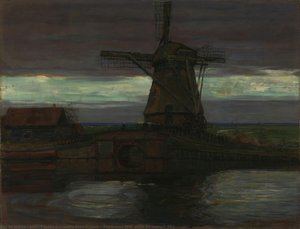
El árbol gris
Giclée / Impresión de arte
Dimensiones de la reproducción
-


Precio total final
€ 71
The Gray Tree: A Pioneering Vision of Cubism
The Gray Tree by Piet Mondrian stands as a cornerstone of modern art—a testament to the transformative power of abstraction and the burgeoning influence of Cubism in the early 1920s. Painted in 1911, this deceptively simple composition encapsulates Mondrian’s radical departure from representational painting and his unwavering commitment to exploring fundamental geometric principles as a vehicle for conveying spiritual truth. Measuring 79 x 109 cm and executed in oil on canvas, the artwork immediately confronts viewers with its stark palette—primarily black, white, and shades of gray—a deliberate rejection of color’s perceived distraction from pure form.An Evolutionary Step Towards Cubist Composition
Mondrian's artistic journey was marked by a gradual but decisive shift away from Impressionistic landscapes toward the revolutionary ideas championed by Pablo Picasso and Georges Braque. Initially drawn to Impressionism’s shimmering light effects, he swiftly recognized the limitations of depicting reality faithfully. The allure of Cubism—specifically Analytical Cubism—proved irresistible, prompting him to dissect objects into fragmented planes and explore multiple perspectives simultaneously. This approach is vividly realized in *The Gray Tree*, where Mondrian abandons traditional illusionistic techniques in favor of a rigorously structured visual language.Cubist Elements: Simplifying Reality
The painting’s formal vocabulary embodies the core tenets of Cubism. The tree itself—a familiar motif—is rendered as a series of intersecting horizontal and vertical lines, creating a dynamic interplay of shapes that transcends any literal depiction. These lines dominate the canvas, establishing a framework for organizing the visual elements without attempting to reproduce their three-dimensional contours. Instead, Mondrian prioritizes geometric abstraction, reducing natural forms to their essential structural components—a deliberate strategy aimed at liberating art from the constraints of mimetic representation. The absence of leaves or any organic detail underscores this commitment to simplification and reinforces the painting’s conceptual focus.Symbolic Significance: Beyond Representation
More than just a visual experiment, *The Gray Tree* carries profound symbolic weight within Mondrian's broader artistic philosophy. He believed that art should transcend the mundane concerns of everyday life and aspire to express universal values—a conviction rooted in his Jansenist upbringing. The monochromatic palette—particularly gray—represents spiritual purity and neutrality, reflecting Mondrian’s desire to achieve a harmonious balance between opposing forces. The geometric lines symbolize order and rationality, mirroring Mondrian's intellectual worldview and aligning with the principles of De Stijl, the artistic movement he co-founded alongside Theo van Doesburg.Influence on Modern Art: A Legacy of Geometric Abstraction
Mondrian’s groundbreaking approach to abstraction profoundly impacted subsequent generations of artists—establishing him as a pivotal figure in the development of Color Field painting and Minimalism. His insistence on reducing visual language to its most fundamental elements paved the way for exploring new aesthetic possibilities and challenging conventional notions of artistic expression. As Stephen Bayley eloquently stated, “Mondrian has come to mean Modernism. His name and his work sum up the High Modernist ideal.” For those seeking inspiration or contemplating acquiring a high-quality reproduction, *The Gray Tree* remains an enduring emblem of geometric abstraction—a timeless masterpiece that continues to resonate with audiences worldwide.- Piet Mondrian was a Dutch painter and art theoretician known for his contributions to abstract art.
- Lehmbruck Museum in Germany houses an important collection of modern sculptures, including works by prominent artists like A.
- The Gray Tree is available for viewing at OriginalUniqueArt.com.
Piet Mondrian: A Life in Abstraction
## Early Life and Artistic Beginnings (1872-1911) ## Evolution Towards Abstraction (1911-1920s) ## Cubist Elements ## Symbolic Significance ## Influence on Modern ArtPreguntas y respuestas
¿Puedo ver "El árbol gris" de Piet Mondrian bajo diferentes luces?
La vista de rayos X de "El árbol gris" de Piet Mondrian se encuentra en la página Radiografía de la obra: un examen interactivo de la imagen a través de once capas ópticas.
¿Quién es el autor de "El árbol gris"?
El artista detrás de "El árbol gris" es Piet Mondrian. La obra está catalogada bajo el nombre de Piet Mondrian.
¿Quién creó "El árbol gris" y en qué año?
"El árbol gris" es una obra de Piet Mondrian, realizada en 1911.
Biografía del artista
**vida temprana y carrera en los Países Bajos (1872-1911)**
pieter cornelis mondriaan, conocido a partir de 1911 como piet mondrian, fue un pintor y teórico del arte holandés nacido el 7 de marzo de 1872, en Amersfoort, Países Bajos. Comenzó su carrera como maestro en educación primaria mientras practicaba la pintura, inicialmente en el estilo impresionista holandés de la Escuela de Ámsterdam.- Su obra temprana, caracterizada por paisajes naturalistas, se puede ver en pinturas como the red mill y trees in moonrise, que se exhibieron en el kunstmuseum den haag.
- La búsqueda de Mondrian por parte de un estilo personal lo llevó a explorar diversos movimientos artísticos, incluyendo el puntillismo y el fauvismo.
- Su primera exposición en 1893 marcó el comienzo de su prolífica carrera.
**la evolución del estilo de Mondrian**
de figurativo a abstracto La dirección artística de Mondrian se desplazó hacia un estilo cada vez más abstracto, culminando en una forma no representacional que llamó neoplasticismo. Esta 'arte plástico puro' tenía como objetivo crear 'belleza universal', limitando su vocabulario formal a los colores primarios (rojo, azul y amarillo), valores (negro, blanco y gris) y direcciones (horizontal y vertical).- Ejemplos de este estilo se pueden ver en pinturas como composition with yellow patch (46 x 46 cm, neoplasticismo, óleo sobre lienzo).
- La obra de Mondrian tuvo una enorme influencia en el arte del siglo XX, impactando no solo la pintura abstracta sino también el diseño, la arquitectura y la moda.
**legado e influencia**
El legado de Mondrian se extiende más allá de su propia obra, influyendo en estilos y movimientos importantes como la pintura de campo de color, el expresionismo abstracto y el minimalismo. El historiador del diseño stephen bayley señaló que Mondrian se ha convertido en un símbolo para todo lo que el modernismo pretendía ser.- Explore más de la obra de Mondrian en OriginalUniqueArt.com.
- Aprenda sobre el movimiento De Stijl y su influencia en el arte moderno en wikipedia.
- Descubra otros artistas influyentes como vincent van gogh y su impacto en el mundo del arte.
**obras clave y exposiciones**
* piet mondrian: apple blossom (cubismo) (ver en OriginalUniqueArt.com) * piet mondrian: still life with vase of spices ii (cubismo) (ver en OriginalUniqueArt.com) * piet mondrian: passionflower (73 x 48 cm, kunstmuseum den haag, post impressionismo, acuarela) (ver en OriginalUniqueArt.com)
Piet Mondrian
1872 - 1944 , Países Bajos
Datos clave
- Artistas Que Influyeron:
- Hague School
- Puntillismo
- Fauvismo
- Cubismo
- Estilo Artístico: Neoplasticismo, De Stijl
- Fecha De Nacimiento: 7 de marzo de 1872
- Influenciado A Artistas:
- Expresionismo abstracto
- Minimalismo
- Color Field painting
- Lugar De Nacimiento: Amersfoort, Países Bajos
- Nacionalidad: Holandés
- Nombre Completo: Piet Mondrian
- Obras Notables:
- Nueva York I
- Composición con Rojo, Azul y Amarillo
- Broadway Boogie Woogie
- Tableau no. 2
Artículos relacionados
Theo van Doesburg: Pioneering De Stijl & the Evolution of Neo-Plasticism
Explore the revolutionary De Stijl movement & Neo-Plasticism with our expert guide. Discover Piet Mondrian, Theo van Doesburg, and the lasting impact of this influential art style. Learn about collecting & investing in De Stijl masterpieces.

Beyond Form & Color: Geometric Abstraction's Evolution in 20th/21st Century Art
Explore the evolution of geometric abstraction from Cubism to contemporary art. Discover key artists like Malevich & Mondrian, investment insights, and expert collecting advice at OriginalUniqueArt.
Pure Harmony: Discover the Bold Geometry and Spiritual Order of De Stijl Art
Explore the profound beauty of De Stijl art. Discover how masters like Piet Mondrian used bold geometry and primary colors to seek universal harmony through Neoplasticism. A deep dive into the spiritual order behind the world's most iconic abstract movements.

Abstracción Geométrica: 10 Obras Maestras que Transformaron el Arte Moderno | OriginalUniqueArt
Descubre las 10 obras maestras de la abstracción geométrica que revolucionaron el arte moderno. Explora a Mondrian, Malevich y Kandinsky en OriginalUniqueArt.com. Reproducciones de alta calidad para tu hogar.
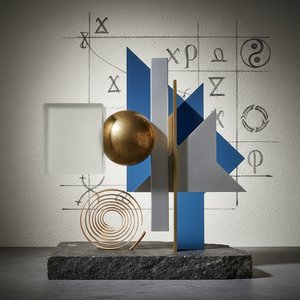
Más Allá de la Forma: Explorando los Fundamentos Filosóficos de la Abstracción Geométrica
Descubre los fundamentos filosóficos de la abstracción geométrica. Explora el suprematismo de Malévich y el neoplasticismo de Mondrian, su impacto en el arte moderno y su legado perdurable. Análisis experto.