Vista previa
 Compartir
 Compartir
 Ver detalles
 Guía
Guía

 Descargar
 Ver artículos similares
 Radiografía
 Presentación de diapositivas
 Estadísticas
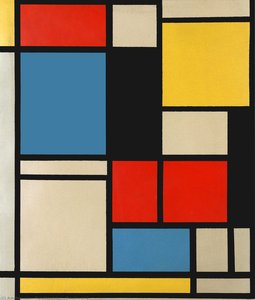
Composición con Rojo, Azul y Amarillo
 Acrílico sobre lienzo
- Arte de pared
- De Stijl
 1930
1930- Arte moderno
 45.0 x 45.0 cm
 Kunsthaus Zürich
 Leer más
Giclée / Impresión de arte
Impresiones giclée o en lienzo de calidad de museo con producción rápida y opciones de acabado flexibles. ( Encargar reproducción pintada a mano Ver versión en imagen digital)




P118B €10

P118H €10

P118W €10

P438Z €10

P508JH €12

P508YH €12

P805H €10

P805Z €10

P919BZ €10

P919G €10

P919XJ €10

P959ZH €10

P968JZ €12

W106C €8

W218G €10

W218JH €8

W218Y €10

W307PJ €10

W316G €10

W316PJ €8

W316Y €10

W398PJ €8

W4111J €10

W500HY €15

W500JH €15

W692G €12

W849H €8

W940BG €15

W953PJ €8




Elija entre nuestros tamaños predefinidos que respetan las proporciones originales de la obra.

Introduzca el ancho y el alto que necesite para adaptarse a su marco o pared. Una impresión solo puede recortarse, nunca hacerse más grande que la imagen original, por lo que un tamaño con una forma distinta perderá parte de la obra. Le enviaremos una maqueta digital para su aprobación antes de realizar cualquier impresión. La imagen que se muestra en esta página no refleja el recorte real; solo la maqueta lo hace.
Envío a todo el mundo () en 2 semanas en lugar de las 4/5 semanas estándar. (23 octubre)

Envío exprés gratuito a todo el mundo

Lienzo de lino de alta calidad

Seguro de envío completo

Garantía de reembolso de impuestos aduaneros

Garantía de fidelidad cromática exacta

Política de devolución de 100 días (solo por defectos)

Garantía de devolución del 100% del dinero

Oferta por volumen
 La opción de vidrio solo está disponible en tamaños inferiores a 110 cm.

Composición con Rojo, Azul y Amarillo
Giclée / Impresión de arte
Tamaño de la reproducción
-


Precio total
€ 70
Composition with Red, Blue and Yellow
Composition with Red, Blue and Yellow stands as an emblem of abstract art’s revolutionary spirit, born from the fertile soil of Piet Mondrian’s artistic vision around 1930. This monumental canvas immediately captivates the eye with its dominant red rectangle—a bold declaration of color that commands attention. However, it is more than just a splash of hue; it embodies the core principles of Neoplasticism, Mondrian's meticulously crafted style that sought to distill painting down to its purest essence.
The painting’s framework is defined by two expansive strips—horizontal bands—that bisect the canvas and delineate its boundaries. These strips are further subdivided into smaller squares, creating a complex geometric grid that reflects Mondrian's unwavering belief in mathematical harmony as the foundation of artistic expression. At the bottom left corner, intersecting black bars disrupt this orderly arrangement, introducing asymmetry and dynamism – elements deliberately opposed to the static equilibrium championed by Mondrian.
Complementing the red rectangle are two distinct zones of color: deep blue and lemon yellow. Separated by horizontal surfaces of pale grey, these hues engage in a visual dialogue that underscores Mondrian’s fascination with relational opposites—a cornerstone of his aesthetic philosophy. Like Kandinsky, Mondrian initially drew inspiration from landscape painting, recognizing its inherent richness and complexity. Yet he swiftly abandoned representational imagery for abstraction, embarking on a transformative journey toward pure geometric forms.
The construction of the picture relied entirely on vertical and horizontal lines—the fundamental building blocks of Neoplasticism—and the deliberate use of primary colors: red, blue, and yellow. Mondrian’s ambition wasn't merely to depict visual reality; he aimed to express a deeper truth – the ‘universal’ – through the absolute harmony achieved by individual pictorial elements. As Stephen Bayley eloquently stated, “Mondrian has come to mean Modernism. His name and his work sum up the High Modernist ideal.”
This painting exemplifies Mondrian's unwavering commitment to relational opposites, asymmetry, and pure planes of color. He believed that abstraction offered a more profound understanding of reality than illusionistic depictions of objects in the visible world. The resulting composition is both balanced and imbued with tension—a reflection of the dynamic forces he perceived governing nature and human experience.
Considered alongside other works from Mondrian’s oeuvre, *Composition with Red, Blue and Yellow* reveals a stylistic evolution marked by an increasing simplification of form and color. The influence of Cubism is palpable in its fragmented perspective—a departure from traditional representation—yet Mondrian transcends this movement's limitations by prioritizing geometric abstraction.
The painting’s enduring appeal lies not only in its visual impact but also in its intellectual depth. It represents a pivotal moment in the history of art, signaling the triumph of rational thought over sensory experience and establishing Mondrian as one of the foremost figures of De Stijl—a Dutch artistic movement advocating geometric abstraction.
Ultimately, *Composition with Red, Blue and Yellow* transcends mere decoration; it embodies a profound philosophical statement about the nature of beauty and the pursuit of universal harmony. Its timeless elegance continues to inspire artists and designers alike, cementing Mondrian’s legacy as an icon of modern art.
Preguntas y respuestas
¿Dónde y para qué uso se recomienda "Composición con Rojo, Azul y Amarillo"?
El uso de (Acento cromático) y el espacio (Salón principal) son las dos recomendaciones registradas para "Composición con Rojo, Azul y Amarillo" de Piet Mondrian.
¿Qué técnica se utilizó para "Composición con Rojo, Azul y Amarillo" y cuándo fue creado?
La técnica de "Composición con Rojo, Azul y Amarillo" de Piet Mondrian es Acrílico sobre lienzo, y la obra data de 1930.
¿Tiene "Composición con Rojo, Azul y Amarillo" una vista previa en realidad aumentada?
"Composición con Rojo, Azul y Amarillo" tiene una vista previa en realidad aumentada: la página de Vista previa AR de la obra permite visualizarla en su propio espacio mediante un dispositivo compatible.
Biografía del artista
**vida temprana y carrera en los Países Bajos (1872-1911)**
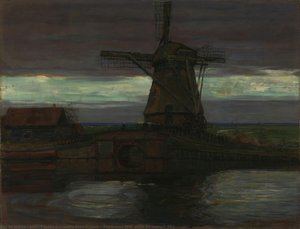
pieter cornelis mondriaan, conocido a partir de 1911 como piet mondrian, fue un pintor y teórico del arte holandés nacido el 7 de marzo de 1872, en Amersfoort, Países Bajos. Comenzó su carrera como maestro en educación primaria mientras practicaba la pintura, inicialmente en el estilo impresionista holandés de la Escuela de Ámsterdam.- Su obra temprana, caracterizada por paisajes naturalistas, se puede ver en pinturas como the red mill y trees in moonrise, que se exhibieron en el kunstmuseum den haag.
- La búsqueda de Mondrian por parte de un estilo personal lo llevó a explorar diversos movimientos artísticos, incluyendo el puntillismo y el fauvismo.
- Su primera exposición en 1893 marcó el comienzo de su prolífica carrera.
**la evolución del estilo de Mondrian**
de figurativo a abstracto La dirección artística de Mondrian se desplazó hacia un estilo cada vez más abstracto, culminando en una forma no representacional que llamó neoplasticismo. Esta 'arte plástico puro' tenía como objetivo crear 'belleza universal', limitando su vocabulario formal a los colores primarios (rojo, azul y amarillo), valores (negro, blanco y gris) y direcciones (horizontal y vertical).- Ejemplos de este estilo se pueden ver en pinturas como composition with yellow patch (46 x 46 cm, neoplasticismo, óleo sobre lienzo).
- La obra de Mondrian tuvo una enorme influencia en el arte del siglo XX, impactando no solo la pintura abstracta sino también el diseño, la arquitectura y la moda.
**legado e influencia**
El legado de Mondrian se extiende más allá de su propia obra, influyendo en estilos y movimientos importantes como la pintura de campo de color, el expresionismo abstracto y el minimalismo. El historiador del diseño stephen bayley señaló que Mondrian se ha convertido en un símbolo para todo lo que el modernismo pretendía ser.- Explore más de la obra de Mondrian en OriginalUniqueArt.com.
- Aprenda sobre el movimiento De Stijl y su influencia en el arte moderno en wikipedia.
- Descubra otros artistas influyentes como vincent van gogh y su impacto en el mundo del arte.
**obras clave y exposiciones**
* piet mondrian: apple blossom (cubismo) (ver en OriginalUniqueArt.com) * piet mondrian: still life with vase of spices ii (cubismo) (ver en OriginalUniqueArt.com) * piet mondrian: passionflower (73 x 48 cm, kunstmuseum den haag, post impressionismo, acuarela) (ver en OriginalUniqueArt.com)
Piet Mondrian
1872 - 1944 , Países Bajos
Datos clave
- Artistas Que Influyeron:
- Hague School
- Puntillismo
- Fauvismo
- Cubismo
- Estilo Artístico: Neoplasticismo, De Stijl
- Fecha De Nacimiento: 7 de marzo de 1872
- Influenciado A Artistas:
- Expresionismo abstracto
- Minimalismo
- Color Field painting
- Lugar De Nacimiento: Amersfoort, Países Bajos
- Nacionalidad: Holandés
- Nombre Completo: Piet Mondrian
- Obras Notables:
- Nueva York I
- Composición con Rojo, Azul y Amarillo
- Broadway Boogie Woogie
- Tableau no. 2
Artículos relacionados
Theo van Doesburg: Pioneering De Stijl & the Evolution of Neo-Plasticism
Explore the revolutionary De Stijl movement & Neo-Plasticism with our expert guide. Discover Piet Mondrian, Theo van Doesburg, and the lasting impact of this influential art style. Learn about collecting & investing in De Stijl masterpieces.
Más Allá de la Forma: Explorando los Fundamentos Filosóficos de la Abstracción Geométrica
Descubre los fundamentos filosóficos de la abstracción geométrica. Explora el suprematismo de Malévich y el neoplasticismo de Mondrian, su impacto en el arte moderno y su legado perdurable. Análisis experto.

Goya: Las 25 Obras Maestras del Genio Español | Reproducciones de Arte en OriginalUniqueArt
Descubre las 25 obras maestras de Goya, el genio español. Explora retratos icónicos, 'Los Caprichos' y 'Las Pinturas Negras'. Reproducciones de arte en lienzo de alta calidad para decorar tu hogar con estilo. ¡Encuentra tu obra favorita en OriginalUniqueArt.com!
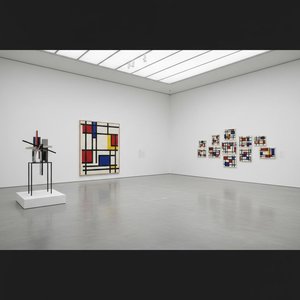
Neoplasticism Unveiled: The Power of Pure Color and Geometric Form in Modern Abstract Art
Explore the profound essence of Neoplasticism. Discover how Piet Mondrian and De Stijl masters used pure color and geometric form to redefine modern art. An essential guide for collectors seeking to understand the enduring power of abstract harmony and universal order.

Abstracción Geométrica: 10 Obras Maestras que Transformaron el Arte Moderno | OriginalUniqueArt
Descubre las 10 obras maestras de la abstracción geométrica que revolucionaron el arte moderno. Explora a Mondrian, Malevich y Kandinsky en OriginalUniqueArt.com. Reproducciones de alta calidad para tu hogar.