Baroque
Self portrait Marble (Pierre Puget)
Pierre Puget (1620–1694) creó Self portrait Marble. Pertenece al movimiento Baroque. Está realizado en Stone.
- Stone

 Óleo pintado a mano
 Enviar
 Compartir
 Ficha técnica


 Descargar
 Similares
 Presentación de diapositivas
 Preguntas y respuestas

 Estadísticas
Self portrait Marble en breve
- Título
- Self portrait Marble
- Artista
- Pierre Puget (1620–1694)
- Lugar de nacimiento del artista
- Marsella, Francia
- Técnica
- Stone
- Movimiento
- Baroque
- Época
- Early Modern
- Tema
- portrait, sculpture, elderly, marble, baroque, classicism
¿Qué representa Self portrait Marble?
Identification of the Self portrait Marble
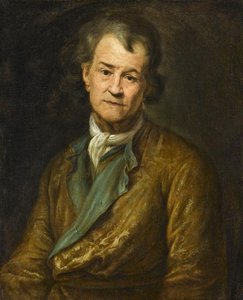
The Self portrait Marble by Pierre Puget presents a quiet confrontation with the passage of time. This work is a photographic reproduction of a sculpted portrait, capturing the likeness of an older man in the stillness of stone. The subject is a bust, focusing on the head and shoulders to anchor the viewer in a singular, unmoving gaze.
In this representation, the artist Pierre Puget turns the chisel toward his own changing features. The sculpture acts as a vessel for human aging and experience, recording the weight of years through the physical presence of the subject. It is a portrait of a man, stripped of movement, existing only in the permanence of his own likeness.
The image holds a steady, frontal view. It captures a moment of stillness that feels heavy and fixed. The stone carries the memory of the face it once held.
Visual Composition and Subject Matter
The composition centers on the head and shoulders of an elderly man, captured in a black and white bust. A simple frontal view meets the eye, stripped of unnecessary distraction. The perspective remains direct, focusing entirely on the subject's presence. Because of the photographic nature of the image, the depth remains limited, pulling the viewer into a shallow space where only the immediate form exists.
Lines define the topography of the face, tracing the paths of wrinkles and the individual strands of hair. These contours map the history of a life through the texture of the skin. Organic shapes dominate the work, following the natural, soft curves of the human head and its features. The light settles into the hollows, emphasizing the physical reality of the subject.
A shallow depth of field isolates the man, blurring the world beyond his immediate silhouette. This focus sharpens the details of the face, making the texture of the sculpture feel tangible. The subject remains still, a quiet study of aging and the weight of experience. The stone holds a steady, silent gaze.
Technique and Material Properties
The original work is a classical sculpture carved from stone, likely marble. This heavy, pale medium captures the weight of the subject's features. The surface is not smooth; instead, the texture appears rough and uneven. Shading and modeling techniques emphasize this tactile quality, pulling light across the ridges of the face and the deep recesses of the hair. Every line is a physical groove in the stone.
This image is a photographic reproduction of that sculpted form. The lens translates the three-dimensional carving into a two-dimensional plane of light and shadow. The technique relies on the interplay of dark and light to define the contours of the head and shoulders. It is a study of how light meets a hard, unyielding surface. The result is a sense of solemnity. The stone holds its stillness.
Imágenes en alta resolución de Self portrait Marble
Pierre Puget, Self portrait Marble. Dominio público
Preguntas sobre Self portrait Marble respondidas
¿En qué técnica está ejecutada "Self portrait Marble" de Pierre Puget?
La técnica de "Self portrait Marble" de Pierre Puget es Stone. Las reproducciones pretenden recrear la apariencia de esta técnica.
¿Qué representa "Self portrait Marble"?
Los temas de "Self portrait Marble" son portrait, sculpture, elderly, marble, baroque, classicism, time, memory.
¿Es "Self portrait Marble" de dominio público?
Información sobre los derechos de autor de "Self portrait Marble" de Pierre Puget: la obra es en el dominio público: sus derechos de autor han expirado. Esto determina si las reproducciones de la imagen pueden realizarse libremente.
¿Quién es el artista detrás de "Self portrait Marble"?
"Self portrait Marble" se atribuye a Pierre Puget.
¿A qué movimiento artístico pertenece "Self portrait Marble" de Pierre Puget?
El movimiento asociado con "Self portrait Marble" de Pierre Puget es Baroque. Esta clasificación sitúa la obra entre artistas y obras relacionadas.
¿A qué etapa de la trayectoria de Pierre Puget pertenece "Self portrait Marble"?
"Self portrait Marble" pertenece al Mature Period de la trayectoria de Pierre Puget. Esta clasificación vincula la obra con el desarrollo del artista.
¿A qué se debe la situación de los derechos de autor de "Self portrait Marble" de Pierre Puget?
"Self portrait Marble" de Pierre Puget es de en el dominio público: sus derechos de autor han expirado. La vigencia de los derechos de autor se cuenta a partir del fallecimiento del artista, que tuvo lugar en 1694.
¿Qué lugar ocupa "Self portrait Marble" dentro de la obra de Pierre Puget?
Dentro de la producción de Pierre Puget, "Self portrait Marble" se enmarca en el estilo Baroque, junto a los temas de classical ideals, roman influence, baroque drama, emotional depth, portraiture tradition, realism, ageing, mortality.
¿Qué lugar ocupa "Self portrait Marble" entre los temas recurrentes de Pierre Puget?
"Self portrait Marble" representa portrait, sculpture, elderly, marble, baroque, classicism, time, memory, mientras que los temas recurrentes de Pierre Puget son classical ideals, roman influence, baroque drama, emotional depth, portraiture tradition, realism, ageing, mortality. Al comparar ambos, se observa cómo la obra se relaciona con los temas habituales del artista.
Sobre el artista, Pierre Puget
1620–1694, Francia
Pierre Puget
Pierre Puget: Una Vida Entre el Arte y la Ingeniería Nacimiento: Marsella, Francia (1620) Fallecimiento: 1694 Primeros Años e Influencias Italianas Aprendizaje: Puget comenzó su carrera a los catorce años, tallando adornos para galeones construidos en Marsella. Esta temprana exposición a la artesanía sentó las bases para sus posteriores aspiraciones artísticas. Viaje a Italia (1640): Buscando oportunidades, viajó a Italia, inicialmente a Livorno y luego a Florencia. Perfeccionó sus habilidades como tallador de madera y pintor.
Otras obras de Pierre Puget
 El encuentro de Alejandro Magno y Diógenes1671
 Mitro de Crotona1671
 Autorretrato1668
 Vista sobre el mar1670
Ensayos sobre Self portrait Marble
 Piedra Eterna: El Poder y la Magia de la Escultura en MármolDescubre la técnica y el origen del mármol en la escultura clásica. Explora la maestría de la piedra eterna ahora.
 Las 25 obras maestras de Hans Baldung Grien: El lado oscuro del RenacimientoExplora las 25 obras maestras de Hans Baldung Grien y el Renacimiento alemán. Descubre su legado en OriginalUniqueArt.com.
 Pierre Puget: 25 obras de dinamismo y fuerza dramática en el BarrocoExplora 25 obras clave de Pierre Puget y su drama barroco. Descubre su arte en OriginalUniqueArt.com.