Vista previa
 Compartir
 Compartir
 Ver detalles
 Guía
Guía

 Descargar
 Ver artículos similares
 Radiografía
 Presentación de diapositivas
 Estadísticas
Untitled (D2X835)
 Acrylic On Canvas
- WallArt
- Neoclassical Romanticism
 1817
1817 216.0 x 142.0 cm
 Museo Metropolitano de Arte
 Leer más
Reproducción al óleo hecha a mano
Óleo sobre lienzo pintado a mano en el tamaño y marco de su elección, realizado por encargo por nuestros artistas. ( Cambiar a formato impreso Ver versión en imagen digital)




P118B €10

P118H €10

P118W €10

P438Z €10

P508JH €12

P508YH €12

P805H €10

P805Z €10

P919BZ €10

P919G €10

P919XJ €10

P959ZH €10

P968JZ €12

W106C €8

W218G €10

W218JH €8

W218Y €10

W307PJ €10

W316G €10

W316PJ €8

W316Y €10

W398PJ €8

W4111J €10

W500HY €15

W500JH €15

W692G €12

W849H €8

W940BG €15

W953PJ €8




Elija entre nuestros tamaños predefinidos que respetan las proporciones originales de la obra.

Puede ingresar sus propias dimensiones para adaptarse a un marco o espacio específico. Si el tamaño seleccionado no coincide con las proporciones de la imagen original, recortaremos la obra o extenderemos la pintura con elementos adicionales pintados a mano. Se le enviará una maqueta digital para su aprobación antes de comenzar la producción.
Tenga en cuenta que la vista previa en pantalla no refleja el recorte o la extensión reales. Solo la maqueta mostrará con precisión la composición final.
Si bien existen tamaños personalizados, recomendamos seleccionar una dimensión de la lista predefinida para preservar las proporciones originales.
Tras realizar el pedido, el equipo de OriginalUniqueArt.com enviará un correo electrónico al cliente para solicitar instrucciones y proporcionarle una vista previa del boceto.
Envío a todo el mundo () en 3-4 semanas en lugar de las 5 semanas estándar. (11 octubre). Sin comprometer la calidad.

Envío exprés gratuito a todo el mundo

Lienzo de lino de alta calidad

Seguro de envío completo

Garantía de reembolso de impuestos aduaneros

Garantía de fidelidad cromática exacta

Política de devolución de 100 días (solo por defectos)

Garantía de devolución del 100% del dinero

Oferta por volumen
 La opción de vidrio solo está disponible en tamaños inferiores a 110 cm.

Untitled (D2X835)
Técnica de reproducción
Tamaño de la reproducción
-


Precio total
€ 259
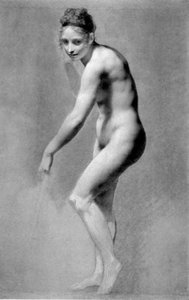
A Portrait of Refined Elegance: Pierre-Paul Prud’hon's “Untitled (D2X835)”
Pierre-Paul Prud’hon’s “Untitled (D2X835),” painted in 1817, offers a captivating glimpse into the world of Parisian society during the early 19th century. More than just a simple portrait, it's a carefully constructed tableau vivant—a staged scene brimming with subtle social commentary and an exquisite mastery of chiaroscuro, a technique that defines Prud’hon’s distinctive style. The painting depicts a gentleman in formal attire – a dark suit, top hat, and crisp tie – positioned beside a chair, creating an immediate sense of quiet contemplation. His clasped hands suggest both formality and perhaps a touch of restrained emotion.
Prud’hon, a pivotal figure bridging the Neoclassical and Romantic movements in French art, was deeply influenced by classical antiquity yet possessed a sensitivity that foreshadowed the emotional intensity of the Romantics. Born in Cluny, he spent formative years in Rome, absorbing the ideals of Greco-Roman sculpture and architecture, which informed his meticulous draftsmanship and his preference for idealized forms. This painting showcases this influence; the gentleman’s posture, attire, and overall composition echo the formality and restraint characteristic of Neoclassical portraiture, while the subtle play of light and shadow—the hallmark of *chiaroscuro*—injects a dramatic depth that hints at the Romantic sensibility he would later embrace.
The Setting: A Window into 19th-Century Domesticity
Beyond the central figure, Prud’hon skillfully employs background elements to enrich the scene and provide context. The presence of several individuals – partially visible in the distance – suggests a gathering or social event, hinting at the importance of hospitality and social interaction within Parisian society. A comfortable couch and another smaller one further contribute to the atmosphere of an affluent home, reflecting the lifestyle of the upper class. Notably, a vase on the left adds a touch of decorative elegance, demonstrating Prud’hon's attention to detail and his understanding of how objects could enhance a scene’s narrative.
The inclusion of these secondary figures isn’t merely decorative; it subtly underscores the social dynamics at play. They are less defined, almost like ghosts in the background, suggesting a hierarchy within the gathering – the central figure commanding attention while others remain peripheral. This layering of detail is characteristic of Prud'hon’s approach, inviting viewers to actively interpret the scene and consider its broader implications.
Symbolism and Emotional Resonance
While the subject matter appears straightforward—a portrait of a gentleman—Prud’hon imbues the painting with layers of symbolic meaning. The man’s posture, the formality of his attire, and the quiet contemplation suggested by his clasped hands invite speculation about his thoughts and feelings. The top hat, a symbol of status and sophistication during this period, further emphasizes his position within society.
Furthermore, Prud'hon’s masterful use of light and shadow—the *chiaroscuro* technique—creates an emotional atmosphere that is both elegant and subtly melancholic. The deep shadows cast upon the background figures and the subtle highlighting of the central figure contribute to a sense of intimacy and introspection. It’s as if we are privy to a private moment, observing a man lost in thought amidst the backdrop of refined domesticity.
A Legacy of Artistic Innovation
"Untitled (D2X835)" stands as a testament to Pierre-Paul Prud’hon's artistic genius and his pivotal role in bridging the gap between Neoclassicism and Romanticism. His meticulous draftsmanship, combined with his innovative use of *chiaroscuro* and his keen eye for detail, produced works that continue to captivate viewers today. OriginalUniqueArt’s hand-painted reproduction faithfully captures the essence of this remarkable painting, offering a stunning addition to any art collection or interior space. The meticulous attention to color, texture, and composition ensures an authentic representation of Prud'hon’s vision, allowing you to experience the beauty and emotional depth of this iconic artwork firsthand.
Preguntas y respuestas
¿Qué tono predominante recorre "Untitled (D2X835)" de Pierre-Paul Prud’hon?
Un tono Ochre to Sepia recorre "Untitled (D2X835)" de Pierre-Paul Prud’hon.
¿Quién creó "Untitled (D2X835)"?
El artista detrás de "Untitled (D2X835)" es Pierre-Paul Prud’hon. La obra está catalogada bajo el nombre de Pierre-Paul Prud’hon.
¿En qué año se creó "Untitled (D2X835)" de Pierre-Paul Prud’hon?
"Untitled (D2X835)" data de 1817. La fecha sitúa la obra dentro de la trayectoria de Pierre-Paul Prud’hon y de su época.
¿Puedo examinar "Untitled (D2X835)" con más detalle?
La vista de rayos X de "Untitled (D2X835)" de Pierre-Paul Prud’hon se encuentra en la página Rayos X de la obra: un examen interactivo de la imagen a través de once capas ópticas.
¿Existe una guía para "Untitled (D2X835)" de Pierre-Paul Prud’hon?
La página Guía de "Untitled (D2X835)" de Pierre-Paul Prud’hon ofrece una ficha informativa imprimible de dos hojas: la obra con su tabla de identidad, una línea de tiempo por décadas que la sitúa en la vida del artista, otras obras del mismo autor, la paleta de colores medida y citas listas para copiar en cuatro estilos diferentes.
¿Qué edad tenía Pierre-Paul Prud’hon cuando creó "Untitled (D2X835)" en 1817?
Cuando se creó "Untitled (D2X835)" en 1817, Pierre-Paul Prud’hon —nacido/a en 1758— tenía 59 años.
¿Cuál es el color dominante de "Untitled (D2X835)" de Pierre-Paul Prud’hon?
El Espresso (#3b2e1c) es el color predominante de "Untitled (D2X835)" de Pierre-Paul Prud’hon.
Biografía del artista
Pierre-Paul Prud'hon: Una Vida en el Arte
- Nacido: Cluny, Francia (1758)
- Fallecido: 1823
- Nacionalidad: Francés
Pierre-Paul Prud’hon fue una figura clave en el arte francés, uniendo la transición del Neoclasicismo al Romanticismo. Nacido en Cluny, Saône-et-Loire, Francia, su trayectoria artística refleja el cambiante panorama estético de finales del siglo XVIII y principios del XIX en Europa. Es celebrado tanto por sus pinturas alegóricas como por sus retratos, demostrando un dominio del claroscuro y el realismo que cautivó al público e influyó en generaciones posteriores.
Primeros Años y Formación
- Orígenes Provinciales: Prud’hon recibió su formación artística inicial en las provincias francesas.
- Beca de Dijon: En 1774, obtuvo una beca municipal para asistir a la École de Dessin en Dijon, marcando un paso significativo hacia la educación artística formal.
- Roma e Influencias Neoclásicas: Viajó a Roma en 1784, donde se sumergió en el estudio del arte clásico, admirando particularmente las obras de Canova y Correggio. Este período moldeó profundamente su estilo temprano, imbuyéndolo con un sentido de elegancia y forma idealizada característico del Neoclasicismo.
Carrera Artística y Patronato Real
- Alegorías Revolucionarias: Su obra ganó prominencia durante la Revolución Francesa, produciendo viñetas, ilustraciones de libros y pinturas alegóricas que resonaron con los ideales republicanos.
- Pintor de Corte Napoleónico: Su talento atrajo la atención de Napoleón Bonaparte, quien lo encargó para pintar retratos tanto de Josefina de Beauharnais como de María Luisa de Austria. El retrato de Josefina, en particular, la representaba no como una emperatriz sino como una mujer cautivadora, alimentando especulaciones sobre una posible relación romántica entre el artista y la ex reina.
- Uniendo Estilos: Prud’hon navegó hábilmente por las tendencias artísticas cambiantes de su tiempo, incorporando elementos tanto del Neoclasicismo como del Romanticismo en su obra. Si bien mantuvo una base clásica en composición y forma, infundió sus pinturas con profundidad emocional e iluminación dramática que presagiaba el movimiento romántico.
Obras Principales y Legado Artístico
- Madame Georges Anthony y Sus Dos Hijos (1796): Un ejemplo temprano de sus habilidades en el retrato, mostrando una elegancia refinada.
- El Alma Rompiendo los Lazos que la Mantienen Atada a la Tierra: Una poderosa obra alegórica que demuestra su capacidad para transmitir emociones complejas a través de imágenes simbólicas.
- El Sueño de la Felicidad: Una exploración conmovedora de las aspiraciones y deseos humanos.
- La Crucifixión (1822): Encargada para la Catedral de San Étienne en Metz, ahora ubicada en el Louvre, esta obra se considera uno de sus logros más significativos.
- Justicia y Venganza Divina Persiguiendo al Crimen: Una monumental obra maestra que anticipa la intensidad dramática del *El Raft of the Medusa* de Géricault.
Influencia y Significado Histórico
Prud'hon ejerció una influencia considerable en generaciones posteriores de artistas franceses. Su dominio del claroscuro, su capacidad para imbuir retratos con profundidad psicológica y su síntesis de estilos neoclásicos y románticos lo convirtieron en una figura muy respetada en el mundo del arte. Artistas como Théodore Géricault y Eugène Delacroix reconocieron su impacto, inspirándose en sus composiciones dramáticas y expresividad emocional. Stendhal, Millet y Baudelaire también reconocieron el mérito artístico de Prud'hon, lo que solidificó aún más su lugar en la historia cultural francesa.

Pierre-Paul Prud’hon
1758 - 1823 , Francia
Datos clave
- Artistas Influenciados:
- Théodore Géricault
- Eugène Delacroix
- Artistas Que Influyeron:
- Antonio Canova
- Leonardo da Vinci
- Correggio
- Fecha De Fallecimiento: 16 de febrero de 1823
- Fecha De Nacimiento: 4 de abril de 1758
- Lugar De Nacimiento: Cluny, Francia
- Movimiento Artístico: Neoclasicismo y Romanticismo
- Nacionalidad: Francés
- Nombre Completo: Pierre-Paul Prud'hon
- Obras Notables:
- Madame Georges Anthony y sus hijos
- El alma rompiendo los lazos
- El sueño de la felicidad
- Crucifixión
- Justicia y venganza divina
Artículos relacionados

Anne-Louis Girodet: Bridging Neoclassicism & Romanticism with Emotional Truth
Explore the captivating world of Anne-Louis Girodet, a pivotal figure bridging Neoclassicism & Romanticism. Discover his masterpieces and unique artistic vision with OriginalUniqueArt.

Neoclassical Portraiture: The Timeless Elegance of Order, Grace, and Academic Mastery
Explore the refined world of Neoclassical portraiture. Discover the mastery of line, light, and order through an expert exploration of academic art history, from Jacques-Louis David to Jean-Antoine Houdon. Immerse yourself in the timeless elegance of classical realism.
Paul Huet: Capturing the Essence of French Romanticism Through Light and Landscape
Explore the captivating world of Paul Huet (1803-1869), a master of French Romantic landscape painting. Discover his influence on Barbizon & Impressionism, and browse high-quality reproductions at OriginalUniqueArt.
Reason vs. Emotion: The Epic Clash of Neoclassicism and Romanticism in Art History
Explore the profound tension between Neoclassicism's rational order and Romanticism's emotional depth. An expert journey through the masters of art history, from David to Delacroix, perfect for collectors and enthusiasts seeking a deeper understanding of artistic evolution.
Pierre-Paul Prud'hon: Exploring Neoclassical Sensibility & Romantic Precursors
Explore the captivating world of Pierre-Paul Prud'hon, a pivotal French painter bridging Neoclassicism & Romanticism. Discover his allegorical masterpieces and lasting influence on 19th-century art history.