

 Vista previa
 Compartir
 Compartir
 Ver detalles
 Guía
Guía

 Descargar
 Ver artículos similares
 Radiografía
 Presentación de diapositivas
 Estadísticas
Still life


 Leer más
Reproducción al óleo hecha a mano
Óleo sobre lienzo pintado a mano en el tamaño y marco de su elección, realizado por encargo por nuestros artistas. ( Cambiar a formato impreso Ver versión en imagen digital)




P118B €10

P118H €10

P118W €10

P438Z €10

P508JH €12

P508YH €12

P805H €10

P805Z €10

P919BZ €10

P919G €10

P919XJ €10

P959ZH €10

P968JZ €12

W106C €8

W218G €10

W218JH €8

W218Y €10

W307PJ €10

W316G €10

W316PJ €8

W316Y €10

W398PJ €8

W4111J €10

W500HY €15

W500JH €15

W692G €12

W849H €8

W940BG €15

W953PJ €8




Elija entre nuestros tamaños predefinidos que respetan las proporciones originales de la obra.

Escriba el ancho y el alto que necesite para adaptarse a su marco o a su pared. Al ser una obra pintada a mano, para un tamaño con una forma distinta, el artista puede pintar un poco más alrededor de la imagen o recortar un poco; usted elige. Le enviaremos una maqueta digital para su aprobación antes de comenzar la pintura. La imagen que se muestra en esta página no refleja el resultado real; solo la maqueta lo hace.
Tras realizar el pedido, el equipo de OriginalUniqueArt.com enviará un correo electrónico al cliente para solicitar instrucciones y proporcionarle una vista previa del boceto.
Envío a todo el mundo () en 3-4 semanas en lugar de las 5 semanas estándar. (23 octubre). Sin comprometer la calidad.

Envío exprés gratuito a todo el mundo

Lienzo de lino de alta calidad

Seguro de envío completo

Garantía de reembolso de impuestos aduaneros

Garantía de fidelidad cromática exacta

Política de devolución de 100 días (solo por defectos)

Garantía de devolución del 100% del dinero

Oferta por volumen
 La opción de vidrio solo está disponible en tamaños inferiores a 110 cm.

Still life
Técnica de reproducción
Tamaño de la reproducción
-


Precio total
€ 263
A Symphony of Abundance: The Baroque Mastery of Peter Binoit
In the quiet, meticulous world of seventeenth-century German Baroque painting, few artists captured the fleeting essence of life with as much delicate precision as Peter Binoit. His 1618 masterpiece, a breathtaking still life executed on copper, serves as a window into an era defined by both scientific curiosity and profound spiritual reflection. As one observes this composition, one is immediately drawn into a lush, sensory experience where the boundaries between reality and art dissolve. The painting presents a sumptuous arrangement of nature’s finest offerings: ripe apples, sun-kissed oranges, deep purple plums, and succulent cherries, all nestled within a bountiful bowl. This is not merely a display of food, but a carefully choreographed dance of color, texture, and light that speaks to the very heart of the pronkstillevens tradition.
The technique employed by Binoit is nothing short of extraordinary. By utilizing a copper support, the artist achieved a luminous, jewel-like clarity that oil on canvas often struggles to replicate. This smooth, non-porous surface allowed his brush to glide with unparalleled precision, capturing the translucent skin of a grape, the velvety fuzz of a peach, and the reflective glint of a blue and white Chinese porcelain bowl. The interplay of light—a hallmark of the Baroque period—creates a sense of three-dimensional volume, making each piece of fruit appear almost tactile, as if one could reach out and pluck a cherry from the arrangement. His ability to render the subtle gradients of shadow and the sharp highlights on glassware demonstrates a level of virtuosity that continues to captivate collectors and connoisseurs today.
Symbolism and the Vanitas Tradition
Beyond its surface beauty, Binoit’s work is steeped in the complex symbolic language of the seventeenth century. To the contemporary viewer, this arrangement might appear as a simple celebration of harvest, yet to a person of the 1600s, every element carried a weight of meaning. The presence of insects amidst the ripening fruit serves as a poignant memento mori—a gentle reminder of the inevable passage of time and the transient nature of earthly delights. As the fruit matures, it moves toward decay, mirroring the human condition. This tension between the vibrant, life-affirming colors of the flowers and the subtle presence of mortality creates an emotional depth that elevates the painting from a mere decorative object to a profound philosophical meditation.
For the modern interior designer or art enthusiast, this piece offers a unique opportunity to introduce a sense of historical grandeur and intellectual depth into a space. A high-quality reproduction of this work does more than decorate a wall; it anchors a room with a sense of timelessness and quiet sophistication. Whether placed in a sunlit breakfast nook to highlight its vibrant tones or in a formal study to complement its scholarly undertones, Binoit’s still life invites contemplation. It is an invitation to slow down, to appreciate the intricate details of the natural world, and to find beauty in the ephemeral moments of existence.
Preguntas y respuestas
¿Es "Still life" representativo de lo que Peter Binoit solía crear?
Los temas recurrentes de Peter Binoit incluyen johann georg schäffer influence, baroque stylistic innovations, pronkstillevens genre mastery, detailed floral arrangements, german baroque tradition; "Still life" se centra en still life, fruit, flowers, insects, porcelain bowl, baroque, nature.
¿Qué tan intensos son los colores de "Still life"?
El color de "Still life" presenta una saturación de Balanced Soft y una intensidad de Balanced.
¿Qué tan intensos son los colores en "Still life" de Peter Binoit?
La intensidad cromática de "Still life" es Balanced. La intensidad describe la fuerza con la que se perciben los colores.
Biografía del artista
Peter Binoit: Un Maestro Silencioso de la Naturaleza Muerta Barroca
Peter Binoit (c. 1590 – 1632) fue un pintor barroco alemán que emergió de Colonia durante los años formativos del siglo XVII, dejando una huella indeleble en el paisaje de las artes visuales de Frankfurt y su región circundante. Reconocido principalmente por sus meticulosas representaciones de arreglos florales y escenas de caza —a menudo denominadas «pronkstillevens»—, la obra de Binoit refleja una profunda sensibilidad al detalle y un dominio magistral de la técnica que lo distingue de muchos de sus contemporáneos. Aunque la información biográfica sigue siendo algo escasa, las investigaciones académicas sugieren que nació en Colonia alrededor de 1590, si bien los registros precisos de su fecha de nacimiento resultan esquivos.- Primeros años y formación: Se sabe poco sobre los años formativos de Binoit, más allá de la confirmación de que se formó bajo la tutela de Johann Georg Schäffer, un destacado pintor de Frankfurt que defendió las innovaciones estilísticas de la era barroca. Schäffer inculcó en Binoit una dedicación a la observación y un aprecio por capturar momentos fugaces con una precisión notable, principios que caracterizarían su práctica artística a lo largo de toda su carrera.
- Actividad en Frankfurt y Colonia (1613-1631): Binoit se estableció como artista residente en Frankfurt, donde cultivó relaciones con mecenas influyentes y participó activamente en el vibrante entorno artístico de la ciudad. Simultáneamente, realizó encargos en Colonia, demostrando versatilidad y adaptando su estilo a diversos contextos. Durante este periodo, produjo numerosas naturalezas muertas que exhibían exquisitas composiciones florales junto a representaciones de animales de caza, un sello estilístico que se alinea estrechamente con las tendencias predominantes del arte barroco.
Características Estilísticas e Influencias
La visión artística de Binoit estaba profundamente arraigada en las tradiciones de la pintura del Renacimiento alemán; sin embargo, abrazó el dinamismo expresivo y el dramático claroscuro favorecido por maestros barrocos como Rubens y Rembrandt. Su meticulosa atención al detalle —evidente en la representación de texturas, colores y sutiles matices de luz— es particularmente notable. Empleó con destreza los «pronkstillevens», una técnica que enfatiza la complejidad compositiva e incorpora elementos de perspectiva ilusionista para aumentar el impacto visual. La influencia del uso dramático del tenebrismo de Caravaggio puede discernirse en las composiciones de Binoit, contribuyendo a su profundidad atmosférica y resonancia emocional.- Naturalezas muertas florales: Binoit excelled en el retrato de flores con un realismo sin igual, capturando sus pétalos delicados, tonalidades vibrantes y sutiles variaciones de forma. Sus pinturas florales incorporan frecuentemente referencias simbólicas que reflejan los ideales humanistas de belleza y contemplación.
- Naturalezas muertas de caza: Junto a los temas botánicos, Binoit produjo cautivadoras representaciones de animales cazados —a menudo presentando aves o ciervos— ejecutadas con una meticulosa precisión anatómica e imbuidas de un sentido palpable de movimiento. Estas obras demuestran su capacidad para transmitir, simultáneamente, la observación científica y la emoción artística.
Obras Notables y Reconocimiento
Dos pinturas supervivientes que llevan el monograma y la fecha de Binoit —una que representa tulipanes y otra un iris— se encuentran en el Hessisches Landesmuseum Darmstadt, ofreciendo valiosas perspectivas sobre su estilo artístico y sus preferencias compositivas. Además, una monumental naturaleza muerta con aves muertas —una cesta rebosante de plumaje— se conserva en el Castillo de Skokloster, en el condado de Stockholm, Suecia; su detallada representación de especímenes aviares ejemplifica el compromiso de Binoit con la precisión científica junto a la excelencia estética. Fragmentos de su obra residen en St Peter's College y son reconocidos como piezas importantes del arte paisajístico británico.Legado e Importancia Histórica
La contribución de Peter Binoit a la pintura barroca no reside meramente en la belleza pura de sus obras, sino también en su encarnación de los ideales humanistas, particularmente la búsqueda del conocimiento y el aprecio por el esplendor de la naturaleza. Su técnica meticulosa, combinada con sus innovaciones estilísticas —como los «pronokstillevens»—, lo establecieron como una figura fundamental dentro de la comunidad artística de Frankfurt y consolidaron su reputación como uno de los pintores de naturalezas muertas más destacados de Alemania en su época. A pesar de la brevedad de su carrera, el legado de Binoit continúa inspirando admiración por su inquebrantable dedicación a la excelencia artística y su profundo entendimiento de la representación visual.
Peter Binoit
1632 , Alemania
Datos clave
- Artistic Movement Or Style: Barroco
- Artists Who Influenced This Artist:
- Rubens
- Rembrandt
- Date Of Birth: c. 1590
- Date Of Death: 1632
- Full Name: Peter Binoit
- Nationality: Alemania
- Notable Artworks:
- Still Life con Tulipas
- Still Life con Iris
- Place Of Birth: Cologne, Alemania
Artículos relacionados
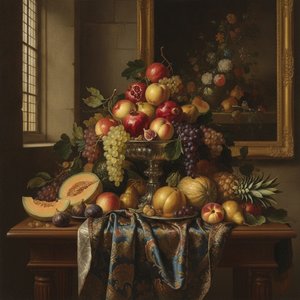
Nature's Bounty: The Art History of Fruit Arrangement Masterpieces and the Baroque Still Life Tradition
Explore the profound beauty of fruit arrangement masterpieces. From Dutch Golden Age opulence to Baroque chiaroscuro, discover the art history, symbolism, and timeless elegance of classical still life paintings for the discerning collector.

Barroco Sublime: 10 Obras Maestras que Definieron una Época |
Descubre las 10 obras maestras del Barroco que marcaron una época. Caravaggio, Bernini y Velázquez cobran vida en . Reproducciones de arte de calidad museo para decorar tu hogar con elegancia. ¡Explora la colección online!

The Bountiful Still Life: Symbolism & Artistic Representation of Fruit Across Art History
Explore the rich history of still life painting & the symbolism of fruit across art movements. Discover masterpieces from Caravaggio to Cézanne with OriginalUniqueArt – expert guidance & museum-quality reproductions.
The Enduring Appeal of Still Life: A Historical & Contemporary Exploration
Explore the rich history & symbolism of still life painting with OriginalUniqueArt. Discover masterpieces from the Dutch Golden Age, learn about vanitas art, and find expert guidance for collecting timeless artworks.

Silent Narratives: Exploring the Enduring Appeal of Still Life Painting Across Centuries
Explore the rich history of still life painting with OriginalUniqueArt. Discover Dutch Masters, decode vanitas symbolism & learn about collecting timeless art. Expert insights and museum-quality reproductions.