Expressionism
Self-portrait (Paula Modersohn-Becker)
Paula Modersohn-Becker (1876–1907) creó Self-portrait. Pertenece al movimiento Expressionism. Está realizado en Oil On Canvas.
- Oil On Canvas

 Ver en contexto

 Óleo pintado a mano
 Enviar
 Compartir
 Ficha técnica


 Descargar
 Similares
 Radiografía
 Presentación de diapositivas
 Preguntas y respuestas

 Estadísticas
Self-portrait en breve
- Título
- Self-portrait
- Artista
- Paula Modersohn-Becker (1876–1907)
- Lugar de nacimiento del artista
- Dresde, Alemania
- Técnica
- Oil On Canvas
- Movimiento
- Expressionism
- Época
- Modern
- Tema
- woman, red hair, green shirt, face, eyes, wall
¿Qué representa Self-portrait?
Identification of the Self-portrait
Self-portrait is a creation by the German Expressionist painter and draftswoman Paula Modersohn-Becker. This specific piece belongs to a vast body of work produced during her active life. The artist was born on 8 February 1876 in Dresden, Germany, and passed away on 30 November 1907 in Worpswede.
In this work, Paula Modersohn-Becker turns her gaze toward the viewer. The image captures a moment of quiet intensity through the artist's own likeness. It remains a direct encounter with her presence.
The Composition and Visual Details
The subject is positioned in front of a plain wall, seated in a manner that brings her face into sharp prominence. She wears a green shirt that contrasts with her red hair. Her hair is styled in an unconventional manner, contributing to the singular presence of the figure. The composition focuses heavily on the facial features, emphasizing a directness of gaze. Her eyes are open wide, looking straight ahead to meet the viewer's eyes with quiet intensity.
The arrangement of the figure against the background creates a sense of immediate, unmediated encounter. There is a notable focus on the psychological weight of the stare. The simplicity of the setting ensures that the viewer's attention remains fixed on the subject's expression and the specific arrangement of her features. This directness removes any sense of artifice from the encounter.
Technique and Artistic Medium
Executed in oil on canvas, this work exemplifies the principles of Expressionism. The medium allows for a directness of form that prioritizes the psychological state over mere physical likeness. Through the application of pigment, the artist achieves a sense of quiet intensity, focusing on the essential features of the face and the gaze to facilitate a moment of introspection.
The application of paint emphasizes a recognizable simplicity of form. This approach moves away from the atmospheric concerns of Impressionism, opting instead for a more structured and subjective visual language. The surface carries the weight of the artist's presence, using color and composition to explore the nuances of identity.
Where to See This Artwork Today
This work is held at the Paula Modersohn-Becker Museum in Bremen, Germany. The institution serves as a primary repository for the artist's output, housing a significant portion of her creative legacy.
Founded in 1927, the museum holds a unique position in art history as the first museum in the world devoted solely to a female artist. Its collection provides a comprehensive view of her development from her early training to her final years in Paris.
Related Works by the Artist
The artist's exploration of the self continued through several distinct phases of her career. In 1906, she produced Self-Portrait Looking Slightly Left, a work that shares a similar searching quality with her other studies of identity. During that same year, she completed Self-Portrait at 6th Wedding Anniversary, a piece that captures a specific moment of transition. This work is also known as Self-portrait on the sixth anniversary of marriage.
Earlier compositions reveal a different focus on objects and the female form. Around 1904, she created Self-Portrait with a bowl and a glass. Her interest in the intersection of the female form and the natural world is further evidenced in Self-Portrait with Two Flowers, where she cradles blossoms with a deliberate, steady intention.
Imágenes en alta resolución de Self-portrait
Paula Modersohn-Becker, Self-portrait. Dominio público
Preguntas sobre Self-portrait respondidas
¿En qué técnica está ejecutada "Self-portrait" de Paula Modersohn-Becker?
"Self-portrait" está realizada en Oil On Canvas.
¿Qué representa "Self-portrait" de Paula Modersohn-Becker?
Los temas de "Self-portrait" son woman, red hair, green shirt, face, eyes, wall.
¿Es "Self-portrait" de Paula Modersohn-Becker de dominio público?
Información sobre los derechos de autor de "Self-portrait" de Paula Modersohn-Becker: la obra es en el dominio público: sus derechos de autor han expirado. Esto determina si las reproducciones de la imagen pueden realizarse libremente.
¿Quién es el autor de "Self-portrait"?
El artista detrás de "Self-portrait" es Paula Modersohn-Becker. La obra está catalogada bajo el nombre de Paula Modersohn-Becker.
¿A qué movimiento artístico pertenece "Self-portrait" de Paula Modersohn-Becker?
El movimiento asociado con "Self-portrait" de Paula Modersohn-Becker es Expressionism. Esta clasificación sitúa la obra entre artistas y obras relacionadas.
¿A qué se debe el estado de los derechos de autor de "Self-portrait"?
El estado de los derechos de autor de "Self-portrait" - en el dominio público: sus derechos de autor han expirado - se determina a partir del fallecimiento del artista en 1907.
¿Qué elementos de la obra de Paula Modersohn-Becker se encuentran en "Self-portrait"?
"Self-portrait" pertenece a la etapa Expressionism de Paula Modersohn-Becker, cuyos temas recurrentes incluyen cézanne, gauguin, van gogh, identity and femininity, self-exploration and agency, pioneer of expressionism.
¿Cómo se relaciona el tema de "Self-portrait" con la temática habitual de Paula Modersohn-Becker?
Entre los temas recurrentes de Paula Modersohn-Becker —cézanne, gauguin, van gogh, identity and femininity, self-exploration and agency, pioneer of expressionism— "Self-portrait" aporta su propio enfoque sobre woman, red hair, green shirt, face, eyes, wall.
Sobre el artista, Paula Modersohn-Becker

1876–1907, Alemania
Paula Modersohn-Becker
Una Visión Interior: La Vida y Obra de Paula Modersohn-Becker Paula Modersohn-Becker, un nombre que resuena con una fuerza silenciosa en los anales del arte moderno temprano, fue una artista que se atrevió a mirar hacia adentro. Nacida como Minna Hermine Paula Becker el 8 de febrero de 1876 en Dresde, Alemania, su vida fue trágicamente corta – falleció el 30 de noviembre de 1907 en Worpswede – sin embargo, en esas tres décadas, forjó un camino de notable innovación artística y valentía personal. Su historia no es una de aclamación inmediata o amplio reconocimiento durante su vida; más bien, es un testimonio de la perdurable fuerza de una voz individual que desafió las convenciones y exploró las profundidades de la experiencia humana con honestidad implacable. Proveniente de un entorno relativamente privilegiado en una familia marcada por una sutil sombra – su tío había intentado asesinar al Rey de Prusia – las inclinaciones artísticas de Paula fueron cultivadas, aunque no sin las expectativas sociales presionando sobre ellas.
Sobre Paula Modersohn-Becker Obras destacadas de Paula Modersohn-Becker
Otras obras de Paula Modersohn-Becker
 Retrato de una joven con sombrero rojo1900
 Retrato de medio cuerpo de un viejo granjero1903
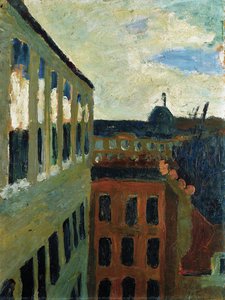 Vista desde la ventana del estudio de la artista en París1900
 Naturaleza muerta con planta, limón y naranja1906
Ensayos sobre Self-portrait
 Obras polacas de la década de 1900Explora el simbolismo de Jacek Malczewski y Olga Boznańska. Descubre obras maestras en OriginalUniqueArt.com.
 Obras de arte alemanas de la década de 1900Explora el expresionismo de Max Beckmann y Franz Marc. Descubre obras maestras en OriginalUniqueArt.com.
 Las 25 obras maestras de Egon Schiele: Emoción pura y expresionismoExplora las 25 obras maestras de Egon Schiele y el expresionismo. Descubre su legado en OriginalUniqueArt.com.