Ver en contexto
 Enviar
 Compartir
 Detalles
 Guía
Guía

 Descargar
 Similares
 Radiografía
 Presentación de diapositivas
 Estadísticas
Sisteron


 Ver más
Reproducción al óleo hecha a mano
Óleo sobre lienzo pintado a mano en el tamaño y marco de su elección, realizado por encargo por nuestros artistas. ( Cambiar a impresiones Cambiar a imagen digital)




P118B €10

P118H €10

P118W €10

P438Z €10

P508JH €12

P508YH €12

P805H €10

P805Z €10

P919BZ €10

P919G €10

P919XJ €10

P959ZH €10

P968JZ €12

W106C €8

W218G €10

W218JH €8

W218Y €10

W307PJ €10

W316G €10

W316PJ €8

W316Y €10

W398PJ €8

W4111J €10

W500HY €15

W500JH €15

W692G €12

W849H €8

W940BG €15

W953PJ €8




Elija entre nuestros tamaños predefinidos que respetan las proporciones originales de la obra.

Indique el ancho y el alto que necesite para adaptarse a su marco o pared. Al tratarse de una obra pintada a mano, si requiere un tamaño con una proporción distinta, el artista puede pintar un poco más alrededor de la imagen o recortarla ligeramente; usted elige. Le enviaremos una maqueta digital para su aprobación antes de comenzar la pintura. La imagen que se muestra en esta página no refleja el resultado real; solo la maqueta lo hace.
Tras realizar el pedido, el equipo de OriginalUniqueArt.com enviará un correo electrónico al cliente para solicitar instrucciones y proporcionarle una vista previa del boceto.
Envío a todo el mundo () en 3-4 semanas en lugar de las 5 semanas estándar. (27 octubre). Sin comprometer la calidad.

Envío exprés gratuito a todo el mundo

Lienzo de lino de alta calidad

Seguro de envío total

Garantía de reembolso de aranceles aduaneros

Garantía de fidelidad cromática exacta

Política de devolución de 100 días (solo por defectos)

Garantía de devolución del 100% del dinero

Descuento por cantidad
 La opción de vidrio solo está disponible en tamaños inferiores a 110 cm.

Sisteron
Técnica de reproducción
Dimensiones de la reproducción
-


Precio total final
€ 264
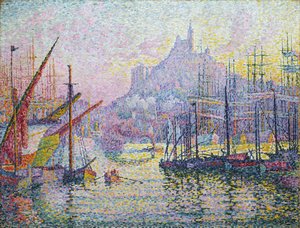
Paul Signac's Sisteron: A Symphony of Light and Color
Paul Signac’s 1902 painting, *Sisteron*, is more than just a depiction of a Provençal landscape; it’s a vibrant manifesto of Post-Impressionism, a testament to the artist’s unwavering pursuit of scientific color theory, and an invitation to lose oneself in the shimmering beauty of light. The canvas unfolds with a remarkable serenity – a river gracefully carving its path through a valley embraced by towering mountains, culminating in a picturesque bridge that acts as a visual anchor for the viewer's eye. Scattered figures add a touch of human scale, subtly enhancing the sense of depth and inviting us to imagine ourselves part of this tranquil scene.
- Subject Matter: A quintessential landscape featuring a river valley, mountains, and a bridge – a common motif in plein air painting but rendered with extraordinary technical precision.
- Style: Firmly rooted in Post-Impressionism, Signac’s approach transcends mere representation; he seeks to capture the *impression* of light and color, prioritizing subjective experience over photographic accuracy.
The Pointillist Technique – A Scientific Approach to Beauty
Signac's genius lies in his masterful application of the Pointillist technique, a method he developed alongside Georges Seurat. Rather than blending colors on the palette or directly on the canvas, Signac meticulously applied tiny dots of pure color – predominantly blues, yellows, and greens – side by side. This seemingly simple technique creates an optical illusion; when viewed from a distance, the viewer’s eye blends these individual dots together, resulting in a luminous, vibrant effect that surpasses the limitations of traditional blending. The painting's surface is a textured mosaic, a deliberate demonstration of this scientific approach to color and light.
- Technique: Pointillism – the application of small, distinct dots of pure color to create an optical mixture.
- Color Palette: Dominated by blues, yellows, and greens, reflecting Signac’s interest in capturing the effects of sunlight on water and foliage.
Historical Context and Artistic Influence
*Sisteron* emerged during a period of profound artistic experimentation, building upon the foundations laid by Impressionism while pushing boundaries towards more expressive forms. Signac's work reflects the influence of Claude Monet’s exploration of light and color, as well as Camille Pissarro’s focus on capturing the essence of rural life. However, unlike his predecessors, Signac sought to ground his artistic practice in scientific principles, drawing inspiration from the theories of Eugène Chevreul regarding simultaneous contrast and optical mixing. This intellectual rigor elevated painting beyond mere aesthetics, transforming it into a rigorous investigation of perception.
- Influence: Heavily influenced by Impressionism and the burgeoning field of color theory.
- Movement: A key figure in Neo-Impressionism (Pointillism).
Symbolic Resonance and Emotional Impact
Beyond its technical brilliance, *Sisteron* possesses a profound emotional resonance. The scene evokes a sense of tranquility, peace, and connection with nature – qualities that were increasingly valued during the late 19th and early 20th centuries. The artist’s skillful handling of light and shadow creates a palpable atmosphere, inviting the viewer to step into this idyllic landscape and experience its beauty firsthand. It's a painting that speaks to our innate desire for serenity and reminds us of the restorative power of nature.
Preguntas y respuestas
¿Cómo se puede integrar "Sisteron" de Paul Signac en la decoración del hogar?
Se recomienda el uso de (Accent) y su ubicación en (Living Room) para "Sisteron" de Paul Signac.
¿Qué ambiente aportaría "Sisteron" a un espacio?
"Sisteron" de Paul Signac transmite una atmósfera Serene y se recomienda para un/a Living Room. El estado de ánimo es la esencia que la obra aporta al espacio que la rodea.
¿Cuántas personas ven "Sisteron"?
Existe una página de Estadísticas para "Sisteron". En ella se detallan las visitas mensuales de la obra y de otras piezas del artista, con desgloses por país e idioma.
Biografía del artista
Primeros años y formación
Paul victor jules signac, un pintor neoimpresionista francés, nació el 11 de noviembre de 1863 en París. Inicialmente, cursó estudios de arquitectura antes de decidirse a convertirse en pintor a los 18 años. Esta decisión fue influenciada por una exposición de la obra de Claude Monet.Estilo artístico e influencias
El estilo de Signac se caracterizó por el uso de pequeños puntos de color puro, que yuxtapuso para crear una sensación de profundidad y luz. Esta técnica, conocida como puntillismo, se desarrolló en colaboración con Georges Seurat. La obra de Signac también estuvo influenciada por sus viajes a lo largo de la costa europea, donde capturó la belleza de las ciudades portuarias en acuarelas.Obras notables y asociaciones
- Boulevard de Clichy (1886), una obra postimpresionista que muestra el meticuloso estilo de Signac.
- El boyero rojo, Saint-Tropez (1895), una vibrante pintura marina con un boi de color rojo anaranjado contra un fondo azul oscuro.
- Miembro fundador de la Société des Artistes Indépendants, que organizó exposiciones anuales que marcaron tendencias en el arte del siglo XX.
Legado e influencia
La obra de Signac tuvo un profundo impacto en el desarrollo del fauvismo, influyendo en artistas como Henri Matisse y André Derain. Como presidente de la Société des Artistes Indépendants, Signac apoyó a los artistas más jóvenes y expuso obras controvertidas de los fauves y los cubistas.- Explore más obras de Paul Signac en https://OriginalUniqueArt.com/@/paul-signac
- Descubra la técnica del puntillismo y su influencia en el neoimpresionismo en https://es.wikipedia.org/wiki/Puntillismo
Fechas clave
- 11 de noviembre de 1863: Nacimiento en París
- 1884: Co-fundación de la Société des Artistes Indépendants
- 15 de agosto de 1935: Fallecimiento a los 71 años

Paul Signac
1863 - 1935 , Francia
Datos clave
- Artistas Que Influyeron:
- Claude Monet
- Eugène Delacroix
- Georges Seurat
- Estilo Artístico: Neoimpresionismo, Puntillismo
- Fecha De Fallecimiento: 15 de agosto de 1935
- Fecha De Nacimiento: 11 de noviembre de 1863
- Influencia En Artistas:
- Henri Matisse
- André Derain
- Lugar De Nacimiento: París, Francia
- Nacionalidad: Francesa
- Nombre Completo: Paul Signac
- Obras Notables:
- Boulevard de Clichy (1886)
- El Pinar de Saint Tropez
- El Faro, Saint-Tropez
Artículos relacionados

Flowing Narratives: Rivers in Painting – A Historical Exploration
Explore the rich history of rivers in painting! Discover masterpieces from ancient times to Impressionism & beyond. Learn about symbolism, artists like Monet & Daubigny, and find your perfect serene artwork at OriginalUniqueArt.

Paul Signac: Pointillism, Politics & the Pursuit of Harmony in Modern Art
Explore the life & art of Paul Signac, a key figure in Neo-Impressionism. Discover his Pointillist technique, anarchist beliefs, and stunning coastal scenes. Learn about his influence on modern art history.

Los 10 Maestros del Río Hudson: Obras que Definieron un Movimiento Artístico
Descubre los 10 lienzos más emblemáticos de la Escuela del Río Hudson. Explora las obras maestras de Thomas Cole, Church y Bierstadt que capturan la belleza del paisaje americano. Encuentra reproducciones de arte exclusivas en OriginalUniqueArt.com.

Paul Klee: Las 25 Obras Maestras que Definen un Genio del Arte Moderno | OriginalUniqueArt
Descubre las 25 obras maestras de Paul Klee, el genio del arte moderno. Explora su expresionismo único, composiciones abstractas y vibrantes paletas de colores. Reproducciones de alta calidad y decoración con arte en OriginalUniqueArt.com.

Paul Cézanne: Las 25 Obras Maestras que Definieron el Arte Moderno | OriginalUniqueArt
Descubre las 25 obras maestras de Paul Cézanne que revolucionaron el arte moderno. Explora su técnica, inspiración y significado en paisajes, bodegones y retratos. Reproducciones de alta calidad para decorar tu hogar con arte inolvidable. ¡Explora la colección completa en OriginalUniqueArt.com!