Menú
Text size

() ·

A painting made for you, by hand

Antibes. Mañana

Reproducción al óleo hecha a mano

Óleo sobre lienzo pintado a mano en el tamaño y marco de su elección, realizado por encargo por nuestros artistas. ( Cambiar a impresiones Cambiar a imagen digital)

Descripción del objeto

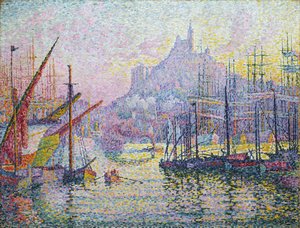
Explore 'Antibes. Mañana' de Paul Signac, un impresionante paisaje marino neoimpresionista que captura la belleza del puerto de Antibes con vibrantes veleros y un majestuoso faro ante colinas onduladas.

Biografía del artista

Descubre a Paul Signac (1863-1935), maestro del Neoimpresionismo y el Puntillismo. Explora sus vibrantes paisajes costeros, influencia en Fauvismo y obras icónicas en OriginalUniqueArt.

from ·

Chapter 1

How large should it be?

Slide to change the size; the picture on the left shows the frame at its real width. The proportions of the original are kept.

Tamaño estándar
a medida
CM
INCH

Elija entre nuestros tamaños predefinidos que respetan las proporciones originales de la obra.

ancho
altura

Indique el ancho y el alto que necesite para adaptarse a su marco o pared. Al tratarse de una obra pintada a mano, si requiere un tamaño con una proporción distinta, el artista puede pintar un poco más alrededor de la imagen o recortarla ligeramente; usted elige. Le enviaremos una maqueta digital para su aprobación antes de comenzar la pintura. La imagen que se muestra en esta página no refleja el resultado real; solo la maqueta lo hace.

Chapter 2

How should it arrive?

Choose the edges of the stretched canvas

Choose your frame

Corner sample of the WhiteWrap canvas edge finish, stretched on madera maciza bars
White €1
Corner sample of the BlurSideWrap canvas edge finish, stretched on madera maciza bars
Blurside €1
Corner sample of the ExtendedWrap canvas edge finish, stretched on madera maciza bars
Extended €1
Corner sample of the P118B picture frame: poliestireno moldeado, 5 cm wide and 3 cm thick
P118B €10
Corner sample of the P118H picture frame: poliestireno moldeado, 5 cm wide and 3 cm thick
P118H €10
Corner sample of the P118W picture frame: poliestireno moldeado, 5 cm wide and 3 cm thick
P118W €10
Corner sample of the P438Z picture frame: poliestireno moldeado, 5.5 cm wide and 3.5 cm thick
P438Z €10
Corner sample of the P508JH picture frame: poliestireno moldeado, 7 cm wide and 3.5 cm thick
P508JH €12
Corner sample of the P508YH picture frame: poliestireno moldeado, 7 cm wide and 3.5 cm thick
P508YH €12
Corner sample of the P805H picture frame: poliestireno moldeado, 5 cm wide and 3.5 cm thick
P805H €10
Corner sample of the P805Z picture frame: poliestireno moldeado, 5 cm wide and 3.5 cm thick
P805Z €10
Corner sample of the P919BZ picture frame: poliestireno moldeado, 7 cm wide and 3.5 cm thick
P919BZ €10
Corner sample of the P919G picture frame: poliestireno moldeado, 7 cm wide and 3.5 cm thick
P919G €10
Corner sample of the P919XJ picture frame: poliestireno moldeado, 7 cm wide and 3.5 cm thick
P919XJ €10
Corner sample of the P959ZH picture frame: poliestireno moldeado, 5 cm wide and 3 cm thick
P959ZH €10
Corner sample of the P968JZ picture frame: poliestireno moldeado, 6 cm wide and 4 cm thick
P968JZ €12
Corner sample of the W106C picture frame: madera maciza, 5 cm wide and 3 cm thick
W106C €8
Corner sample of the W218G picture frame: madera maciza, 5 cm wide and 3 cm thick
W218G €10
Corner sample of the W218JH picture frame: madera maciza, 5 cm wide and 3 cm thick
W218JH €8
Corner sample of the W218Y picture frame: madera maciza, 5 cm wide and 3 cm thick
W218Y €10
Corner sample of the W307PJ picture frame: madera maciza, 6 cm wide and 3 cm thick
W307PJ €10
Corner sample of the W316G picture frame: madera maciza, 6 cm wide and 3 cm thick
W316G €10
Corner sample of the W316PJ picture frame: madera maciza, 6 cm wide and 3 cm thick
W316PJ €8
Corner sample of the W316Y picture frame: madera maciza, 6 cm wide and 3 cm thick
W316Y €10
Corner sample of the W398PJ picture frame: madera maciza, 5 cm wide and 3 cm thick
W398PJ €8
Corner sample of the W4111J picture frame: madera maciza, 6.5 cm wide and 3.5 cm thick
W4111J €10
Corner sample of the W500HY picture frame: madera maciza, 7 cm wide and 5 cm thick
W500HY €15
Corner sample of the W500JH picture frame: madera maciza, 7 cm wide and 5 cm thick
W500JH €15
Corner sample of the W692G picture frame: madera maciza, 8 cm wide and 4 cm thick
W692G €12
Corner sample of the W849H picture frame: madera maciza, 5 cm wide and 3 cm thick
W849H €8
Corner sample of the W940BG picture frame: madera maciza, 7.5 cm wide and 4.5 cm thick
W940BG €15
Corner sample of the W953PJ picture frame: madera maciza, 6 cm wide and 3.5 cm thick
W953PJ €8
Corner sample of the H24-GOLD picture frame: madera tallada con estuco, 10 cm wide and 6 cm thick
H24-GOLD €30
Corner sample of the H24-SILVER picture frame: madera tallada con estuco, 10 cm wide and 6 cm thick
H24-SILVER €30
Corner sample of the H36-GOLD picture frame: madera tallada con estuco, 15 cm wide and 6.5 cm thick
H36-GOLD €45
Corner sample of the H36-SILVER picture frame: madera tallada con estuco, 15 cm wide and 6.5 cm thick
H36-SILVER €45

Moulding: . Overall size with the frame: .

Chapter 3

Who paints it, and should anything change?

Examples of what can be changed: Replace face with customer photo; Add pet (e.g., replace cat with dog); Include hidden message in background; Change background landscape or elements.
After order, OriginalUniqueArt.com team will email client for instructions and provide a mockup preview

Envío a todo el mundo () en 3-4 semanas en lugar de las 5 semanas estándar. (30 octubre). Sin comprometer la calidad.

Chapter 4

The finishing touches

A nameplate, as in a museum?

Detalles de la placa de bronce grabada

This elegant plaque features the artist's name and the title of the artwork, finely engraved for a timeless presentation.

It is made from bronze with a refined, elegant finish. The text is precisely laser-engraved for a sharp and permanent result. Measuring 9x2 cm, the plaque is compact yet easy to read. It's built to be durable and scratch-resistant, offering a professional, museum-quality look. Mounting is simple thanks to the included adhesive backing.

Detalles de la placa de acrílico transparente

The plaque includes essential engraved details such as the artist's name, the title of the artwork, the date it was created, the type of media used-like oil on canvas or watercolor-a brief description of the piece, and a QR code that links to the complete artwork information.

It is crafted from clear acrylic, offering a sleek, modern appearance. The text is UV-engraved in black to ensure strong visual contrast. With a size of 10x15 cm, it ensures optimal readability. It comes equipped with two metal hooks for secure wall mounting. The plaque is designed to be weather-resistant, making it suitable for various environments, and it includes interactive features that work seamlessly with smartphone scanning.

Detalles de la placa de acrílico negro

This elegant plaque includes engraved information such as the artist's name, the title of the artwork, the date it was created, the type of media used (like oil on canvas or watercolor), a short description of the artwork, and a QR code for quick access to more information.

The plaque itself is made from refined black acrylic with a premium finish. The text is laser-engraved in white for high contrast and readability. Its size is 10x15 cm, designed to be easy to read. It comes with two metal hooks for professional mounting. The design is sleek and fits any interior style. It is also weather-resistant and durable, with built-in digital integration for mobile compatibility.

A protective varnish?

When do you need it?

Chapter 5

Your painting, as you ordered it

Antibes. Mañana

Técnica de reproducción

Dimensiones de la reproducción

-

Selección de artistas premium

Mayor nivel de detalle, delicadeza y tiempo de producción adicional

-

Enmarcado de reproducción

-

-

Para obras de arte o reproducciones que midan más de 105 cm (aproximadamente 41 pulgadas) en cualquiera de sus lados, el marco se enviará como un kit desmontado. Este método garantiza una entrega segura y evita daños durante el transporte.

Se requiere montaje profesional: este no es un producto para hacer usted mismo (DIY).
El kit debe ser ensamblado y el lienzo tensado por un enmarcador profesional con experiencia, utilizando cola para madera (no incluida), una tenaza para tensar lienzos y sargentos para mantener los bastidores alineados mientras la cola se seca. Un montaje incorrecto o una tensión desigual del lienzo pueden dañar la obra de arte de forma permanente y no están cubiertos por nuestra garantía.

  • Se incluyen todos los listones de madera maciza, cortados con precisión según las medidas.

  • Se ensambla con los tornillos incluidos, además de cola para madera para las uniones de las esquinas, la cual no se incluye y debe ser proporcionada por su enmarcador.

  • Se requieren herramientas profesionales que no están incluidas: un alicate para tensar lienzos (tensor) y abrazaderas para mantener los bastidores alineados mientras se seca el pegamento.

Importante:
Las uniones de las esquinas requieren cola para madera, los listones deben sujetarse con prensas hasta que la cola esté completamente seca, y para tensar el lienzo en el bastidor ensamblado se requiere una pinza para tensar lienzos. Ninguno de estos elementos está incluido en el kit. Por favor, contacte con un profesional del enmarcado con experiencia antes de realizar un pedido de este tamaño.

Cartela

-

-

Barniz protector

Barniz brillante (realza los colores y protege contra la luz y la humedad)

-

Personalizar mi obra

Ejemplos de lo que se puede personalizar: sustituir el rostro por una foto del cliente; añadir una mascota (por ejemplo, cambiar un gato por un perro); incluir un mensaje oculto en el fondo; cambiar el paisaje o los elementos del fondo.

-

Envío urgente

Envío a todo el mundo () en 3 o 4 semanas, en lugar de las 5 semanas habituales. (30 octubre). Sin comprometer la calidad.

-

Envío urgente

Envío internacional () en 5 semanas. (6 noviembre).

Incluido

Precio total final

€ 266

Precio total € 266

La opción de vidrio solo está disponible en tamaños inferiores a 110 cm.

Included with every order

  • Envío exprés gratuito a todo el mundo
  • Lienzo de lino de alta calidad
  • Seguro de envío total
  • Garantía de reembolso de aranceles aduaneros
  • Garantía de fidelidad cromática exacta
  • Política de devolución de 100 días (solo por defectos)
  • Garantía de devolución del 100% del dinero
  • Descuento por cantidad

Antibes. Morning: A Symphony of Light and Color by Paul Signac

Paul Signac’s “Antibes. Morning” stands as a cornerstone of Neo-Impressionism, embodying the movement's revolutionary approach to capturing visual experience through scientific observation and meticulous color theory. Painted in 1913–1914 during Signac’s formative years on the French Riviera—a period marked by intense artistic experimentation and collaboration with Georges Seurat—the canvas presents a tranquil seascape infused with vibrant hues that shimmer and dance under the influence of shifting sunlight. More than just a depiction of a picturesque coastal scene, “Antibes. Morning” represents Signac's unwavering commitment to unlocking the secrets of perception itself.

The Science Behind Impressionism’s Evolution

Before delving into the artwork’s aesthetic qualities, it’s crucial to understand the intellectual impetus behind Neo-Impressionism. Following the groundbreaking innovations of Monet and Renoir—artists who championed Impressionism's focus on capturing fleeting moments of light—Signac and Seurat sought to transcend mere sensory representation. Inspired by Henri Poincaré’s theories on optics and color perception, they adopted Pointillism – a technique that deliberately eschewed blending brushstrokes altogether. Instead, artists painstakingly applied tiny dots of pure pigment onto the canvas, allowing the viewer's eye to synthesize these individual colors into a unified impression of light and atmosphere. This method wasn’t merely stylistic; it was a deliberate attempt to mimic how the human retina perceives color, grounding painting in scientific principles.

A Detailed Examination of Composition and Technique

The painting’s composition is deceptively simple yet remarkably effective. Three sailboats dominate the foreground, positioned strategically against the backdrop of a rocky shoreline and punctuated by the prominent lighthouse beacon. Signac skillfully utilizes perspective to create depth, guiding the viewer's gaze from the boats towards the distant hills bathed in golden light. The artist’s meticulous application of Pointillism is evident throughout—a dense tapestry of minuscule dots meticulously arranged to reproduce the nuances of color and luminosity. Notice how Signac captures the subtle variations in hue as sunlight filters through the clouds, creating an ethereal glow that imbues the scene with a palpable sense of serenity.

Symbolic Resonance: Antibes and Artistic Inspiration

Antibes itself holds significance beyond its visual beauty; it served as a crucible for artistic innovation during Signac’s time on the Riviera. The town welcomed artists like Monet and Cézanne, fostering an environment conducive to experimentation and intellectual discourse. Signac's fascination with the interplay of light and color—a preoccupation that permeates “Antibes. Morning”—reflects this broader cultural landscape. Furthermore, the lighthouse symbolizes guidance and vigilance, perhaps mirroring Signac’s own unwavering dedication to his artistic vision.

Emotional Impact: Capturing Tranquility and Wonder

Ultimately, “Antibes. Morning” succeeds in conveying a profound sense of tranquility and wonder. The painting invites contemplation—encouraging viewers to immerse themselves in the beauty of nature and appreciate the transformative power of light. Signac’s masterful technique captures not just what he sees but how he feels—translating visual observation into an emotionally resonant experience that speaks to the enduring fascination with capturing sublime landscapes. It remains a testament to Signac's genius and a cornerstone of Neo-Impressionist legacy.

Preguntas y respuestas

¿Cómo se describe la paleta de colores de "Antibes. Mañana" de Paul Signac?

Los colores de "Antibes. Mañana" conforman una paleta Tonos neutros. Esta clasificación describe las familias de colores dominantes.

¿Qué intensidad de color tiene "Antibes. Mañana" de Paul Signac?

"Antibes. Mañana" de Paul Signac presenta una intensidad de color Equilibrado.

¿Cuál es la técnica y las dimensiones de "Antibes. Mañana"?

La obra original "Antibes. Mañana" de Paul Signac es una pieza de Acrílico sobre lienzo con unas dimensiones de 120 x 80 cm. La técnica y el tamaño describen la obra original.

More about this painting

Ver en contexto Vista previa en RA Cambiar a impresiones Cambiar a imagen digital Enviar
Detalles Guía Añadir a favoritos Descargar Similares Radiografía Presentación de diapositivas Q&A Estadísticas

In numbers

  • 29frames to choose from
  • standard sizes, in its own proportions
  • 5weeks to paint and deliver it
Paul Signac

Paul Signac

1863 - 1935, Francia

Quick facts about Paul Signac

  • Artistas Que Influyeron:
    • Claude Monet
    • Eugène Delacroix
    • Georges Seurat
  • Estilo Artístico: Neoimpresionismo, Puntillismo
  • Fecha De Fallecimiento: 15 de agosto de 1935
  • Fecha De Nacimiento: 11 de noviembre de 1863
  • Influencia En Artistas:
    • Henri Matisse
    • André Derain
  • Lugar De Nacimiento: París, Francia
  • Nacionalidad: Francesa
  • Nombre Completo: Paul Signac
  • Obras Notables:
    • Boulevard de Clichy (1886)
    • El Pinar de Saint Tropez
    • El Faro, Saint-Tropez

Biografía del artista

Primeros años y formación

Paul victor jules signac, un pintor neoimpresionista francés, nació el 11 de noviembre de 1863 en París. Inicialmente, cursó estudios de arquitectura antes de decidirse a convertirse en pintor a los 18 años. Esta decisión fue influenciada por una exposición de la obra de Claude Monet.

Estilo artístico e influencias

El estilo de Signac se caracterizó por el uso de pequeños puntos de color puro, que yuxtapuso para crear una sensación de profundidad y luz. Esta técnica, conocida como puntillismo, se desarrolló en colaboración con Georges Seurat. La obra de Signac también estuvo influenciada por sus viajes a lo largo de la costa europea, donde capturó la belleza de las ciudades portuarias en acuarelas.

Obras notables y asociaciones

  • Boulevard de Clichy (1886), una obra postimpresionista que muestra el meticuloso estilo de Signac.
  • El boyero rojo, Saint-Tropez (1895), una vibrante pintura marina con un boi de color rojo anaranjado contra un fondo azul oscuro.
  • Miembro fundador de la Société des Artistes Indépendants, que organizó exposiciones anuales que marcaron tendencias en el arte del siglo XX.

Legado e influencia

La obra de Signac tuvo un profundo impacto en el desarrollo del fauvismo, influyendo en artistas como Henri Matisse y André Derain. Como presidente de la Société des Artistes Indépendants, Signac apoyó a los artistas más jóvenes y expuso obras controvertidas de los fauves y los cubistas.

Fechas clave

  • 11 de noviembre de 1863: Nacimiento en París
  • 1884: Co-fundación de la Société des Artistes Indépendants
  • 15 de agosto de 1935: Fallecimiento a los 71 años
Experimente el genio artístico de Paul Signac a través de sus cautivadoras obras, disponibles para su exploración en OriginalUniqueArt.com.

Datos clave

  • Estilo artístico: Realista
  • Ubicación: Museo Nacional de Varsovia
  • Movimiento: Neoimpresionismo
  • Título: Antibes. Mañana
  • Técnica: Óleo sobre lienzo

Test de conocimientos artísticos

Cada pregunta tiene una única respuesta correcta.

Pregunta 1:
¿Con qué movimiento artístico se asocia Paul Signac?
Pregunta 2:
¿Dónde se encuentran dos vistas de Antibes de Signac?
Pregunta 3:
¿Qué técnica empleó Signac para lograr colores vibrantes?
Pregunta 4:
La pintura representa una escena portuaria con veleros y un faro. ¿Cuál es el enfoque principal de la visión artística de Signac?
Pregunta 5:
¿Qué castillo aparece destacado en una de las pinturas de Antibes de Signac?