Vista previa
 Compartir
 Compartir
 Ver detalles
 Guía
Guía

 Descargar
 Ver artículos similares
 Radiografía
 Presentación de diapositivas
 Estadísticas
Snake-Eaters
 Oil On Canvas
- WallArt
- Symbolism
 19th Century
 161.0 x 127.0 cm
 Museo Nacional de Varsovia
 Leer más
Giclée / Impresión de arte
Impresiones giclée o en lienzo de calidad de museo con producción rápida y opciones de acabado flexibles. ( Encargar reproducción pintada a mano Ver versión en imagen digital)




P118B €10

P118H €10

P118W €10

P438Z €10

P508JH €12

P508YH €12

P805H €10

P805Z €10

P919BZ €10

P919G €10

P919XJ €10

P959ZH €10

P968JZ €12

W106C €8

W218G €10

W218JH €8

W218Y €10

W307PJ €10

W316G €10

W316PJ €8

W316Y €10

W398PJ €8

W4111J €10

W500HY €15

W500JH €15

W692G €12

W849H €8

W940BG €15

W953PJ €8




Elija entre nuestros tamaños predefinidos que respetan las proporciones originales de la obra.

Introduzca el ancho y el alto que necesite para adaptarse a su marco o pared. Una impresión solo puede recortarse, nunca hacerse más grande que la imagen original, por lo que un tamaño con una forma distinta perderá parte de la obra. Le enviaremos una maqueta digital para su aprobación antes de realizar cualquier impresión. La imagen que se muestra en esta página no refleja el recorte real; solo la maqueta lo hace.
Envío a todo el mundo () en 2 semanas en lugar de las 4/5 semanas estándar. (24 octubre)

Envío exprés gratuito a todo el mundo

Lienzo de lino de alta calidad

Seguro de envío completo

Garantía de reembolso de impuestos aduaneros

Garantía de fidelidad cromática exacta

Política de devolución de 100 días (solo por defectos)

Garantía de devolución del 100% del dinero

Oferta por volumen
 La opción de vidrio solo está disponible en tamaños inferiores a 110 cm.

Snake-Eaters
Giclée / Impresión de arte
Tamaño de la reproducción
-


Precio total
€ 70
A Mystical Encounter in the Breton Woods
In the heart of the dense, dappled forests of Brittany, Paul Sérusier’s “Snake-Eaters” unfolds as a profound invocation of ancient folklore and spiritual mystery. Painted in 1896, this masterpiece transcends mere landscape painting to become a window into the soul of Breton mysticism. The canvas captures four figures caught in the midst of a ritualistic dance, their forms emerging from the shadows of a primordial woodland. There is an undeniable sense of communal connection present in the scene, yet it is draped in an aura of the unknown. As sunlight filters through the thick canopy, it illuminates not just the physical space, but the spiritual weight of the ceremony taking place. For the discerning collector or interior designer, this work offers more than visual beauty; it provides a gateway into a world where the boundaries between the human and the divine are beautifully blurred.
The technique employed by Sérusier is a masterclass in Cloisonnism, a style that would later become a cornerstone of modern abstraction. Rather than relying on the fleeting optical realism of the Impressionists, Sérus and his contemporaries sought a deeper, more permanent truth. He utilizes flat planes of color, bounded by thin, dark contours that resemble the stained glass of a cathedral. This method strips away unnecessary naturalistic detail, allowing the viewer to focus on the rhythmic harmony of the composition. The texture of the foliage and the deliberate arrangement of the figures create a sense of depth that does not rely on traditional perspective, but rather on the emotional weight of color and shape. It is a technique that demands attention, making it a striking focal point for any sophisticated gallery or curated living space.
Symbolism and the Spirit of the Nabis
To understand “Snake-Eaters,” one must look toward the historical currents of the late 19th century. Emerging from the influential Pont-Aven colony under the mentorship of Paul Gauguin, Sérusier was a pioneer of the Nabis movement. This group of artists sought to express inner emotions and spiritual truths through symbolic imagery, rejecting the objective observation of the world in favor of subjective experience. The painting’s palette—a somber yet mesmerizing arrangement of deep browns, earthy reds, and heavy blacks—is meticulously chosen to evoke feelings of reverence, apprehension, and mystery. Every element, from the posture of the dancing figures to the subtle presence of nature around them, serves as a symbol for the unseen forces that shape human existence.
For those looking to integrate art into a refined interior, “Snake-Eaters” offers an unparalleled emotional resonance. It is a piece that invites contemplation and conversation, bringing a sense of historical gravity and avant-garde intellect to a room. Whether displayed as a high-quality reproduction in a study or as a centerpiece in a contemporary lounge, the painting’s ability to evoke the "aura of the unknown" remains potent. It stands as a testament to a period of intense artistic experimentation, offering a timeless connection to the legends and shadows of the past.
Preguntas y respuestas
¿Cómo se realizó "Snake-Eaters" y cuáles son sus dimensiones?
La obra original "Snake-Eaters" de Paul Sérusier es una pieza de Oil On Canvas con unas dimensiones de 161 x 127 cm. La técnica y el tamaño describen la obra original.
¿A qué movimiento artístico pertenece "Snake-Eaters" de Paul Sérusier?
"Snake-Eaters" es una obra de Symbolism. El movimiento indica la tradición artística de la que forma parte la obra.
¿Qué armonía cromática presenta "Snake-Eaters" de Paul Sérusier?
La armonía cromática de "Snake-Eaters" se describe como Unified Palette.
Biografía del artista
Primeros años y educación
Paul Sérusier, nacido Louis-Paul-Henri Sérusier el 9 de noviembre de 1864 en París, fue un pintor francés que se convirtió en pionero del arte abstracto e inspiró el movimiento vanguardista los nabis, sintetismo y cloisonnismo. Estudió en la Académie Julian, donde se convirtió en monitor a mediados de la década de 1880. Esto marcó el comienzo de su viaje artístico.
Carrera artística
En el verano de 1888, Sérusier viajó a Pont-Aven, donde se unió a un pequeño grupo de artistas centrado en Paul Gauguin. Bajo la estrecha supervisión de Gauguin, Sérusier pintó "El Talismán", un ejercicio extremo en cloisonnismo que se aproximaba a la pura abstracción. Esta obra mostró su estilo innovador y su disposición a experimentar con nuevas técnicas.
Como pintor postimpresionista, Sérusier formó parte del grupo Les Nabis, junto con Pierre Bonnard, Édouard Vuillard y Maurice Denis. Aunque no tan reconocido como algunos de sus compañeros, las contribuciones de Sérusier al desarrollo del arte abstracto son innegables.
Obras notables y legado
Algunas de las obras más destacadas de Sérusier incluyen:
- L'Averse (1893), Museo d’Orsay, París
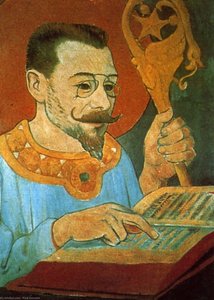
- Retrato de Paul Ranson (1890), Museo d’Orsay, París
- Melancolía (1890)
- Las serpientes comiendo (1894), Muzeum Narodowe, Varsovia
En sus últimos años, Sérusier enseñó en la Académie Ranson y publicó su libro "ABC de la pintura" en 1921. Falleció el 7 de octubre de 1927 en Morlaix.
Movimiento artístico e influencia
El trabajo de Sérusier estuvo influenciado por el cloisonnismo, un estilo caracterizado por formas audaces y planas separadas por contornos oscuros. Este movimiento, que surgió a fines del siglo XIX, jugó un papel importante en la configuración del desarrollo del arte moderno.
- Explore más sobre el cloisonnismo: el movimiento artístico cloisonnista
- Descubra la obra de Sérusier: Paul Sérusier | OriginalUniqueArt.com
- Infórmese sobre el movimiento los nabis: el movimiento artístico los nabis
Desarrollo y logros
Sérusier se alejó del concepto de arte como imitación del mundo visible, introduciendo elementos más conceptuales y evocadores en su pintura, especialmente en la disolución de las formas y el uso de colores no descriptivos. La idea era primordial en su obra y la colocaba por encima de la representación: si percibía el cielo amarillo, lo pintaba como amarillo y no azul. Buscando una verdad representativa más allá del mundo de las apariencias, estuvo influenciado tanto por artistas postimpresionistas anteriores como Paul Gauguin, como por pensamientos místicos conectados con la Teosofía.
Sérusier se esforzó por sintetizar tres elementos clave dentro de sus obras: la apariencia del mundo natural, la sensación que le producía y la forma en que elegía representar. Al equilibrar estos tres elementos, Sérusier también se centró en aplanar las formas en sus obras.
La abstracción de formas en la búsqueda de traducir emoción y percepción al lienzo no solo lo distinguió de los artistas anteriores, sino que también inspiró a otros. Los historiadores, así como sus contemporáneos, datan el comienzo del movimiento Nabi con la obra de Sérusier, El Talismán.
Sérusier animó a mayores experimentos hacia la abstracción en un intento de "liberar la forma y el color de sus funciones descriptivas tradicionales para expresar emociones e verdades espirituales personales". Este principio rector de la sensación a través del color fue una innovación asombrosa que resonó con futuras generaciones de coloristas, incluyendo Helen Frankenthaler, Mark Rothko y Josef Albers.

Paul Sérusier
1864 - 1927 , Francia
Datos clave
- Artistas Que Influyeron:
- Paul Gauguin
- Émile Bernard
- Estilo Artístico: Postimpresionismo, Cloisonnismo
- Fecha De Fallecimiento: 7 de octubre de 1927
- Fecha De Nacimiento: 9 de noviembre de 1864
- Influenciado A:
- Les Nabis
- Movimiento abstracto
- Lugar De Nacimiento: París, Francia
- Nacionalidad: Francesa
- Nombre Completo: Paul Sérusier (Louis-Paul-Henri)
- Obras Notables:
- L'Averse (1893)
- Retrato de Paul Ranson (1890)
- Melancolía (1890)
- Las Comedoras de Serpientes (1894)
Artículos relacionados

Paul Cézanne: Las 25 Obras Maestras que Definieron el Arte Moderno | OriginalUniqueArt
Descubre las 25 obras maestras de Paul Cézanne que revolucionaron el arte moderno. Explora su técnica, inspiración y significado en paisajes, bodegones y retratos. Reproducciones de alta calidad para decorar tu hogar con arte inolvidable. ¡Explora la colección completa en OriginalUniqueArt.com!

Paisajes Románticos: 10 Obras Maestras que Definieron un Movimiento Artístico
Descubre los 10 paisajes románticos más influyentes de artistas como Caspar David Friedrich y Turner. Explora la belleza, el simbolismo y las técnicas del movimiento romántico. Reproducciones de arte exclusivas en OriginalUniqueArt.com.

Evocations of Place: A Historical Journey Through Landscape Art
Explore the rich history of landscape art with OriginalUniqueArt. Discover renowned artists, movements like Impressionism & Romanticism, and expert guidance for collecting timeless pieces. Find your perfect serene escape today!
Paul Sérusier: Pioneering Synthetism & The Nabis’ Symbolic Revolution
Discover Paul Sérusier's pivotal role in the Nabis movement & the birth of Synthetism. Explore 'The Talisman,' his influence on modern art, and a deeper understanding of this symbolic revolution. Expert analysis & insights.
Paul Klee: Las 25 Obras Maestras que Definen un Genio del Arte Moderno | OriginalUniqueArt
Descubre las 25 obras maestras de Paul Klee, el genio del arte moderno. Explora su expresionismo único, composiciones abstractas y vibrantes paletas de colores. Reproducciones de alta calidad y decoración con arte en OriginalUniqueArt.com.