Vista previa
 Compartir
 Compartir
 Ver detalles
 Guía
Guía

 Descargar
 Ver artículos similares
 Radiografía
 Presentación de diapositivas
 Estadísticas
Landscape


 Leer más
Reproducción al óleo hecha a mano
Óleo sobre lienzo pintado a mano en el tamaño y marco de su elección, realizado por encargo por nuestros artistas. ( Cambiar a formato impreso Ver versión en imagen digital)




P118B €10

P118H €10

P118W €10

P438Z €10

P508JH €12

P508YH €12

P805H €10

P805Z €10

P919BZ €10

P919G €10

P919XJ €10

P959ZH €10

P968JZ €12

W106C €8

W218G €10

W218JH €8

W218Y €10

W307PJ €10

W316G €10

W316PJ €8

W316Y €10

W398PJ €8

W4111J €10

W500HY €15

W500JH €15

W692G €12

W849H €8

W940BG €15

W953PJ €8




Elija entre nuestros tamaños predefinidos que respetan las proporciones originales de la obra.

Escriba el ancho y el alto que necesite para adaptarse a su marco o a su pared. Al ser una obra pintada a mano, para un tamaño con una forma distinta, el artista puede pintar un poco más alrededor de la imagen o recortar un poco; usted elige. Le enviaremos una maqueta digital para su aprobación antes de comenzar la pintura. La imagen que se muestra en esta página no refleja el resultado real; solo la maqueta lo hace.
Tras realizar el pedido, el equipo de OriginalUniqueArt.com enviará un correo electrónico al cliente para solicitar instrucciones y proporcionarle una vista previa del boceto.
Envío a todo el mundo () en 3-4 semanas en lugar de las 5 semanas estándar. (22 octubre). Sin comprometer la calidad.

Envío exprés gratuito a todo el mundo

Lienzo de lino de alta calidad

Seguro de envío completo

Garantía de reembolso de impuestos aduaneros

Garantía de fidelidad cromática exacta

Política de devolución de 100 días (solo por defectos)

Garantía de devolución del 100% del dinero

Oferta por volumen
 La opción de vidrio solo está disponible en tamaños inferiores a 110 cm.

Landscape
Técnica de reproducción
Tamaño de la reproducción
-


Precio total
€ 263
Paul Sérusier’s “Landscape”: A Pioneer of Color and Light
Paul Sérusier's "Landscape," painted in 1912, isn’t merely a depiction of a green field; it’s a pivotal moment in the history of modern art. Born in Paris in 1864, Sérusier was a key figure in the Nabis movement – a group of Symbolist painters who sought to move beyond traditional academic styles and explore the expressive potential of color and form. This particular work embodies the core tenets of that revolutionary approach, representing a radical departure from representational accuracy and a profound embrace of subjective experience.
The painting immediately captivates with its vibrant palette – not a realistic rendering of nature, but an orchestration of pure hues. Deep greens dominate, punctuated by flashes of ochre, cerulean blue, and the warm tones of tree trunks. Sérusier eschewed meticulous detail, opting instead for broad, gestural brushstrokes that suggest movement and atmosphere rather than precise form. The trees themselves are simplified into blocks of color, their outlines blurred and indistinct, contributing to a sense of dreamlike abstraction. This technique, heavily influenced by the theories of Paul Gauguin, who had mentored Sérusier during his time at Pont-Aven in Brittany, was known as “cloisonnism,” where forms were defined by flat planes of color rather than shading or modeling.
The Influence of Breton Symbolism
Sérusier’s journey to this style began with a transformative summer spent in the coastal village of Pont-Aven. There, he encountered a community of artists deeply influenced by Breton folklore and spirituality. The landscape of Brittany, with its rugged coastline, ancient forests, and mystical traditions, provided fertile ground for artistic exploration. Gauguin encouraged Sérusier to “paint what you see, not what you think you should see,” urging him to capture the essence of the scene through color and emotion rather than strict adherence to photographic realism. This instruction proved crucial in shaping Sérusier’s distinctive style – a bold move towards abstraction that would profoundly impact subsequent generations of artists.
The painting's composition subtly evokes Breton legends, with the central tree acting as a focal point, reminiscent of ancient standing stones or sacred groves. The distant figures, barely discernible against the horizon, hint at human presence within this wild and untamed landscape, suggesting a connection between humanity and nature. The cat perched atop one of the trees adds an element of whimsical charm, perhaps symbolizing intuition or a primal connection to the natural world – a recurring motif in Symbolist art.
A Bridge Between Impressionism and Abstraction
"Landscape" stands as a crucial bridge between Impressionism and the nascent movements of abstraction. While rooted in the vibrant color palettes and atmospheric effects of Impressionism, Sérusier’s work transcends mere optical representation. He deliberately simplifies forms, reduces space, and prioritizes emotional expression over objective accuracy – characteristics that would become increasingly prominent in early 20th-century abstract art. It's a testament to his willingness to experiment and push the boundaries of artistic convention.
Emotional Resonance and Artistic Legacy
More than just a beautiful landscape, “Landscape” is an invitation to contemplate the relationship between nature, spirituality, and human perception. The painting’s luminous colors and fluid brushstrokes evoke a sense of tranquility and wonder, inviting the viewer to lose themselves in its dreamlike atmosphere. Sérusier's pioneering work paved the way for artists like Kandinsky and Mondrian, demonstrating that art could be more than just a mirror reflecting reality; it could be a powerful vehicle for expressing inner experience and exploring the depths of human consciousness. Reproductions of this piece offer a captivating glimpse into the heart of early modernism, inviting viewers to appreciate the enduring power of color and form.
Preguntas y respuestas
¿Puedo ver "Landscape" como una presentación de diapositivas a pantalla completa?
Hay una presentación de diapositivas disponible: la página Presentación de diapositivas de "Landscape" de Paul Sérusier.
¿Qué técnica y estilo caracterizan a "Landscape" de Paul Sérusier?
"Landscape" de Paul Sérusier combina la técnica de Acrylic On Canvas con el estilo Nabis Movement. La técnica y el movimiento describen la elaboración y el estilo de la obra.
¿Qué sentimiento transmite "Landscape" de Paul Sérusier?
"Landscape" de Paul Sérusier transmite una sensación Tranquil dentro de un ambiente general Calm.
Biografía del artista
Primeros años y educación
Paul Sérusier, nacido Louis-Paul-Henri Sérusier el 9 de noviembre de 1864 en París, fue un pintor francés que se convirtió en pionero del arte abstracto e inspiró el movimiento vanguardista los nabis, sintetismo y cloisonnismo. Estudió en la Académie Julian, donde se convirtió en monitor a mediados de la década de 1880. Esto marcó el comienzo de su viaje artístico.
Carrera artística
En el verano de 1888, Sérusier viajó a Pont-Aven, donde se unió a un pequeño grupo de artistas centrado en Paul Gauguin. Bajo la estrecha supervisión de Gauguin, Sérusier pintó "El Talismán", un ejercicio extremo en cloisonnismo que se aproximaba a la pura abstracción. Esta obra mostró su estilo innovador y su disposición a experimentar con nuevas técnicas.
Como pintor postimpresionista, Sérusier formó parte del grupo Les Nabis, junto con Pierre Bonnard, Édouard Vuillard y Maurice Denis. Aunque no tan reconocido como algunos de sus compañeros, las contribuciones de Sérusier al desarrollo del arte abstracto son innegables.
Obras notables y legado
Algunas de las obras más destacadas de Sérusier incluyen:
- L'Averse (1893), Museo d’Orsay, París
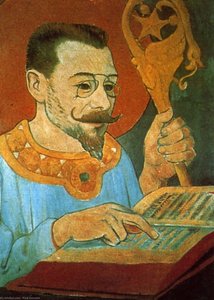
- Retrato de Paul Ranson (1890), Museo d’Orsay, París
- Melancolía (1890)
- Las serpientes comiendo (1894), Muzeum Narodowe, Varsovia
En sus últimos años, Sérusier enseñó en la Académie Ranson y publicó su libro "ABC de la pintura" en 1921. Falleció el 7 de octubre de 1927 en Morlaix.
Movimiento artístico e influencia
El trabajo de Sérusier estuvo influenciado por el cloisonnismo, un estilo caracterizado por formas audaces y planas separadas por contornos oscuros. Este movimiento, que surgió a fines del siglo XIX, jugó un papel importante en la configuración del desarrollo del arte moderno.
- Explore más sobre el cloisonnismo: el movimiento artístico cloisonnista
- Descubra la obra de Sérusier: Paul Sérusier | OriginalUniqueArt.com
- Infórmese sobre el movimiento los nabis: el movimiento artístico los nabis
Desarrollo y logros
Sérusier se alejó del concepto de arte como imitación del mundo visible, introduciendo elementos más conceptuales y evocadores en su pintura, especialmente en la disolución de las formas y el uso de colores no descriptivos. La idea era primordial en su obra y la colocaba por encima de la representación: si percibía el cielo amarillo, lo pintaba como amarillo y no azul. Buscando una verdad representativa más allá del mundo de las apariencias, estuvo influenciado tanto por artistas postimpresionistas anteriores como Paul Gauguin, como por pensamientos místicos conectados con la Teosofía.
Sérusier se esforzó por sintetizar tres elementos clave dentro de sus obras: la apariencia del mundo natural, la sensación que le producía y la forma en que elegía representar. Al equilibrar estos tres elementos, Sérusier también se centró en aplanar las formas en sus obras.
La abstracción de formas en la búsqueda de traducir emoción y percepción al lienzo no solo lo distinguió de los artistas anteriores, sino que también inspiró a otros. Los historiadores, así como sus contemporáneos, datan el comienzo del movimiento Nabi con la obra de Sérusier, El Talismán.
Sérusier animó a mayores experimentos hacia la abstracción en un intento de "liberar la forma y el color de sus funciones descriptivas tradicionales para expresar emociones e verdades espirituales personales". Este principio rector de la sensación a través del color fue una innovación asombrosa que resonó con futuras generaciones de coloristas, incluyendo Helen Frankenthaler, Mark Rothko y Josef Albers.

Paul Sérusier
1864 - 1927 , Francia
Datos clave
- Artistas Que Influyeron:
- Paul Gauguin
- Émile Bernard
- Estilo Artístico: Postimpresionismo, Cloisonnismo
- Fecha De Fallecimiento: 7 de octubre de 1927
- Fecha De Nacimiento: 9 de noviembre de 1864
- Influenciado A:
- Les Nabis
- Movimiento abstracto
- Lugar De Nacimiento: París, Francia
- Nacionalidad: Francesa
- Nombre Completo: Paul Sérusier (Louis-Paul-Henri)
- Obras Notables:
- L'Averse (1893)
- Retrato de Paul Ranson (1890)
- Melancolía (1890)
- Las Comedoras de Serpientes (1894)
Artículos relacionados

Paul Klee: Las 25 Obras Maestras que Definen un Genio del Arte Moderno | OriginalUniqueArt
Descubre las 25 obras maestras de Paul Klee, el genio del arte moderno. Explora su expresionismo único, composiciones abstractas y vibrantes paletas de colores. Reproducciones de alta calidad y decoración con arte en OriginalUniqueArt.com.

Los 10 Maestros del Paisaje Impresionista: Obras que Cambiaron la Historia del Arte
Descubre los 10 lienzos impresionistas que revolucionaron el arte. Monet, Renoir y más… Explora la historia, técnica y belleza de cada obra maestra. Encuentra reproducciones de alta calidad para tu hogar en OriginalUniqueArt.com.

Paul Cézanne: Las 25 Obras Maestras que Definieron el Arte Moderno | OriginalUniqueArt
Descubre las 25 obras maestras de Paul Cézanne que revolucionaron el arte moderno. Explora su técnica, inspiración y significado en paisajes, bodegones y retratos. Reproducciones de alta calidad para decorar tu hogar con arte inolvidable. ¡Explora la colección completa en OriginalUniqueArt.com!
Paul Sérusier: Pioneering Synthetism & The Nabis’ Symbolic Revolution
Discover Paul Sérusier's pivotal role in the Nabis movement & the birth of Synthetism. Explore 'The Talisman,' his influence on modern art, and a deeper understanding of this symbolic revolution. Expert analysis & insights.

Evocations of Place: A Historical Journey Through Landscape Art
Explore the rich history of landscape art with OriginalUniqueArt. Discover renowned artists, movements like Impressionism & Romanticism, and expert guidance for collecting timeless pieces. Find your perfect serene escape today!