Ver en contexto
 Enviar
 Compartir
 Detalles
 Guía
Guía

 Descargar
 Similares
 Radiografía
 Presentación de diapositivas
 Preguntas y respuestas
 Estadísticas
Little Hope

- 46.0 x 52.0 cm


 Ver más
Giclée / Impresión de arte
Impresiones giclée o en lienzo de calidad de museo con producción rápida y opciones de acabado flexibles. ( Comprar pintura hecha a mano Cambiar a imagen digital)




P118B €10

P118H €10

P118W €10

P438Z €10

P508JH €12

P508YH €12

P805H €10

P805Z €10

P919BZ €10

P919G €10

P919XJ €10

P959ZH €10

P968JZ €12

W106C €8

W218G €10

W218JH €8

W218Y €10

W307PJ €10

W316G €10

W316PJ €8

W316Y €10

W398PJ €8

W4111J €10

W500HY €15

W500JH €15

W692G €12

W849H €8

W940BG €15

W953PJ €8




Elija entre nuestros tamaños predefinidos que respetan las proporciones originales de la obra.

Introduzca el ancho y el alto que necesite para adaptarse a su marco o pared. Una impresión solo puede recortarse, nunca hacerse más grande que la imagen original, por lo que un tamaño con una forma distinta perderá parte de la obra. Le enviaremos una maqueta digital para su aprobación antes de realizar cualquier impresión. La imagen que se muestra en esta página no refleja el recorte real; solo la maqueta lo hace.
Envío a todo el mundo () en 2 semanas en lugar de las 4/5 semanas estándar. (8 noviembre)

Envío exprés gratuito a todo el mundo

Lienzo de lino de alta calidad

Seguro de envío total

Garantía de reembolso de aranceles aduaneros

Garantía de fidelidad cromática exacta

Política de devolución de 100 días (solo por defectos)

Garantía de devolución del 100% del dinero

Descuento por cantidad
 La opción de vidrio solo está disponible en tamaños inferiores a 110 cm.

Little Hope
Giclée / Impresión de arte
Dimensiones de la reproducción
-


Precio total final
€ 72
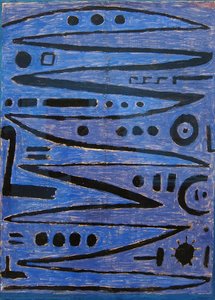
A Fragment of Hope Amidst Uncertainty
- Subject Matter: The painting depicts a solitary human face rendered in an abstracted form against a serene blue backdrop. This deliberate simplification prioritizes emotional resonance over precise anatomical detail, inviting viewers to contemplate the essence of human experience.
- Style: Klee’s work embodies the spirit of Surrealism and Expressionism simultaneously. While retaining elements of Cubist fragmentation—particularly evident in the geometric shapes subtly interwoven within the face—the overall aesthetic leans towards lyrical abstraction, characteristic of his mature style. It's a visual language that eschews literal representation for conveying feeling.
- Technique: Executed in watercolor on paper, “Little Hope” showcases Klee’s masterful control over color and texture. Watercolor pigments blend seamlessly to create luminous washes and delicate gradations, capturing the ethereal quality of light and atmosphere. The artist employs a technique known as ‘masking,’ strategically covering portions of the paper with adhesive tape to ensure consistent pigment distribution and achieve precise tonal harmonies.
- Historical Context: Created in 1938 during the tumultuous period of World War II, “Little Hope” reflects the anxieties and aspirations of its time. Klee’s artistic output during this era was marked by a preoccupation with themes of fragility, resilience, and spiritual contemplation—responses to the pervasive fear of destruction that gripped Europe.
- Symbolism: The blue hue dominating the background is not merely decorative; it symbolizes tranquility and introspection – a deliberate counterpoint to the external pressures of war. Furthermore, the distorted face itself can be interpreted as representing vulnerability and inner turmoil, yet simultaneously conveying an unwavering spirit of hope—a subtle affirmation of human perseverance in the face of adversity.
Exploring Klee’s Artistic Vision
Paul Klee's artistic philosophy revolved around a belief that art should transcend mere imitation of nature. Instead, he sought to capture inner states and emotions through visual symbols—a method deeply rooted in Jungian psychology and influenced by Eastern philosophies. His approach championed spontaneity and intuition, rejecting rigid academic conventions in favor of embracing chance and experimentation.Watercolor’s Delicate Embrace
The choice of watercolor as the medium was crucial to Klee's artistic intent. Watercolor pigments possess remarkable transparency and luminosity—qualities that allowed him to achieve breathtaking effects of color and light. Unlike oil paints, which require layering and blending over extended periods, watercolor dries quickly, permitting artists to capture fleeting impressions and imbue their canvases with immediacy.A Legacy of Emotional Resonance
“Little Hope” stands as a testament to Klee’s enduring legacy—a painting that continues to captivate viewers with its understated beauty and profound psychological depth. Its evocative imagery speaks to universal themes of human emotion, reminding us that even amidst darkness and uncertainty, the possibility of solace and renewal persists.Preguntas y respuestas
¿Qué lugar ocupa "Little Hope" dentro de la obra de Paul Klee?
"Little Hope" pertenece a la etapa Abstract Expressionism de Paul Klee, cuyos temas recurrentes incluyen expressionist roots, swiss identity, emotional depth, geometric abstraction, klee legacy.
¿Quién es el autor de "Little Hope"?
"Little Hope" se atribuye a Paul Klee.
¿Qué tamaño debería elegir para imprimir "Little Hope" en mi habitación?
Para un/a Living Room, el tamaño de impresión recomendado para "Little Hope" de Paul Klee es Large.
Biografía del artista
Paul Klee: Una Vida en Color y Forma
Primeros Años y Educación
- Paul Klee nació el 18 de diciembre de 1879, en Münchenbuchsee, Suiza.
- Su padre era profesor de música alemán y su madre una cantante suiza, fomentando una temprana apreciación por las artes.
- Inicialmente, Klee se dedicó al dibujo pero finalmente abandonó la representación realista en favor de formas más expresivas.
- Estudió en la Academia de Bellas Artes de Múnich entre 1898 y 1901.
Desarrollo Artístico e Influencias
- La obra temprana de Klee mostraba influencias del Art Nouveau y el Simbolismo, pero rápidamente comenzó a desarrollar su estilo único.
- Un viaje crucial a Túnez en 1914 impactó profundamente su uso del color y la abstracción – la luz y la atmósfera inspiraron un cambio hacia paletas más audaces.
- Estuvo influenciado por movimientos como el Expresionismo, el Cubismo y el Surrealismo, aunque nunca se alineó completamente con ninguno de ellos.
- Su interés en la música informó profundamente su enfoque artístico, a menudo comparando la pintura con la composición musical.
Los Años Bauhaus y Más Allá
- De 1931 a 1933, Klee enseñó en la influyente escuela Bauhaus de arte, diseño y arquitectura junto a Wassily Kandinsky.
- Este período vio florecer su obra abstracta, explorando la teoría del color y las relaciones formales.
- Con el ascenso del nazismo en Alemania, Klee fue despedido de la Bauhaus en 1933 debido a su “arte degenerado”.
- Regresó a Suiza y continuó pintando, pero su salud se deterioró durante este tiempo.
Temas Principales y Estilo Artístico
- La obra de Klee se caracteriza por una exploración juguetona pero profunda del color, la línea y la forma.
- A menudo empleaba imágenes infantiles y composiciones caprichosas, impregnadas de significado simbólico.
- Temas recurrentes incluyen jardines, paisajes, retratos y arreglos abstractos.
- Sus “Cuadernos de Paul Klee”, publicados póstumamente, revelan sus extensas investigaciones teóricas sobre el color y el diseño.
Legado e Importancia Histórica
- Paul Klee murió el 29 de junio de 1940, en Muralto, Suiza.
- Se considera uno de los artistas más importantes del siglo XX, conectando el abismo entre el arte figurativo y el abstracto.
- Su uso innovador del color y sus escritos teóricos continúan inspirando a artistas e diseñadores hoy en día.
- La obra de Klee sigue siendo muy buscada por coleccionistas y museos de todo el mundo, consolidando su lugar como una figura icónica en la historia del arte moderno.

Paul Klee
1879 - 1940 , Suiza
Datos clave
- Fecha De Fallecimiento: 29 de junio de 1940
- Fecha De Nacimiento: 18 de diciembre de 1879
- Lugar De Nacimiento: Münchenbuchsee, Suiza
- Movimiento Artístico:
- Expresionismo
- Cubismo
- Surrealismo
- Nacionalidad: Suizo-alemán
- Nombre Completo: Paul Klee
- Obras Notables:
- Ritmos RojoVerde y VioletaAmarillo
- Contemplación
- En las casas de Saint Germain
- Nubes sobre Bor
- Hermanos
- Carta Fantasma
- Flora sobre rocas Sol
Artículos relacionados

Dominando la Abstracción: Las 25 Obras Maestras de Paul Klee
Explora las 25 obras maestras de Paul Klee y su ritmo abstracto. Encuentra reproducciones de museo en OriginalUniqueArt.com.

Acuarelas Legendarias: 10 Obras Maestras que Transformaron el Arte | OriginalUniqueArt
Descubre 10 acuarelas legendarias de Turner, Monet y Sargent que revolucionaron el arte. Explora la historia, técnica y belleza de estas obras maestras impresionistas y románticas. Reproducciones de museo en OriginalUniqueArt.com.

Las 10 Obras Maestras del Azul Pizarra: Arte, Historia y Decoración
Descubre las 10 pinturas más famosas dominadas por el azul pizarra. Explora la historia, técnica y belleza de Monet, Van Gogh y otros maestros. Encuentra reproducciones de arte exclusivas para decorar tu hogar en .

Expresionismo Abstracto: 10 Obras Maestras que Transformaron el Arte |
Descubre las 10 obras maestras del Expresionismo Abstracto: Pollock, Rothko y más. Explora la historia, técnica y significado de estos lienzos icónicos. Reproducciones de arte exclusivas en .

Dominando la Abstracción: Las 25 Obras Más Icónicas de Wassily Kandinsky
Explora las 25 obras maestras de Kandinsky y su arte abstracto. Descubre reproducciones de museo en OriginalUniqueArt.com.