Vista previa
 Compartir
 Compartir
 Ver detalles
 Guía
Guía

 Descargar
 Ver artículos similares
 Radiografía
 Presentación de diapositivas
 Estadísticas
Messaging
 Acrylic On Canvas
- WallArt
- Surrealist Dreamscapes
 1980
1980- Modern
 150.0 x 150.0 cm
 Leer más
La obra de arte que se muestra en esta página está protegida por las leyes de propiedad intelectual, lo que significa que no podemos crear ni vender legalmente una reproducción idéntica. Esta protección se hace cumplir en virtud de acuerdos internacionales como el Convenio de Berna y por las leyes nacionales, incluidas aquellas establecidas por el Ley de derechos de autor de los EE. UU. - Título 17.
Este método cumple plenamente con las normativas de derechos de autor, ya que no implica la copia ni la duplicación de la obra protegida. En su lugar, se trata de una reinterpretación creativa: una nueva pintura influenciada por la original, pero que no es idéntica a ella.
Giclée / Impresión de arte
Impresiones giclée o en lienzo de calidad de museo con producción rápida y opciones de acabado flexibles. ( Encargar reproducción pintada a mano Ver versión en imagen digital)




P118B €10

P118H €10

P118W €10

P438Z €10

P508JH €12

P508YH €12

P805H €10

P805Z €10

P919BZ €10

P919G €10

P919XJ €10

P959ZH €10

P968JZ €12

W106C €8

W218G €10

W218JH €8

W218Y €10

W307PJ €10

W316G €10

W316PJ €8

W316Y €10

W398PJ €8

W4111J €10

W500HY €15

W500JH €15

W692G €12

W849H €8

W940BG €15

W953PJ €8




Elija entre nuestros tamaños predefinidos que respetan las proporciones originales de la obra.

Introduzca el ancho y el alto que necesite para adaptarse a su marco o pared. Una impresión solo puede recortarse, nunca hacerse más grande que la imagen original, por lo que un tamaño con una forma distinta perderá parte de la obra. Le enviaremos una maqueta digital para su aprobación antes de realizar cualquier impresión. La imagen que se muestra en esta página no refleja el recorte real; solo la maqueta lo hace.
Envío a todo el mundo () en 2 semanas en lugar de las 4/5 semanas estándar. (22 octubre)

Envío exprés gratuito a todo el mundo

Lienzo de lino de alta calidad

Seguro de envío completo

Garantía de reembolso de impuestos aduaneros

Garantía de fidelidad cromática exacta

Política de devolución de 100 días (solo por defectos)

Garantía de devolución del 100% del dinero

Oferta por volumen
 La opción de vidrio solo está disponible en tamaños inferiores a 110 cm.

Messaging
Giclée / Impresión de arte
Tamaño de la reproducción
-


Precio total
€ 70
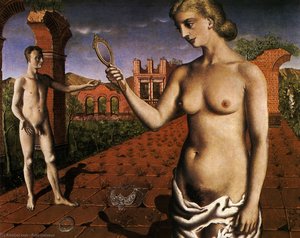
Paul Delvaux's "Messaging": A Descent into Surrealist Mystery
Paul Delvaux’s “Messaging,” painted in 1980, is more than just a depiction of women on a sidewalk; it’s an immersion into the unsettling logic of the subconscious. Executed during his long and prolific career, this work exemplifies the core tenets of Surrealism – a deliberate exploration of dreams, anxieties, and the irrational through meticulously rendered realism. Measuring 150 x 150 cm, the painting commands attention with its stark composition and the palpable sense of unease it evokes. Delvaux, born in Wanze, Belgium, in 1897, spent his life translating the bizarre narratives that haunted him into visual form, earning him a place as one of the movement’s most significant figures.
- Subject Matter: The scene presents five women, clad in pristine white gowns, engaged in what appears to be a serious conversation. Their postures are formal, almost statuesque, contributing to the painting's overall sense of formality and detachment.
- Setting: An outdoor urban setting – a sidewalk with a bench and a clock – provides a mundane backdrop that only amplifies the surreal nature of the figures’ interaction. The inclusion of the bench suggests a temporary respite, a moment of pause within this strange tableau.
- Details: Several figures are dressed in ties, adding an element of professional or societal constraint to the scene, further heightening the feeling of tension and unspoken communication.
Technique and Style – The Delvaux Aesthetic
Delvaux’s technical skill is immediately apparent. His meticulous attention to detail, honed through his architectural training, translates into a hyper-realistic depiction of these figures and their surroundings. However, it's not mere realism that defines the work; rather, it’s the *application* of realism to utterly illogical scenarios. The smooth surfaces, the precise rendering of fabrics, and the careful modeling of light create an almost photographic quality, intensifying the unsettling effect. This technique is a hallmark of Delvaux’s style – a masterful blend of classical training with a distinctly modern sensibility that anticipates the anxieties of the 20th century.
Symbolism and Interpretation
"Messaging" resonates deeply with Surrealist themes of hidden desires, repressed emotions, and the fragility of human connection. The women's white gowns can be interpreted as symbols of innocence or perhaps a carefully constructed facade. Their silent conversation hints at secrets, anxieties, or unspoken truths – elements frequently explored by Delvaux in his work. The clock, a recurring motif in his oeuvre, adds another layer of complexity, representing the relentless passage of time and the potential for lost opportunities. The overall atmosphere suggests a scene frozen in a moment of profound significance, leaving the viewer to ponder the nature of their exchange.
Historical Context and Emotional Impact
Painted in 1980, “Messaging” reflects Delvaux’s enduring fascination with the darker aspects of human psychology. His work emerged during a period of significant social and political upheaval, mirroring anxieties about modernity, alienation, and the loss of traditional values. The painting's unsettling beauty continues to captivate viewers, prompting reflection on themes of communication, isolation, and the hidden currents beneath the surface of everyday life. This reproduction offers an exceptional opportunity to own a piece of Surrealist history, bringing Delvaux’s evocative vision into your space.
Preguntas y respuestas
¿Qué técnica y dimensiones tiene la obra original "Messaging" de Paul Delvaux?
La técnica de "Messaging" de Paul Delvaux es Acrylic On Canvas y sus dimensiones registradas son 150 x 150 cm.
¿Qué tono predominante recorre "Messaging" de Paul Delvaux?
Un tono Golden Yellow Range recorre "Messaging" de Paul Delvaux.
¿Qué atmósfera aportaría una reproducción de "Messaging" de Paul Delvaux a una habitación?
La atmósfera Ethereal de "Messaging" de Paul Delvaux combina perfectamente con su espacio recomendado: un Living Room.
Biografía del artista
Primeros años e influencias
Paul Delvaux, un renombrado pintor belga, nació el 23 de septiembre de 1897 en Wanze, Bélgica. Sus primeros años estuvieron marcados por una variedad de intereses, incluyendo la música, los estudios de griego y latín, así como las obras de Julio Verne y Homero. Estas influencias más tarde moldearían su estilo artístico único.Desarrollo Artístico
El viaje artístico de Delvaux comenzó en la Academia Real de Bellas Artes de Bruselas, donde estudió arquitectura debido a la desaprobación de sus padres por su ambición de convertirse en pintor. Sin embargo, continuó persiguiendo la pintura, asistiendo a clases impartidas por Constant Montald y Jean Delville. Sus primeras obras, principalmente paisajes naturalistas, estuvieron influenciadas por expresionistas flamencos como Constant Permeke y Gustave De Smet.Período Surrealista
A finales de los años 20 y principios de los 30, las pinturas de Delvaux comenzaron a presentar desnudos en paisajes, mostrando su mezcla única de elementos clásicos y escenas oníricas. Este estilo estuvo fuertemente influenciado por el arte metafísico de Giorgio De Chirico, que conoció a finales de la década de 1920. Un ejemplo notable de este período es "La Venus Durmiente", una cautivadora pintura al óleo que ejemplifica el estilo surrealista de Delvaux.Obras Notables y Museos
- "Noche de Tren" (1947), una obra maestra del surrealismo, se puede encontrar en el Musée de Toyama en Japón.
- La Tate Gallery en Londres presenta otra versión de "La Venus Durmiente", mostrando el trabajo a gran escala de Delvaux.
Legado e Impacto
El estilo único de Delvaux, que combina elementos clásicos con escenas oníricas, ha dejado un impacto duradero en el mundo del arte. Sus obras continúan siendo celebradas por su belleza y cualidades estéticas. Como artista, Delvaux sigue siendo una figura significativa en el movimiento surrealista, inspirando a futuras generaciones de artistas.- Descubre más sobre la vida y las obras de Paul Delvaux en https://OriginalUniqueArt.com/@/paul-delvaux
- Explora la historia del surrealismo y sus figuras clave en https://en.wikipedia.org/wiki/surrealism
- Aprende sobre el impacto del arte metafísico de Giorgio De Chirico en el trabajo de Delvaux en /es/art/show/art-d3cr9h-es/
- 23 de septiembre de 1897: Nació en Wanze, Bélgica
- 1944: Creó "La Venus Durmiente"
- 20 de julio de 1994: Falleció en Veurne, Bélgica

Paul Delvaux
1897 - 1994 , Bélgica
Datos clave
- Artistas Que Influyeron:
- René Magritte
- E. L. T. Mesens
- Giorgio de Chirico
- Fecha De Fallecimiento: 20 de julio de 1994
- Fecha De Nacimiento: 23 de septiembre de 1897
- Lugar De Nacimiento: Wanze, Bélgica
- Movimiento Artístico: Surrealismo
- Nacionalidad: Belga
- Nombre Completo: Paul Delvaux
- Obras Notables:
- El Bosque
- La Dama Rosa
- La Venus Durmiente
- Noche de Tren
Artículos relacionados

OriginalUniqueArt.com F.A.Q.: Elevate Your Decor with Premium Textured Giclée Prints
Discover the distinction of OriginalUniqueArt.com premium textured Giclée prints. Expertly crafted with archival 12-color pigments and museum-grade substrates, our prints offer unparalleled vividness for the discerning collector seeking luxury, durability, and timeless elegance.