Vista previa
 Compartir
 Compartir
 Ver detalles
 Guía
Guía

 Descargar
 Ver artículos similares
 Radiografía
 Presentación de diapositivas
 Estadísticas
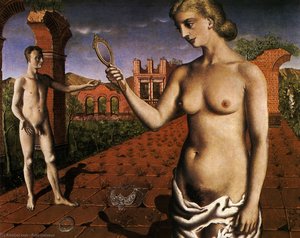
Chrysis
 Acrylic On Canvas
- WallArt
- Surrealism
 1967
1967- Modern
 160.0 x 140.0 cm
 Leer más
La obra de arte que se muestra en esta página está protegida por las leyes de propiedad intelectual, lo que significa que no podemos crear ni vender legalmente una reproducción idéntica. Esta protección se hace cumplir en virtud de acuerdos internacionales como el Convenio de Berna y por las leyes nacionales, incluidas aquellas establecidas por el Ley de derechos de autor de los EE. UU. - Título 17.
Este método cumple plenamente con las normativas de derechos de autor, ya que no implica la copia ni la duplicación de la obra protegida. En su lugar, se trata de una reinterpretación creativa: una nueva pintura influenciada por la original, pero que no es idéntica a ella.
Giclée / Impresión de arte
Impresiones giclée o en lienzo de calidad de museo con producción rápida y opciones de acabado flexibles. ( Encargar reproducción pintada a mano Ver versión en imagen digital)




P118B €10

P118H €10

P118W €10

P438Z €10

P508JH €12

P508YH €12

P805H €10

P805Z €10

P919BZ €10

P919G €10

P919XJ €10

P959ZH €10

P968JZ €12

W106C €8

W218G €10

W218JH €8

W218Y €10

W307PJ €10

W316G €10

W316PJ €8

W316Y €10

W398PJ €8

W4111J €10

W500HY €15

W500JH €15

W692G €12

W849H €8

W940BG €15

W953PJ €8




Elija entre nuestros tamaños predefinidos que respetan las proporciones originales de la obra.

Puede introducir sus propias dimensiones para adaptarse a un marco o espacio específico. Si el tamaño seleccionado no coincide con las proporciones de la imagen original, recortaremos la obra de arte o extenderemos la imagen con un borde con efecto espejo o de color sólido. Se enviará una maqueta digital para su aprobación antes de que comience la producción.
Tenga en cuenta que la vista previa en pantalla no refleja el recorte o la extensión real. Solo la maqueta mostrará con precisión la composición final.
Aunque existen tamaños personalizados, recomendamos seleccionar una dimensión de la lista predefinida para preservar las proporciones originales.
Envío a todo el mundo () en 2 semanas en lugar de las 4/5 semanas estándar. (11 octubre)

Envío exprés gratuito a todo el mundo

Lienzo de lino de alta calidad

Seguro de envío completo

Garantía de reembolso de impuestos aduaneros

Garantía de fidelidad cromática exacta

Política de devolución de 100 días (solo por defectos)

Garantía de devolución del 100% del dinero

Oferta por volumen
 La opción de vidrio solo está disponible en tamaños inferiores a 110 cm.

Chrysis
Giclée / Impresión de arte
Tamaño de la reproducción
-


Precio total
€ 69
A Descent into Dreamscapes: Paul Delvaux’s *Chrysis*
Paul Delvaux's 1967 painting, *Chrysis*, is not merely a depiction of a woman on stairs; it’s an immersion into the unsettling and profoundly beautiful realm of Surrealism. This meticulously rendered work, measuring 160 x 140 cm, captures a moment suspended between reality and dream, a hallmark of Delvaux's distinctive style that cemented his place as one of the movement’s most compelling figures. The painting immediately confronts the viewer with an arresting image: a nude woman, her skin rendered in a startlingly vibrant blue, stands poised on a grand staircase, holding a cup and cigarette – objects imbued with ambiguous significance within this nocturnal tableau.
- The Uncanny Realism: Delvaux’s technical mastery is immediately apparent. He employs a hyper-realistic style, meticulously detailing every surface, from the smooth texture of the woman's skin to the worn steps of the staircase. This realism, however, is deliberately deployed to heighten the unsettling effect, creating an "uncanny" quality that draws the viewer into a state of disquiet and fascination.
- Surrealist Symbolism: The blue figure itself is central to the painting’s enigmatic power. Blue has long been associated with melancholy, mystery, and the subconscious in art history. Combined with the woman's nudity – a recurring motif in Delvaux’s work – it evokes themes of vulnerability, desire, and perhaps even death.
Contextualizing the Dream: Delvaux and Surrealism
Delvaux emerged during a pivotal moment in the history of Surrealism, a movement born from the ashes of World War I and fueled by a desire to explore the irrational depths of the human psyche. Unlike some of his contemporaries who embraced overtly fantastical imagery, Delvaux’s surrealism was rooted in a meticulous observation of the everyday, transforming mundane scenes into dreamlike narratives. His work reflects a fascination with classical mythology, particularly themes of metamorphosis and transformation – evident in the woman's almost insect-like stillness and the implied sense of transition.
The presence of two clocks adds another layer of complexity to the scene. Clocks are frequently used as symbols of time, mortality, and the disruption of natural order—themes prevalent in Surrealist art. Their placement within the composition suggests a deliberate manipulation of temporal perception, further contributing to the painting’s dreamlike atmosphere.
Technique and Materials
Delvaux primarily worked with oil paints, utilizing a glazing technique that allowed him to build up layers of color and create subtle gradations of tone. This meticulous approach is crucial to achieving the painting's remarkable realism and luminous quality. The use of light and shadow is particularly effective in sculpting the woman’s form and creating a sense of depth within the confined space. The smooth, almost polished finish of the blue pigment contributes significantly to the unsettling effect, mimicking the sheen of skin or perhaps even insect wings.
Emotional Resonance and Legacy
*Chrysis* is more than just a beautiful image; it’s an invitation to contemplate the hidden anxieties and desires that lie beneath the surface of consciousness. Delvaux's work continues to resonate with viewers today, prompting questions about identity, sexuality, and the nature of reality itself. This reproduction offers a unique opportunity to own a piece of Surrealist history, bringing the unsettling beauty of Delvaux’s dreamscapes into your home or office.
Preguntas y respuestas
¿En qué estancia del hogar quedaría bien una reproducción de "Chrysis"?
Se recomienda "Chrysis" de Paul Delvaux para un Living Room. Esta sugerencia se basa en el tema, los colores y la atmósfera de la obra.
¿Cuál es la fecha de creación de "Chrysis" de Paul Delvaux?
"Chrysis" data de 1967. La fecha sitúa la obra dentro de la trayectoria de Paul Delvaux y de su época.
¿Los colores de "Chrysis" de Paul Delvaux son saturados o tenues?
La paleta de "Chrysis" tiene una saturación Muted.
¿Qué edad tenía Paul Delvaux cuando creó "Chrysis" en 1967?
Paul Delvaux tenía 70 años cuando creó "Chrysis" en 1967. La edad se calcula a partir del año de nacimiento del artista, 1897.
¿De qué país proviene la obra del Surrealism "Chrysis"?
"Chrysis" conecta el movimiento Surrealism con Bélgica a través del lugar de nacimiento de su creador.
¿A qué etapa de la trayectoria de Paul Delvaux pertenece "Chrysis"?
"Chrysis" pertenece al Modern de la trayectoria de Paul Delvaux. Esta clasificación vincula la obra con el desarrollo del artista.
¿Quién creó "Chrysis"?
"Chrysis" fue creada por Paul Delvaux. La información en esta página describe la obra original de Paul Delvaux.
Biografía del artista
Primeros años e influencias
Paul Delvaux, un renombrado pintor belga, nació el 23 de septiembre de 1897 en Wanze, Bélgica. Sus primeros años estuvieron marcados por una variedad de intereses, incluyendo la música, los estudios de griego y latín, así como las obras de Julio Verne y Homero. Estas influencias más tarde moldearían su estilo artístico único.Desarrollo Artístico
El viaje artístico de Delvaux comenzó en la Academia Real de Bellas Artes de Bruselas, donde estudió arquitectura debido a la desaprobación de sus padres por su ambición de convertirse en pintor. Sin embargo, continuó persiguiendo la pintura, asistiendo a clases impartidas por Constant Montald y Jean Delville. Sus primeras obras, principalmente paisajes naturalistas, estuvieron influenciadas por expresionistas flamencos como Constant Permeke y Gustave De Smet.Período Surrealista
A finales de los años 20 y principios de los 30, las pinturas de Delvaux comenzaron a presentar desnudos en paisajes, mostrando su mezcla única de elementos clásicos y escenas oníricas. Este estilo estuvo fuertemente influenciado por el arte metafísico de Giorgio De Chirico, que conoció a finales de la década de 1920. Un ejemplo notable de este período es "La Venus Durmiente", una cautivadora pintura al óleo que ejemplifica el estilo surrealista de Delvaux.Obras Notables y Museos
- "Noche de Tren" (1947), una obra maestra del surrealismo, se puede encontrar en el Musée de Toyama en Japón.
- La Tate Gallery en Londres presenta otra versión de "La Venus Durmiente", mostrando el trabajo a gran escala de Delvaux.
Legado e Impacto
El estilo único de Delvaux, que combina elementos clásicos con escenas oníricas, ha dejado un impacto duradero en el mundo del arte. Sus obras continúan siendo celebradas por su belleza y cualidades estéticas. Como artista, Delvaux sigue siendo una figura significativa en el movimiento surrealista, inspirando a futuras generaciones de artistas.- Descubre más sobre la vida y las obras de Paul Delvaux en https://OriginalUniqueArt.com/@/paul-delvaux
- Explora la historia del surrealismo y sus figuras clave en https://en.wikipedia.org/wiki/surrealism
- Aprende sobre el impacto del arte metafísico de Giorgio De Chirico en el trabajo de Delvaux en /es/art/show/art-d3cr9h-es/
- 23 de septiembre de 1897: Nació en Wanze, Bélgica
- 1944: Creó "La Venus Durmiente"
- 20 de julio de 1994: Falleció en Veurne, Bélgica

Paul Delvaux
1897 - 1994 , Bélgica
Datos clave
- Artistas Que Influyeron:
- René Magritte
- E. L. T. Mesens
- Giorgio de Chirico
- Fecha De Fallecimiento: 20 de julio de 1994
- Fecha De Nacimiento: 23 de septiembre de 1897
- Lugar De Nacimiento: Wanze, Bélgica
- Movimiento Artístico: Surrealismo
- Nacionalidad: Belga
- Nombre Completo: Paul Delvaux
- Obras Notables:
- El Bosque
- La Dama Rosa
- La Venus Durmiente
- Noche de Tren
Artículos relacionados

The Enigmatic Realm of Paul Delvaux: Surrealism, Memory & the Poetics of Disquiet
Explore the haunting dreamscapes of Paul Delvaux, a master of Surrealism. Discover his iconic motifs, classical influences & enduring legacy with OriginalUniqueArt.com.

The Enduring Allure of the Nude: A Historical & Artistic Exploration of the Human Form
Explore the captivating history of nude art! Discover iconic paintings & artists from classical to modern eras. Uncover symbolism, techniques & find museum-quality reproductions at OriginalUniqueArt.
Los 10 Maestros del Surrealismo: Obras que Desafían la Realidad | OriginalUniqueArt
Descubre los 10 cuadros surrealistas más influyentes de artistas como Dalí y Magritte. Explora la historia, el simbolismo y las técnicas del movimiento surrealista. Encuentra reproducciones de arte de museo en OriginalUniqueArt.com.

Paul Cézanne: Las 25 Obras Maestras que Definieron el Arte Moderno | OriginalUniqueArt
Descubre las 25 obras maestras de Paul Cézanne que revolucionaron el arte moderno. Explora su técnica, inspiración y significado en paisajes, bodegones y retratos. Reproducciones de alta calidad para decorar tu hogar con arte inolvidable. ¡Explora la colección completa en OriginalUniqueArt.com!
Paul Klee: Las 25 Obras Maestras que Definen un Genio del Arte Moderno | OriginalUniqueArt
Descubre las 25 obras maestras de Paul Klee, el genio del arte moderno. Explora su expresionismo único, composiciones abstractas y vibrantes paletas de colores. Reproducciones de alta calidad y decoración con arte en OriginalUniqueArt.com.