Vista previa
 Compartir
 Compartir
 Ver detalles
 Guía
Guía

 Descargar
 Ver artículos similares
 Radiografía
 Presentación de diapositivas
 Estadísticas
Vista de Auvers-sur-Oise
 Óleo sobre lienzo
- Arte de pared
- Post-Impressionism
 1873
1873- Siglo XIX
 44.0 x 34.0 cm
 Leer más
Reproducción al óleo hecha a mano
Óleo sobre lienzo pintado a mano en el tamaño y marco de su elección, realizado por encargo por nuestros artistas. ( Cambiar a formato impreso Ver versión en imagen digital)




P118B €10

P118H €10

P118W €10

P438Z €10

P508JH €12

P508YH €12

P805H €10

P805Z €10

P919BZ €10

P919G €10

P919XJ €10

P959ZH €10

P968JZ €12

W106C €8

W218G €10

W218JH €8

W218Y €10

W307PJ €10

W316G €10

W316PJ €8

W316Y €10

W398PJ €8

W4111J €10

W500HY €15

W500JH €15

W692G €12

W849H €8

W940BG €15

W953PJ €8




Elija entre nuestros tamaños predefinidos que respetan las proporciones originales de la obra.

Escriba el ancho y el alto que necesite para adaptarse a su marco o a su pared. Al ser una obra pintada a mano, para un tamaño con una forma distinta, el artista puede pintar un poco más alrededor de la imagen o recortar un poco; usted elige. Le enviaremos una maqueta digital para su aprobación antes de comenzar la pintura. La imagen que se muestra en esta página no refleja el resultado real; solo la maqueta lo hace.
Tras realizar el pedido, el equipo de OriginalUniqueArt.com enviará un correo electrónico al cliente para solicitar instrucciones y proporcionarle una vista previa del boceto.
Envío a todo el mundo () en 3-4 semanas en lugar de las 5 semanas estándar. (24 octubre). Sin comprometer la calidad.

Envío exprés gratuito a todo el mundo

Lienzo de lino de alta calidad

Seguro de envío completo

Garantía de reembolso de impuestos aduaneros

Garantía de fidelidad cromática exacta

Política de devolución de 100 días (solo por defectos)

Garantía de devolución del 100% del dinero

Oferta por volumen
 La opción de vidrio solo está disponible en tamaños inferiores a 110 cm.

Vista de Auvers-sur-Oise
Técnica de reproducción
Tamaño de la reproducción
-


Precio total
€ 263
A Moment Frozen in Time: Unveiling Cézanne’s “View of Auvers”
Paul Cézanne's "View of Auvers," painted in 1879–80, isn’t merely a depiction of a rural French landscape; it’s a profound exploration of perception and the very nature of seeing. This captivating work, housed today at the Ashmolean Museum in Oxford, represents a pivotal moment in Cézanne's artistic journey – a bridge between his early influences and the groundbreaking innovations that would define his legacy as a Post-Impressionist master. The scene unfolds within the small village of Auvers-sur-Oise, nestled just northwest of Paris, a location that held particular significance for the artist during his brief but intensely productive residency there. More than simply capturing a picturesque vista, Cézanne sought to distill the essence of the place – its light, its atmosphere, and the way it resonated with his own internal vision.

The painting itself is a study in controlled chaos, a deliberate departure from the fleeting impressions of Impressionism. Instead of striving for photographic accuracy, Cézanne employs a technique he termed “separating planes,” meticulously constructing the scene through distinct layers of color and form. The houses, rendered with simplified shapes and muted tones, are not painted as individual objects but rather as volumes that exist within a larger spatial framework. The rolling hills and distant trees are treated similarly, their outlines subtly defined to create an illusion of depth and solidity. Notice how the artist uses short, broken brushstrokes – almost like dabs or smears – to build up the surfaces, capturing the play of light and shadow with remarkable sensitivity. The sky itself is a symphony of blues and whites, not blended smoothly but rather applied in distinct patches, suggesting movement and atmosphere.
The Seeds of Modernism: Cézanne’s Revolutionary Approach
Cézanne's "View of Auvers" stands as a crucial stepping stone towards the development of Cubism. His emphasis on geometric forms, his fragmentation of space, and his exploration of multiple viewpoints – all hallmarks of this painting – foreshadowed the radical innovations of Picasso and Braque. However, Cézanne wasn’t simply dismantling traditional representation; he was fundamentally altering how we *perceive* art itself. He believed that a painting should not merely imitate nature but rather capture its underlying structure—the way objects exist in space and relate to one another. This conviction led him to experiment with perspective, often depicting multiple viewpoints simultaneously within a single frame, challenging the viewer’s sense of depth and orientation.
The influence of Japanese prints is undeniable here. Cézanne was deeply fascinated by the flattened perspectives and bold compositions found in Ukiyo-e woodblock prints. He adopted these techniques to create a sense of immediacy and dynamism, injecting a vibrant energy into his landscapes. Furthermore, Cézanne’s exploration of color—his use of complementary hues and his avoidance of traditional blending—echoes the principles of Japanese aesthetics, where color is often employed to evoke mood and atmosphere rather than simply describing reality.
A Village in Transition: Context and Connections
To understand “View of Auvers,” it’s essential to consider the context in which Cézanne was working. The late 1870s were a period of intense artistic ferment, as Impressionism challenged established conventions and paved the way for new directions. Cézanne, initially influenced by Impressionist techniques, gradually moved beyond them, seeking a more enduring and expressive language. His time in Auvers-sur-Oise was particularly formative, providing him with a sense of tranquility and inspiration that fueled his artistic experimentation.
Interestingly, this painting shares thematic connections with Vincent van Gogh’s “Vineyards with a View of Auvers,” created just a few years later. While Van Gogh employed a more emotionally charged palette and expressive brushwork, both artists were captivated by the same landscape—a testament to its enduring beauty and Cézanne’s profound ability to capture its essence. The two paintings offer a fascinating dialogue between artistic approaches, highlighting the evolving trajectory of Post-Impressionism.
Bringing Cézanne Home: Reproductions and Artistic Inspiration
OriginalUniqueArt offers meticulously crafted hand-painted oil painting reproductions of “View of Auvers,” allowing you to experience Paul Cézanne's masterpiece in stunning detail. Our skilled artists faithfully recreate Cézanne’s unique style, capturing the subtle nuances of color, texture, and form. Whether for your home or office, a OriginalUniqueArt reproduction will serve as a timeless reminder of Cézanne’s revolutionary vision and his enduring legacy as one of art history’s most influential figures.
Explore our collection today: View of Auvers and discover the perfect Cézanne reproduction to complement your space.
Preguntas y respuestas
¿Qué alias o nombres alternativos tiene Paul Cézanne?
Otros nombres registrados para Paul Cézanne, creador de "Vista de Auvers-sur-Oise", incluyen Cézanne.
¿Hacia qué tono se inclina "Vista de Auvers-sur-Oise"?
Un tono Espectro del verde al violeta recorre "Vista de Auvers-sur-Oise" de Paul Cézanne.
¿A qué se debe la situación de los derechos de autor de "Vista de Auvers-sur-Oise" de Paul Cézanne?
"Vista de Auvers-sur-Oise" de Paul Cézanne es de en el dominio público: sus derechos de autor han expirado. Los términos de derechos de autor se calculan a partir del fallecimiento del artista, y Paul Cézanne murió en 1906.
Biografía del artista
vida temprana e influencias
paul cézanne, un pintor postimpresionista francés, nació el 19 de enero de 1839 en Aix-en-Provence, Francia. Su vida temprana estuvo marcada por una fuerte conexión con la empresa bancaria de su familia, lo que le proporcionó seguridad financiera. Esto le permitió concentrarse en sus aspiraciones artísticas sin la carga del estrés financiero. les nabis, neoimpresionismo y simbolismo influyeron en el trabajo temprano de Cézanne, que se caracterizó por su énfasis en las formas geométricas y una paleta de colores limitada. Su interés en las obras de paul gauguin y georges seurat fortaleció aún más su estilo postimpresionista.estilo artístico y técnicas
El uso innovador de Cézanne de los planos de color y pequeños trazos repetitivos creó campos complejos que transmitían su intenso estudio de los temas. Su enfoque a menudo exploratorio del arte condujo al desarrollo de un nuevo lenguaje pictórico, que enfatizaba la estructura subyacente de los objetos en una composición.- características clave:
- formas geométricas y facetado
- paleta de colores reducida
- énfasis en la esencia constructiva del mundo físico
- múltiples perspectivas y simultaneidad
- obras influyentes:
- el estanque de jas de bouffan (1880)
- retrato de emile zola (1866)
- bosque (1892)
- museos que exhiben el trabajo de Cézanne:
- museo marmottan monet en París, Francia
- el museo de bellas artes en Houston, Estados Unidos
legado e impacto
El trabajo pionero de Cézanne en el postimpresionismo allanó el camino para diversos movimientos vanguardistas, incluyendo cubismo, fauvismo y surrealismo. Su influencia se puede ver en las obras de pablo picasso, henri matisse y georges braque. El legado de Cézanne continúa inspirando a artistas y entusiastas del arte por igual, consolidando su lugar como una figura fundamental en la historia del arte moderno.- movimientos artísticos relacionados:
- vea las obras de Cézanne:
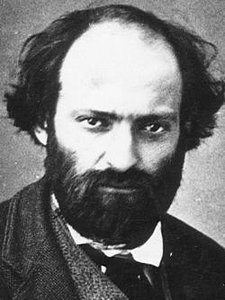
Paul Cézanne
1839 - 1906 , Francia
Datos clave
- Artistas Que Influyeron:
- Paul Gauguin
- Georges Seurat
- Estilo Artístico: Postimpresionismo
- Fecha De Muerte: Octubre 22, 1906
- Fecha De Nacimiento: 19 de enero de 1839
- Influenciado A Artistas:
- Pablo Picasso
- Henri Matisse
- Georges Braque
- Lugar De Nacimiento: Aix-en-Provence, Francia
- Nacionalidad: Francés
- Nombre Completo: Paul Cézanne
- Obras Notables:
- El estanque de Jas de Bouffan
- Retrato de Émile Zola
- Bosque
- Grandes Bañistas
Artículos relacionados
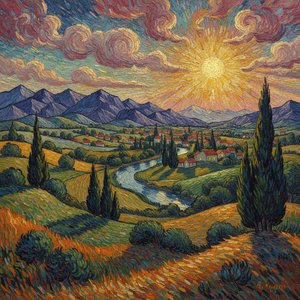
Beyond Impressionism: The Emotional Depth and Vibrant Evolution of Post-Impressionist Landscapes
Explore the profound evolution of Post-Impressionist landscapes. From Van Gogh's emotional brushwork to Cézanne's structural mastery, discover how these visionaries redefined art history through color and form in this expert guide for fine art enthusiasts.

Los 10 Maestros del Paisaje Impresionista: Obras que Cambiaron la Historia del Arte
Descubre los 10 lienzos impresionistas que revolucionaron el arte. Monet, Renoir y más… Explora la historia, técnica y belleza de cada obra maestra. Encuentra reproducciones de alta calidad para tu hogar en OriginalUniqueArt.com.

Paul Cézanne: Las 25 Obras Maestras que Definieron el Arte Moderno | OriginalUniqueArt
Descubre las 25 obras maestras de Paul Cézanne que revolucionaron el arte moderno. Explora su técnica, inspiración y significado en paisajes, bodegones y retratos. Reproducciones de alta calidad para decorar tu hogar con arte inolvidable. ¡Explora la colección completa en OriginalUniqueArt.com!

Más Allá del Impresionismo: Profundizando en la Emoción y el Simbolismo Postimpresionista
Descubre la profundidad emocional y el simbolismo del Postimpresionismo con OriginalUniqueArt. Análisis experto de Cézanne, Van Gogh, Gauguin y más. Explora la historia y el legado de este fascinante movimiento artístico.

Impresionismo: 10 Obras Maestras que Capturan la Luz y el Momento
Descubre 10 obras maestras del impresionismo de Monet, Renoir y Degas. Explora la luz, el color y las historias detrás de estos icónicos cuadros. Reproducciones de arte en OriginalUniqueArt.com para decorar tu hogar con estilo.