

 Vista previa
 Compartir
 Compartir
 Ver detalles
 Guía
Guía

 Descargar
 Ver artículos similares
 Radiografía
 Presentación de diapositivas
 Estadísticas
Plain by Mount Sainte-Victoire


 Leer más
Adquiera una imagen digital de alta resolución y optimizada, muy superior a la vista previa en línea.
Cada archivo es preparado meticulosamente por nuestros especialistas internos mediante el uso de herramientas avanzadas y un experto retoque manual. Nos aseguramos de que cada imagen posea una claridad excepcional, una precisión cromática impecable y un detalle minucioso.
El archivo final se entrega por correo electrónico en un plazo de 72 horas, optimizado para su uso inmediato en entornos profesionales, editoriales y de impresión. Esta es la misma calidad en la que confían los estudios de diseño, las editoriales y las galerías de primer nivel.
Imagen Digital
Descarga un archivo de alta resolución para exhibición personal, impresión y proyectos creativos. ( Cambiar a formato impreso Encargar reproducción pintada a mano)
Incluido en cada pedido de imágenes digitales
Entrega digital experta, garantizada.
Al elegir OriginalUniqueArt.com, no solo está adquiriendo una imagen; está recibiendo una obra de arte digital mejorada profesionalmente, elaborada con precisión y respaldada por una garantía de satisfacción. Esto es todo lo que incluye su pedido, automáticamente:

Entrega inmediata por email
Recibirá su archivo de imagen digital en alta resolución por correo electrónico en un plazo de 72 horas tras realizar su pedido, listo para su uso inmediato.

Archivo digital optimizado por IA
Su obra de arte se optimiza profesionalmente mediante herramientas avanzadas de IA y edición manual, garantizando el máximo detalle, claridad y precisión cromática.

Reenvío gratuito de por vida
¿Has borrado o perdido tu archivo por error? No te preocupes: te lo volveremos a enviar en cualquier momento, sin coste adicional.

Sin gastos de importación, siempre
Disfrute de su obra de arte al instante sin aduanas, aranceles ni gastos de envío; las descargas digitales siempre están libres de impuestos.

Garantía de precisión de color
Garantizamos que su imagen digital refleje los colores originales con la mayor fidelidad posible, mediante el uso de herramientas profesionales y gestión del color.

Garantía de satisfacción de 100 días
Si no está satisfecho con su imagen digital, la revisaremos o le reembolsaremos el 100% en un plazo de 100 días, sin preguntas.

100% Garantía de devolución de dinero
¿No está satisfecho? Obtenga un reembolso completo dentro de los 100 días posteriores a la recepción de su archivo digital, sin preguntas.

Descuentos por volumen
Compra 3 imágenes, ahorra 10% - Compra 5, ahorra 15% - Compra 10+, ahorra 20%. Ideal para proyectos creativos, galerías y agencias.
Paul Cézanne’s “Plain by Mount Sainte-Victoire”: A Bridge Between Impressionism and Modernity
Paul Cézanne's "Plain by Mount Sainte-Victoire," painted in 1890, isn’t merely a landscape; it’s a profound meditation on perception, form, and the very nature of seeing. This iconic work, housed within the collections of esteemed institutions like the Musée d’Orsay in Paris, represents a pivotal moment in art history – a deliberate dismantling of traditional representation and a bold assertion of Cézanne's unique vision. More than just a picturesque view of Provence, it embodies his revolutionary approach to painting, laying the groundwork for movements that would fundamentally reshape the 20th-century artistic landscape.
Cézanne’s journey toward this groundbreaking style began with his early exposure to Impressionism in Paris. He initially embraced the fleeting effects of light and color championed by artists like Monet and Renoir. However, Cézanne grew increasingly dissatisfied with what he perceived as Impressionism's superficiality – its focus on capturing a momentary impression rather than exploring the underlying structure of objects. He sought a more enduring representation, one that captured not just *what* was seen but *how* it was seen, imbued with his own subjective experience. This desire led him to experiment with simplified forms, bold colors, and an emphasis on geometric structures within the natural world.
The painting itself is deceptively simple in its composition. A vast expanse of muted blues, greens, and browns dominates the canvas, punctuated by the stark silhouette of Mount Sainte-Victoire rising majestically in the background. The village nestled at the foot of the mountain appears almost as a secondary element, a mere suggestion rather than a detailed depiction. Yet, within this apparent simplicity lies a complex interplay of observation and invention. Cézanne meticulously studied the mountain over decades, returning to it repeatedly from various vantage points. He wasn’t simply copying what he saw; he was analyzing its essential forms – the planes of rock, the receding lines of the valley, the atmospheric perspective—and translating these observations onto the canvas with a deliberate and almost architectural precision.
Cézanne's Revolutionary Technique: Breaking from Tradition
What distinguishes “Plain by Mount Sainte-Victoire” is Cézanne’s radical approach to technique. He abandoned the smooth, blended brushstrokes of Impressionism in favor of short, broken strokes that create a sense of movement and energy. These individual marks, applied with a confident hand, build up to form larger areas of color and shape. Crucially, he didn't attempt to mimic the illusion of depth or space as traditional landscape painters had done for centuries. Instead, he flattened the picture plane, emphasizing the two-dimensionality of the canvas itself. This flattening was achieved through the use of overlapping planes of color and a deliberate disregard for linear perspective—a technique that would later profoundly influence Pablo Picasso and Georges Braque, paving the way for Cubism.
The painting’s palette is deliberately restrained, contributing to its sense of quiet contemplation. The dominant blues and greens evoke the vastness of the sky and the surrounding landscape, while the browns suggest the earthiness of the mountainside. Cézanne's use of color isn’t about replicating reality; it’s about conveying mood and atmosphere—a subtle blend of serenity and power.
Symbolism and Emotional Resonance
Beyond its formal innovations, “Plain by Mount Sainte-Victoire” resonates with a deep sense of emotional resonance. The mountain itself has become synonymous with Cézanne’s life and work—he painted it obsessively throughout his career, returning to the same subject repeatedly. Some art historians interpret the painting as an exploration of Cézanne's relationship with nature, his desire to capture its essence, and his struggle to reconcile his artistic vision with the constraints of traditional representation. The quiet stillness of the scene suggests a profound sense of contemplation—a moment of connection between the artist, the mountain, and the vastness of the universe.
The inclusion of figures in the foreground – shepherds tending their flocks – adds another layer of meaning to the painting. These small human forms serve as a reminder of the scale of nature and the insignificance of individual existence within its grand scheme. They also subtly echo Cézanne’s own position as an artist—a solitary observer seeking to capture the essence of the world around him.
Cézanne's Legacy: A Foundation for Modern Art
Paul Cézanne’s “Plain by Mount Sainte-Victoire” stands as a testament to his revolutionary vision and enduring influence. His innovative approach to form, color, and perspective fundamentally altered the course of art history, paving the way for Cubism, Fauvism, and countless other modern movements. Reproductions of this masterpiece offer a unique opportunity to experience firsthand the genius of one of the 19th century’s most important artists. At OriginalUniqueArt.com, we are proud to offer meticulously hand-painted reproductions that capture not only the visual beauty of Cézanne's work but also the emotional depth and intellectual rigor behind it—a true celebration of a pivotal moment in art history.
For more information on Paul Cézanne’s life and work, please visit OriginalUniqueArt.com or explore his biography on Wikipedia.
Biografía del artista
vida temprana e influencias
paul cézanne, un pintor postimpresionista francés, nació el 19 de enero de 1839 en Aix-en-Provence, Francia. Su vida temprana estuvo marcada por una fuerte conexión con la empresa bancaria de su familia, lo que le proporcionó seguridad financiera. Esto le permitió concentrarse en sus aspiraciones artísticas sin la carga del estrés financiero. les nabis, neoimpresionismo y simbolismo influyeron en el trabajo temprano de Cézanne, que se caracterizó por su énfasis en las formas geométricas y una paleta de colores limitada. Su interés en las obras de paul gauguin y georges seurat fortaleció aún más su estilo postimpresionista.estilo artístico y técnicas
El uso innovador de Cézanne de los planos de color y pequeños trazos repetitivos creó campos complejos que transmitían su intenso estudio de los temas. Su enfoque a menudo exploratorio del arte condujo al desarrollo de un nuevo lenguaje pictórico, que enfatizaba la estructura subyacente de los objetos en una composición.- características clave:
- formas geométricas y facetado
- paleta de colores reducida
- énfasis en la esencia constructiva del mundo físico
- múltiples perspectivas y simultaneidad
- obras influyentes:
- el estanque de jas de bouffan (1880)
- retrato de emile zola (1866)
- bosque (1892)
- museos que exhiben el trabajo de Cézanne:
- museo marmottan monet en París, Francia
- el museo de bellas artes en Houston, Estados Unidos
legado e impacto
El trabajo pionero de Cézanne en el postimpresionismo allanó el camino para diversos movimientos vanguardistas, incluyendo cubismo, fauvismo y surrealismo. Su influencia se puede ver en las obras de pablo picasso, henri matisse y georges braque. El legado de Cézanne continúa inspirando a artistas y entusiastas del arte por igual, consolidando su lugar como una figura fundamental en la historia del arte moderno.- movimientos artísticos relacionados:
- vea las obras de Cézanne:
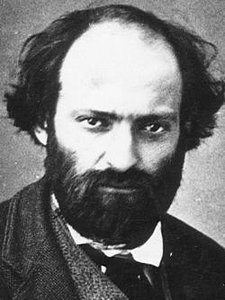
Paul Cézanne
1839 - 1906 , Francia
Datos clave
- Artistas Que Influyeron:
- Paul Gauguin
- Georges Seurat
- Estilo Artístico: Postimpresionismo
- Fecha De Muerte: Octubre 22, 1906
- Fecha De Nacimiento: 19 de enero de 1839
- Influenciado A Artistas:
- Pablo Picasso
- Henri Matisse
- Georges Braque
- Lugar De Nacimiento: Aix-en-Provence, Francia
- Nacionalidad: Francés
- Nombre Completo: Paul Cézanne
- Obras Notables:
- El estanque de Jas de Bouffan
- Retrato de Émile Zola
- Bosque
- Grandes Bañistas