Text size

() ·

A painting made for you, by hand

Lucrezia

Reproducción al óleo hecha a mano

Óleo sobre lienzo pintado a mano en el tamaño y marco de su elección, realizado por encargo por nuestros artistas. ( Cambiar a impresiones Cambiar a imagen digital)

Descripción del objeto

Admira Lucrezia de Parmigianino, un retrato renacentista de gran elegancia. Explora su simbolismo, técnica y contexto histórico.

Biografía del artista

Parmigianino (1503-1540): Maestro del Manierismo italiano, conocido por sus figuras elegantes y alargadas, retratos refinados y obras icónicas como 'La Madonna con el cuello largo'. Descubre su impacto en la historia del arte.

from ·

Chapter 1

How large should it be?

Slide to change the size; the picture on the left shows the frame at its real width. The proportions of the original are kept.

Tamaño estándar
a medida
CM
INCH

Elija entre nuestros tamaños predefinidos que respetan las proporciones originales de la obra.

ancho
altura

Indique el ancho y el alto que necesite para adaptarse a su marco o pared. Al tratarse de una obra pintada a mano, si requiere un tamaño con una proporción distinta, el artista puede pintar un poco más alrededor de la imagen o recortarla ligeramente; usted elige. Le enviaremos una maqueta digital para su aprobación antes de comenzar la pintura. La imagen que se muestra en esta página no refleja el resultado real; solo la maqueta lo hace.

Chapter 2

How should it arrive?

Choose the edges of the stretched canvas

Choose your frame

Corner sample of the WhiteWrap canvas edge finish, stretched on madera maciza bars
White €1
Corner sample of the BlurSideWrap canvas edge finish, stretched on madera maciza bars
Blurside €1
Corner sample of the ExtendedWrap canvas edge finish, stretched on madera maciza bars
Extended €1
Corner sample of the P118B picture frame: poliestireno moldeado, 5 cm wide and 3 cm thick
P118B €10
Corner sample of the P118H picture frame: poliestireno moldeado, 5 cm wide and 3 cm thick
P118H €10
Corner sample of the P118W picture frame: poliestireno moldeado, 5 cm wide and 3 cm thick
P118W €10
Corner sample of the P438Z picture frame: poliestireno moldeado, 5.5 cm wide and 3.5 cm thick
P438Z €10
Corner sample of the P508JH picture frame: poliestireno moldeado, 7 cm wide and 3.5 cm thick
P508JH €12
Corner sample of the P508YH picture frame: poliestireno moldeado, 7 cm wide and 3.5 cm thick
P508YH €12
Corner sample of the P805H picture frame: poliestireno moldeado, 5 cm wide and 3.5 cm thick
P805H €10
Corner sample of the P805Z picture frame: poliestireno moldeado, 5 cm wide and 3.5 cm thick
P805Z €10
Corner sample of the P919BZ picture frame: poliestireno moldeado, 7 cm wide and 3.5 cm thick
P919BZ €10
Corner sample of the P919G picture frame: poliestireno moldeado, 7 cm wide and 3.5 cm thick
P919G €10
Corner sample of the P919XJ picture frame: poliestireno moldeado, 7 cm wide and 3.5 cm thick
P919XJ €10
Corner sample of the P959ZH picture frame: poliestireno moldeado, 5 cm wide and 3 cm thick
P959ZH €10
Corner sample of the P968JZ picture frame: poliestireno moldeado, 6 cm wide and 4 cm thick
P968JZ €12
Corner sample of the W106C picture frame: madera maciza, 5 cm wide and 3 cm thick
W106C €8
Corner sample of the W218G picture frame: madera maciza, 5 cm wide and 3 cm thick
W218G €10
Corner sample of the W218JH picture frame: madera maciza, 5 cm wide and 3 cm thick
W218JH €8
Corner sample of the W218Y picture frame: madera maciza, 5 cm wide and 3 cm thick
W218Y €10
Corner sample of the W307PJ picture frame: madera maciza, 6 cm wide and 3 cm thick
W307PJ €10
Corner sample of the W316G picture frame: madera maciza, 6 cm wide and 3 cm thick
W316G €10
Corner sample of the W316PJ picture frame: madera maciza, 6 cm wide and 3 cm thick
W316PJ €8
Corner sample of the W316Y picture frame: madera maciza, 6 cm wide and 3 cm thick
W316Y €10
Corner sample of the W398PJ picture frame: madera maciza, 5 cm wide and 3 cm thick
W398PJ €8
Corner sample of the W4111J picture frame: madera maciza, 6.5 cm wide and 3.5 cm thick
W4111J €10
Corner sample of the W500HY picture frame: madera maciza, 7 cm wide and 5 cm thick
W500HY €15
Corner sample of the W500JH picture frame: madera maciza, 7 cm wide and 5 cm thick
W500JH €15
Corner sample of the W692G picture frame: madera maciza, 8 cm wide and 4 cm thick
W692G €12
Corner sample of the W849H picture frame: madera maciza, 5 cm wide and 3 cm thick
W849H €8
Corner sample of the W940BG picture frame: madera maciza, 7.5 cm wide and 4.5 cm thick
W940BG €15
Corner sample of the W953PJ picture frame: madera maciza, 6 cm wide and 3.5 cm thick
W953PJ €8
Corner sample of the H24-GOLD picture frame: madera tallada con estuco, 10 cm wide and 6 cm thick
H24-GOLD €30
Corner sample of the H24-SILVER picture frame: madera tallada con estuco, 10 cm wide and 6 cm thick
H24-SILVER €30
Corner sample of the H36-GOLD picture frame: madera tallada con estuco, 15 cm wide and 6.5 cm thick
H36-GOLD €45
Corner sample of the H36-SILVER picture frame: madera tallada con estuco, 15 cm wide and 6.5 cm thick
H36-SILVER €45

Moulding: . Overall size with the frame: .

Chapter 3

Who paints it, and should anything change?

Examples of what can be changed: Replace face with customer photo; Add pet (e.g., replace cat with dog); Include hidden message in background; Change background landscape or elements.
After order, OriginalUniqueArt.com team will email client for instructions and provide a mockup preview

Envío a todo el mundo () en 3-4 semanas en lugar de las 5 semanas estándar. (1 noviembre). Sin comprometer la calidad.

Chapter 4

The finishing touches

A nameplate, as in a museum?

Detalles de la placa de bronce grabada

This elegant plaque features the artist's name and the title of the artwork, finely engraved for a timeless presentation.

It is made from bronze with a refined, elegant finish. The text is precisely laser-engraved for a sharp and permanent result. Measuring 9x2 cm, the plaque is compact yet easy to read. It's built to be durable and scratch-resistant, offering a professional, museum-quality look. Mounting is simple thanks to the included adhesive backing.

Detalles de la placa de acrílico transparente

The plaque includes essential engraved details such as the artist's name, the title of the artwork, the date it was created, the type of media used-like oil on canvas or watercolor-a brief description of the piece, and a QR code that links to the complete artwork information.

It is crafted from clear acrylic, offering a sleek, modern appearance. The text is UV-engraved in black to ensure strong visual contrast. With a size of 10x15 cm, it ensures optimal readability. It comes equipped with two metal hooks for secure wall mounting. The plaque is designed to be weather-resistant, making it suitable for various environments, and it includes interactive features that work seamlessly with smartphone scanning.

Detalles de la placa de acrílico negro

This elegant plaque includes engraved information such as the artist's name, the title of the artwork, the date it was created, the type of media used (like oil on canvas or watercolor), a short description of the artwork, and a QR code for quick access to more information.

The plaque itself is made from refined black acrylic with a premium finish. The text is laser-engraved in white for high contrast and readability. Its size is 10x15 cm, designed to be easy to read. It comes with two metal hooks for professional mounting. The design is sleek and fits any interior style. It is also weather-resistant and durable, with built-in digital integration for mobile compatibility.

A protective varnish?

When do you need it?

Chapter 5

Your painting, as you ordered it

Lucrezia

Técnica de reproducción

Dimensiones de la reproducción

-

Selección de artistas premium

Mayor nivel de detalle, delicadeza y tiempo de producción adicional

-

Enmarcado de reproducción

-

-

Para obras de arte o reproducciones que midan más de 105 cm (aproximadamente 41 pulgadas) en cualquiera de sus lados, el marco se enviará como un kit desmontado. Este método garantiza una entrega segura y evita daños durante el transporte.

Se requiere montaje profesional: este no es un producto para hacer usted mismo (DIY).
El kit debe ser ensamblado y el lienzo tensado por un enmarcador profesional con experiencia, utilizando cola para madera (no incluida), una tenaza para tensar lienzos y sargentos para mantener los bastidores alineados mientras la cola se seca. Un montaje incorrecto o una tensión desigual del lienzo pueden dañar la obra de arte de forma permanente y no están cubiertos por nuestra garantía.

  • Se incluyen todos los listones de madera maciza, cortados con precisión según las medidas.

  • Se ensambla con los tornillos incluidos, además de cola para madera para las uniones de las esquinas, la cual no se incluye y debe ser proporcionada por su enmarcador.

  • Se requieren herramientas profesionales que no están incluidas: un alicate para tensar lienzos (tensor) y abrazaderas para mantener los bastidores alineados mientras se seca el pegamento.

Importante:
Las uniones de las esquinas requieren cola para madera, los listones deben sujetarse con prensas hasta que la cola esté completamente seca, y para tensar el lienzo en el bastidor ensamblado se requiere una pinza para tensar lienzos. Ninguno de estos elementos está incluido en el kit. Por favor, contacte con un profesional del enmarcado con experiencia antes de realizar un pedido de este tamaño.

Cartela

-

-

Barniz protector

Barniz brillante (realza los colores y protege contra la luz y la humedad)

-

Personalizar mi obra

Ejemplos de lo que se puede personalizar: sustituir el rostro por una foto del cliente; añadir una mascota (por ejemplo, cambiar un gato por un perro); incluir un mensaje oculto en el fondo; cambiar el paisaje o los elementos del fondo.

-

Envío urgente

Envío a todo el mundo () en 3 o 4 semanas, en lugar de las 5 semanas habituales. (1 noviembre). Sin comprometer la calidad.

-

Envío urgente

Envío internacional () en 5 semanas. (8 noviembre).

Incluido

Precio total final

€ 267

Precio total € 267

La opción de vidrio solo está disponible en tamaños inferiores a 110 cm.

Included with every order

  • Envío exprés gratuito a todo el mundo
  • Lienzo de lino de alta calidad
  • Seguro de envío total
  • Garantía de reembolso de aranceles aduaneros
  • Garantía de fidelidad cromática exacta
  • Política de devolución de 100 días (solo por defectos)
  • Garantía de devolución del 100% del dinero
  • Descuento por cantidad

La mirada enigmática de Lucrezia

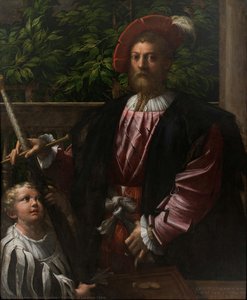
Estar frente a la representación de Lucrezia de Parmigianino es encontrarse no solo con un retrato, sino con un momento suspendido en un aire refinado: un suspiro contenido entre la contemplación terrenal y la aspiración divina. El sujeto, identificado como la célebre Lucrezia Borgia, cautiva la atención con una gracia casi etérea. Se nos presenta en una vista de tres cuartos, con una postura que sugiere tanto una elegancia lánguida como un profundo pensamiento interior. Su mirada hacia arriba es el núcleo magnético de la pintura; dirige el ojo del espectador más allá del marco, invitando a la especulación sobre qué visión celestial o profunda interrogante filosófica ocupa su mente. La impresión general es de un refinamiento exquisito, característico de la cúspide de la ambición renacentista filtrada a través del lente de la sofisticación manierista.

El Manierismo y la gracia alargada

El toque distintivo de Parmigianino —el sello del Manierismo— es inmediatamente evidente en las proporciones de la figura. Aquí, observamos un alargamiento exquisito; cada línea, desde el movimiento de sus ropajes hasta la delicada curva de su cuello, habla de un artificio elevado al nivel de la belleza sublime. La composición en sí misma es una clase magistral de asimetría dinámica. Mientras que la figura principal domina con contornos suaves y fluidos, la inclusión de dos figuras más pequeñas y parcialmente ocultas en la esquina inferior derecha añade una sutil tensión narrativa, como si fueran testigos de su ensueño privado. Esta manipulación deliberada de la forma y la escala crea una atmósfera que es, a la vez, intensamente personal y dramáticamente teatral.

Una sinfonía de luz y sombra

Desde el punto de vista técnico, la pintura exhibe el manejo magistral del óleo sobre tabla por parte de Parmigianino. El artista emplea un esquema de iluminación difusa pero direccional que esculpe al sujeto desde su interior. Nótese cómo la luz captura la cualidad luminosa de su piel, contrastando fuertemente con las sombras profundas e indefinidas del fondo. Esta dramática técnica del claroscuro sirve para aislar a Lucrezia, haciendo que parezca casi iluminada por sí misma. La paleta de colores —un sofisticado juego de tonos cálidos de carne, grises azulados fríos en los drapeados y toques de oro— se trabaja con una sutil técnica de veladuras, otorgando a la tela y a la piel una profundidad y un brillo inigualables que las reproducciones modernas se esfuerzan por capturar.

Simbolismo y encanto perdurable

Más allá de su brillantez técnica, la pintura resuena con múltiples capas de simbolismo. La inclinación hacia arriba de su cabeza sugiere un anhelo de trascendencia, quizás aludiendo a una contemplación espiritual o a una inspiración divina muy alejada de las maquinaciones políticas asociadas con su figura histórica. El collar de oro actúa tanto como emblema de estatus como punto focal para la mirada. Para el coleccionista o diseñador que busca infundir un espacio con historia y misterio, esta pieza ofrece más que una mera decoración; ofrece un punto de partida para la conversación: una meditación sobre la belleza, la ambición y la naturaleza esquiva del alma.

Preguntas y respuestas

¿Qué paleta y qué color predominante definen a "Lucrezia"?

"Lucrezia" se define por una paleta de Tonos tierra con predominio del Verde ftalocianina (#161714).

¿Qué intensidad de color tiene "Lucrezia" de Parmigianino?

La intensidad cromática de "Lucrezia" es Monocromático. La intensidad describe la fuerza con la que se perciben los colores.

¿Qué sensación transmite "Lucrezia" de Parmigianino?

"Lucrezia" de Parmigianino transmite una sensación Contemplativo dentro de un ambiente general Elegante.

More about this painting

Ver en contexto Vista previa en RA Cambiar a impresiones Cambiar a imagen digital Enviar
Detalles Guía Añadir a favoritos Descargar Similares Radiografía Presentación de diapositivas Q&A Estadísticas

In numbers

  • 1539the year it was painted
  • 29frames to choose from
  • standard sizes, in its own proportions
  • 5weeks to paint and deliver it
Parmigianino

Parmigianino

1503 - 1540, Italia

Quick facts about Parmigianino

  • Artistic Movement Or Style: Manierismo
  • Artists Or Movements Influenced By This Artist: ['Renacimiento Italiano']
  • Artists Who Influenced This Artist:
    • Correggio
    • Rafael
  • Date Of Birth: 11 de enero de 1503
  • Date Of Death: 24 de agosto de 1540
  • Full Name: Girolamo Francesco Maria Mazzola
  • Nationality: Italiano
  • Notable Artworks:
    • Madonna con el cuello largo
    • Visión de San Jerónimo
    • Autorretrato en espejo convexo
  • Place Of Birth: Parma, Italia

Biografía del artista

A Refined Sensibility: The Life and Art of Parmigianino

Girolamo Francesco Maria Mazzola, known to history as Parmigianino – “the little one from Parma” – emerged during the High Renaissance, yet swiftly became a defining figure of the burgeoning Mannerist style. Born in Parma on January 11, 1503, his early life was marked by familial loss; his father, Filippo Mazzola, died when Girolamo was just two years old. Raised by his uncles, Michele and Pier Ilario, both modestly skilled artists themselves, the young Parmigianino received his initial artistic training within this familial circle. This foundation, however, proved merely a springboard for an exceptional talent that would soon eclipse even his mentors. By the astonishing age of eighteen, he had already completed the Bardi Altarpiece, a work demonstrating a maturity and sophistication far beyond his years, signaling the arrival of a truly remarkable artist. The Bardi Altarpiece, with its innovative composition and refined details, immediately established Parmigianino as a force to be reckoned with in the Florentine art world.

Florence, Rome, and the Shaping of a Mannerist Vision

Parmigianino’s artistic journey led him to Florence around 1524, where he absorbed the influence of masters like Raphael and Leonardo da Vinci, though he quickly began to forge his own distinct path. He presented Pope Clement VII with three paintings, including a striking self-portrait in a convex mirror – a testament to his technical skill and burgeoning self-awareness. This act secured commissions in Rome, but the city’s artistic landscape was soon disrupted by the tumultuous Sack of 1527. Forced to flee, Parmigianino sought refuge in Bologna, where he painted one of his most celebrated works, the *Holy Family*. It was during this period that his signature style truly crystallized: elongated forms, graceful poses, and a refined sensuality became hallmarks of his art. He wasn’t merely depicting reality; he was reimagining it through a lens of elegance and idealized beauty. This departure from the High Renaissance's emphasis on naturalism marked him as a key innovator of Mannerism, an artistic movement characterized by its artificiality, sophistication, and deliberate distortion of classical forms. The influence of Correggio is particularly evident in his early works, while the dynamism of Michelangelo’s figures can be seen in his later compositions.

Masterpieces of Elongation and Grace

Parmigianino’s legacy rests upon a relatively small but profoundly influential body of work. The *Madonna with the Long Neck* (1534) remains perhaps his most iconic creation. Its unsettling yet captivating composition, featuring figures with elongated necks and limbs, challenges conventional notions of beauty and proportion. This deliberate distortion isn't simply stylistic; it conveys a sense of spiritual yearning and otherworldly grace. Similarly, *Vision of Saint Jerome* (1527), completed during his time in Rome, showcases his mastery of anatomy and perspective, while simultaneously embracing the Mannerist penchant for dramatic compositions and emotional intensity. Beyond these celebrated paintings, Parmigianino’s drawings reveal an extraordinary level of skill and sensitivity. His studies of figures, drapery, and architectural elements demonstrate a meticulous attention to detail and a profound understanding of form. Even his lesser-known works, such as *Bow-Carving Amor*, display the same refined sensibility and technical virtuosity that define his oeuvre. His work is characterized by an exquisite balance between elegance and tension, creating images that are both visually stunning and psychologically complex.

A Legacy Interrupted: Parmigianino’s Final Years

Tragically, Parmigianino's promising career was cut short by his untimely death in Casalmaggiore in 1540 at the age of thirty-seven. The circumstances surrounding his demise remain somewhat mysterious; some accounts suggest he succumbed to a fever, while others hint at complications from a fall. Despite his brief life, Parmigianino left an indelible mark on Italian Renaissance art. He stands as one of the most important representatives of Mannerism, influencing generations of artists with his elegant style and innovative approach to form and composition. His work continues to captivate viewers today, offering a glimpse into a world where beauty is not merely observed but actively created – a testament to the enduring power of artistic vision. The frescoes he left unfinished in Parma and Fontanellato serve as poignant reminders of what might have been, yet even in their incomplete state, they reveal the brilliance of a master whose legacy continues to resonate through the centuries. His influence can be seen in artists who followed, adapting and expanding upon his distinctive style.

Datos clave

  • Medium: Óleo sobre tabla
  • Subject or theme: Retrato de Lucrezia Borgia
  • Movement: Manierismo
  • Notable elements or techniques: Proporciones alargadas, técnica de veladura

Test de conocimientos artísticos

Cada pregunta tiene una única respuesta correcta.

Pregunta 1:
¿Qué estilo artístico es más característico de la obra de Parmigianino, como se ve en 'Lucrezia'?
Pregunta 2:
¿Cuál es el tema principal representado en la pintura 'Lucrezia'?
Pregunta 3:
¿Qué elemento contribuye a la sensación de elegancia y al efecto algo surrealista en la composición?
Pregunta 4:
¿Qué técnica empleó Parmigianino para lograr sutiles gradaciones de tono y efectos luminosos en la pintura?
Pregunta 5:
La mirada hacia arriba de la figura principal en 'Lucrezia' sugiere ¿qué tipo de contemplación?