

 Vista previa
 Compartir
 Compartir
 Ver detalles
 Guía
Guía

 Descargar
 Ver artículos similares
 Radiografía
 Presentación de diapositivas
 Estadísticas
El Nacimiento de María


 Leer más
Giclée / Impresión de arte
Impresiones giclée o en lienzo de calidad de museo con producción rápida y opciones de acabado flexibles. ( Encargar reproducción pintada a mano Ver versión en imagen digital)




P118B €10

P118H €10

P118W €10

P438Z €10

P508JH €12

P508YH €12

P805H €10

P805Z €10

P919BZ €10

P919G €10

P919XJ €10

P959ZH €10

P968JZ €12

W106C €8

W218G €10

W218JH €8

W218Y €10

W307PJ €10

W316G €10

W316PJ €8

W316Y €10

W398PJ €8

W4111J €10

W500HY €15

W500JH €15

W692G €12

W849H €8

W940BG €15

W953PJ €8




Elija entre nuestros tamaños predefinidos que respetan las proporciones originales de la obra.

Introduzca el ancho y el alto que necesite para adaptarse a su marco o pared. Una impresión solo puede recortarse, nunca hacerse más grande que la imagen original, por lo que un tamaño con una forma distinta perderá parte de la obra. Le enviaremos una maqueta digital para su aprobación antes de realizar cualquier impresión. La imagen que se muestra en esta página no refleja el recorte real; solo la maqueta lo hace.
Envío a todo el mundo () en 2 semanas en lugar de las 4/5 semanas estándar. (24 octubre)

Envío exprés gratuito a todo el mundo

Lienzo de lino de alta calidad

Seguro de envío completo

Garantía de reembolso de impuestos aduaneros

Garantía de fidelidad cromática exacta

Política de devolución de 100 días (solo por defectos)

Garantía de devolución del 100% del dinero

Oferta por volumen
 La opción de vidrio solo está disponible en tamaños inferiores a 110 cm.

El Nacimiento de María
Giclée / Impresión de arte
Tamaño de la reproducción
-


Precio total
€ 70
Birth Of The Virgin
The Birth of the Virgin is a remarkable painting that showcases Paolo Uccello's mastery of perspective and his unique style. Created in the Early Renaissance period, this artwork depicts the birth of the Virgin Mary, an essential event in Christian iconography.
Introduction to Paolo Uccello and the Early Renaissance Movement
Paolo Uccello, born Paolo di Dono in 1397 in Pratovecchio, Italy, was a pivotal figure of the Early Renaissance. His nickname, “Uccello” (little bird), likely stemmed from his fondness for depicting birds in his art. He wasn't merely interested in representing reality; he sought to *understand* the underlying principles of how things appear to us. From 1412 to 1416, he apprenticed under the renowned sculptor Lorenzo Ghiberti, whose workshop was at the forefront of Florentine artistic innovation. This formative period exposed Uccello to the prevailing Gothic style and instilled in him a deep understanding of narrative composition.
The Painting's Composition and Style
The Birth of the Virgin features vibrant colors and intricate details, which reflect Uccello’s background in Gothic art and architecture. The painting's composition is characterized by its use of perspective, creating a sense of depth and space. You can find more information about Paolo Uccello and his artworks on OriginalUniqueArt.com.
Historical Context and Artistic Significance
The Birth of the Virgin was created in a time when painting served various purposes, including imperial, private, civic, and religious patronage. During this period, painters worked for the church and wealthy aristocracy, with their works reflecting the cultural and intellectual transformations of Europe, particularly Italy. The Siena Cathedral in Italy is one of the notable museums that house Uccello’s artworks.
- Handmade oil painting reproductions of the Birth of the Virgin are available on OriginalUniqueArt.com.
- You can also find more information about the Early Renaissance movement on Wikipedia.
Conclusion
The Birth of the Virgin by Paolo Uccello is an exceptional example of Early Renaissance art. The painting's masterful use of perspective, vibrant colors, and intricate details showcase Uccello’s unique style and his contribution to the development of visual perspective in art. You can appreciate the beauty and historical significance of this masterpiece by visiting OriginalUniqueArt.com.

The painting is a depiction of the birth of the Virgin Mary. The scene shows several people gathered around a bed where Mary is lying down. There are at least 12 people in the painting, including both men and women. Some of them are standing close to the bed while others are further away. A few individuals can be seen on the left side of the image, with one person closer to the foreground and another two people slightly farther back. On the right side of the image, there is a group of three people, with one person near the center and the other two people positioned towards the background.
The bed occupies a significant portion of the painting, extending from the left edge to almost the entire width of the image. The people in the scene are engaged in various activities, such as looking at Mary or attending to her needs during this special moment.
The painting’s composition is characterized by its use of perspective, creating a sense of depth and space. You can find more information about Paolo Uccello and his artworks on OriginalUniqueArt.com.
The painting’s colors are rich and luminous, reflecting the influence of Gothic art and architecture. The artist skillfully employs shading to create a realistic portrayal of human figures and drapery.
Preguntas y respuestas
¿Puedo usar la realidad aumentada para ver "El Nacimiento de María" de Paolo Uccello en mi habitación?
La página de Vista previa AR de "El Nacimiento de María" de Paolo Uccello utiliza realidad aumentada para mostrar la obra en su propio espacio, mediante un dispositivo compatible.
¿Con qué otros nombres se conoce a Paolo Uccello?
Paolo Uccello también es conocido como Paolo di Dono.
¿Qué nivel de saturación cromática tiene "El Nacimiento de María" de Paolo Uccello?
"El Nacimiento de María" de Paolo Uccello está registrado con una saturación de Suave equilibrado.
Biografía del artista
vida temprana y formación
Paolo Uccello, nacido Paolo di Dono, fue un distinguido pintor y matemático italiano de Florencia. Era notable por su trabajo pionero en la perspectiva visual en el arte. Nacido en 1397, la vida temprana de Uccello no está bien documentada, pero se sabe que estuvo aprendiz del famoso escultor Lorenzo Ghiberti de 1412 a 1416.carrera y obras notables
La carrera de Uccello abarcó más de cuatro décadas, durante las cuales produjo numerosas obras de arte, incluyendo pinturas, frescos y retablos. Algunas de sus obras más notables incluyen:- Nacimiento de la Virgen (renacimiento temprano, óleo), una pintura que muestra su uso de la perspectiva para crear una sensación de profundidad.
- Frescos San Miniato al Monte 03 (renacimiento temprano, óleo), un fresco que demuestra su innovador uso del color y la luz.
- Adoración del Niño (renacimiento temprano, óleo), una pintura que presenta una representación detallada y naturalista de la forma humana.
- Estudio de caballero (renacimiento temprano, óleo), un autorretrato que muestra su uso seguro y autónomo de los temas en el arte.
influencia y legado
La obra de Uccello tuvo un impacto significativo en el desarrollo del arte renacentista. Su uso de la perspectiva y su énfasis en crear una sensación de profundidad en sus pinturas influyeron en numerosos artistas, incluyendo a Albrecht Dürer, quien también era conocido por su trabajo pionero en el campo de la perspectiva. Movimientos artísticos clave:- El Renacimiento Temprano
- Renacimiento Italiano
- Gótico Tardío
- Paolo Uccello (1397-1475)
- Albrecht Dürer (1471-1528)
- Lorenzo Ghiberti (1379-1455)
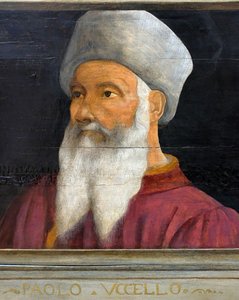
Paolo Uccello
1397 - 1475 , Italia
Datos clave
- Artistas Influenciados: ['Albrecht Dürer']
- Artistas Que Influyeron:
- Lorenzo Ghiberti
- Donatello
- Fecha De Muerte: 1475
- Fecha De Nacimiento: 1397
- Lugar De Nacimiento: Pratovecchio, Italia
- Movimiento Artístico: Renacimiento Temprano
- Nacionalidad: Italiana
- Nombre Completo: Paolo Uccello
- Obras Notables:
- Batalla de San Romano
- Nacimiento de la Virgen
- San Jorge y el Dragón
- La Inundación
Artículos relacionados
Paolo Veronese: A Renaissance Master of Color, Composition, and Venetian Splendor
Explore the vibrant world of Paolo Veronese, a Renaissance master renowned for his opulent compositions, masterful use of color, and dramatic Venetian scenes. Discover key artworks & legacy.
Divine Grace: A Journey Through the Most Iconic Depictions of the Virgin Mary in Art History
Embark on a profound journey through art history with our exploration of the most iconic depictions of the Virgin Mary. Discover the divine grace, symbolism, and masterful techniques found in Renaissance masterpieces and sacred iconography.
Paolo Uccello: Pioneering Perspective & the Renaissance Pursuit of Visual Truth
Explore the revolutionary art of Paolo Uccello, a Florentine Renaissance master who pioneered perspective. Discover his iconic paintings like 'St. George & The Dragon' and learn about his lasting influence on art history.
Jacob Henricus Maris: A Master of Dutch Atmospheric Realism & the Intimate Landscape
Explore the captivating world of Jacob Henricus Maris, a leading figure of the Dutch Hague School. Discover his atmospheric landscapes, signature brushstrokes & lasting influence on 19th-century art. Learn more at OriginalUniqueArt.
Fra Angelico: Las 25 Obras Maestras del Renacimiento para Decorar con Arte y Fe
Descubre las 25 obras maestras de Fra Angelico, el pintor renacentista que llenó el arte sacro de luz y fe. Explora su técnica, simbolismo y belleza en frescos e iconos. Encuentra reproducciones de alta calidad para decorar tu hogar con OriginalUniqueArt.com.


