Ver en contexto
 Enviar
 Compartir
 Detalles
 Guía
Guía

 Descargar
 Similares
 Radiografía
 Presentación de diapositivas
 Estadísticas
The Lute Player


 Ver más
Giclée / Impresión de arte
Impresiones giclée o en lienzo de calidad de museo con producción rápida y opciones de acabado flexibles. ( Comprar pintura hecha a mano Cambiar a imagen digital)




P118B €10

P118H €10

P118W €10

P438Z €10

P508JH €12

P508YH €12

P805H €10

P805Z €10

P919BZ €10

P919G €10

P919XJ €10

P959ZH €10

P968JZ €12

W106C €8

W218G €10

W218JH €8

W218Y €10

W307PJ €10

W316G €10

W316PJ €8

W316Y €10

W398PJ €8

W4111J €10

W500HY €15

W500JH €15

W692G €12

W849H €8

W940BG €15

W953PJ €8




Elija entre nuestros tamaños predefinidos que respetan las proporciones originales de la obra.

Introduzca el ancho y el alto que necesite para adaptarse a su marco o pared. Una impresión solo puede recortarse, nunca hacerse más grande que la imagen original, por lo que un tamaño con una forma distinta perderá parte de la obra. Le enviaremos una maqueta digital para su aprobación antes de realizar cualquier impresión. La imagen que se muestra en esta página no refleja el recorte real; solo la maqueta lo hace.
Envío a todo el mundo () en 2 semanas en lugar de las 4/5 semanas estándar. (27 octubre)

Envío exprés gratuito a todo el mundo

Lienzo de lino de alta calidad

Seguro de envío total

Garantía de reembolso de aranceles aduaneros

Garantía de fidelidad cromática exacta

Política de devolución de 100 días (solo por defectos)

Garantía de devolución del 100% del dinero

Descuento por cantidad
 La opción de vidrio solo está disponible en tamaños inferiores a 110 cm.

The Lute Player
Giclée / Impresión de arte
Dimensiones de la reproducción
-


Precio total final
€ 70
A Symphony of Light and Shadow
In the quiet intimacy of Orazio Gentileschi’s The Lute Player, we are invited into a moment of profound sensory immersion. Completed around 1615, this masterpiece serves as a breathtaking window into the early Baroque era, where the boundaries between reality and reverie begin to blur. The scene unfolds with a delicate balance of light and shadow, a hallmark of the tenebrismo technique that was revolutionizing the Roman art scene at the time. A young woman, draped in a luminous golden yellow gown that seems to glow from within, sits poised at the edge of our vision. Her body is turned slightly away, as if she has been caught in a private, meditative moment, her head tilted toward her instrument to catch the very resonance of a note just struck.
Gentileschi, heavily influenced by the dramatic naturalism of Caravaggio, uses light not merely to illuminate, but to sculpt. The luminous glow hitting the subject’s face and hands draws the viewer’s eye inward, emphasizing an inner serenity that contrasts beautifully with the deep, velvety shadows surrounding her. For the discerning collector or interior designer, this interplay of chiaroscuro offers a captivating focal point, bringing a sense of dramatic depth and sophisticated warmth to any curated space.
Symbolism and the Art of Contemplation
Beyond its visual splendor, The Lute Player is a painting steeped in the intellectual currents of the seventeenth century. The subject, believed to be Cecilia Giovanna Gonzaga, represents the aristocratic ideal of the era: a woman of piety, virtue, and refined intellect. Every element within the frame is laden with symbolic weight. The lute itself is far more than a musical instrument; it serves as a profound metaphor for harmony, spiritual devotion, and the disciplined pursuit of intellectual beauty. As the musician leans into her craft, she embodies the humanist ideal of contemplatio—the act of focused, inward reflection.
The surrounding environment further enriches this narrative of musicality and grace. Scattered books and the presence of a violin in the background suggest a life dedicated to the arts and learning. Even the subtle placement of objects on the table adds a layer of domestic tranquility to the scene. This layering of meaning ensures that the painting remains a subject of endless fascination, offering much more than mere decoration; it provides a window into a lost world of elegance and moral purpose.
A Timeless Addition to the Modern Interior
For those seeking to infuse their homes with a sense of history and emotional resonance, a high-quality reproduction of this work offers unparalleled inspiration. The painting’s palette—rich golds, deep shadows, and soft textures—complements both classical and contemporary decor. It possesses a unique ability to anchor a room, providing a conversation piece that speaks of cultural heritage and the enduring power of beauty.
Whether placed in a quiet study to encourage reflection or as a bold statement in a grand living area, The Lute Player brings with it an atmosphere of sophisticated calm. To possess such a work is to hold a fragment of the Baroque spirit, allowing the masterful hand of Orazio Gentileschi to continue its legacy of grace and dramatic intensity within the modern sanctuary.
Preguntas y respuestas
¿Cuál es la atmósfera general de "The Lute Player" de Orazio Gentileschi?
"The Lute Player" transmite una atmósfera Dramatic.
¿Cómo se combinan la técnica y el movimiento en "The Lute Player"?
"The Lute Player" de Orazio Gentileschi combina la técnica de Oil On Canvas con el estilo Baroque. La técnica y el movimiento describen la ejecución y el estilo de la obra.
¿Se encuentra "The Lute Player" de Orazio Gentileschi en el país de origen del artista?
No; la obra se encuentra en el extranjero. El país de nacimiento de Orazio Gentileschi es Italia, y el museo que alberga el original de "The Lute Player" se encuentra en USA.
Biografía del artista
Primeros Años y Formación
- Nacido: Toscana, Italia (1563)
- Fallecido: 1639
- Orazio Gentileschi comenzó su carrera en Roma, pintando en un estilo manierista. Gran parte de su trabajo inicial consistió en pintar figuras dentro de los esquemas decorativos de otros artistas.
- Se formó con el pintor umbro, Cola dell'Amata.
- Gentileschi también se vio influenciado por la obra de Francesco da Sangallo, un destacado arquitecto y escultor de la época.
Estilo Artístico e Influencias
- Su estilo se caracterizó por colores brillantes y composiciones dramáticas.
- Tras 1600, quedó bajo la influencia del estilo más naturalista de Caravaggio, adoptando una nueva sensibilidad.
- Las pinturas de Gentileschi a menudo representaban escenas bíblicas y temas mitológicos.
- Influencias Clave: Manierismo, Caravaggio
Obras Principales y Logros
- "Danae": Considerada una de sus obras más importantes, que muestra su habilidad para capturar la esencia de las historias mitológicas.
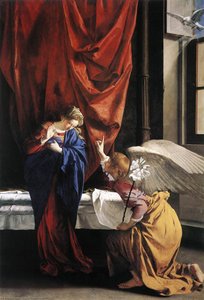
- "El Anuncio": Se encuentra en la Galleria Borghese en Roma.
- "La Virgen María": También se encuentra en la Galleria Borghese en Roma.
- Sus frescos y mosaicos para iglesias como Santa Maria Maggiore y San Giovanni Laterano demuestran su dominio de la pintura decorativa a gran escala.
Desarrollo y Evolución
- Inicialmente trabajó dentro de un estilo manierista, incorporando gradualmente elementos del naturalismo de Caravaggio.
- Desarrolló una versión más suave y refinada del estilo dramático de Caravaggio, caracterizada por una paleta más clara y detalles precisos.
- Sus obras posteriores muestran un estilo elegante y cortesano, que refleja su patrocinio en las cortes de María de Médici en París y Carlos I en Londres.
Significado Histórico y Legado
- El uso de colores brillantes y composiciones dramáticas por parte de Gentileschi influyó en el desarrollo del arte barroco.
- Fue uno de los primeros practicantes del caravaggismo en Inglaterra, impactando significativamente el panorama artístico allí.
- Su hija, Artemisia Gentileschi, se convirtió en una artista renombrada por derecho propio, continuando su legado y desarrollando aún más la tradición artística familiar.
- Sus obras se encuentran en museos y galerías de todo el mundo, incluyendo la Galería Uffizi en Florencia y la Galería Accademia en Venecia.

Orazio Gentileschi
1563 - 1639 , Italia
Datos clave
- Artistas Que Influyeron:
- Cola dell'Amata
- Francesco da Sangallo
- Caravaggio
- Fecha De Muerte: 7 de febrero de 1639
- Fecha De Nacimiento: 9 de julio de 1563
- Lugar De Nacimiento: Toscana, Italia
- Movimiento Artístico: Barroco
- Movimientos Influenciados: ['Caravaggismo']
- Nacionalidad: Italiana
- Nombre Completo: Orazio Gentileschi
- Obras Notables:
- Danae
- El Anuncio
- La Virgen María
- Santa Cecilia con un Ángel
Artículos relacionados

Barroco Sublime: 10 Obras Maestras que Definieron una Época |
Descubre las 10 obras maestras del Barroco que marcaron una época. Caravaggio, Bernini y Velázquez cobran vida en . Reproducciones de arte de calidad museo para decorar tu hogar con elegancia. ¡Explora la colección online!

The Visceral Stage: Exploring Dramatic Narratives & Emotional Intensity in Baroque Art
Explore the dramatic world of Baroque art! Discover iconic masters like Caravaggio & Rembrandt, their techniques, and the movement's lasting impact. Expert insights for collectors & enthusiasts at OriginalUniqueArt.

Echoes of Time: Exploring the Enduring Appeal & Historical Context of Vintage Art Prints
Explore the captivating world of vintage art prints! Discover their history, collecting tips & enduring appeal. Expert insights on chromolithography and building a legacy collection with OriginalUniqueArt.

Drama Barroca: Llevando la Grandeza y la Emoción a los Interiores Contemporáneos
Descubre cómo el drama y la grandeza del arte barroco pueden transformar tus interiores. Guía experta, inspiración y reproducciones de alta calidad en .

Giclée Prints: Archival Quality & Aesthetic Nuances for the Discerning Collector
Explore the world of giclée prints with OriginalUniqueArt. Learn about archival quality, aesthetic nuances & investment potential. Expert guidance for discerning art collectors seeking museum-quality reproductions and lasting value.