

 Vista previa
 Compartir
 Compartir
 Ver detalles
 Guía
Guía

 Descargar
 Ver artículos similares
 Radiografía
 Presentación de diapositivas
 Estadísticas
The Child
 Acrílico sobre lienzo
- Arte de pared
- Symbolist Painting
 1894
1894 27.0 x 26.0 cm
 Musée Des Beaux
 Leer más
Reproducción al óleo hecha a mano
Óleo sobre lienzo pintado a mano en el tamaño y marco de su elección, realizado por encargo por nuestros artistas. ( Cambiar a formato impreso Ver versión en imagen digital)




P118B €10

P118H €10

P118W €10

P438Z €10

P508JH €12

P508YH €12

P805H €10

P805Z €10

P919BZ €10

P919G €10

P919XJ €10

P959ZH €10

P968JZ €12

W106C €8

W218G €10

W218JH €8

W218Y €10

W307PJ €10

W316G €10

W316PJ €8

W316Y €10

W398PJ €8

W4111J €10

W500HY €15

W500JH €15

W692G €12

W849H €8

W940BG €15

W953PJ €8




Elija entre nuestros tamaños predefinidos que respetan las proporciones originales de la obra.

Escriba el ancho y el alto que necesite para adaptarse a su marco o a su pared. Al ser una obra pintada a mano, para un tamaño con una forma distinta, el artista puede pintar un poco más alrededor de la imagen o recortar un poco; usted elige. Le enviaremos una maqueta digital para su aprobación antes de comenzar la pintura. La imagen que se muestra en esta página no refleja el resultado real; solo la maqueta lo hace.
Tras realizar el pedido, el equipo de OriginalUniqueArt.com enviará un correo electrónico al cliente para solicitar instrucciones y proporcionarle una vista previa del boceto.
Envío a todo el mundo () en 3-4 semanas en lugar de las 5 semanas estándar. (24 octubre). Sin comprometer la calidad.

Envío exprés gratuito a todo el mundo

Lienzo de lino de alta calidad

Seguro de envío completo

Garantía de reembolso de impuestos aduaneros

Garantía de fidelidad cromática exacta

Política de devolución de 100 días (solo por defectos)

Garantía de devolución del 100% del dinero

Oferta por volumen
 La opción de vidrio solo está disponible en tamaños inferiores a 110 cm.

The Child
Técnica de reproducción
Tamaño de la reproducción
-


Precio total
€ 263
A Dreamscape in Pastel: Unveiling Odilon Redon’s “The Child”
Odilon Redon's "The Child," painted in 1894 and currently residing within the hallowed halls of the Musée des Beaux-Arts in Dijon, France, is not merely a depiction of a young figure; it’s an immersion into a realm of potent symbolism and haunting beauty. This work, rendered primarily in delicate pastel hues, exemplifies Redon's signature style – a deliberate blurring of reality and dream, where familiar forms are subtly distorted and imbued with layers of psychological depth. Redon, a pivotal figure within the Symbolist movement, sought to capture not just what was seen, but what lay beneath the surface of perception, translating inner states into visual language.
The painting immediately draws the viewer in with its ethereal atmosphere. The child’s face, rendered with an almost unnerving clarity despite the soft pastel application, possesses a gaze that seems to pierce through the canvas, directed towards something just beyond our field of vision. Blue eyes, framed by rosy cheeks and a delicate nose, convey both innocence and a hint of melancholy. This directness is juxtaposed against the background – a vibrant, almost aggressively bright orange—a color choice that immediately creates tension and intrigue. Redon masterfully uses this contrast to draw attention to the child’s face, elevating it as the focal point of the composition while simultaneously suggesting an unsettling disconnect between the subject and its surroundings.
The Language of Symbolism: Decoding Redon's Palette
Redon’s artistic journey was deeply influenced by a fascination with the subconscious and the exploration of hidden meanings. He frequently employed recurring motifs – children, animals, and fantastical creatures—to represent universal themes such as mortality, transformation, and the fragility of human existence. In “The Child,” these symbolic elements are subtly interwoven into the scene. The bright orange background, often interpreted as representing primal energy or even danger, could symbolize the unknown forces that shape a child’s development and perception of the world. The child's averted gaze suggests a contemplation of something beyond immediate experience, perhaps hinting at an awareness of mortality or the mysteries of life.
Furthermore, Redon’s choice of pastel as his primary medium is crucial to understanding the painting’s emotional impact. Pastels offer a remarkable ability to capture subtle nuances of light and shadow, creating a sense of softness and vulnerability. The hazy quality of the colors contributes to the dreamlike atmosphere, inviting viewers to project their own emotions and interpretations onto the scene. Redon's technique involved layering thin washes of pastel pigment, building up color gradually to achieve depth and luminosity – a process that demanded immense patience and control.
A Historical Context: Symbolism and the Dawn of Modern Art
To fully appreciate “The Child,” it’s essential to understand the artistic climate in which Redon was working. The late 19th century witnessed a growing disillusionment with academic realism, as artists sought new ways to express subjective experience and explore the darker aspects of human psychology. Symbolism emerged as a direct response to this shift, rejecting literal representation in favor of evocative imagery and symbolic narratives. Artists like Redon, alongside Monet, Renoir, and Degas, were pushing the boundaries of traditional painting, paving the way for the radical innovations of the 20th century.
Redon’s work aligns closely with the Symbolist movement's interest in exploring the subconscious mind and its influence on perception. He was also deeply influenced by Japanese art, particularly woodblock prints, which he admired for their use of flattened perspective, bold colors, and symbolic imagery. This influence is evident in the painting’s composition and color palette, contributing to its distinctive dreamlike quality.
A Timeless Masterpiece: Reproduction and Beyond
"The Child" remains a profoundly moving work of art, captivating viewers with its haunting beauty and enigmatic symbolism. Today, high-quality reproductions offer an accessible way to experience the power of Redon’s vision. Whether displayed in a private residence or a public space, this painting continues to spark contemplation and invite us to delve into the depths of our own imaginations. For those seeking a piece that transcends mere decoration, “The Child” is a testament to the enduring legacy of Odilon Redon – an artist who dared to paint not what he saw, but what he felt.
Preguntas y respuestas
¿Qué sentimiento transmite "The Child" de Odilon Redon?
El estado de ánimo capturado en "The Child" de Odilon Redon es Etéreo, y su tono emocional es Enigmático.
¿En qué tamaño se recomienda imprimir "The Child"?
Se recomienda imprimir "The Child" en un tamaño de Tamaño mediano. Otros tamaños están disponibles con las mismas proporciones.
¿Dónde puedo ver una vista previa de "The Child"?
Para previsualizar una reproducción de "The Child" de Odilon Redon, abra la página de Vista previa de la obra.
Biografía del artista
Vida Temprana y Formación
Odilon Redon (Bertrand-Jean Redon), nació el 20 de abril de 1840 en Burdeos, Aquitania, en una familia próspera. Su padre amasó su fortuna en el comercio de esclavos en Luisiana. Redon recibió el apodo "Odilon" de su madre, Odile. Demostró talento artístico desde temprana edad; a los diez años ganó un premio de dibujo en la escuela. Inicialmente estudió arquitectura, pero a instancias de su padre, cambió de rumbo. Tras no aprobar los exámenes de ingreso a la École des Beaux-Arts de París en 1864, brevemente estudió pintura bajo la tutela de Jean-Léon Gérôme. Posteriormente, se dedicó a la escultura y perfeccionó sus habilidades en grabado y litografía bajo la guía de Rodolphe Bresdin. Su servicio militar durante la Guerra Franco-Prusiana (1870-1871) interrumpió su carrera artística por un tiempo.Evolución Artística y el Período de los "Noirs"
Tras la guerra, Redon se trasladó a París y retomó su trabajo principalmente en carboncillo y litografía, creando lo que se conoce como sus “noirs” (negros). Estas obras, caracterizadas por imágenes oníricas y simbólicas en tonos oscuros, exploraban temas de misterio, miedo y la psique humana. Ganó reconocimiento inicial con "Espíritu Guardián de las Aguas" en 1878 y publicó su primer álbum de litografías, "Dans le Rêve," en 1879. Su obra fue catapultada a la fama tras ser mencionada en la novela cultista “Contra Naturaleza” (À rebours) de Joris-Karl Huysmans en 1884, lo que atrajo la atención del público y los coleccionistas. Durante este período, Redon experimentó con diferentes técnicas y estilos, influenciado por el arte japonés y las corrientes simbolistas de la época.Madurez: Pastel, Óleo e Influencias Orientales
En la década de 1890, Redon comenzó a trabajar en pastel y óleo, abandonando casi por completo los "noirs" después de 1900. Desarrolló un profundo interés en la religión hindú y el budismo, lo que se reflejó cada vez más en su obra. La influencia del japonismo es evidente en pinturas como “La Muerte de Buda” (alrededor de 1899), "El Buda" (1906) y "Jacobo y el Ángel" (1905). En 1900-1901, recibió un importante encargo del Barón Robert de Domecy para crear 17 paneles decorativos para el Château de Domecy-sur-le-Vault. Estos trabajos marcaron una transición hacia la pintura más abstracta y ornamental.Logros Destacados y Legado
Redon fue condecorado con la Legión de Honor en 1903, un reconocimiento a su contribución al arte francés. Su popularidad se disparó tras la publicación de un catálogo de grabados y litografías por André Mellerio en 1913, seguido de una exposición retrospectiva en la Armería de Nueva York. Su obra es hoy reconocida como precursora del Surrealismo por su exploración del inconsciente y sus imágenes oníricas. Redon falleció el 6 de julio de 1916, dejando un legado artístico significativo que continúa inspirando a artistas y amantes del arte en todo el mundo.Referencias

Odilon Redon
1840 - 1916 , Francia
Datos clave
- Artistas Que Influyeron:
- Rodolphe Bresdin
- Jean-Léon Gérôme
- Fecha De Fallecimiento: 6 de julio de 1916
- Fecha De Nacimiento: 20 de abril de 1840
- Influenciado A Artistas: ['Surrealismo']
- Lugar De Nacimiento: Burdeos, Francia
- Movimiento Artístico: Simbolismo
- Nacionalidad: Francesa
- Nombre Completo: Odilon Redon
- Obras Notables:
- El espíritu guardián de las aguas
- La muerte del Buda
- Jacobo y el ángel
Artículos relacionados

Soft Texture, High Impact: The Ultimate Buyer's Guide to Mastering Pastel Art for Modern Interiors
Master the art of texture with our ultimate guide to pastel art. Discover how to select high-impact, soft-textured pieces that transform modern interiors, from hand-painted masterpieces to custom AI-remixed portraits. Elevate your space with expert curation and bold design.

The Subdued Radiance of Pastel: Exploring Nuance & Emotion in Art
Explore the nuanced world of pastel art! Discover its history, techniques & emotional power with expert insights from OriginalUniqueArt.com. Find museum-quality reproductions and learn about collecting this delicate medium.
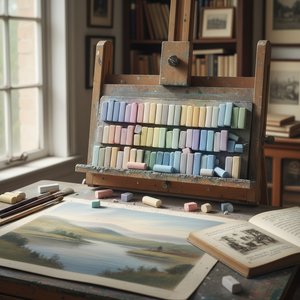
La Sutileza del Pastel: Técnica, Historia y Resonancia Emocional en el Arte
Descubre la sutileza del pastel: técnica, historia y artistas clave como Degas y Renoir. Guías expertas sobre materiales, conservación y cómo expresar emociones a través de este bello arte.
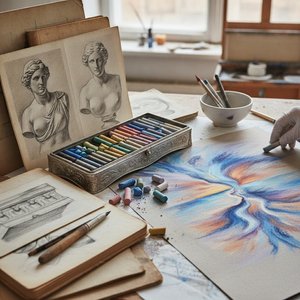
The Magic of Pastel Art: A Guide to Soft Colors and Velvately Textures in Impressionist Masterpieces
Explore the ethereal beauty of pastel art. Discover how Impressionist masters used soft hues and velvety textures to capture light. A professional guide for art enthusiasts seeking to understand, collect, and appreciate the delicate magic of this timeless medium.
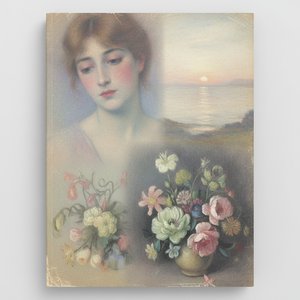
The Subdued Radiance of Pastel Palettes: Exploring Emotional Resonance in Art History
Explore the emotional power of pastel palettes in art history! Discover Impressionism, Post-Impressionism & color psychology insights. Find museum-quality reproductions at OriginalUniqueArt.


