
 Ver en contexto
 Enviar
 Compartir
 Detalles
 Guía
Guía

 Descargar
 Similares
 Radiografía
 Presentación de diapositivas
 Preguntas y respuestas
 Estadísticas
Peasant and his son

- 75.0 x 56.0 cm


 Ver más
Giclée / Impresión de arte
Impresiones giclée o en lienzo de calidad de museo con producción rápida y opciones de acabado flexibles. ( Comprar pintura hecha a mano Cambiar a imagen digital)




P118B €10

P118H €10

P118W €10

P438Z €10

P508JH €12

P508YH €12

P805H €10

P805Z €10

P919BZ €10

P919G €10

P919XJ €10

P959ZH €10

P968JZ €12

W106C €8

W218G €10

W218JH €8

W218Y €10

W307PJ €10

W316G €10

W316PJ €8

W316Y €10

W398PJ €8

W4111J €10

W500HY €15

W500JH €15

W692G €12

W849H €8

W940BG €15

W953PJ €8




Elija entre nuestros tamaños predefinidos que respetan las proporciones originales de la obra.

Introduzca el ancho y el alto que necesite para adaptarse a su marco o pared. Una impresión solo puede recortarse, nunca hacerse más grande que la imagen original, por lo que un tamaño con una forma distinta perderá parte de la obra. Le enviaremos una maqueta digital para su aprobación antes de realizar cualquier impresión. La imagen que se muestra en esta página no refleja el recorte real; solo la maqueta lo hace.
Envío a todo el mundo () en 2 semanas en lugar de las 4/5 semanas estándar. (4 noviembre)

Envío exprés gratuito a todo el mundo

Lienzo de lino de alta calidad

Seguro de envío total

Garantía de reembolso de aranceles aduaneros

Garantía de fidelidad cromática exacta

Política de devolución de 100 días (solo por defectos)

Garantía de devolución del 100% del dinero

Descuento por cantidad
 La opción de vidrio solo está disponible en tamaños inferiores a 110 cm.

Peasant and his son
Giclée / Impresión de arte
Dimensiones de la reproducción
-


Precio total final
€ 72
A Glimpse into Georgian Rural Life: Niko Pirosmani's "Peasant and his Son"
Niko Pirosmani’s “Peasant and his son,” painted in 1908, offers a poignant window into the soul of rural Georgia at the turn of the twentieth century. This vertical oil painting isn't merely a depiction of two figures; it is an embodiment of generational connection, quiet dignity, and the timeless rhythms of agricultural life. The scene unfolds outdoors, suggested by the tall stalks that rise in the background—resembling reeds or corn—creating a backdrop evocative of the Georgian countryside. An elderly man dominates the left side of the composition, his presence weighty and grounded, while his young son stands to the right, presenting something unseen to his father. This simple act forms the heart of the painting’s narrative, hinting at respect, inheritance, or perhaps the passing down of knowledge—a symbolic exchange that resonates across time and cultures. The overall impression is one of profound stillness, a moment captured in amber, inviting contemplation on themes of family, tradition, and the enduring strength of human bonds.The Language of Primitivism: Style and Technique
Pirosmani’s artistic style defies easy categorization, often described as primitivist or naive. He wasn't formally trained; his skill blossomed from a deep observation of the world around him and an innate ability to translate that vision onto canvas. This lack of formal training is evident in the painting’s deliberate simplicity—a flattened perspective characteristic of folk art traditions, where illusionistic space takes a backseat to emotional impact. The artist employs visible brushstrokes, layering oil paints to create texture, particularly noticeable in the man's beard and robes, lending them a tactile quality that draws the viewer closer. Lines are used purposefully to define forms – both figures and surrounding vegetation—creating a sense of solidity and depth despite the overall flatness. The palette is predominantly dark: browns, blacks, and muted reds dominate, contributing to a somber yet contemplative mood. This restrained use of color amplifies the painting’s emotional weight, focusing attention on the subjects' faces and their interaction. Pirosmani often worked on oilcloth rather than traditional canvas, a testament to his resourcefulness and perhaps adding another layer of rustic authenticity to his work.A Georgian Visionary: Context and Legacy
To fully appreciate “Peasant and his son,” it’s essential to understand the context in which it was created. Niko Pirosmani lived a life largely outside the mainstream art world, working various odd jobs while pursuing his passion for painting. He was a self-taught artist who captured the essence of Georgian culture with remarkable honesty and sensitivity. His work gained recognition later in his life thanks to the support of Russian poets and artists like Mikhail Le-Dantyu and Kirill Zdanevich, who championed his unique vision. Pirosmani’s style resonated with the burgeoning primitivist movement, which celebrated art created outside established academic traditions. He became a pivotal figure in 20th-century Georgian art, influencing generations of artists with his distinctive approach to subject matter and technique. His paintings offer invaluable insights into the social fabric and daily life of Georgia during a period of significant change and transition.Emotional Resonance: A Timeless Portrait
Beyond its historical significance and artistic merit, “Peasant and his son” possesses an undeniable emotional power. The painting evokes a sense of quiet dignity and timelessness—a feeling that transcends the specific time and place depicted. The connection between father and son is palpable, conveyed through their posture and gaze. There's a profound tenderness in the boy’s offering, and a gentle acceptance in the man’s response. This isn’t a grand narrative of triumph or tragedy; it’s a simple moment of human interaction elevated to something extraordinary by Pirosmani’s masterful touch. The painting invites viewers to reflect on their own relationships with family, tradition, and the enduring values that shape our lives—making it a work of art that continues to resonate deeply with audiences today.Preguntas y respuestas
¿Qué colores predominan en "Peasant and his son" de Niko Pirosmani?
La identidad cromática de "Peasant and his son" de Niko Pirosmani: una paleta Earthy, dominada por el Black (#150d12).
¿Qué tamaño de reproducción se sugiere para "Peasant and his son" de Niko Pirosmani?
El tamaño de impresión recomendado para "Peasant and his son" de Niko Pirosmani es Medium.
¿Qué nivel de saturación cromática tiene "Peasant and his son" de Niko Pirosmani?
"Peasant and his son" de Niko Pirosmani presenta una saturación de Muted.
Biografía del artista
Primeros años y carrera
Niko Pirosmanashvili (también conocido como Niko Pirosmani), un pintor primitivista georgiano, nació en 1862 en el pueblo de Mirzaani, provincia de Kakheti. Sus padres, Aslan Pirosmanashvili y Tekle Tolikishvili, eran agricultores que poseían una pequeña viña. Huérfano a temprana edad, Pirosmani quedó al cuidado de sus dos hermanas mayores.Estilo artístico y temas
El estilo artístico de Pirosmani se caracteriza por su naturaleza ingenua y primitivista, a menudo representando escenas cotidianas de la vida georgiana. Sus pinturas, realizadas principalmente sobre tela asfáltica (oilcloth), exhiben una consideración compositiva única y un emplazamiento frontal de las figuras. Pirosmani sentía gran afecto por la naturaleza y la vida rural, empleando raramente paisajes urbanos en su obra. Su arte refleja una visión personal y directa del mundo que lo rodeaba, sin pretensiones ni influencias académicas evidentes.Obras notables y exposiciones
Entre las obras más destacadas de Pirosmani se encuentran:- Musha con una zurra, una pintura que muestra su capacidad para capturar la esencia de la cultura georgiana.
- Boda georgiana, una representación de los tradicionales rituales nupciales georgianos.
- Retrato de Zhdanevich, un retrato del poeta ruso Mikhail Le-Dantu, que despertó el entusiasmo de Kirill Zdanevich y su hermano Ilia Zdanevich.
Legado y reconocimiento póstumo
La vida de Pirosmani estuvo marcada por la pobreza, pero su reconocimiento póstumo ha sido significativo. Su obra ha sido celebrada en diversas exposiciones, incluyendo la primera gran exposición de pintores georgianos en 1918. Hoy en día, sus pinturas se exhiben en el Museo de Arte de Georgia y el Museo Histórico-Etnográfico de Sighnaghi, con más de 350.000 visitantes. Vea las obras de Niko Pirosmani en OriginalUniqueArt Lea más sobre Niko Pirosmani en Wikipedia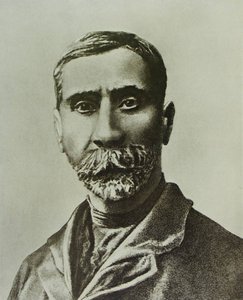
Niko Pirosmani
1862 - 1918 , Georgia
Datos clave
- Fecha De Nacimiento: 1862
- Lugar De Nacimiento: Mtskheta, Georgia
- Movimiento Artístico: Primitivismo, Naive art
- Nacionalidad: Georgiano
- Nombre Completo: Niko Pirosmani
- Obras Notables:
- Musha con una wineskin
- Boda georgiana
- Retrato de Zhdanevich
- Otros Nombres: Nikoláy Aslánovich Pirosmanashvíli
Artículos relacionados
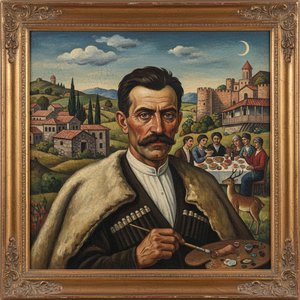
Niko Pirosmani: A Georgian Visionary – Life, Legacy, and the Poetics of Outsider Art
Discover the captivating life & art of Niko Pirosmani, Georgia’s celebrated primitivist painter. Explore his unique oilcloth paintings, lasting influence, and enduring legacy with OriginalUniqueArt.
Cultivating Visions: Rural Life & Social Commentary in Art History
Explore the rich history of rural life in art! Discover masterpieces from Dutch Masters to Van Gogh & Courbet. Uncover artistic movements, social significance & expert collecting insights at OriginalUniqueArt.
Cultivating Visions: A Historical Exploration of Rural Life in Painting
Explore the rich history of rural life in painting! Discover masterpieces from Dutch Masters to Courbet & Watteau. Uncover the artistic and social significance of idyllic landscapes and peasant scenes.

Echoes of Rural Life: Nostalgia, Labor & Identity in Art History
Explore the rich history of rural life in art! Discover how Realism captured labor & identity through masterpieces by Van Gogh, Millet & more. Expert analysis for collectors and enthusiasts.

Echoes of Rural Life: Art's Enduring Representations of the Countryside
Explore the rich history of rural life in art! Discover masterpieces from Millet to Mauve & beyond. Learn about Realism, Barbizon School & find inspiration for your home with OriginalUniqueArt.


