- Inicio

- Impresión en lienzo
- Nicolas de Largillière
- Tutor and Pupil
 Vista previa
 Compartir
 Compartir
 Ver detalles

 Descargar
 Ver similares
 Radiografía
 Presentación automática
Tutor and Pupil
 Acrylic On Canvas
- WallArt
- French Baroque Portraiture
 1685
1685 146.0 x 115.0 cm
 Galería Nacional de Arte
 Leer más
Giclée / Impresión de arte
Impresiones giclée o en lienzo de calidad de museo con producción rápida y opciones de acabado flexibles. ( Cambiar a pintura hecha a mano Cambiar a imagen)




P118B $10

P118H $10

P118W $10

P438Z $10

P508JH $12

P508YH $12

P805H $10

P805Z $10

P919BZ $10

P919G $10

P919XJ $10

P959ZH $10

P968JZ $12

W106C $8

W218G $10

W218JH $8

W218Y $10

W307PJ $10

W316G $10

W316PJ $8

W316Y $10

W398PJ $8

W4111J $10

W500HY $15

W500JH $15

W692G $12

W849H $8

W940BG $15

W953PJ $8




Elija entre nuestros tamaños predefinidos que respetan las proporciones originales de la obra.

Puede introducir sus propias dimensiones para adaptarse a un marco o espacio específico. Si el tamaño seleccionado no coincide con las proporciones de la imagen original, recortaremos la obra de arte o extenderemos la imagen con un borde con efecto espejo o de color sólido. Se enviará una maqueta digital para su aprobación antes de que comience la producción.
Tenga en cuenta que la vista previa en pantalla no refleja el recorte o la extensión real. Solo la maqueta mostrará con precisión la composición final.
Aunque existen tamaños personalizados, recomendamos seleccionar una dimensión de la lista predefinida para preservar las proporciones originales.
Envío a todo el mundo () en 2 semanas en lugar de las 4/5 semanas estándar. (31 julio)

Envío exprés gratuito a todo el mundo

Lienzo de lino de alta calidad

Seguro de envío completo

Garantía de reembolso de aranceles aduaneros

Garantía de fidelidad cromática exacta

Política de devolución de 60 días (solo por defectos)

Garantía de devolución del 100% del dinero

Oferta por volumen
 La opción de vidrio solo está disponible en tamaños inferiores a 110 cm.

Tutor and Pupil
Giclée / Impresión de arte
Tamaño de la reproducción
-


Precio total
$ 80
Detalles de la pieza
A Moment of Quiet Dignity: Nicolas de Largillière’s “Tutor and Pupil”
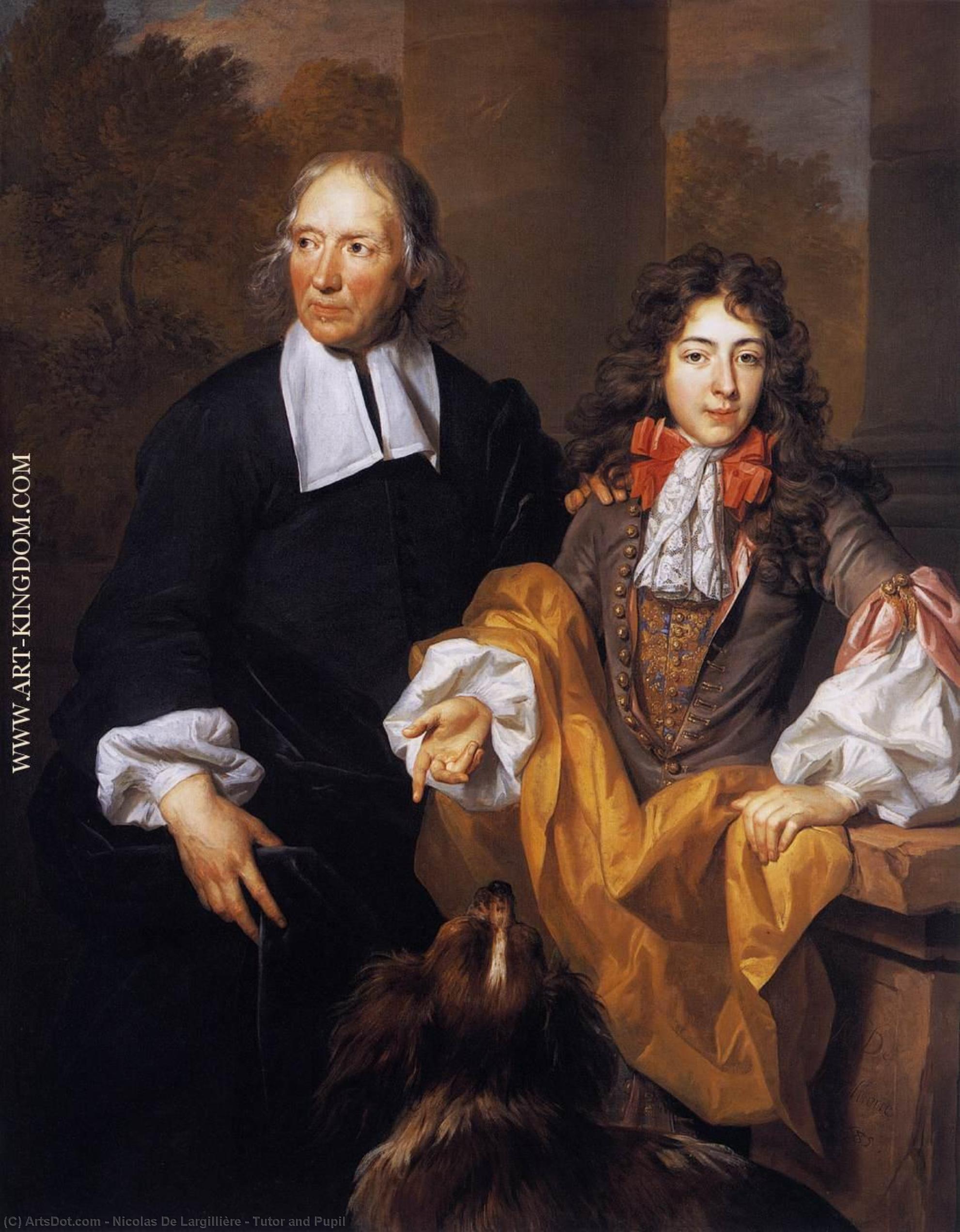
Nicolas de Largillière's "Tutor and Pupil," painted in 1685, isn’t merely a portrait; it’s a carefully constructed tableau of familial affection, intellectual guidance, and the subtle nuances of social standing within 17th-century France. This intimate scene, measuring 146 x 115 cm, captures a fleeting moment between a learned gentleman and his young protégé – a father and daughter relationship rendered with an exquisite blend of realism and idealized grace. Largillière, a master of the Parisian portraiture tradition, moved away from the overtly theatrical styles favored by some of his contemporaries, opting instead for a more restrained elegance that speaks volumes through its quiet observation.
The painting immediately draws the eye to the central figures: a mature man, likely a scholar or gentleman of considerable means, and a young boy, dressed in attire indicative of his status. The man’s pose – slightly turned away, hand resting on his knee – exudes an air of dignified composure, while the boy leans forward with an almost eager attentiveness. Notice the subtle details—the crisp white collar of the tutor, the carefully arranged folds of the boy's gown, and the meticulously rendered textures of their clothing. These elements aren’t simply decorative; they are crucial to establishing a clear hierarchy of social standing and conveying the established roles within this familial dynamic.
The Language of Baroque Portraiture
Largillière’s style is firmly rooted in the Baroque period, yet he transcends its more flamboyant tendencies. He employs a technique known as “chiaroscuro,” skillfully manipulating light and shadow to create depth and drama. The soft, diffused lighting illuminates the figures from an unseen source, casting gentle shadows that define their forms and contribute to the painting’s overall atmosphere of serenity. The brushwork is remarkably smooth and refined—a hallmark of Largillière's approach—allowing for a delicate rendering of skin tones and fabrics. This meticulous attention to detail speaks to his commitment to capturing not just likeness, but also character and emotion.
Furthermore, the composition itself is carefully considered. The figures are positioned within a shallow space, creating a sense of intimacy and immediacy. The inclusion of two dogs – one on either side of the pair – adds an unexpected layer of warmth and companionship to the scene. These animals aren’t merely decorative elements; they represent loyalty, affection, and the simple pleasures of domestic life. The placement of the dog closest to the boy suggests a bond between them, reinforcing the theme of mentorship and guidance.
Symbolism and Context
“Tutor and Pupil” resonates with broader themes prevalent in 17th-century French society – the importance of education, the transmission of knowledge from one generation to the next, and the complex dynamics within families. The subject matter itself—a father imparting wisdom to his child—was a common motif in portraiture during this era, reflecting a societal emphasis on social responsibility and familial values. The painting’s creation coincided with a period of relative stability under Louis XIV, known as the “Age of Gold,” which fostered an environment of artistic patronage and refinement.
Interestingly, Largillière's style draws inspiration from both Flemish masters like Anthony van Dyck and Dutch painters, blending their techniques to create a uniquely French aesthetic. As noted in scholarly research, elements such as the angular draperies and schematic drawing of the boy’s face are reminiscent of English portraiture, reflecting Largillière’s early training in London. The inclusion of the stone pedestal, with the artist's signature and date prominently displayed, further emphasizes his artistic pride and commitment to his craft.
A Timeless Portrait of Human Connection
“Tutor and Pupil” is more than just a beautiful painting; it’s a poignant meditation on human relationships. Largillière masterfully captures the quiet dignity of the man, the youthful curiosity of the boy, and the unspoken bond between them. The painting's enduring appeal lies in its ability to evoke a sense of warmth, intimacy, and timeless wisdom. A reproduction by OriginalUniqueArt offers an exceptional opportunity to bring this exquisite work into your home or office, allowing you to appreciate its beauty and significance for generations to come.
Biografía del artista
Nicolás de Largillière: Una Vida Dedicada al Retrato
- Nacido: París, Francia (1656)
- Fallecido: 1746
Nicolás de Largillière fue un prominente pintor de retratos barroco francés que floreció a finales del siglo XVII y principios del XVIII. Su carrera abarcó varios períodos significativos de la historia europea, reflejando tanto las tendencias artísticas como los cambios políticos. La habilidad de Largillière para capturar la esencia de sus sujetos – desde la realeza hasta personas comunes – lo estableció como uno de los retratistas líderes de su tiempo.
Primeros Años y Formación
La primera etapa de vida de Largillière estuvo marcada por considerables viajes. Nacido en París, fue llevado a Amberes a los tres años por su padre, comerciante. Pasó casi dos años en Londres como niño antes de regresar a Amberes. Un negocio fallido lo llevó a buscar un aprendizaje con Anton Goubau, pero Largillière se marchó después de poco tiempo. Un momento crucial llegó cuando viajó a Inglaterra y trabajó para Peter Lely, el retratista líder de la corte inglesa, durante cuatro años en Windsor. Esta experiencia bajo Lely demostró ser invaluable, exponiéndolo a las técnicas y estilos que moldearían su propio desarrollo artístico. La controversia en torno a la Conspiración de Rye House contra los católicos motivó su regreso a París.
Logros Destacados y Estilo Artístico
- Patronazgo Real: Largillière rápidamente ganó reconocimiento en París, atrayendo la atención del rey Jacobo II, quien lo convocó brevemente de vuelta a Inglaterra. Pintó retratos de Jacobo II, la reina María de Modena y el Príncipe de Gales (aunque este último probablemente se completó más tarde en París).
- Membresía en la Academia Francesa: En 1686, produjo un retrato de Charles Le Brun, entonces presidente de la Academia Francesa, asegurando su aceptación en esta prestigiosa institución. Esto lo marcó como una figura significativa dentro del mundo artístico parisino.
- Pintura Histórica y Retrato: Largillière fue documentado por la Academia Francesa como pintor histórico, reflejando una tendencia artística más amplia. Sin embargo, se le conoció principalmente por sus retratos, representando figuras prominentes de la época, incluyendo Pierre de Montesquiou, gobernador de Arras, y miembros de la familia real.
- El Retrato de la Familia Real (1709): Su monumental retrato de la familia de Luis XIV, mostrando al rey, Madame de Ventadour y sus nietos, ejemplifica su dominio de la composición y la captura de personalidades individuales dentro de un entorno grupal. Empleó técnicas del Renacimiento de disposición estructurada en esta obra.
- Retratos Posteriores: Hacia el final de su carrera, Largillière pintó numerosos retratos de nobles parisinos, a menudo adoptando una pose distintiva con los dedos extendidos ocultando una carta o mostrando una vista frontal de tres cuartos contra un fondo de columna dórica. Obras posteriores notables incluyen retratos del rey Augusto II de Polonia, Jacques-Antoine Arlaud y Nicolas Couston.
El estilo de Largillière se caracteriza por su elegancia, realismo y atención al detalle. Empleó hábilmente la luz y la sombra para crear profundidad y dimensión en sus retratos, capturando los rasgos de sus sujetos con una precisión notable. Si bien influenciado por el enfoque de Peter Lely, Largillière desarrolló una sensibilidad parisina distintiva, incorporando elementos del estilo cortesano francés a sus composiciones.
Legado e Influencia
Nicolás de Largillière dejó atrás un cuerpo sustancial de obra que proporciona valiosas perspectivas sobre el panorama social y cultural del siglo XVIII en Francia. Sus retratos son admirados por su habilidad técnica y su capacidad para transmitir el carácter y el estatus de sus modelos. Formó a varios artistas notables, incluyendo Jean-Baptiste Oudry y Jacob van Schuppen, quienes continuaron en la tradición rococó. El legado de Largillière se extiende más allá de sus obras individuales; desempeñó un papel significativo en dar forma al desarrollo del retrato en Francia y contribuyó al prestigio de la Academia Francesa.
Colecciones
Obras de Nicolás de Largillière pueden encontrarse en numerosos museos prestigiosos en todo el mundo, incluyendo:
- Museo Ashmolean (Universidad de Oxford)
- Museo Fitzwilliam (Universidad de Cambridge)
- Honolulu Museum of Art
- El Louvre
- National Gallery of Art (Washington D.C.)
- Nelson-Atkins Museum of Art (Kansas City, Missouri)
- Musée des Beaux-Arts de Estrasburgo
- Pinacoteca di Brera (Milán)
- Museo Calouste Gulbenkian
- Museu Nacional de Arte Antiga (Lisboa)
- Museum De Fundatie (Zwolle)
- Detroit Institute of Arts (Detroit)
- Speed Art Museum (Louisville)

Nicolas de Largillière
1656 - 1746 , Francia
Datos clave
- Artistas Influenciados:
- Jean-Baptiste Oudry
- Jacob van Schuppen
- Artistas Que Influyeron:
- Anton Goubau
- Peter Lely
- Fecha De Muerte: 1746
- Fecha De Nacimiento: 1656
- Lugar De Nacimiento: París, Francia
- Movimiento Artístico: Barroco, Rococó
- Nacionalidad: Francés
- Nombre Completo: Nicolas de Largillière
- Obras Notables:
- Retrato de la Marquesa
- François de Gontaut
- Magistrados Municipales
- Princesa rákóczi
- André François Alloys
- Elizabeth Throckmorton
- Anne Frances Throckmorton
- Pomona
- Autorretrato
Artículos relacionados

Goya: Las 25 Obras Maestras del Genio Español | Reproducciones de Arte en OriginalUniqueArt
Descubre las 25 obras maestras de Goya, el genio español. Explora retratos icónicos, 'Los Caprichos' y 'Las Pinturas Negras'. Reproducciones de arte en lienzo de alta calidad para decorar tu hogar con estilo. ¡Encuentra tu obra favorita en OriginalUniqueArt.com!
Los 10 Retratos Más Icónicos de la Historia del Arte | OriginalUniqueArt
Descubre los 10 retratos más influyentes de la historia del arte. Explora las historias detrás de obras maestras de Rembrandt, Van Gogh y Frida Kahlo. Encuentra reproducciones de alta calidad para tu hogar en OriginalUniqueArt.com

Solicitudes Comerciales
APS ofrece reproducciones de bellas artes y encargos personalizados desde 2004. Confían en nosotros corporaciones, hoteles y coleccionistas selectos para obras de arte de calidad museística, servicio discreto y soluciones artísticas completas. ¡Póngase en contacto con nosotros para obtener un presupuesto personalizado!
Vínculos Eternos: El Encargo de Retratos de Pareja al Óleo como Legado del Amor Romántico y la Herencia Familiar
Encargue un retrato al óleo único y atemporal para celebrar su amor. Artistas expertos crean obras maestras personalizadas que perduran generaciones. ¡Preserve su legado familiar con arte de calidad!
Echoes of Time: A Comprehensive Exploration of Vintage Portrait Art – Styles, Techniques & Enduring Appeal
Explore the captivating world of vintage portrait art! Discover styles, techniques & the enduring appeal of 19th-century masterpieces. Expert restoration, custom reproductions & appraisal services at OriginalUniqueArt.



