

 Vista previa
 Compartir
 Compartir
 Ver detalles
 Guía
Guía

 Descargar
 Ver artículos similares
 Radiografía
 Presentación de diapositivas
 Estadísticas
Self-Portrait
 Oil On Canvas
- WallArt
- Baroque Portraiture
 1707
1707- Early Modern
 93.0 x 73.0 cm
 Galería Nacional de Arte
 Leer más
Giclée / Impresión de arte
Impresiones giclée o en lienzo de calidad de museo con producción rápida y opciones de acabado flexibles. ( Encargar reproducción pintada a mano Ver versión en imagen digital)




P118B €10

P118H €10

P118W €10

P438Z €10

P508JH €12

P508YH €12

P805H €10

P805Z €10

P919BZ €10

P919G €10

P919XJ €10

P959ZH €10

P968JZ €12

W106C €8

W218G €10

W218JH €8

W218Y €10

W307PJ €10

W316G €10

W316PJ €8

W316Y €10

W398PJ €8

W4111J €10

W500HY €15

W500JH €15

W692G €12

W849H €8

W940BG €15

W953PJ €8




Elija entre nuestros tamaños predefinidos que respetan las proporciones originales de la obra.

Introduzca el ancho y el alto que necesite para adaptarse a su marco o pared. Una impresión solo puede recortarse, nunca hacerse más grande que la imagen original, por lo que un tamaño con una forma distinta perderá parte de la obra. Le enviaremos una maqueta digital para su aprobación antes de realizar cualquier impresión. La imagen que se muestra en esta página no refleja el recorte real; solo la maqueta lo hace.
Envío a todo el mundo () en 2 semanas en lugar de las 4/5 semanas estándar. (21 octubre)

Envío exprés gratuito a todo el mundo

Lienzo de lino de alta calidad

Seguro de envío completo

Garantía de reembolso de impuestos aduaneros

Garantía de fidelidad cromática exacta

Política de devolución de 100 días (solo por defectos)

Garantía de devolución del 100% del dinero

Oferta por volumen
 La opción de vidrio solo está disponible en tamaños inferiores a 110 cm.

Self-Portrait
Giclée / Impresión de arte
Tamaño de la reproducción
-


Precio total
€ 70
A Window into Parisian Baroque Elegance
To stand before Nicolas de Largillière’s Self-Portrait is to encounter more than a mere likeness; it is to step through a portal into the refined, theatrical world of early 18th-century Paris. Created in 1707, this masterpiece serves as a profound meditation on identity, status, and the act of seeing. The artist presents himself not just as a creator, but as a figure of immense dignity and composure, draped in the sartorial splendor of his era. Through his unwavering gaze, Largillière invites the viewer into an intimate dialogue, capturing a moment where the boundaries between the artist’s reality and his painted persona begin to blur.
The composition is a masterclass in Baroque grandeur, utilizing a dynamic tableau that extends far beyond the central figure. While the artist commands the foreground, the inclusion of secondary figures—a gentleman to the left, others to the right, and a woman positioned above—creates a sense of social interconnectedness and movement. This arrangement speaks eloquently to the social conventions of the time, where portraiture functioned as a vital tool for documenting one's place within the burgeoning bourgeois and aristocratic circles of France.
The Mastery of Light and Texture
Technically, the painting is a triumph of chiaroscuro, the dramatic interplay of light and shadow that defines the Baroque spirit. Largillière employs these sharp contrasts to sculpt the forms within the frame, lending a three-dimensional, almost sculptural quality to the subject's face and the voluminous folds of his attire. The light catches the intricate textures of his wig and the sheen of his fine clothing, conveying an unmistakable sense of wealth and sophistication. Every brushstroke is calculated to enhance the luminosity of the skin and the tactile depth of the drapery.
Executed with meticulous precision in oil on canvas, the work demonstrates a sophisticated command of pigment layering. The artist achieves subtle gradations of color that allow for a seamless transition between light and dark, creating a sense of atmosphere that feels both heavy with history and vibrantly alive. For the discerning collector or interior designer, this technical brilliance translates into a piece that possesses a commanding presence, capable of anchoring a room with its rich tonal complexity and enduring classical beauty.
Symbolism and the Artist's Legacy
Beyond the surface level of fashion and form, the setting of the portrait is steeped in symbolic significance. The inclusion of a stately room adorned with a statue serves as an emblem of virtù—the cultivation of intellect and artistic excellence. Such classical elements were frequently integrated into aristocratic interiors to signal a connection to antiquity and high culture. By placing himself within this environment, Largillière asserts his status not merely as a craftsman, but as an intellectual participant in the grand cultural narrative of his age.
This self-portrait remains a captivating study of self-fashioning. It captures the essence of an era undergoing profound transformation, where the rise of the middle class demanded art that reflected individual importance and personal achievement. For those seeking to adorn their spaces with works of historical depth, this reproduction offers more than decoration; it provides a window into the soul of the French Baroque, offering a timeless sense of elegance, prestige, and emotional resonance.
Preguntas y respuestas
¿Los colores de "Self-Portrait" de Nicolas de Largillière son saturados o tenues?
La paleta de "Self-Portrait" tiene una saturación Muted.
¿Dónde puedo ver una vista previa de "Self-Portrait"?
Para previsualizar una reproducción de "Self-Portrait" de Nicolas de Largillière, abra la página de Vista previa de la obra.
¿De qué está hecho "Self-Portrait" y en qué estilo se encuentra?
"Self-Portrait" está realizada en Oil On Canvas, con el estilo Baroque Portraiture.
Biografía del artista
Nicolás de Largillière: Una Vida Dedicada al Retrato
- Nacido: París, Francia (1656)
- Fallecido: 1746
Nicolás de Largillière fue un prominente pintor de retratos barroco francés que floreció a finales del siglo XVII y principios del XVIII. Su carrera abarcó varios períodos significativos de la historia europea, reflejando tanto las tendencias artísticas como los cambios políticos. La habilidad de Largillière para capturar la esencia de sus sujetos – desde la realeza hasta personas comunes – lo estableció como uno de los retratistas líderes de su tiempo.
Primeros Años y Formación
La primera etapa de vida de Largillière estuvo marcada por considerables viajes. Nacido en París, fue llevado a Amberes a los tres años por su padre, comerciante. Pasó casi dos años en Londres como niño antes de regresar a Amberes. Un negocio fallido lo llevó a buscar un aprendizaje con Anton Goubau, pero Largillière se marchó después de poco tiempo. Un momento crucial llegó cuando viajó a Inglaterra y trabajó para Peter Lely, el retratista líder de la corte inglesa, durante cuatro años en Windsor. Esta experiencia bajo Lely demostró ser invaluable, exponiéndolo a las técnicas y estilos que moldearían su propio desarrollo artístico. La controversia en torno a la Conspiración de Rye House contra los católicos motivó su regreso a París.
Logros Destacados y Estilo Artístico
- Patronazgo Real: Largillière rápidamente ganó reconocimiento en París, atrayendo la atención del rey Jacobo II, quien lo convocó brevemente de vuelta a Inglaterra. Pintó retratos de Jacobo II, la reina María de Modena y el Príncipe de Gales (aunque este último probablemente se completó más tarde en París).
- Membresía en la Academia Francesa: En 1686, produjo un retrato de Charles Le Brun, entonces presidente de la Academia Francesa, asegurando su aceptación en esta prestigiosa institución. Esto lo marcó como una figura significativa dentro del mundo artístico parisino.
- Pintura Histórica y Retrato: Largillière fue documentado por la Academia Francesa como pintor histórico, reflejando una tendencia artística más amplia. Sin embargo, se le conoció principalmente por sus retratos, representando figuras prominentes de la época, incluyendo Pierre de Montesquiou, gobernador de Arras, y miembros de la familia real.
- El Retrato de la Familia Real (1709): Su monumental retrato de la familia de Luis XIV, mostrando al rey, Madame de Ventadour y sus nietos, ejemplifica su dominio de la composición y la captura de personalidades individuales dentro de un entorno grupal. Empleó técnicas del Renacimiento de disposición estructurada en esta obra.
- Retratos Posteriores: Hacia el final de su carrera, Largillière pintó numerosos retratos de nobles parisinos, a menudo adoptando una pose distintiva con los dedos extendidos ocultando una carta o mostrando una vista frontal de tres cuartos contra un fondo de columna dórica. Obras posteriores notables incluyen retratos del rey Augusto II de Polonia, Jacques-Antoine Arlaud y Nicolas Couston.
El estilo de Largillière se caracteriza por su elegancia, realismo y atención al detalle. Empleó hábilmente la luz y la sombra para crear profundidad y dimensión en sus retratos, capturando los rasgos de sus sujetos con una precisión notable. Si bien influenciado por el enfoque de Peter Lely, Largillière desarrolló una sensibilidad parisina distintiva, incorporando elementos del estilo cortesano francés a sus composiciones.
Legado e Influencia
Nicolás de Largillière dejó atrás un cuerpo sustancial de obra que proporciona valiosas perspectivas sobre el panorama social y cultural del siglo XVIII en Francia. Sus retratos son admirados por su habilidad técnica y su capacidad para transmitir el carácter y el estatus de sus modelos. Formó a varios artistas notables, incluyendo Jean-Baptiste Oudry y Jacob van Schuppen, quienes continuaron en la tradición rococó. El legado de Largillière se extiende más allá de sus obras individuales; desempeñó un papel significativo en dar forma al desarrollo del retrato en Francia y contribuyó al prestigio de la Academia Francesa.
Colecciones
Obras de Nicolás de Largillière pueden encontrarse en numerosos museos prestigiosos en todo el mundo, incluyendo:
- Museo Ashmolean (Universidad de Oxford)
- Museo Fitzwilliam (Universidad de Cambridge)
- Honolulu Museum of Art
- El Louvre
- National Gallery of Art (Washington D.C.)
- Nelson-Atkins Museum of Art (Kansas City, Missouri)
- Musée des Beaux-Arts de Estrasburgo
- Pinacoteca di Brera (Milán)
- Museo Calouste Gulbenkian
- Museu Nacional de Arte Antiga (Lisboa)
- Museum De Fundatie (Zwolle)
- Detroit Institute of Arts (Detroit)
- Speed Art Museum (Louisville)

Nicolas de Largillière
1656 - 1746 , Francia
Datos clave
- Artistas Influenciados:
- Jean-Baptiste Oudry
- Jacob van Schuppen
- Artistas Que Influyeron:
- Anton Goubau
- Peter Lely
- Fecha De Muerte: 1746
- Fecha De Nacimiento: 1656
- Lugar De Nacimiento: París, Francia
- Movimiento Artístico: Barroco, Rococó
- Nacionalidad: Francés
- Nombre Completo: Nicolas de Largillière
- Obras Notables:
- Retrato de la Marquesa
- François de Gontaut
- Magistrados Municipales
- Princesa rákóczi
- André François Alloys
- Elizabeth Throckmorton
- Anne Frances Throckmorton
- Pomona
- Autorretrato
Artículos relacionados
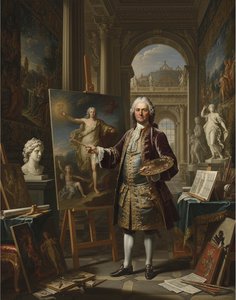
Charles Le Brun: Master of French Baroque Classicism & His Enduring Legacy
Explore the life & art of Charles Le Brun, master of French Baroque Classicism. Discover his royal commissions, influence on Versailles, and enduring legacy through detailed analysis & stunning artworks.
Simon Vouet: A Baroque Master's Journey from Italian Influence to French Classicism
Explore the life & art of Simon Vouet, a pivotal French Baroque painter who introduced Italian styles to France. Discover his masterpieces and lasting influence on 17th-century art.

Barroco Sublime: 10 Obras Maestras que Definieron una Época |
Descubre las 10 obras maestras del Barroco que marcaron una época. Caravaggio, Bernini y Velázquez cobran vida en . Reproducciones de arte de calidad museo para decorar tu hogar con elegancia. ¡Explora la colección online!
The Grandeur of Baroque Portraiture: Power, Emotion & Artistic Innovation
Explore the grandeur of Baroque portraiture! Discover Rubens, Van Dyck & the masters of 17th-century art. Uncover symbolism, techniques & lasting influence. Expert insights for collectors and enthusiasts.

Drama Barroca: Llevando la Grandeza y la Emoción a los Interiores Contemporáneos
Descubre cómo el drama y la grandeza del arte barroco pueden transformar tus interiores. Guía experta, inspiración y reproducciones de alta calidad en .


