Vista previa
 Compartir
 Compartir
 Ver detalles
 Guía
Guía

 Descargar
 Ver artículos similares
 Radiografía
 Presentación de diapositivas
 Estadísticas
Number 28


 Leer más
La obra de arte que se muestra en esta página está protegida por las leyes de propiedad intelectual, lo que significa que no podemos crear ni vender legalmente una reproducción idéntica. Esta protección se hace cumplir en virtud de acuerdos internacionales como el Convenio de Berna y por las leyes nacionales, incluidas aquellas establecidas por el Ley de derechos de autor de los EE. UU. - Título 17.
Este método cumple plenamente con las normativas de derechos de autor, ya que no implica la copia ni la duplicación de la obra protegida. En su lugar, se trata de una reinterpretación creativa: una nueva pintura influenciada por la original, pero que no es idéntica a ella.
Giclée / Impresión de arte
Impresiones giclée o en lienzo de calidad de museo con producción rápida y opciones de acabado flexibles. ( Encargar reproducción pintada a mano Ver versión en imagen digital)




P118B €10

P118H €10

P118W €10

P438Z €10

P508JH €12

P508YH €12

P805H €10

P805Z €10

P919BZ €10

P919G €10

P919XJ €10

P959ZH €10

P968JZ €12

W106C €8

W218G €10

W218JH €8

W218Y €10

W307PJ €10

W316G €10

W316PJ €8

W316Y €10

W398PJ €8

W4111J €10

W500HY €15

W500JH €15

W692G €12

W849H €8

W940BG €15

W953PJ €8




Elija entre nuestros tamaños predefinidos que respetan las proporciones originales de la obra.

Introduzca el ancho y el alto que necesite para adaptarse a su marco o pared. Una impresión solo puede recortarse, nunca hacerse más grande que la imagen original, por lo que un tamaño con una forma distinta perderá parte de la obra. Le enviaremos una maqueta digital para su aprobación antes de realizar cualquier impresión. La imagen que se muestra en esta página no refleja el recorte real; solo la maqueta lo hace.
Envío a todo el mundo () en 2 semanas en lugar de las 4/5 semanas estándar. (18 octubre)

Envío exprés gratuito a todo el mundo

Lienzo de lino de alta calidad

Seguro de envío completo

Garantía de reembolso de impuestos aduaneros

Garantía de fidelidad cromática exacta

Política de devolución de 100 días (solo por defectos)

Garantía de devolución del 100% del dinero

Oferta por volumen
 La opción de vidrio solo está disponible en tamaños inferiores a 110 cm.

Number 28
Giclée / Impresión de arte
Tamaño de la reproducción
-


Precio total
€ 70
A Symphony of Color and Fluidity
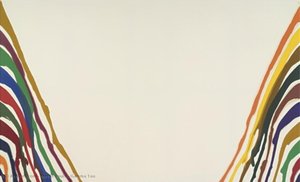
In the realm of mid-century abstraction, few works capture the ethereal essence of movement as profoundly as Morris Louis’s Number 28. Created in 1961, this masterpiece stands as a definitive pillar of the Color Field painting movement, inviting the viewer into a meditative space where boundaries between form and pigment dissolve. At first glance, the composition presents a striking minimalist architecture: two vertical bands of vibrant, saturated color that descend like celestial ribbons against a stark, luminous white void. There is no traditional subject matter here—no figures to anchor the eye or landscapes to ground the soul—only the pure, unadulterated interplay of light and hue.
The brilliance of Number 28 lies in its breathtaking use of color. Within the vertical columns, a kaleidoscopic spectrum unfolds, ranging from deep, oceanic blues and verdant greens to fiery oranges and warm yellows. These colors do not sit static upon the canvas; rather, they appear to breathe and pulse. Through a masterful layering of tones, Louis achieves a sense of translucent depth, as if one is peering through layers of stained glass or watching sunlight filter through tropical waters. This fluidity creates an organic, living quality that transforms the flat surface into a window of infinite, swirling energy.
The Alchemy of Staining and Technique
To understand the emotional resonance of this work, one must appreciate the revolutionary technique employed by Louis. Moving away from the heavy, impasto textures of the Abstract Expressionists who preceded him, Louis embraced the method of "staining." Utilizing thinned acrylic paints—specifically the pioneering Magna paint—he allowed the pigment to soak directly into the unprimed canvas fibers. This process ensures that the color becomes one with the fabric itself, eliminating the distinction between the medium and the support. The result is a surface that possesses a remarkable luminosity, where the edges of the color fields are not defined by harsh lines, but by soft, bleeding transitions that suggest an eternal state of flux.
This technique imbues the painting with a sense of effortless grace. There is no evidence of the artist's brushstroke or physical struggle; instead, there is only the record of gravity and flow. This lack of tactile resistance contributes to the artwork’s profound sense of serenity. For the collector or interior designer, this piece offers a unique aesthetic advantage: it provides a focal point that is both commanding in its presence and soothing in its execution. It does not demand attention through aggression, but rather captivates through a quiet, hypnotic magnetism.
A Legacy of Serenity for Modern Spaces
Beyond its technical mastery, Number 28 serves as an emotional sanctuary. The verticality of the composition evokes a sense of aspiration and monumentality, much like the soaring columns of classical architecture, yet it remains intimately personal and soft. It is a work that celebrates the beauty of simplicity and the power of pure perception. In a modern interior, a high-quality reproduction of this piece acts as a sophisticated anchor, bringing a sense of calm, intellectual depth, and timeless elegance to any room.
Whether placed in a minimalist gallery setting or a richly textured living space, the painting’s ability to harmonize diverse color palettes makes it an invaluable asset for those seeking to curate an atmosphere of refined tranquility. It remains a testament to Morris Louis's vision: a world where color is not merely applied to a surface, but becomes the very soul of the art itself.
Preguntas y respuestas
¿"Number 28" de Morris Louis utiliza contrastes fuertes o armonías suaves?
La composición cromática de "Number 28" de Morris Louis combina un contraste Statement con una armonía Discordant Palette.
¿Qué comparte "Number 28" con el resto de la obra de Morris Louis?
"Number 28" pertenece a la obra Color Field Painting de Morris Louis, cuyos temas recurrentes incluyen color field, abstract expressionism, post-war american art, experimentation, innovation, process, minimalist, serene composition.
¿Qué tan armoniosos son los colores de "Number 28" de Morris Louis?
Los colores de "Number 28" de Morris Louis muestran una armonía Discordant Palette. La armonía describe cómo se relacionan los colores entre sí.
Biografía del artista
Primeros Años y Educación
- Nacimiento: Morris Louis Bernstein, 28 de noviembre de 1912, Baltimore, Maryland
- Padres: Louis Bernstein (vendedor de muebles) y Cecelia Luckman Bernstein.
- Educación: Asistió a escuelas públicas en Baltimore; Instituto de Arte Aplicado y Fino de Maryland (ahora MICA), 1929-1932. No completó un título.
- Influencias tempranas incluyeron a Eugene Speicher y Paul Cézanne.
- Mostró un interés temprano en el arte, alentado por su familia a pesar de las oportunidades limitadas en Baltimore.
Desarrollo como Artista e Influencias Clave
- 1930s: Trabajó varios empleos ocasionales para mantenerse mientras pintaba (pelador de verduras, lavandería, investigación de la Gallup Poll).
- 1934-1936: Participó en el proyecto mural del Proyecto de Arte Público de las Artes (WPA) bajo Sam Swerdloff.
- 1936-1937: Se mudó a Nueva York; experimentó con técnicas en el Taller de Siqueiros.
- Descubrimiento de la Pintura Magna (1948): Un momento crucial – Louis pionero en el uso de pintura acrílica basada en aceite, Magna, creada para él por Leonard Bocour y Sam Golden. Esto permitió una mayor fluidez y transparencia en su trabajo.
- Influencia de Helen Frankenthaler: En 1953, Louis y Kenneth Noland visitaron el estudio de Frankenthaler y quedaron profundamente impresionados por sus pinturas de manchas (particularmente "Montañas y Mar"). Esto inspiró su experimentación con técnicas de vertido y manchado.
Las Pinturas Velo e Innovaciones del Campo de Color
- Pinturas Velo Maduras (1954): Caracterizadas por capas superpuestas de color transparente vertidas y manchadas sobre lienzo dimensionado o no dimensionado.
- Técnica: La pintura extremadamente diluida se aplicaba a un lienzo sin imprimación ni estiramiento, permitiendo que fluyera sobre la superficie inclinada, creando velos de color translúcidos. Esto eliminó los trazos de pincel y enfatizó la planitud.
- Pintura del Campo de Color: Louis se convirtió en una figura central en la pintura del campo de color, simplificando el espacio pictórico y enfatizando las superficies planas de intenso color. Formó parte del movimiento Washington Color School.
- Series y Estilos: Más allá de las pinturas Velo, exploró series como florales, columnas (1960), desenvueltos (1960-61) – con remolinos de color opaco – y pinturas a rayas (1961-62).
Logros Mayores y Significado Histórico
- Pionero en la Pintura del Campo de Color: Louis es reconocido como un innovador clave en la pintura del campo de color, junto con artistas como Kenneth Noland y Helen Frankenthaler.
- Influencia en el Expresionismo Abstracto: Su trabajo expandió los límites del expresionismo abstracto al centrarse en el color y la planitud en lugar del gesto o la composición.
- Washington Color School: Un contribuyente significativo a este influyente movimiento, que enfatizó un enfoque reduccionista de la pintura.
- Destrucción de Obras: Notablemente, Louis destruyó muchas de sus pinturas entre 1955 y 1957, reflejando una autoevaluación crítica de su trabajo.
- Legado: Su énfasis en el color, la planitud y la materialidad de la pintura continúa influyendo en los artistas contemporáneos.
Últimos Años y Muerte
- Louis continuó pintando prolíficamente hasta su muerte.
- Muerte: Falleció el 7 de septiembre de 1962, en Washington, D.C., a la edad de 49 años.
- Exposición Conmemorativa (1963): Se llevó a cabo una exposición significativa en el Museo Solomon R. Guggenheim poco después de su muerte.
- Exposiciones Retrospectivas: Siguieron retrospectivas importantes en el Museum of Fine Arts, Boston (1967), y la National Gallery of Art, Washington, D.C. (1976).

Morris Louis
1912 - 1962 , Estados Unidos de América
Datos clave
- Artistas Que Influyeron:
- Helen Frankenthaler
- Cézanne
- Fecha De Fallecimiento: 7 de septiembre de 1962
- Fecha De Nacimiento: 28 de noviembre de 1912
- Influenciado Por Artistas:
- Kenneth Noland
- Washington Color School
- Lugar De Nacimiento: Baltimore, Estados Unidos
- Movimiento Artístico: Campo de color
- Nacionalidad: Estadounidense
- Nombre Completo: Morris Louis Bernstein
- Obras Notables:
- Alto
- Número 1-36
- Donde
- Número 1-68
- Gamma Tau
- Tercer elemento
- Delta Theta
Artículos relacionados
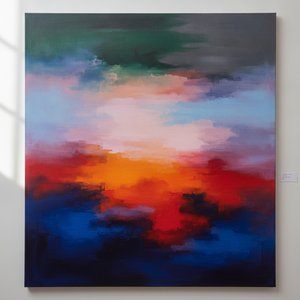
Color Field Painting: The Emotional Power of Pure Abstraction and Chromatic Depth
Explore the profound emotional depth of Color Field painting. Discover the history of mid-century abstraction, from Rothko to Newman, and learn how pure color transforms the viewer's experience through our expert art history guide.

Las 10 Obras Maestras del Azul Pizarra: Arte, Historia y Decoración
Descubre las 10 pinturas más famosas dominadas por el azul pizarra. Explora la historia, técnica y belleza de Monet, Van Gogh y otros maestros. Encuentra reproducciones de arte exclusivas para decorar tu hogar en .
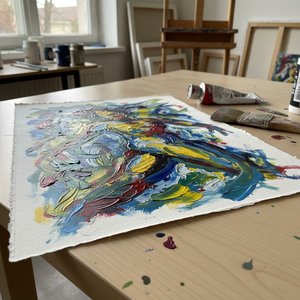
Acrílico sobre Papel: Materialidad y Expresión en el Arte Contemporáneo
Explore la fascinante técnica de la pintura acrílica sobre papel en el arte contemporáneo. Descubra la materialidad, las técnicas mixtas y consejos para coleccionistas exigentes. Guía experta.
Serene Blue Backgrounds: Discover Soulful Art to Transform Your Space with Timeless Elegance
Transform your home with soulful blue art. From serene Monet impressions to modern textured sculptures, discover curated masterpieces designed to inspire calm. Explore expert art consultations and bespoke hand-painted reproductions to create your personal sanctuary.

Morris Louis: Pioneering Color Field Painting & Abstract Expressionism's Legacy
Explore the groundbreaking abstract expressionism of Morris Louis, a pioneer of Color Field painting. Discover his innovative techniques, influential series & lasting legacy in post-war American art. Learn more at OriginalUniqueArt.