

 Ver en contexto
 Enviar
 Compartir
 Detalles

 Descargar
 Similares
 Radiografía
 Presentación de diapositivas
 Estadísticas
Child with Doll


 Ver más
Giclée / Impresión de arte
Impresiones giclée o en lienzo de calidad de museo con producción rápida y opciones de acabado flexibles. ( Comprar pintura hecha a mano Cambiar a imagen digital)




P118B $10

P118H $10

P118W $10

P438Z $10

P508JH $12

P508YH $12

P805H $10

P805Z $10

P919BZ $10

P919G $10

P919XJ $10

P959ZH $10

P968JZ $12

W106C $8

W218G $10

W218JH $8

W218Y $10

W307PJ $10

W316G $10

W316PJ $8

W316Y $10

W398PJ $8

W4111J $10

W500HY $15

W500JH $15

W692G $12

W849H $8

W940BG $15

W953PJ $8




Elija entre nuestros tamaños predefinidos que respetan las proporciones originales de la obra.

Puede introducir sus propias dimensiones para adaptarse a un marco o espacio específico. Si el tamaño seleccionado no coincide con las proporciones de la imagen original, recortaremos la obra de arte o extenderemos la imagen con un borde con efecto espejo o de color sólido. Se enviará una maqueta digital para su aprobación antes de que comience la producción.
Tenga en cuenta que la vista previa en pantalla no refleja el recorte o la extensión real. Solo la maqueta mostrará con precisión la composición final.
Aunque existen tamaños personalizados, recomendamos seleccionar una dimensión de la lista predefinida para preservar las proporciones originales.
Envío a todo el mundo () en 2 semanas en lugar de las 4/5 semanas estándar. (12 septiembre)

Envío exprés gratuito a todo el mundo

Lienzo de lino de alta calidad

Seguro de envío total

Garantía de reembolso de impuestos aduaneros

Garantía de fidelidad cromática exacta

Política de devolución de 100 días (solo por defectos)

Garantía de devolución del 100% del dinero

Descuento por cantidad
 La opción de vidrio solo está disponible en tamaños inferiores a 110 cm.

Child with Doll
Giclée / Impresión de arte
Dimensiones de la reproducción
-


Precio total final
$ 80
Child with Doll – A Quiet Revolution in Color
Milton Avery’s “Child with Doll,” painted in 1944, stands as a testament to the artist's masterful manipulation of color and form—a cornerstone of American Modernism that continues to resonate with audiences today. More than just a depiction of domestic tranquility, it embodies Avery’s profound belief in the expressive power of abstraction, prioritizing emotional resonance over literal representation. The artwork immediately captivates with its bold palette dominated by shades of orange and pink against a grounding expanse of grey—a deliberate choice that reflects Avery's fascination with Matisse and his pioneering exploration of chromatic harmony.Composition & Style: Embracing Simplicity
The canvas is centered around two figures – a mother and child – rendered in simplified geometric shapes: rectangles and ovals. These forms are delineated by thick, confident lines, creating strong visual anchors that convey stability and warmth. Avery eschews traditional perspective, opting instead for a frontal view that emphasizes the immediacy of observation and invites contemplation. This stylistic decision aligns perfectly with the burgeoning interest in Surrealism at the time, where artists sought to bypass rational thought and tap into subconscious impulses—a trend Avery skillfully navigated through his distinctive visual language. The overall impression is one of serene stillness, punctuated by subtle textural variations achieved through broad brushstrokes that lend a palpable sense of materiality to the canvas.Technique & Materials: Palette Knife Texture
Avery’s technique involved applying oil paint onto canvas using a palette knife—a method that imparts a distinctive roughness and physicality to the surface. This deliberate choice contributes significantly to the artwork's emotional impact, mirroring the tactile qualities of everyday life and grounding it in a tangible reality. The careful layering of colors creates depth and luminosity, capturing the diffused light of an interior space with remarkable accuracy. The artist’s meticulous attention to detail—particularly evident in the rendering of the doll—suggests a deep appreciation for craftsmanship and a desire to convey nuanced emotional states through subtle visual cues.Symbolism & Emotional Resonance: Protection and Nurturing
“Child with Doll” transcends mere representation; it speaks to universal themes of maternal care, innocence, and vulnerability. The orange background symbolizes warmth, comfort, and vitality—elements crucial to fostering a secure environment for the child. Avery’s use of color is not arbitrary but purposeful, conveying emotions rather than documenting facts. Like many folk art pieces from the period, this artwork prioritizes expressive form over precise detail, inviting viewers to engage with its emotional core. It's a quiet affirmation of familial bonds and a celebration of the beauty found in simple gestures—a timeless message conveyed through Avery’s groundbreaking artistic vision.Historical Context: Matisse & The Dawn of Abstract Expressionism
Milton Avery emerged during a pivotal moment in American art history, coinciding with the rise of Surrealism and the burgeoning influence of European avant-garde movements. His work stands apart from prevailing trends due to its unwavering commitment to color theory—a principle championed by Henri Matisse—and his pioneering exploration of abstraction as a vehicle for conveying emotion. Avery’s legacy extends far beyond his own lifetime, profoundly impacting subsequent generations of artists who embraced the expressive freedom offered by non-representational painting. “Child with Doll” remains an enduring emblem of this artistic revolution, demonstrating that beauty and meaning can be found in forms stripped bare of convention.Biografía del artista
Primeros años y carrera
Milton Clark Avery, un pintor modernista estadounidense, nació el 7 de marzo de 1885 en Altmar, Nueva York. Se mudó a Connecticut en 1898 y posteriormente a la ciudad de Nueva York. Hijo de un curtidor de cuero, Avery comenzó a trabajar en una fábrica local a los 16 años y se mantuvo económicamente con diversos trabajos de cuello azul.Trayectoria artística
El interés de Avery por el arte lo llevó a tomar clases en la Liga de Estudiantes de Arte de Connecticut en Hartford. Practicó la pintura en la oscuridad, recibiendo una educación artística conservadora. En 1917, comenzó a trabajar por las noches para poder pintar durante el día.Matrimonio y apoyo
En 1924, Avery conoció a Sally Michel, una joven estudiante de arte, y se casaron en 1926. Los ingresos de ella como ilustradora le permitieron concentrarse más en la pintura. Tuvieron una hija, March Avery, en 1932.Ascenso a la prominencia
El gran avance de Avery llegó cuando Roy Neuberger descubrió su obra y decidió promocionarla. Neuberger compró más de 100 pinturas de Avery, incluyendo *Gaspé Landscape*, y las prestó o donó a museos de todo el mundo. Esta exposición llevó a Avery a convertirse en un pintor muy respetado y exitoso.Estilo artístico e influencias
La obra de Avery es fundamental para la pintura abstracta estadounidense, centrándose en las relaciones de color. Su estilo estuvo influenciado por el fauvismo francés y el expresionismo alemán, con sus primeras obras que se asemejan a las pinturas de Ernst Ludwig Kirchner. En la década de 1940, el estilo de Avery se volvió más similar al de Henri Matisse, utilizando el color con gran sutileza.- Obras clave:
- Gaspé Landscape
- Central Park
- The Flight of Birds
- Museos que exhiben la obra de Avery:
- La Colección Phillips, Washington, D.C. Ver las obras de Milton Avery en OriginalUniqueArt
- Hospital Montefiore, Nueva York
- Asociaciones notables:
- Adolph Gottlieb
- Mark Rothko
Legado y muerte
Avery falleció el 3 de enero de 1965 en el Hospital Montefiore en el Bronx, Nueva York. Está enterrado en el cementerio de artistas en Woodstock, Condado de Ulster, Nueva York. Después de su muerte, su viuda, Sally Avery, donó sus documentos personales a los Archivos del Arte Americano, un centro de investigación de la Institución Smithsonian. Explore más artistas en OriginalUniqueArt
Milton Avery
1885 - 1965 , Estados Unidos de América
Datos clave
- Artistas Que Influyeron:
- Ernst Ludwig Kirchner
- Henri Matisse
- Fecha De Fallecimiento: 3 de enero de 1965
- Fecha De Nacimiento: 7 de marzo de 1885
- Influenciado A: ['Abstract Expressionismo']
- Lugar De Nacimiento: Altmar, Estados Unidos
- Movimiento Artístico: Modernismo americano
- Nacionalidad: Estadounidense
- Nombre Completo: Milton Avery
- Obras Notables:
- Gaspé Landscape
- Central Park
- The Flight of Birds
Artículos relacionados

The Heart of Folk Art: Discover the Beauty of Tradition and Storytelling
Explore the profound beauty of folk art through its rich history and storytelling traditions. Discover how Naive Art and cultural heritage preserve ancestral narratives through vibrant color and symbolism for the modern collector.

The Pure Charm of Naïve Art: Finding Beauty in Simplicity, Soul, and the Unfiltered Vision
Discover the profound beauty of Naïve Art. Explore how self-taught masters bypass academic tradition to capture raw emotional truth through vibrant color and soulful simplicity. A cultural journey for the true art lover seeking depth beyond convention.
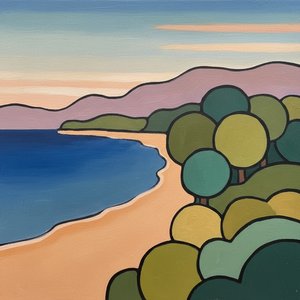
Milton Avery: A Poetic Vision of Color & Form in American Modernism
Explore the captivating world of Milton Avery, a pivotal American Modernist painter. Discover his innovative use of color, simplified forms & lasting influence on Abstract Expressionism. Learn more at OriginalUniqueArt.

Ecos de la Tradición: El Legado Perenne del Arte Popular y sus Maestros
Descubre el fascinante mundo del arte popular y sus maestros. Explora su historia, figuras clave como los Prymachenko y la diversidad cultural que lo define. ¡Un viaje a través de las tradiciones artísticas más auténticas!

The Soul of Tradition: Exploring the Vibrant Heritage and Naive Mastery of Global Folk Art
Discover the profound beauty of folk art through a cultural lens. Explore how naive masterpieces and vibrant global traditions preserve heritage, offering timeless inspiration for collectors and art enthusiasts seeking authenticity and soul in every brushstroke.
