- Inicio

- Reproducción al óleo
- Max Beckmann
- Perseus. Triptych

 Comprar impresión Comprar imagen en alta resolución
 Enviar
 Compartir
 Detalles
 Añadir a favoritos

 Descargar
 Similares
 Radiografía
 Presentación de diapositivas
Perseus. Triptych


 Ver más
Reproducción al óleo hecha a mano
Óleo sobre lienzo pintado a mano en el tamaño y marco de su elección, realizado por encargo por nuestros artistas.




P118B $10

P118H $10

P118W $10

P438Z $10

P508JH $12

P508YH $12

P805H $10

P805Z $10

P919BZ $10

P919G $10

P919XJ $10

P959ZH $10

P968JZ $12

W106C $8

W218G $10

W218JH $8

W218Y $10

W307PJ $10

W316G $10

W316PJ $8

W316Y $10

W398PJ $8

W4111J $10

W500HY $15

W500JH $15

W692G $12

W849H $8

W940BG $15

W953PJ $8




Elija entre nuestros tamaños predefinidos que respetan las proporciones originales de la obra.

Puede ingresar sus propias dimensiones para adaptarse a un marco o espacio específico. Si el tamaño seleccionado no coincide con las proporciones de la imagen original, recortaremos la obra o extenderemos la pintura con elementos adicionales pintados a mano. Se le enviará una maqueta digital para su aprobación antes de comenzar la producción.
Tenga en cuenta que la vista previa en pantalla no refleja el recorte o la extensión reales. Solo la maqueta mostrará con precisión la composición final.
Si bien existen tamaños personalizados, recomendamos seleccionar una dimensión de la lista predefinida para preservar las proporciones originales.
Tras realizar el pedido, el equipo de OriginalUniqueArt.com enviará un correo electrónico al cliente para solicitar instrucciones y proporcionarle una vista previa del boceto.
Entrega mundial () en 3-4 semanas en lugar de las 5 semanas estándar. (19 julio). Sin compromisos con la calidad.

Envío exprés gratuito a todo el mundo

Lienzo de lino de alta calidad

Seguro de envío total

Garantía de reembolso de impuestos aduaneros

Garantía de fidelidad de color

Política de devolución de 60 días (solo por defectos)

Garantía de devolución del 100% del dinero

Descuento por pedido múltiple
 La opción de vidrio solo está disponible en tamaños inferiores a 110 cm.

Perseus. Triptych
Técnica de reproducción
Tamaño de la reproducción
-


Precio total final
-
Descripción de la obra
A Descent into Myth and Modernity: Exploring Beckmann’s ‘Perseus. Triptych’
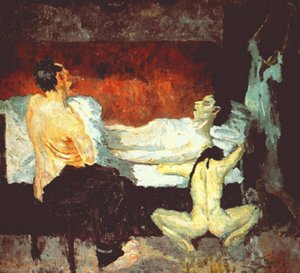
Max Beckmann's “Perseus. Triptych,” painted in 1941 during his self-imposed exile in Amsterdam, is not merely a depiction of Greek mythology; it’s a visceral exploration of trauma, isolation, and the precariousness of human existence rendered through a uniquely distorted lens. Born amidst the turmoil of World War I – an experience that fundamentally reshaped his artistic vision – Beckmann abandoned the polished surfaces and idealized forms of academic painting for a brutally honest portrayal of the world as he perceived it: fractured, chaotic, and imbued with a profound sense of unease. This triptych, measuring a substantial 151cm by 222.5cm, embodies this shift powerfully, inviting viewers into a psychological landscape far removed from classical serenity.
The painting’s composition immediately commands attention. The left panel presents a scene of ambiguous social interaction – perhaps a café or bar – populated by figures rendered with unsettlingly sharp angles and distorted proportions. Their faces are largely obscured, contributing to an atmosphere of detachment and anonymity. This deliberate lack of clarity establishes a sense of disorientation, mirroring the artist’s own experience of displacement and loss during his exile. The central panel explodes with dynamic energy. Here, Perseus – not as the heroic figure of legend, but as a powerfully built, almost monstrous presence – engages in what appears to be a violent struggle. The figures are intertwined, their bodies contorted into unnatural shapes, conveying a sense of desperate conflict and imminent danger. The color palette is dominated by stark contrasts: deep blues and blacks juxtaposed with flashes of crimson and ochre, intensifying the emotional impact.
Expressionist Distortion and the Trauma of War
Beckmann’s artistic style during this period – often categorized as New Objectivity or Neo-Expressionism – is characterized by a deliberate rejection of traditional perspective and realistic representation. He employed distortion not to deceive, but to reveal underlying truths about human psychology. The jagged lines, fragmented forms, and exaggerated proportions are direct responses to the horrors he witnessed in World War I, an event that shattered his faith in reason and order. The painting’s overall effect is profoundly unsettling, reflecting the artist's own anxieties and the pervasive sense of dread that gripped Europe during the lead-up to and throughout the war. The influence of Bosch and Grünewald, masters of depicting human suffering and moral ambiguity, can be clearly discerned in Beckmann’s use of symbolism and his willingness to confront uncomfortable realities.
Symbolism and Narrative Layers
Beyond its immediate depiction of a mythological struggle, “Perseus. Triptych” is rich with symbolic layers. The central panel, depicting Perseus's victory over Medusa, can be interpreted as an allegory for the artist’s own battle against artistic constraints and societal pressures. The confinement suggested in the right panel – a shadowy figure seemingly trapped within a dark space – speaks to themes of isolation, vulnerability, and the loss of freedom. The recurring motif of birds throughout the composition adds another layer of meaning, potentially representing both hope and despair—a reminder of the fleeting nature of beauty amidst chaos. Beckmann’s own life during this period was marked by constant displacement and a struggle for recognition, making these themes deeply personal.
A Legacy of Intensity: Reproduction and Appreciation
“Perseus. Triptych” remains one of Max Beckmann's most compelling and emotionally resonant works. Its raw intensity, masterful use of distortion, and profound exploration of the human condition continue to captivate viewers today. High-quality reproductions offer a remarkable opportunity to experience the power of this iconic painting firsthand. When selecting a reproduction, consider the medium – oil on canvas prints capture the texture and depth of Beckmann’s original brushstrokes with exceptional fidelity. This artwork is not simply a depiction of myth; it's an invitation to confront the complexities of human existence—a timeless testament to the artist’s unique vision and enduring legacy.
Biografía del artista
Vida temprana y desarrollo artístico
Max Beckmann, un renombrado pintor, dibujante, grabador, escultor y escritor alemán, nació el 12 de febrero de 1884 en Leipzig, Sajonia. Su viaje artístico comenzó con representaciones académicamente correctas, que luego se transformaron en figuras y espacios distorsionados, reflejando su visión alterada de la humanidad después de servir como ordenanza médica durante la Primera Guerra Mundial.Estilo artístico e influencias
El estilo de Beckmann, arraigado en la imaginería del vidrio medieval, estuvo influenciado por varios artistas, incluyendo a Cézanne, Van Gogh, Blake, Rembrandt y Rubens. También se inspiró en los artistas europeos del norte del siglo tardío medieval y del Renacimiento temprano, como Bosch, Bruegel y Matthias Grünewald.Obras notables y exposiciones
- El Bark (adquirido por la Galería Nacional de Berlín)
- Autorretrato con esmoquin (comprado en 1928)
- Retrospectivas en la Städtische Kunsthalle Mannheim (1928) y en Basilea y Zúrich (1930)
Vida posterior y exilio
La fortuna de Beckmann cambió con el ascenso de Adolf Hitler, lo que llevó a su despido de la escuela de arte en Frankfurt y a la confiscación de más de 500 de sus obras. Vivió en autoexilio en Ámsterdam durante diez años, sin lograr obtener un visado para los Estados Unidos.Legado
- Enseñó en las escuelas de arte de la Universidad Washington en St. Louis y el Museo de Brooklyn
- La primera retrospectiva en los Estados Unidos tuvo lugar en 1948 en el City Art Museum, Saint Louis
- La Galería Max-Slevogt, Alemania, presenta una colección de sus obras
- Nació: 12 de febrero de 1884
- Falleció: 27 de diciembre de 1950
Contexto Histórico y Recepción
Beckmann fue una figura central en el desarrollo del Expresionismo alemán, aunque rechazó la etiqueta. Su obra refleja las turbulencias sociales y políticas de su tiempo, especialmente los horrores de la Primera Guerra Mundial y el ascenso del nazismo. Su estilo evolucionó desde representaciones académicas hasta un lenguaje visual más abstracto y simbólico, que a menudo exploraba temas de alienación, violencia y desesperanza. A pesar de enfrentar persecución bajo el régimen nazi, su legado perdura como uno de los artistas más importantes del siglo XX.
Max Beckmann
1884 - 1950 , Alemania
Datos clave
- Artistas Que Influyeron:
- Cézanne
- Van Gogh
- Blake
- Rembrandt
- Rubens
- Bosch
- Bruegel
- Grünewald
- Fecha De Fallecimiento: 27 de diciembre de 1950
- Fecha De Nacimiento: 12 de febrero de 1884
- Lugar De Nacimiento: Leipzig, Alemania
- Movimiento Artístico: Expresionismo Alemán
- Nacionalidad: Alemán
- Nombre Completo: Max Beckmann
- Obras Notables:
- El Bark
- Autorretrato con Tuxedo
- La Noche
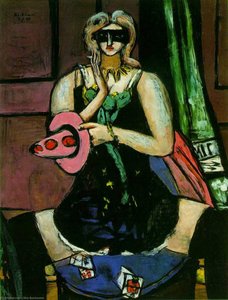
- Columbine
- Gran Escena de Angustia
Artículos relacionados

Max Ernst: Las 25 Obras Maestras del Surrealismo para Decorar tu Hogar con Arte
Descubre las 25 obras maestras de Max Ernst, el rey del surrealismo. Explora su arte onírico, técnicas innovadoras y simbolismo profundo. Reproducciones de alta calidad para decorar tu hogar con estilo en OriginalUniqueArt.com
Las 25 Obras Maestras del MET: Arte, Historia y Decoración para tu Hogar
Descubre las 25 obras maestras del MET de Nueva York: Van Gogh, Monet, Rembrandt y más. Explora la historia, el arte y los colores que inspiran tu hogar. Reproducciones de museo en OriginalUniqueArt.com.
Las 25 Obras Maestras del DIA de Detroit: Arte, Historia y Decoración Inspiradora
Descubre las 25 obras maestras del Instituto de Arte de Detroit: Van Gogh, Monet, Rembrandt y más. Historias fascinantes, técnicas innovadoras y arte para inspirar tu hogar. Reproducciones de alta calidad en OriginalUniqueArt.com.
Las 25 Obras Maestras del National Gallery of Art: Arte, Historia y Decoración Exclusiva
Descubre las 25 obras maestras del National Gallery of Art, Washington. Explora la historia de Cézanne, Matisse, Picasso y más. Encuentra reproducciones de arte exclusivas e ideas para decorar tu hogar con lienzos inolvidables en OriginalUniqueArt.com.
Hieronymus Bosch: Las 25 Obras Maestras del Genio Medieval | Arte y Decoración
Descubre las 25 obras maestras de Hieronymus Bosch, el enigmático pintor medieval. Explora 'El Jardín de las Delicias' y su simbolismo único. Reproducciones de arte de alta calidad para tu hogar en OriginalUniqueArt.com.