 Cambiar a impresiones
 Ver más







































 Para obras de arte o reproducciones que midan más de 105 cm (aproximadamente 41 pulgadas) en cualquiera de sus lados, el marco se enviará como un kit desmontado. Este método garantiza una entrega segura y evita daños durante el transporte.


A Symphony of Form and Pattern: The Fish-shaped Dish
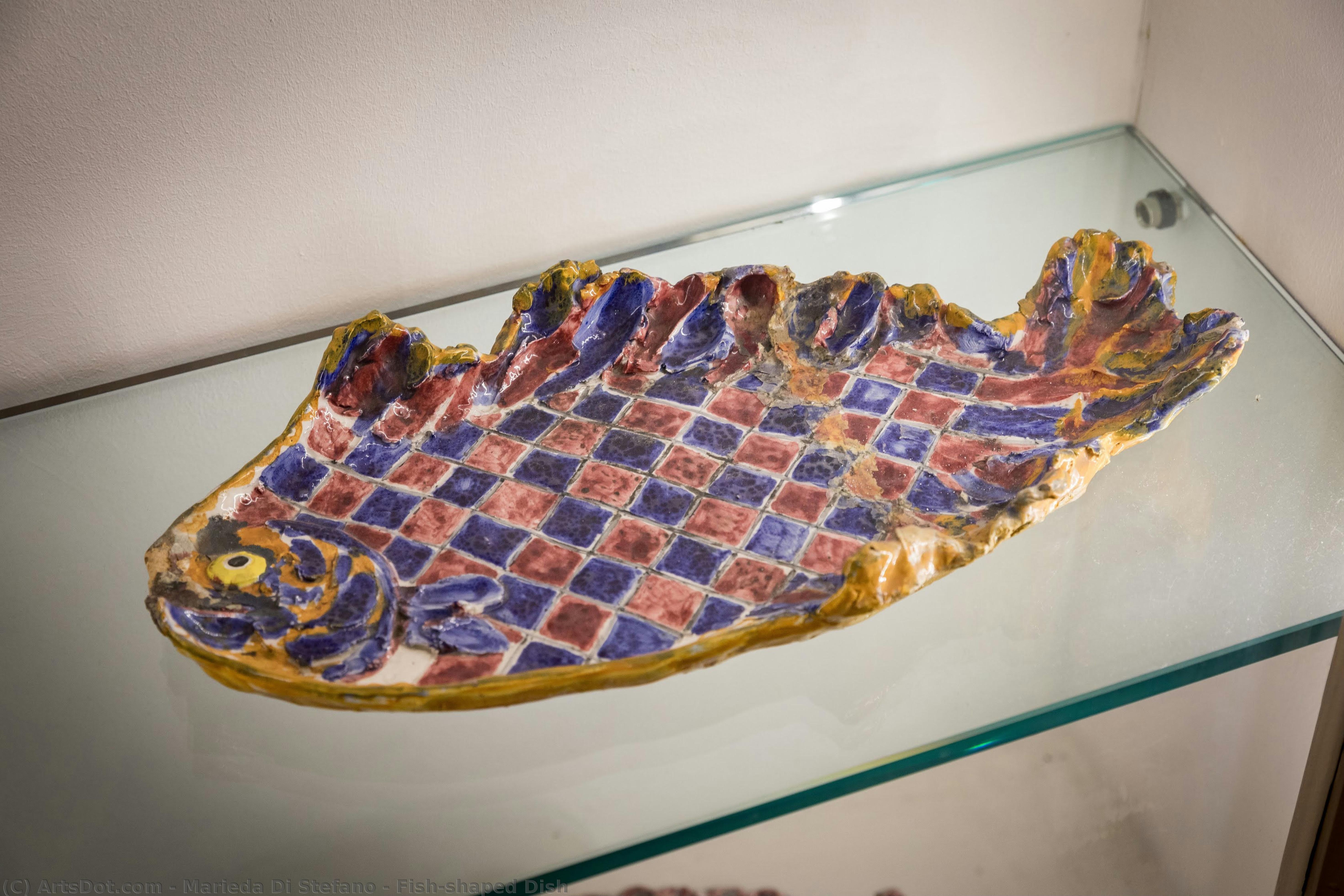
In the quiet intersection of utility and fine art lies Marieda di Stefano’s Fish-shaped Dish, a captivating relic from 1950 that breathes life into the concept of functional ceramics. At first glance, the piece presents a playful silhouette, mimicking the organic curves of a sea creature, yet it transcends mere ornamentation through its striking visual rhythm. The surface is adorned with a meticulous checkered pattern of vibrant red and deep blue, a chromatic choice that creates a rhythmic pulse across the ceramic form. This interplay of color does more than decorate; it transforms a simple object into a dynamic exploration of geometry and nature, inviting the viewer to contemplate how rigid patterns can inhabit fluid, organic shapes.
< تجربenciaModernist Echoes in Post-War Italy
To understand this piece, one must look toward the vibrant atmosphere of post-war Italy, an era defined by a profound tension between tradition and the burgeoning modernist movement. As an artist, Marieda di Stefano emerged from the Roman art scene, bringing a sensibility that favored simplicity, functionality, and expressive minimalism. The Fish-shaped Dish serves as a testament to this period's fascination with the "objecthood" of art—the idea that everyday items could carry the weight of sculptural intention. The use of bold, primary-adjacent tones and the structured grid pattern reflect the mid-century aesthetic, where the clean lines of modernism met the tactile, earthy traditions of Italian pottery.
The technique employed here speaks to a mastery of ceramic surfaces, where the glaze acts not just as a protective layer but as a medium for light and depth. The way the blue and red pigments interact on the curved edges of the dish creates an illusion of movement, as if the scales of the fish are shimmering under water. For the discerning collector or interior designer, this piece offers more than just visual interest; it provides a focal point of historical significance and sophisticated charm.
An Invitation to Curated Living
For those seeking to infuse their living spaces with character, a high-quality reproduction of this work offers a unique opportunity to bridge the gap between museum-grade history and contemporary decor. Whether placed upon a minimalist glass shelf or integrated into a curated collection of mid-century ceramics, the Fish-shaped Dish acts as a conversation starter. It evokes a sense of nostalgia for the 1950s while maintaining a timelessness that complements modern, eclectic, or even coastal interior styles.
Owning a piece inspired by di Stefano’s vision is an invitation to celebrate the beauty of the everyday. It reminds us that art is not confined to canvases on walls, but can be found in the very shapes and patterns that we hold in our hands. This work remains a poignant reminder of a time when Italian craftsmanship sought to find harmony between the structured world of man and the fluid wonders of the natural world.
Preguntas y respuestas
¿Los colores de "Fish-shaped Dish" son intensos o suaves?
La intensidad cromática de "Fish-shaped Dish" es Balanced. La intensidad describe la fuerza con la que se perciben los colores.
¿Hay obras similares a "Fish-shaped Dish"?
Puedes encontrar obras similares a "Fish-shaped Dish" de Marieda Di Stefano en la página de Obras similares de esta obra.
¿Es "Fish-shaped Dish" representativo de la temática habitual de Marieda Di Stefano?
"Fish-shaped Dish" representa fish dish, checkered pattern, red and blue, ceramic plate, glass shelf, mientras que los temas recurrentes de Marieda Di Stefano son post-war italian art, modernist ceramics, functional sculpture, minimalist expression. Al comparar ambos, se observa cómo la obra se relaciona con los temas habituales del artista.
 Enviar
 Compartir
 Detalles
 Guía
Guía

 Descargar
 Similares
 Presentación de diapositivas
 Q&A
Q&A Estadísticas